The Sign is Louder Than Bombs: Algerian Visual Artists Collective Aouchem
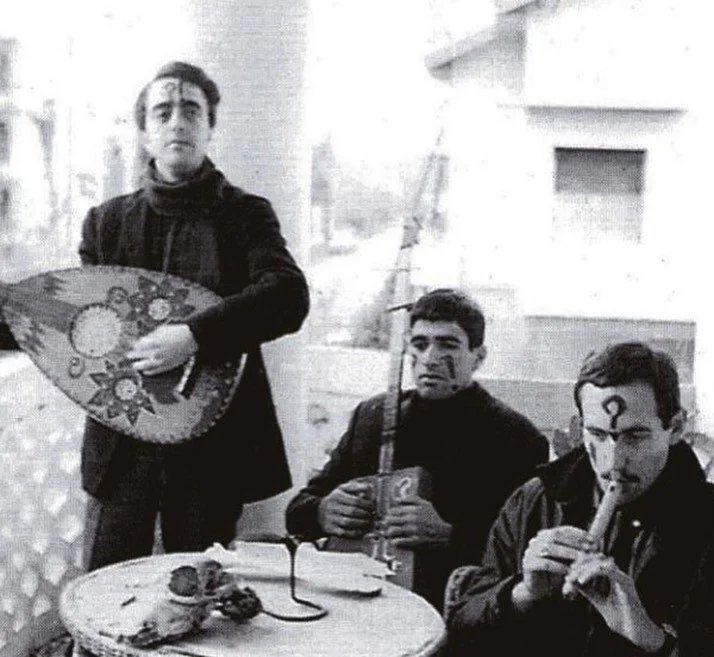
In 1967, a group of artists gathered in Algiers to sign a manifesto that would change the course of North African modernism. They called themselves Aouchem (Arabic for "tattoos"). At a time when the newly independent Algerian state was searching for a visual identity, and Western art schools were still the dominant model, Aouchem looked toward the "magical signs" of their own soil.
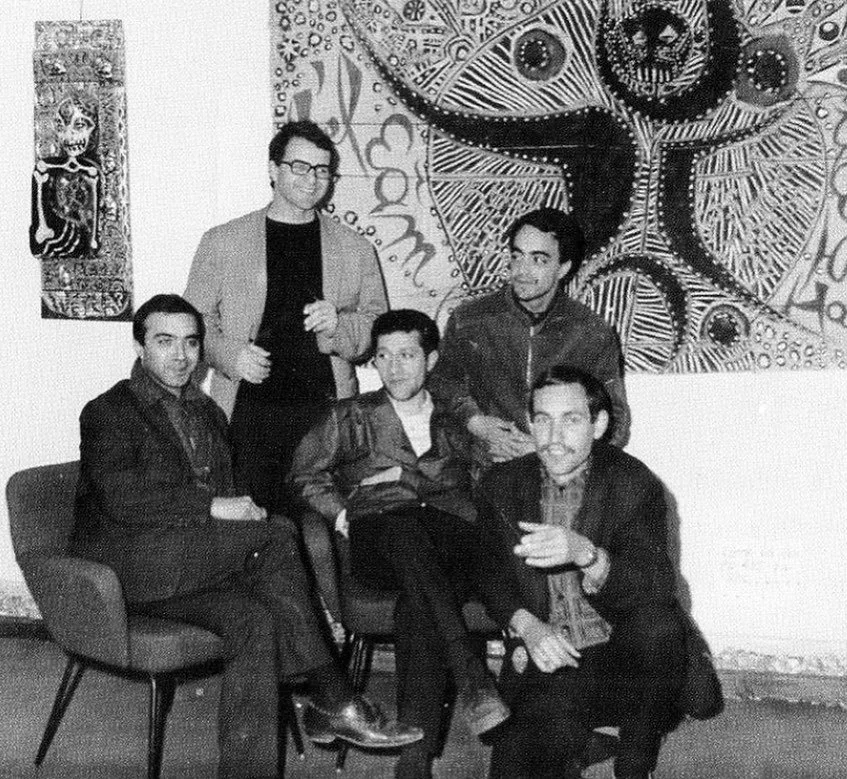
For the “Aouchemists”, a tattoo was not just body art; it was a non-verbal, ancestral archive. In North African history, tattoos were often marks of tribal identity, protection, and – during the French colonial era – a silent form of resistance for women. They saw that the future of African art was hidden in its ancient past.
Breaking away from Western art schools, they looked to the 10,000-year-old cave paintings of the Tassili mountains and the traditional tattoos of Amazigh women to create a new, decolonial visual language. To them, a painting was a tattoo on the nation's history – a mark that could never be erased.
By naming themselves "Tattoos" in Darija, artists like Denis Martinez (the group’s theoretical engine, known for his "Doors" series and his use of Tifinagh-inspired scripts) and Choukri Mesli (his co-founder who focused on the sensuous, stylized female figure as a symbol of the land) were declaring that their art was an indelible mark on the skin of the nation.

Choukri Mesli, Woman, Composition, 1986 , oil on plywood, 195 x 97 cm. Source: Liassine, Françoise. Choukri Mesli, Algiers: Enag Editions, 2002
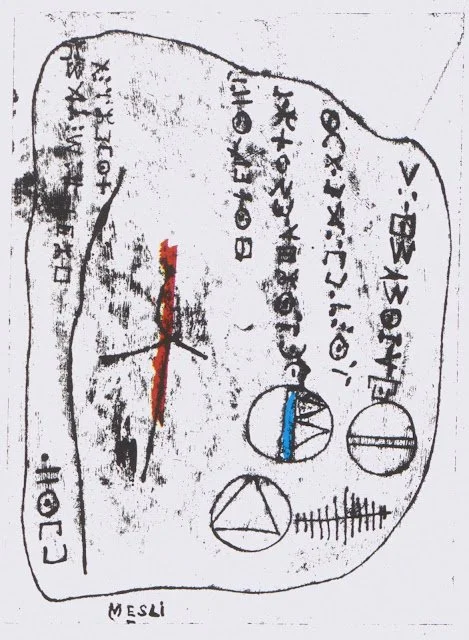
Choukri Mesli, Poème pour elle [Poem for Her], c. 1982, monotype, 65 x 50 cm. From the exhibition catalogue Mesli: Gouaches et Monotypes. Algiers: Galerie M’hamed Issiakhem, 1986. Published in conjunction with an exhibition of the same title, organized by and presented at Galerie M’hamed Issiakhem, 1986. Private collection
The group’s 1967 manifesto begins with a bold claim: “Aouchem was born thousands of years ago on the walls of a cave in the Tassili Mountains.” They drew a direct line from the prehistoric rock art of Tassili n’Ajjer (some of the world's oldest and most significant rock art) to modern painting. They rejected aesthetic mediocrity and the “gratuitous freedom” of Western abstraction, opting instead for a Painters of the Sign approach—using Amazigh symbols, pottery patterns, and geometry as a universal language.
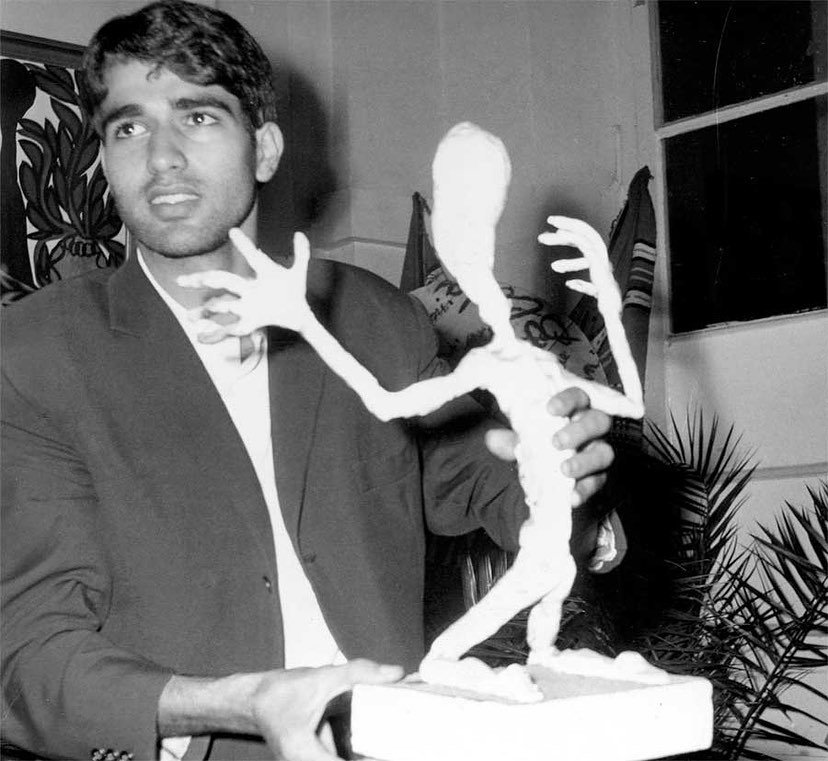
Mustapha Akmoun, 1967, plaster sculpture during the exhibition at the party cultural center in Blida
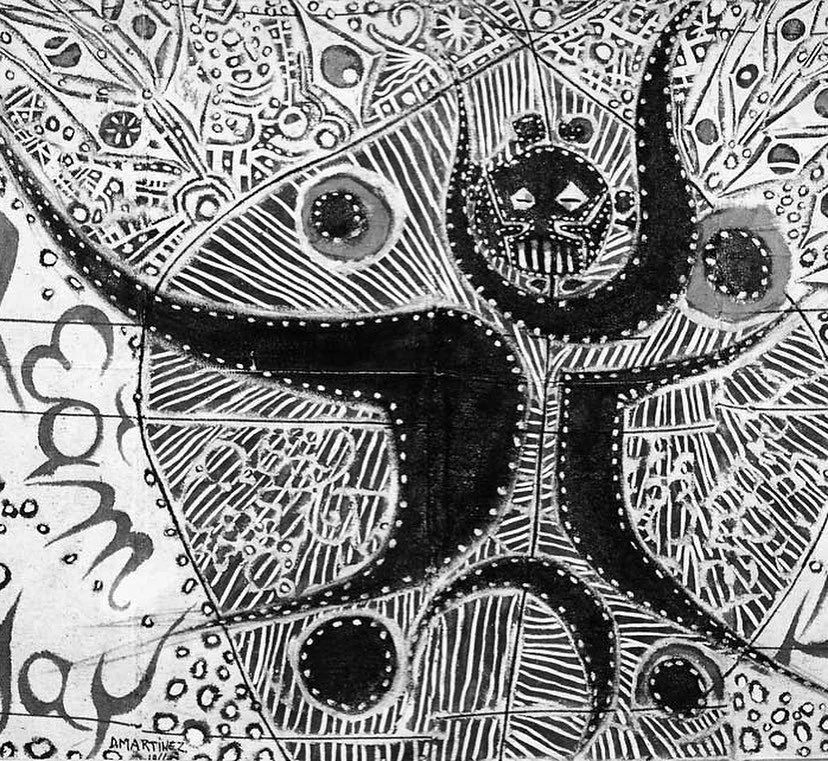
“The Sign is Louder Than Bombs.”
This famous line from their manifesto perfectly encapsulates their philosophy. They believed that while violence could kill or fragment a people, their symbols – their semiotics – were indestructible. They sought to reassemble the plastic elements of civilizations that had been crushed by colonialism.
While the group was largely male-led, its most famous signatory was Baya Mahieddine. A surrealist prodigy who had previously fascinated Picasso, Baya was the only woman to sign the Aouchem manifesto. Her work – lush, colorful, and devoid of men – perfectly aligned with Aouchem’s goal of creating an art form that felt primordial and authentically local. She was considered the godmother of the movement whose patterns mimicked traditional Algerian embroidery.
There are distinctive traits in Aouchem’s style which makes it recognizable. For one, there’s geometric rigor in the art, which often feels plotted like a rug or a piece of pottery. It also follows a symbols over subjects approach: look for triangles, dots and zig-zags (symbols for water, fertility, and protection). Lastly, keep an eye out for the sign, shapes that look like letters but aren't quite readable – a style often called “Asemic writing”.