Palestinians in Paraguay & the “Paraguay Scheme”
WORDS Max Saakyan
Researcher Hadeel Assali had grown up hearing about her distant uncle, Mahmoud, a Palestinian man who was unwillingly deported to Paraguay as a teenager. It was a story that ran in the family, but its details were vague and it was never openly discussed. When we sat down with Hadeel while producing our series Palestinians in Paraguay for Uncovering Roots, she told us the moment she decided she needed to talk to her uncle. She visited him in Amman in 2005. They sat around a platter of olives, cheese and eggs, and eventually she asked him the question she’d been holding back for a long time: how did you get from Gaza to South America? When he finally told her, "I found it really hard to believe," she told us. "It just sounded crazy."
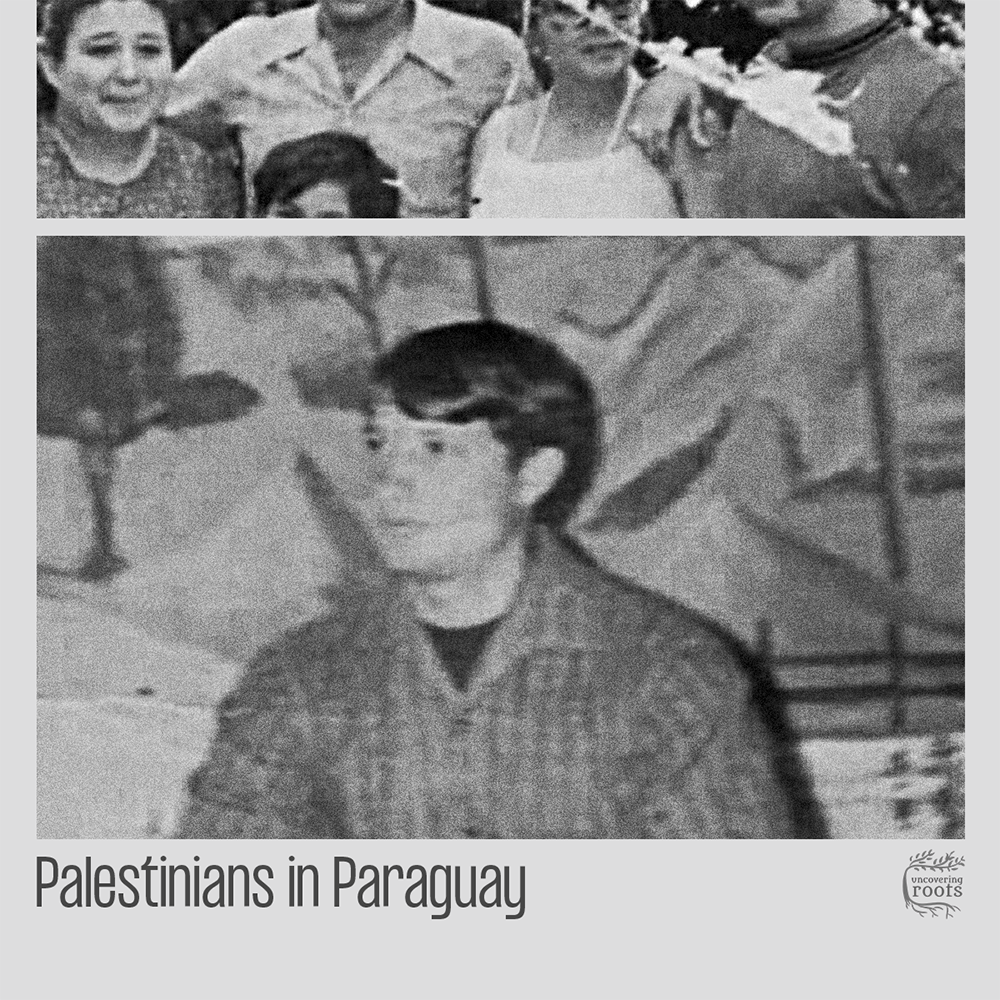
Mahmoud told her he had signed up for what he thought was a work program in Brazil. He was 19. He boarded a plane and said goodbye to his father, who was sick, and his mother, who was six months pregnant. When the plane landed, it wasn't Brazil. It was Asunción, Paraguay, a landlocked country under one of Latin America's most brutal dictatorships of Alfredo Strossner. Mahmoud had no money, was stripped of his documents, and had no way to return home. And he wasn’t alone.
We started pulling on that thread. What we uncovered wasn't a strange family story, but an Israeli policy of expulsion, one that would notoriously take the title of “the Paraguay Scheme”. And its shadows were stretched long and entrenched deep.
The scheme was backed by a May 1969 ministerial document, sitting in the Israeli state archives. It outlined how the Israeli government would finance the travel of Palestinians out of Gaza. Pay each deportee $100 in living expenses. Pay the Paraguayan government $33 per person, with a $350,000 advance on the first 10,000 arrivals. The aim was to bring sixty thousand people from Gaza to Paraguay. The plan was written into policy, and government funds were earmarked to carry it out.
The men recruited had no idea. They were promised work, wages and the choice to return home. They signed documents in Hebrew they couldn't read. "It was just a family story this whole time," Hadeel told us, "until the document. The first feeling was vindication."
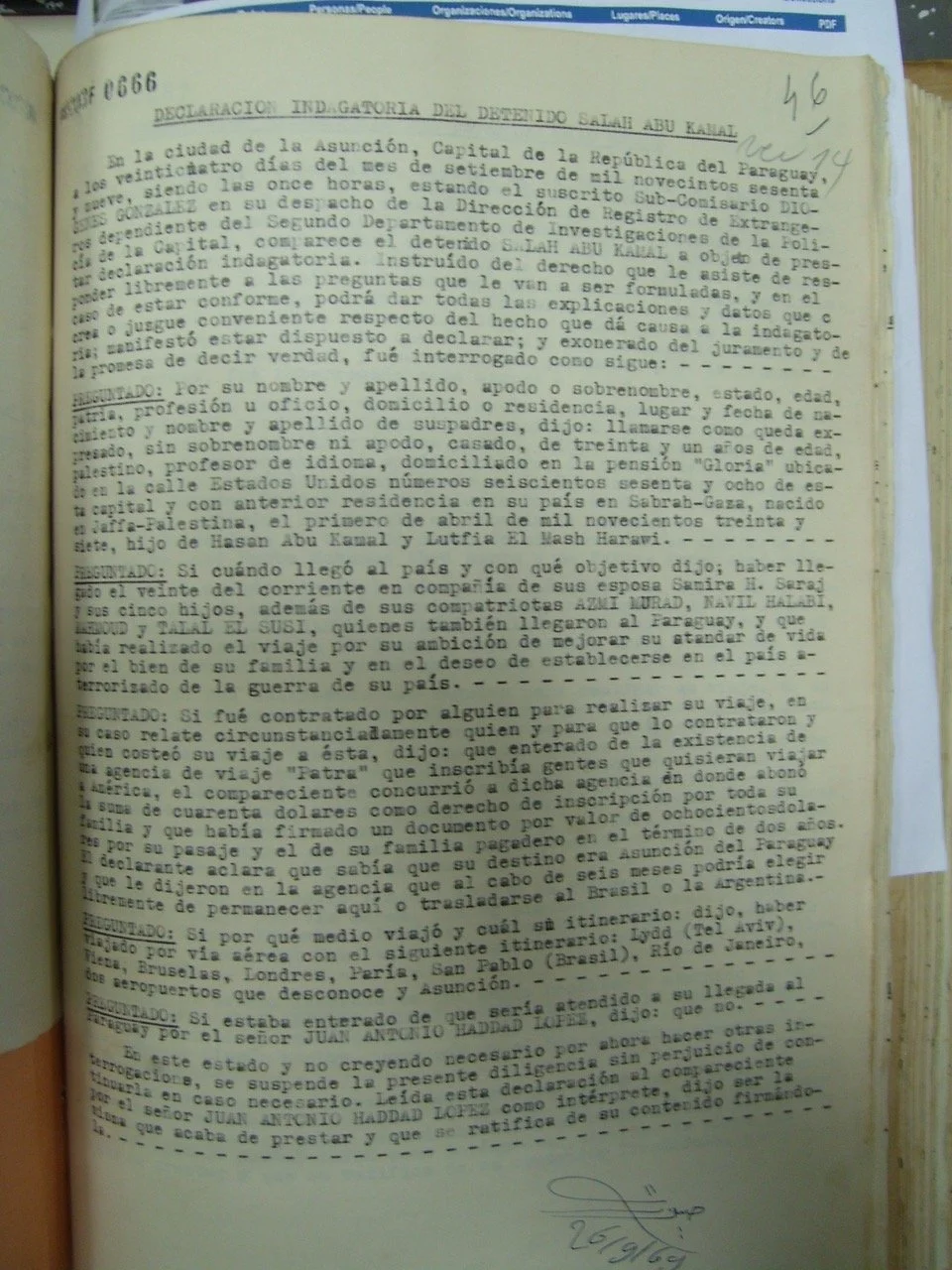
Salah Abu Kamal testimony from the Archive of Terror
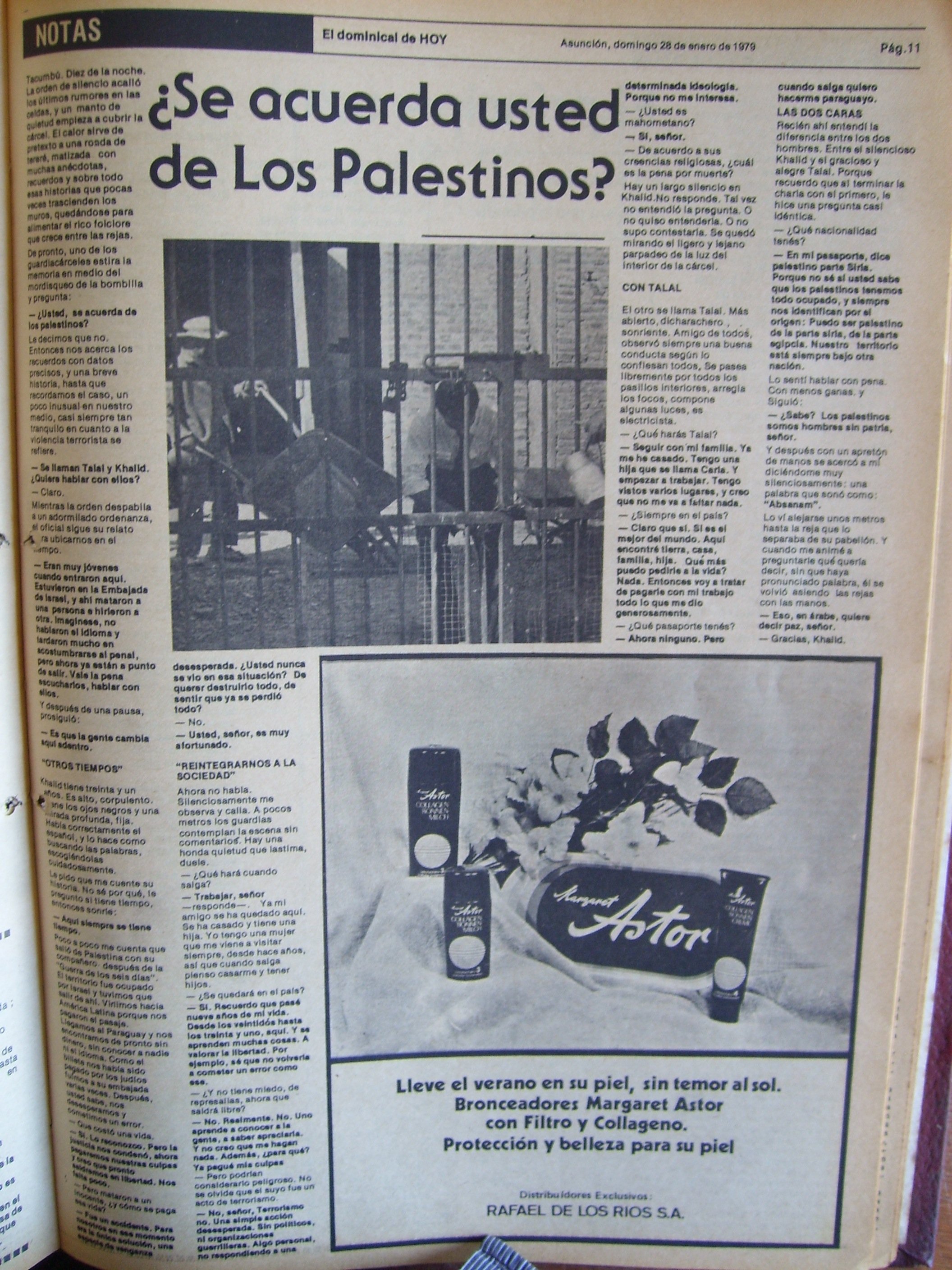
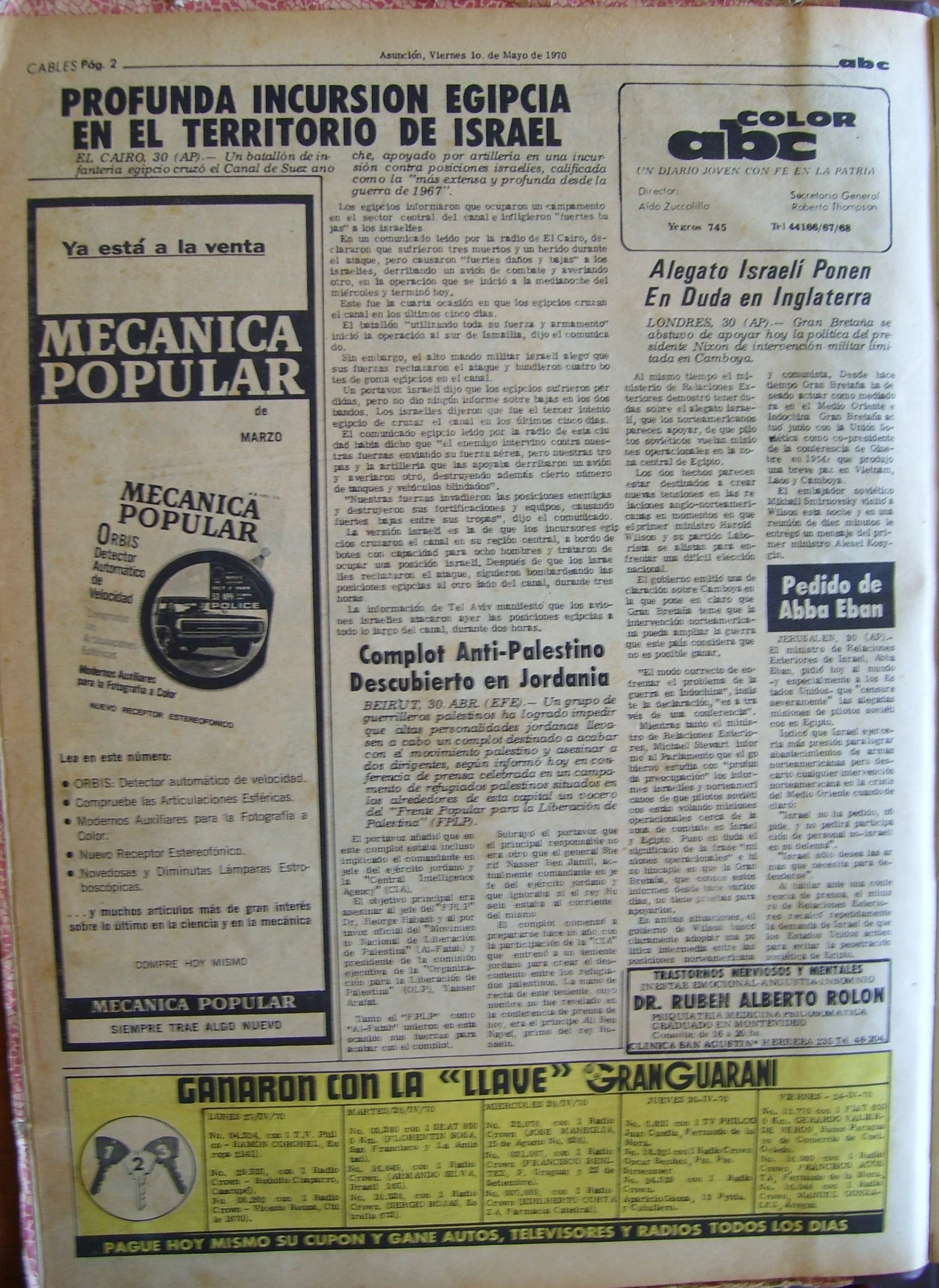
It is hard to estimate just how many people like Mahmoud ended up stranded in Paraguay — without legal recourse or anyone to sound or scream their grievances to. Eleven or fewer did speak to the Paraguayan police, but their names ended up in the “Archive of Terror”, the intelligence files of former Paraguayan dictator Alfredo Stroessner.
Professor John Tofik Karam, who was researching Arab immigration, unexpectedly uncovered their sworn statements, which are now historical testimonies. The testimonies revealed that an Israeli travel agency by the name of Patra promised them a "work abroad program" to leave Gaza and return, but instead, they were trafficked to Paraguay. This occurred while Israel was courting a relationship with Stroessner’s regime, offering "technical assistance" in exchange for political support, despite the dictator's notorious Nazi sympathies.
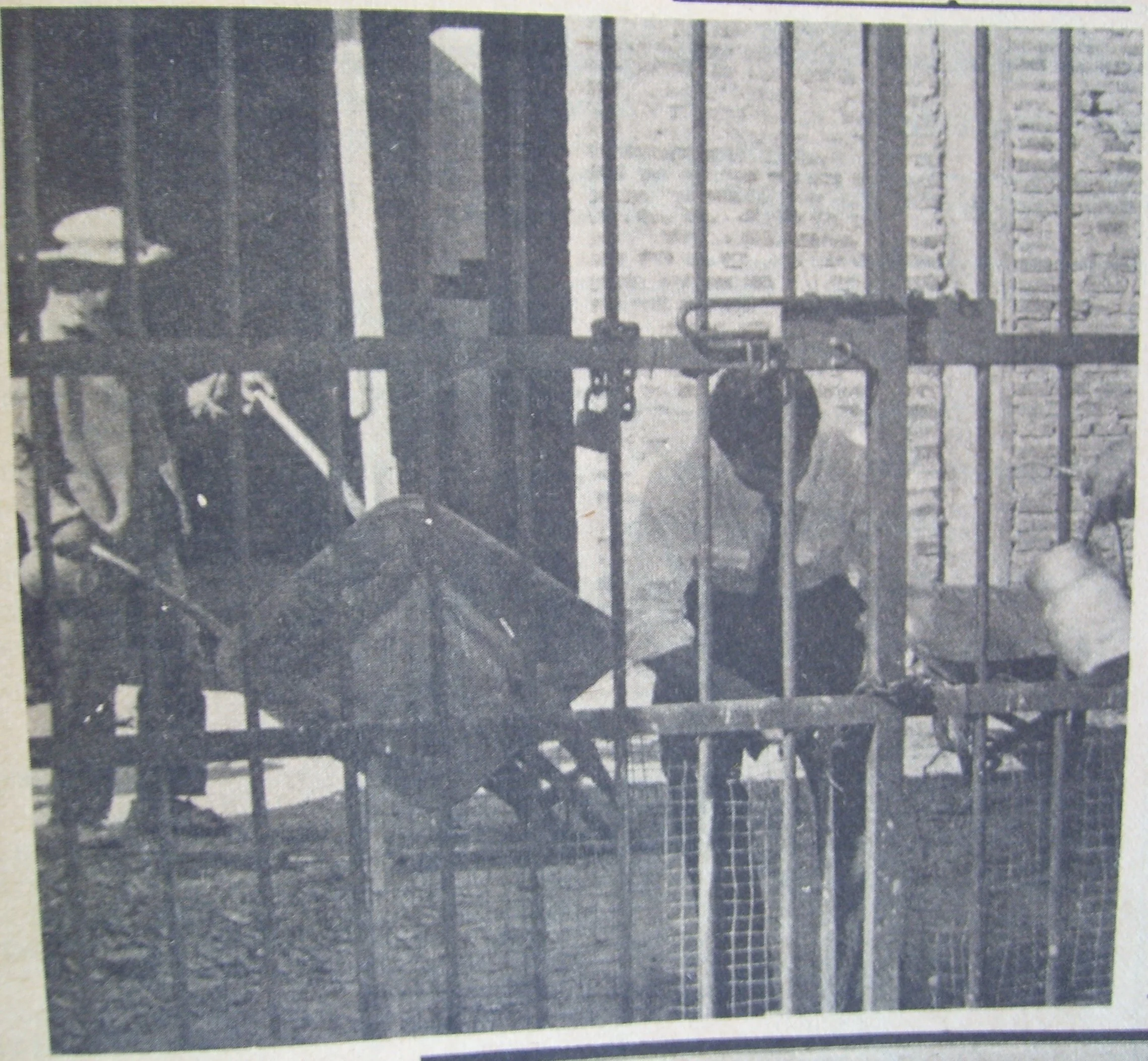
The discovery highlights a hidden chapter of the "refugee problem" that concerned the Israeli cabinet at the time. The trials of these men, and the stories they tried to tell to the police, would’ve faded were it not for one man, who was singlehandedly responsible for exposing the Israeli scheme. His name is Talal al-Dimassi. He is the only living deportee willing to speak publicly, and we tracked him down to speak to him. He told his story candidly to us over a year. He shared moments of pain, and others of joy and vindication. For example, before his deportation, Israeli forces had detained and tortured him. "They'd hang us up like bats, by our legs," he told us. "Our whole bodies, the blood would rush downwards." Faced with a choice between deportation and having his family expelled, he took the plane.
He had never heard of Paraguay. "We'd learned about Brazil in school," he said. "Colombia, Argentina, Brazil, we knew. But Paraguay? It wasn't on the map." He also shared with us his deepest memories of the scheme, starting with when he boarded the flight out of Palestine, and how it “felt like something was being ripped out of my chest. Like something pulling at me with pliers, ripping a vein from my heart." He also told us details of a horrific day that would change his life forever.
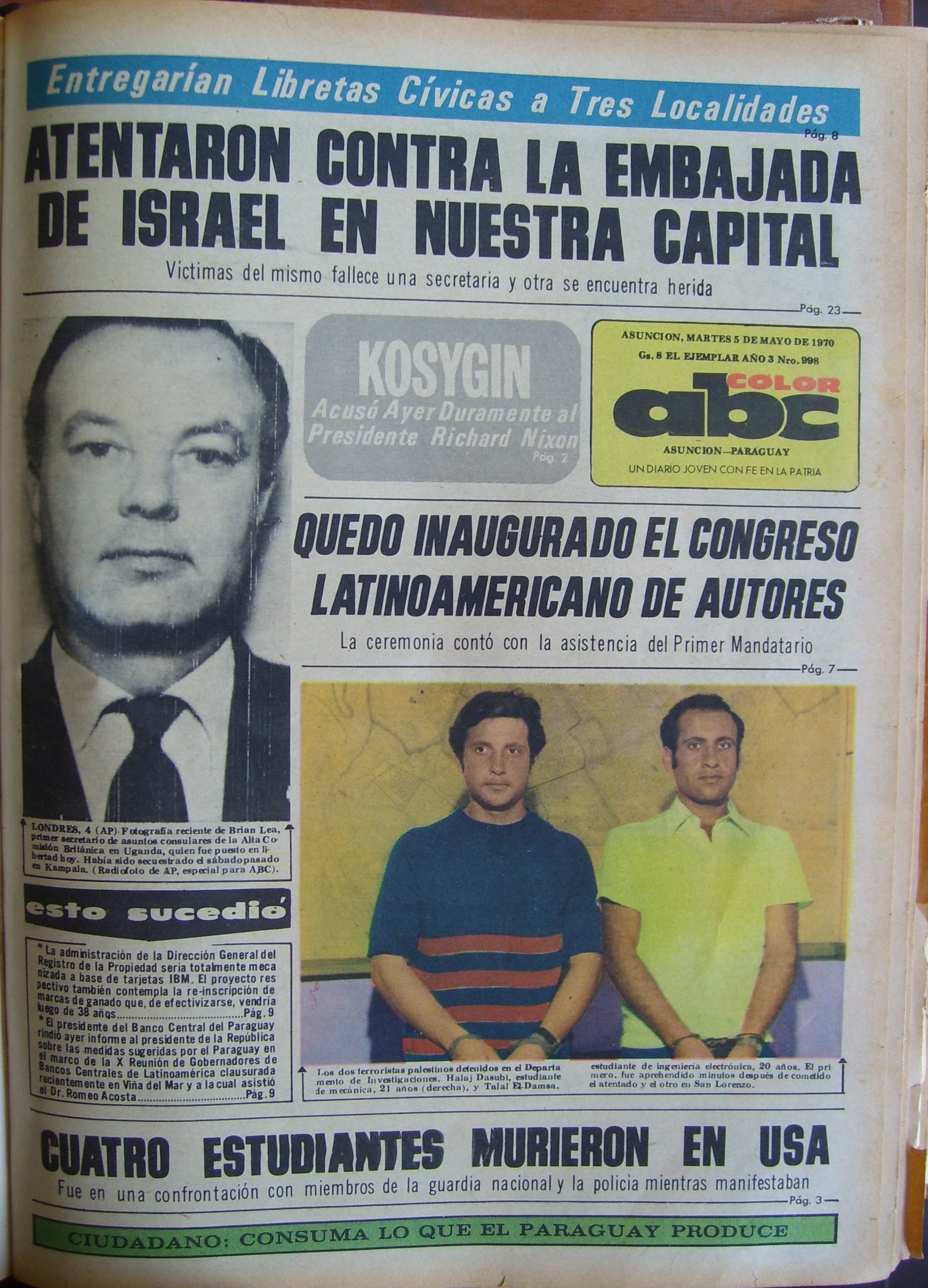
On May 4th 1970, after months of broken promises and failed attempts at survival, Talal and another deportee walked into the Israeli embassy in Asunción. They went in to talk and negotiate a way back home, but were caught in the crossfire of a shooting. Their faces were plastered on the front page the next morning: two young men, handcuffed, looking directly at the camera. Israel demanded they be put behind bars for 30 years.
What followed was a two-year trial that the Paraguayan press covered obsessively. The media called it "The Palestine Case". In open court, Talal took the stand and laid out the history of British and Israeli colonialism against his land and people; he named parties and agencies involved, and testified against those who brought him to Paraguay against his will. And for that, he stands as the man who thwarted a covert Israeli deportation scheme.
"I don't regret it," he told us. "I saved 60,000 Palestinians who were going to be expelled to Paraguay. They remain there. In our homeland."
Talal never returned to Gaza. But he still dreams about it. "I see the Palestinian flag billowing. The moon and sun at the same time."
"It means that Gaza will return."
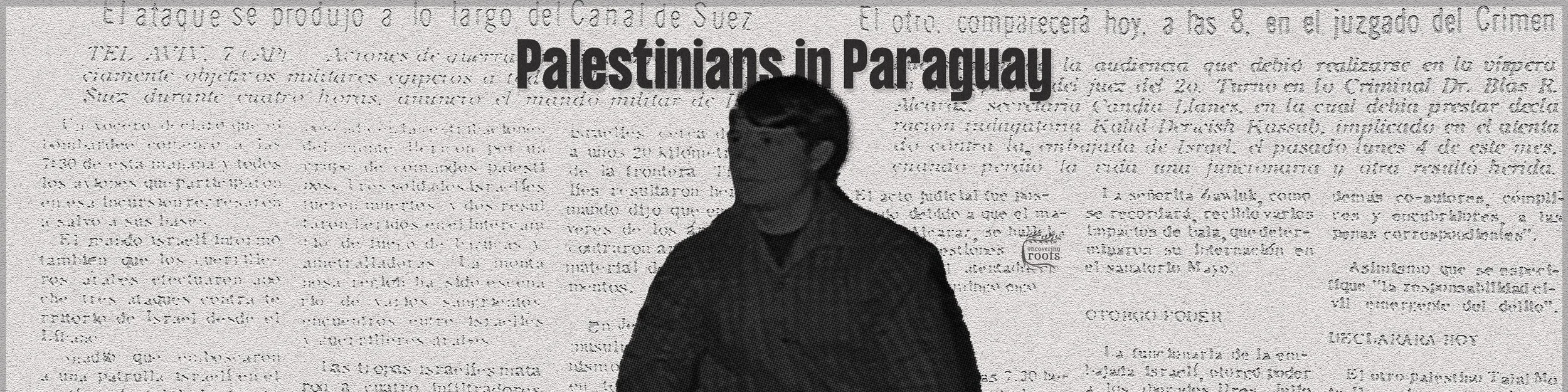
Palestinians in Paraguay is a four-part investigative documentary podcast from Uncovering Roots. It draws on declassified Israeli state documents, testimonies from Paraguay's Archive of Terror, and an exclusive interview with Talal al-Dimassi.
Listen now on all major platforms including Spotify & Apple Podcasts.