The Figure of the Arab Body
words by Victor lund shammas
The relationship of the West to the figure of the Arab is not so much about Arabs themselves as it is about the West—and its frailties & anxieties.
The fourteenth-century Arab intellectual Ibn Khaldun is one of the great contributors to the history of social thought. Despite his relative invisibility in the tradition, Khaldun could stake out a claim to being one of sociology’s inventors. In his nearly seven-hundred-year-old text, the Muqaddimah (“Introduction”), Khaldun develops the concept of asabiyya, or tribalism, to explain what holds societies together. In so doing, he prefigured by half a millennium the French nineteenth-century sociologist Émile Durkheim’s concern with social solidarity as the emotional basis for cohesive societies.
“Hercule Poirot…pointed downward. ‘Regard them there, lying out in rows. What are they? They are not men and women. There is nothing personal about them. They are just—bodies!”
Yet Khaldun is rarely taught in Western universities: His thought is often simply ignored in favor of a still-largely European canon, which contains significant blind spots and erasures. Why is Khaldun not more widely recognized in lecture halls and on syllabi as a key figure in the history of the social sciences? The answer has to do with the Eurocentricity of modernity, compounded by a haughty, stereotyping, dismissive, or even actively aggressive attitude toward all ideas and thinkers originating from outside the Western core, identified half a century ago by the Palestinian-American intellectual Edward Said in his Orientalism.
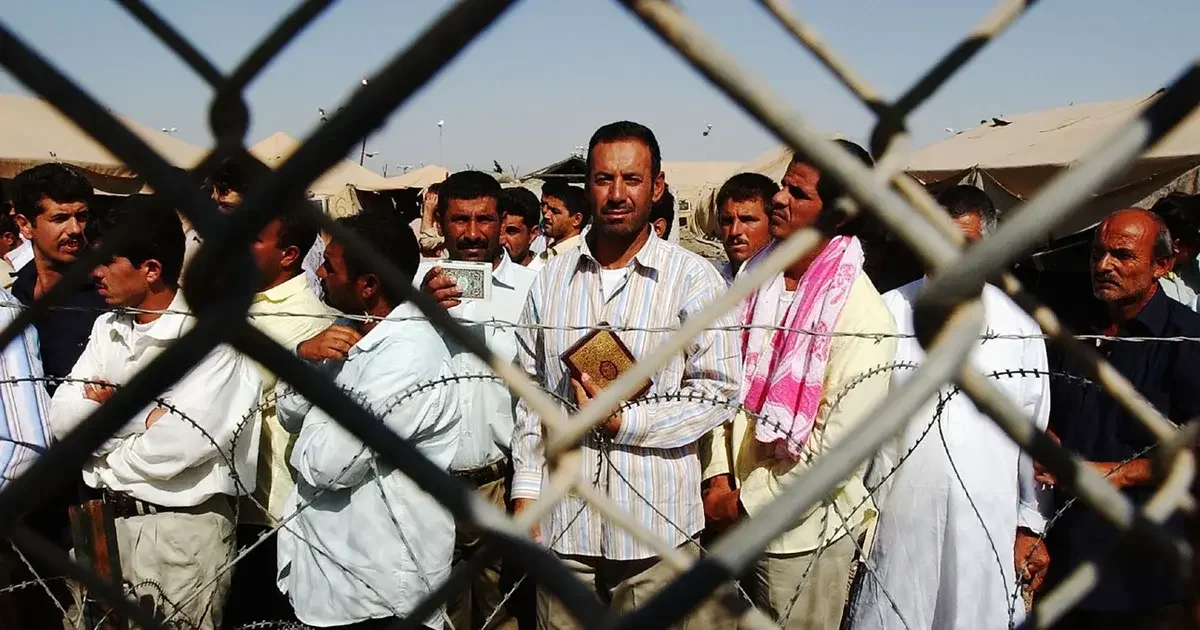
This dismissal of Arab thought is mirrored in the rejection—sometimes violently—of Arab corporeality. Some years ago, I wrote an essay, "The Arab Body,” in which I argued that in the past decades, the physical, embodied figure of "the Arab" has been a uniquely intense focal point for Western governments. It has been uniquely dangerousto be the bearer of what we might call an “Arab body” in this new century—whether in the deadly, devastating, trillion-dollar, post-9/11 wars, from Iraq, Libya, Afghanistan and beyond, with its hundreds of thousands of war dead, its “extraordinary renditions” and Abu Ghraib-style torture “black sites”; or in the increasingly acrimonious, xenophobic, if not outright fascistic “public debates” in Europe over immigration, where nationalist-populist parties are vying for pole position, from the Farage’s Reform UK to Germany’s Alternative für Deutschland. Israel’s genocidal campaign in Gaza, its policies of death and displacement in the West Bank, and its illegal war on Lebanon announce the truth of what philosopher Judith Butler wrote years ago: that there are some bodies that are “grievable,” worthy of care and mourning—and others that, quite simply, are not accorded the same respect, dignity, or human worth. “In this world, as we know,” Butler writes, “lives are not equally valued; their claim against being injured or killed is not always registered. And one reason for this is that their lives are not considered worthy of grief, or grievable.”
Now, this notion of “the Arab body” involves a reduction to brute physicality, a fleshy substrate that can be surveilled, measured, indexed, repressed, tortured, bombed, bulldozed, and therefore, in the final instance, killed—from the “Hell” of Israel’s “torture camps” reserved for Palestinians, as documented by Israeli human rights organization B’Tselem, to the terra nullius of Guantanamo Bay, where detainees reported being subjected to “gruesome acts of violence, sexual and religious humiliation, and prolonged psychological terror,” as The Guardian has noted. In all kinds of ways, Western public discourse has expressed the essential unworth of Arab lives—from literary references, like Jack Kerouac’s On the Road, which repeatedly impugns the figure of a “band of Arabs” or an “Ay-rab” as inherently violent or criminal; to the existential calamity of more than 50,000 Palestinian children reportedly injured or killed in the Gaza war by mid-2025, according to UNICEF. Israeli officials regularly speak of “mowing the grass,” a repugnant metaphor papering over the indiscriminate killing of fighters and civilians alike. When Madeleine Albright said in an infamous 1996 interview on 60 Minutes that half a million Iraqi children’s deaths from sanctions were “worth it,” this was a brutal expression of the fact that, from a particular Western vantage point, Arab lives quite simply don’t matter—or do not matter to such a degree that anyone ought to lose much sleep over them.
Similarly, during the U.S-Israeli 12-day war with Iran in the summer of 2025, Germany’s chancellor Friedrich Merz praised Israel for doing “the dirty work […] for all of us,” seeming to echo Germany’s not just inaction during the Gaza genocide but, in fact, active complicity in its commission—from shutting down peaceful pro-Palestinian protests in Germany itself, to failing to suspend arms sales until 22 months into the Gaza war. In deeds if not outright words, Merz had seemed to suggest Israel was precisely doing the “dirty work” of the West in its war on Gaza, too. To be the bearer of Arab identity, then, is to be caught in the force field of a Western violence-producing machine, a decades-long manufacturing of indifference and lethality.
Sadly, many in Europe fear, revile, and despise this figure of the Arab body. When the German extreme-right party AfD regularly polls in lead position, and finished second in the 2025 general election, this is not primarily because of economic issues or inflation, as some commentators have claimed, but because it appears to promise a “purification” of the German body politic of non-Germanness, trained less on the figure of the Turkish immigrant as in decades past than precisely the Arab—after Merkel’s solidaristic 2015 gesture of “Wir schaffen das” in the wake of the Syrian civil war and who welcomed more than a million Syrians into the country. Similarly, if the far-right, ultra-nationalistic, xenophobic Sweden Democrats have become Sweden’s second-most popular party, attracting around a fifth of voters, this is not because of some generalized Swedish economic crisis—what crisis?—but because of a years-long political campaign and media obsession with immigration, mainly from “MENA” countries, migrant-coded crime anxieties, and minorities and migrants’ purported disruption of “Swedish values” (svenska värderingar)—typically viewed, ironically, to hinge on the “equal worth” of all as a 2016 poll showed. These are all anxieties about the presence of precisely “the Arab body” in Europe—constructed as a disruptive, polluting presence and targeted for political gain by the right. And it is in this sense that we can say that the figure of the Arab is in fact the engine driving much of European politics today, latched onto by the national-populist right as a scapegoat, a symbolic punching bag functioning as a master category to explain all that might be difficult, frustrating, or wrong in voters’ lives. The history of this brand of politics on the European continent is a dark and deadly one.

Now, the idea of an “Arab body” should, of course, always be enclosed, at least implicitly, in quotation marks, as colonial or imperial entities rarely care to make careful ethnological distinctions. In practice, the boundaries blur between religion, geography, nationality, and ethnicity in the Western "concern" with the Arab, who is at various times a Muslim, Christian, or Jew (as in Avi Shlaim’s Three Worlds, the memoirs of an “Arab-Jew”), or even a non-Arab Iranian, or a “Mediterranean”—recall the Italian Ivy League mathematician (described in deeply racialized terms by the Washington Post as having “dark, curly hair, olive skin and an exotic foreign accent”), who was thrown off a plane because a fellow passenger thought his mathematical scribblings looked vaguely Quranic. In the eye of the right beholder, even an Italian can be construed to possess an “Arab body”—a category that is precisely free-floating from any necessary heritage as such, part of a fuzzy taxonomy.
I myself am the bearer of an Iraqi Christian/Iraqi Jewish–Nordic heritage, yet that “complexity” or intermingling of backgrounds did not prevent the customs officers at Newark Liberty International Airport in the late 2000s from subjecting me to “random additional screening,” channeling me into a room filled with others who looked just like me, so to speak, nor indeed the security officers at Ben Gurion Airport in the early 2010s, who were waiting for me right there on the jet bridge to subject me to questioning. I mention this not in search of sympathy—the slights are almost too trivial to mention relative to the enormity of suffering elsewhere—but to make the point that the identification of the “Arab other” is a wildly indiscriminate, discriminating enterprise. The violent, surveillant Western gaze that sees and “operates on” the figure of the Arab body—from the streets of Berlin’s Gaza protests to the rubble of downtown Beirut—does not care much about the niceties of ancestral research, cultural heritage or, of course, genotype; it casts its net wide, an imprecise categorizing outlook that sweeps wide and often operates with impunity. The point is the reduction to pure, malleable physicality—“they are just bodies,” as Agatha Christie wrote above—to be done with as those at the top of the hierarchy please.
“The identification of the ‘Arab other’ is a wildly indiscriminate, discriminating enterprise.”
One might, of course, be forgiven for thinking that the U.S. and Western Europe’s focus has been on Islam, rather than Arabness, owing to the post-9/11 security environment and the threat of radical Islam, both real and imagined. But because the vector of the gaze of the state often operates through deputized perceivers of appearance (often at the level of the individual or “ordinary people”—as in the ubiquitous public slogans in U.S. public transit systems, “If you see something, say something,” which leave this “something” so vague as to allow for the most vulgar stereotyping behaviors), the gaze needs physical, racialized markers to latch onto. Islam is not always that. Just as radical Islam has often been conflated with Islam tout court, Islam has at times been conflated with Arabness—and Arabness with the Other as such, a vague, ill-defined, shadowy category that can be seen in anyone who deviates from normative whiteness.
It is not then “the Muslim” alone who functions as a locus of right-wing aggression in the Western imaginary. The reason is that the gaze that registers, identifies, and targets bodies for negative treatment is above all else ocular or visually attuned, as Frantz Fanon long ago recognized: the gaze requires visibly discernible grist for its mill. The social gaze is racializing and depends on physical markers visible on the surfaces of bodies, more so than the deeper spiritual or ideological contents of minds, which are always at least partly hidden.
But anti-Arabism does seem to share a trajectory with both Islamophobia and antisemitism in the Western imaginary. They are not incompatible but, in fact, can mesh and mingle in conspicuous ways. There are three forms of perceived (intolerable) difference in the xenophobic parts of the Western imaginary. We might even go so far as to say that anti-Arabism, Islamophobia, and antisemitism are solidaristically linked: they are all forms of exclusionary, violent, at times deadly processes of othering, such that bearers of these identities might rightly find common cause in the fact of their oppression. It is not so much that “the Arab” today fulfills the historical role of “the Jew” in European interwar society—after all, antisemitism remains a lethal force today. Rather, the xenophobic grammar is expanding, mutating, absorbing new categories to target that are yet linked by what Wittgenstein would call a “family resemblance.” And those very same far-right movements that today target Arabs, Muslims, and “immigrants” more broadly are historically linked to and deeply susceptible to the pestilence and virulence of antisemitism.
“Anti-Arabism, Islamophobia, and antisemitism are solidaristically linked: they are all forms of exclusionary, violent, at times deadly processes of othering.”
What is the way out of this violent impasse? In a word: universality—which is to say, dignity for all, which only a universalistic vision of humankind can carry; but a universality that recognizes the richness of cultural heritages, traditions, particularities, including that of the “Arab peoples”, while enfolding this particularity into a bolder, more fulfilling, perhaps even stranger universality than were this cultural remainder to remain excluded. In the West, the figure of the Arab has been consigned to the margins, relegated even to a zone of death, or what the great philosopher Achille Mbembe calls “necropolitics.” There are all manner of complex social, cultural, political, and economic issues still to be resolved within “the Middle East”—a colonial toponym itself suffering from a geography constructed colonially, a “line in the sand” drawn by Western powers. But to begin this work boldly surely requires the West to relent in its violent stalkings of the Arab body—in other words, to admit, finally, its humanity, dignity, and equal worth, and along with it, the richness of its cultural history.
About the author:
Dr. Victor Lund Shammas is a sociologist living in Oslo, Norway. He is Head of Department and Associate Professor of Sociology at the University of Agder in southern Norway and will be taking up a position at the University of Bergen (UiB) in mid-2026. He has published extensively on punishment, political economy, and critical theory. He runs a newsletter, theorybrief.com, about politics, culture, and social theory.