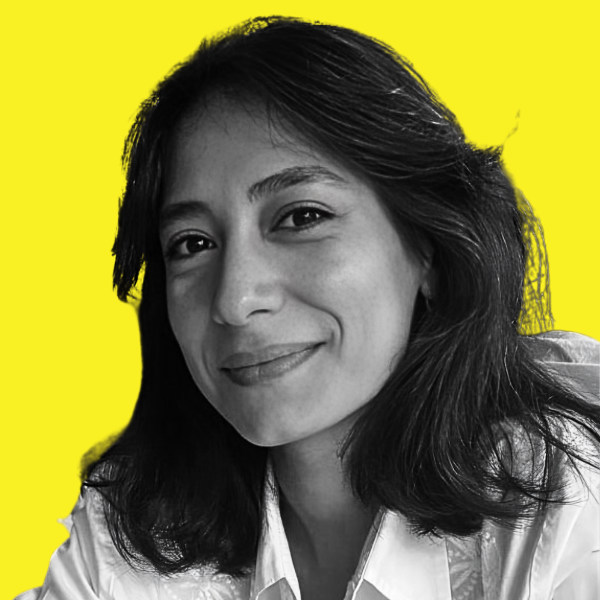
Body, Memory, and Movement: Hadi Nahleh in Conversation with Ibrahim Nehme
INTERVIEW BY IBRAHIM NEHME
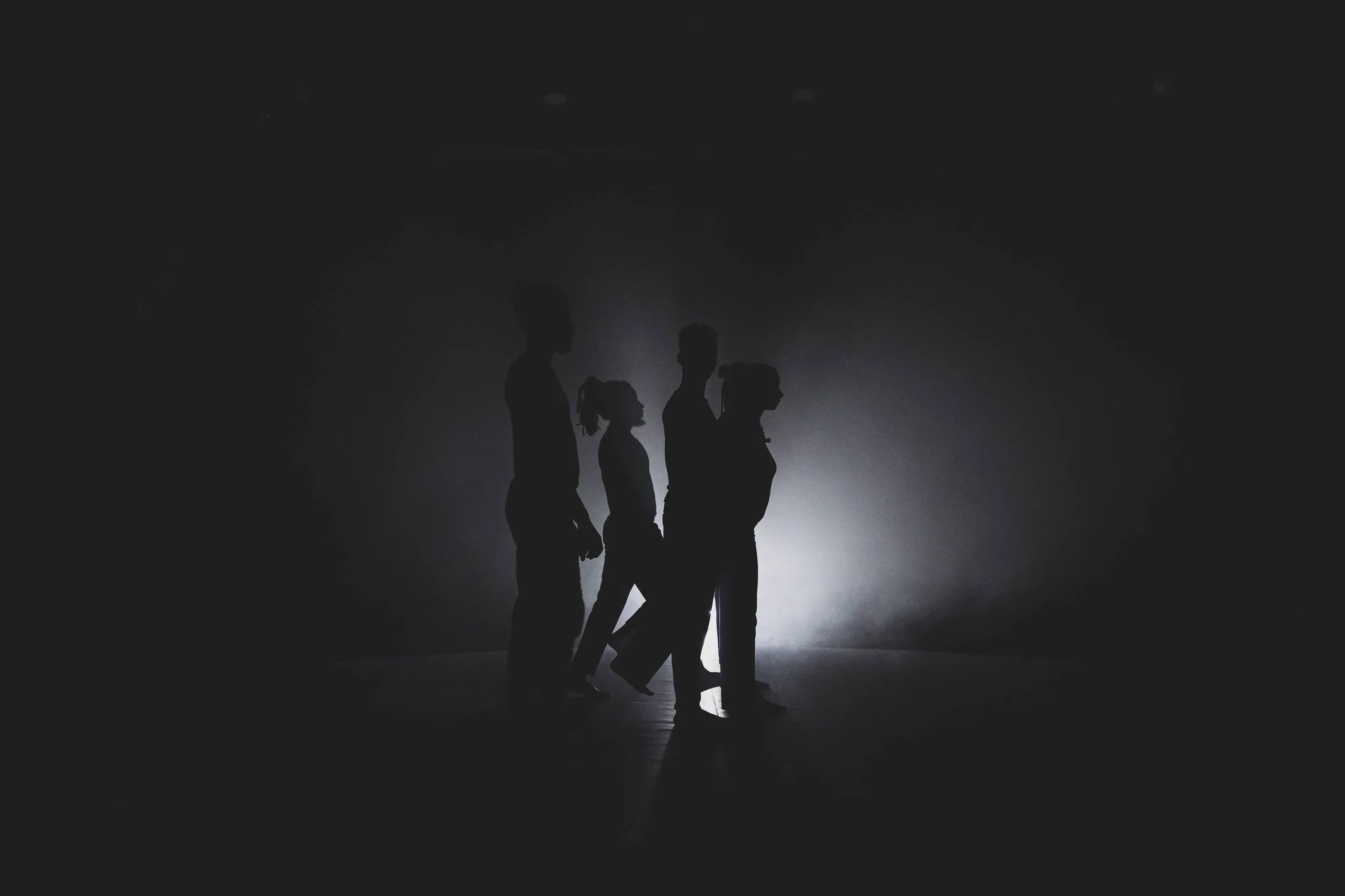
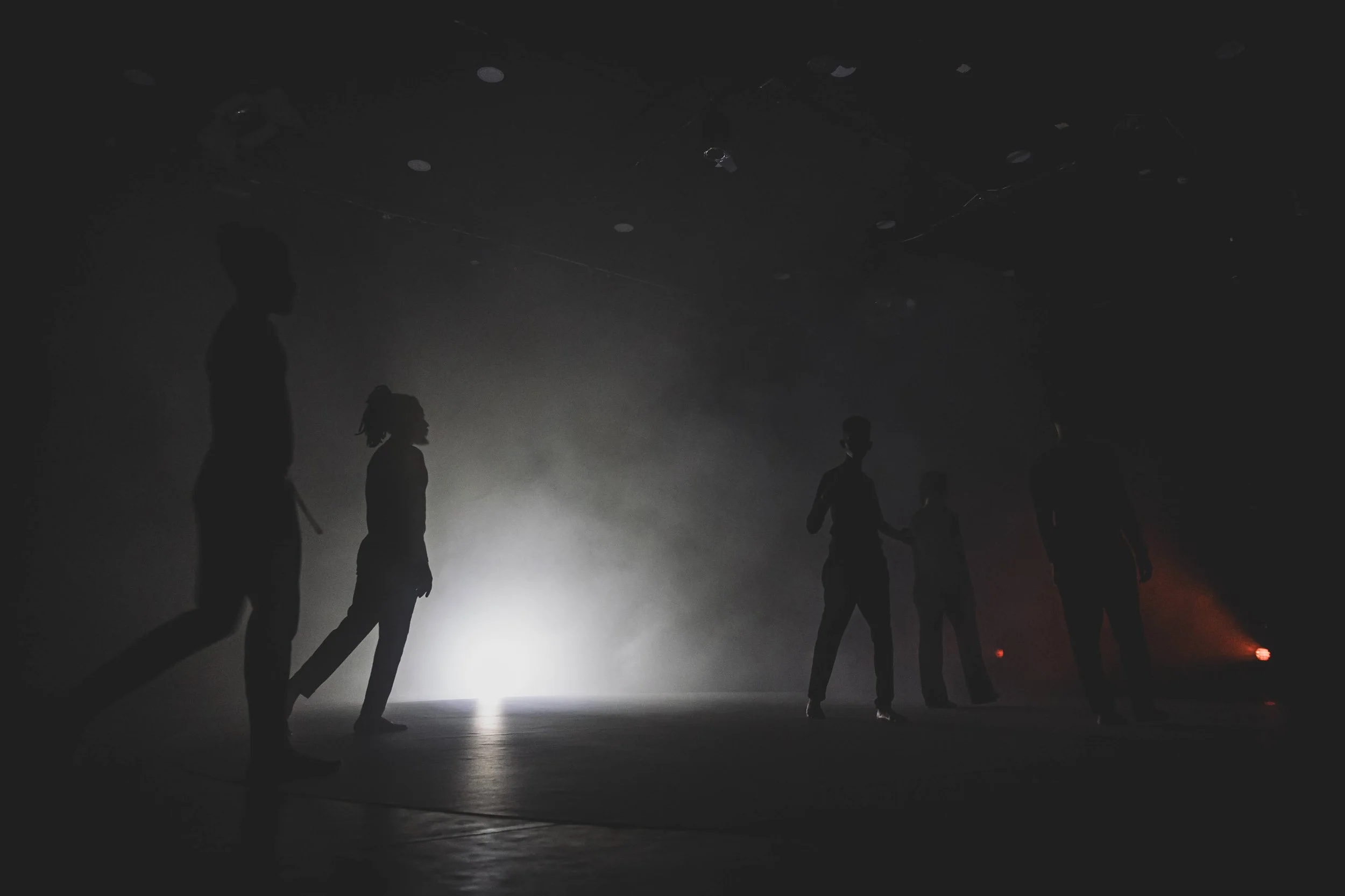
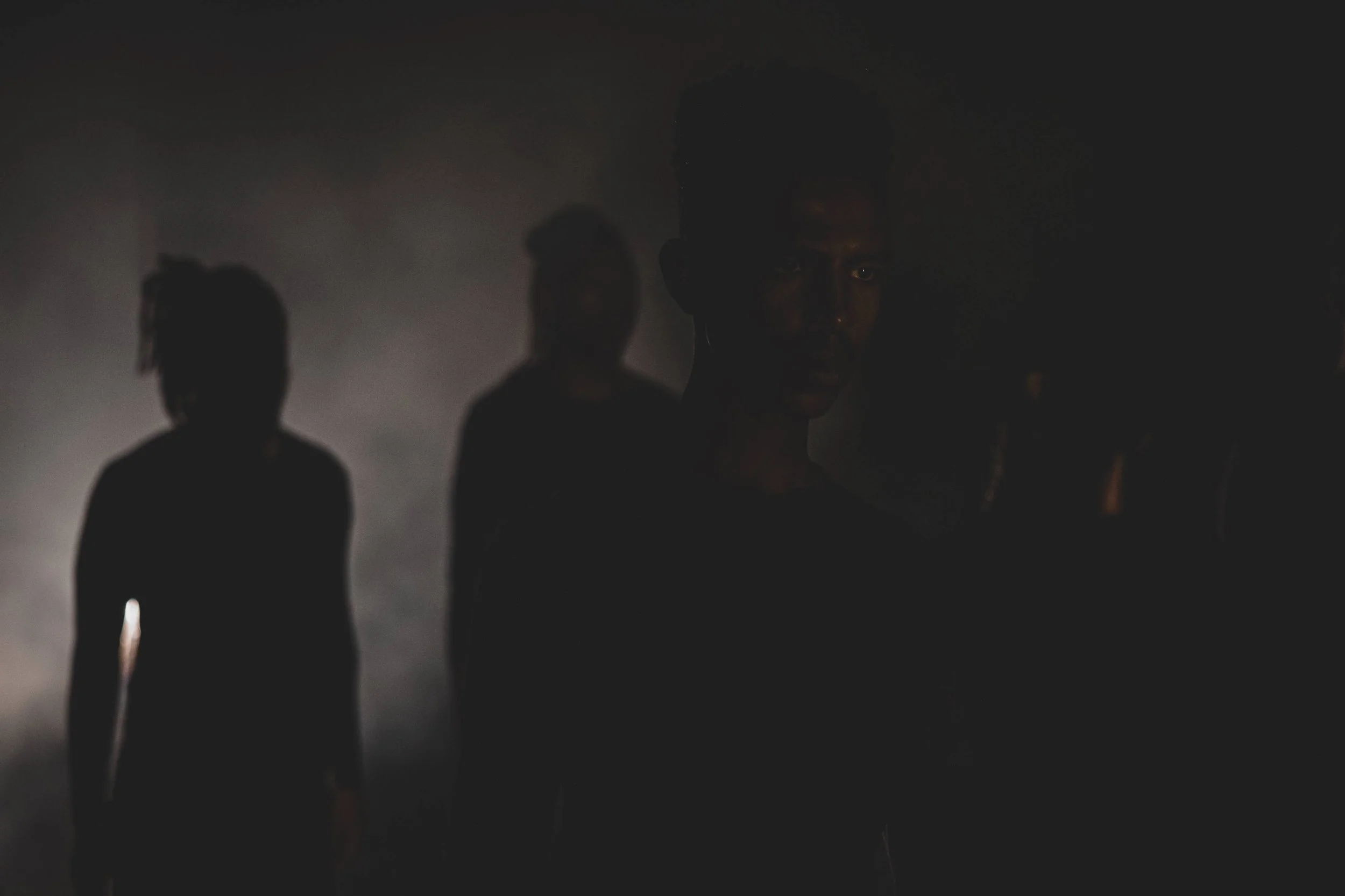
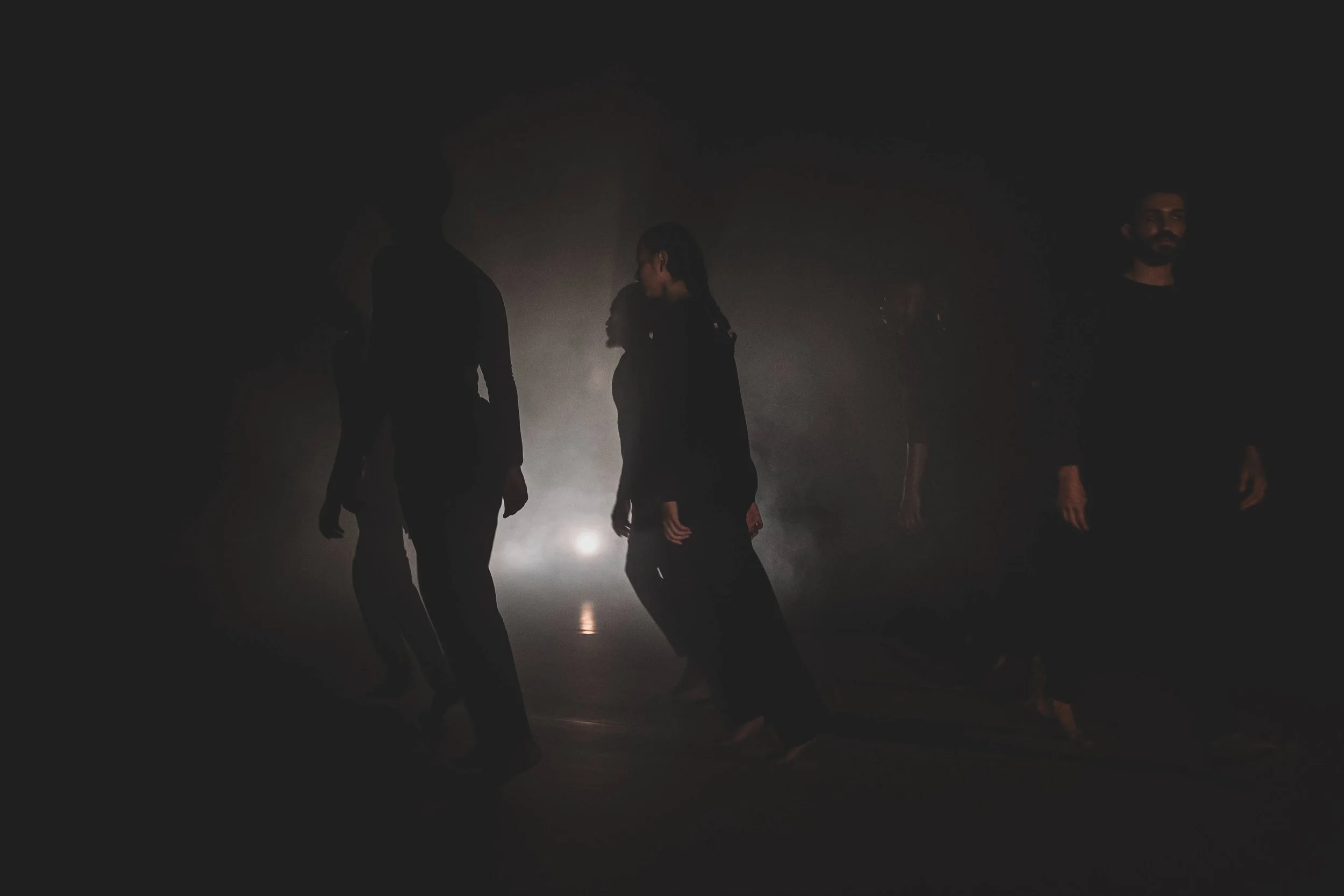
Hadi is a Jordanian curator, choreographer, and movement designer based in Amman, where he has founded Studio 8 and IDEA Festival. His practice moves between performance, ceremony, and interdisciplinary collaboration, and is rooted in an ongoing inquiry into the body as an archive, language, and site of cultural memory. Through movement, repetition, rhythm, and ritual structures, his work explores how bodies carry traces of time, negotiate social expectations, and search for forms of presence that are both intimate and collective.
Ibrahim Nehme: When did you first become aware of your body, not as something you have, but something you are?
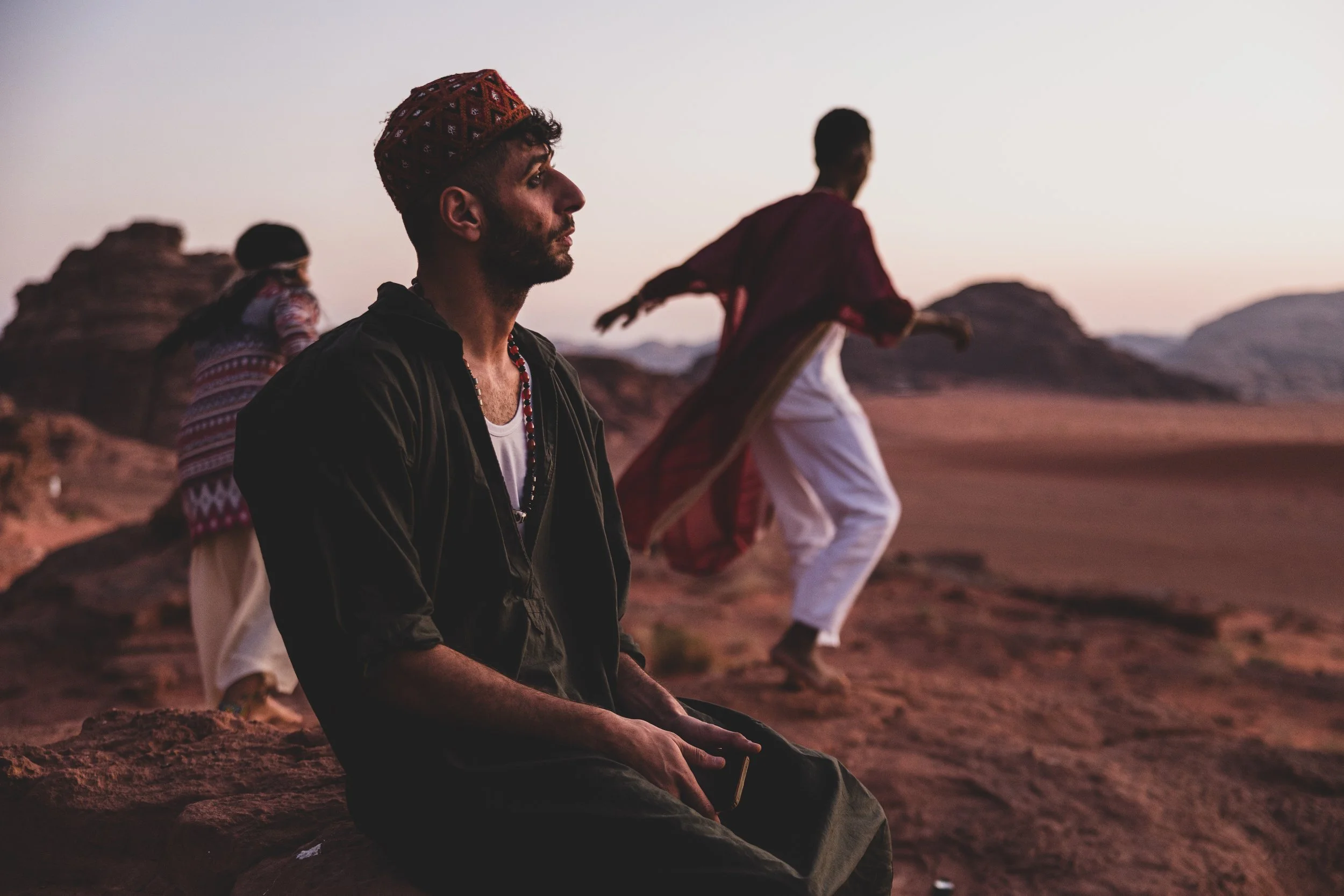
Hadi Nahleh: This awareness did not arrive as a single moment of revelation. It unfolded gradually through movement, interruption, and return. In my early years of dancing, I was deeply engaged with physical dance techniques that demanded speed, power, and endurance. At that time, I understood the body mainly as an instrument, something to train, control, and push further. Movement was something I produced. A turning point came when I suffered a neck injury while practicing and performing. It forced me to abandon the acrobatic vocabulary I had relied on and search for another way of moving. I spent months trying to reinvent my style through footwork and different physical approaches, but nothing felt convincing. Eventually, I stepped away from dance altogether. For nearly two years, I lost direction. That period revealed something fundamental to me: how essential yet fragile and delicate the body is. It was the first time I truly confronted the limits of what I had assumed would always be available to me. When I later returned to academia and enrolled in a master’s degree in cultural anthropology, my relationship with movement changed entirely. I became fascinated with habitual movement, habitus, rituals, and ceremonies. Instead of being preoccupied with dancing, I became interested in observing movement itself, how we sit, walk, gesture, hesitate, and react.
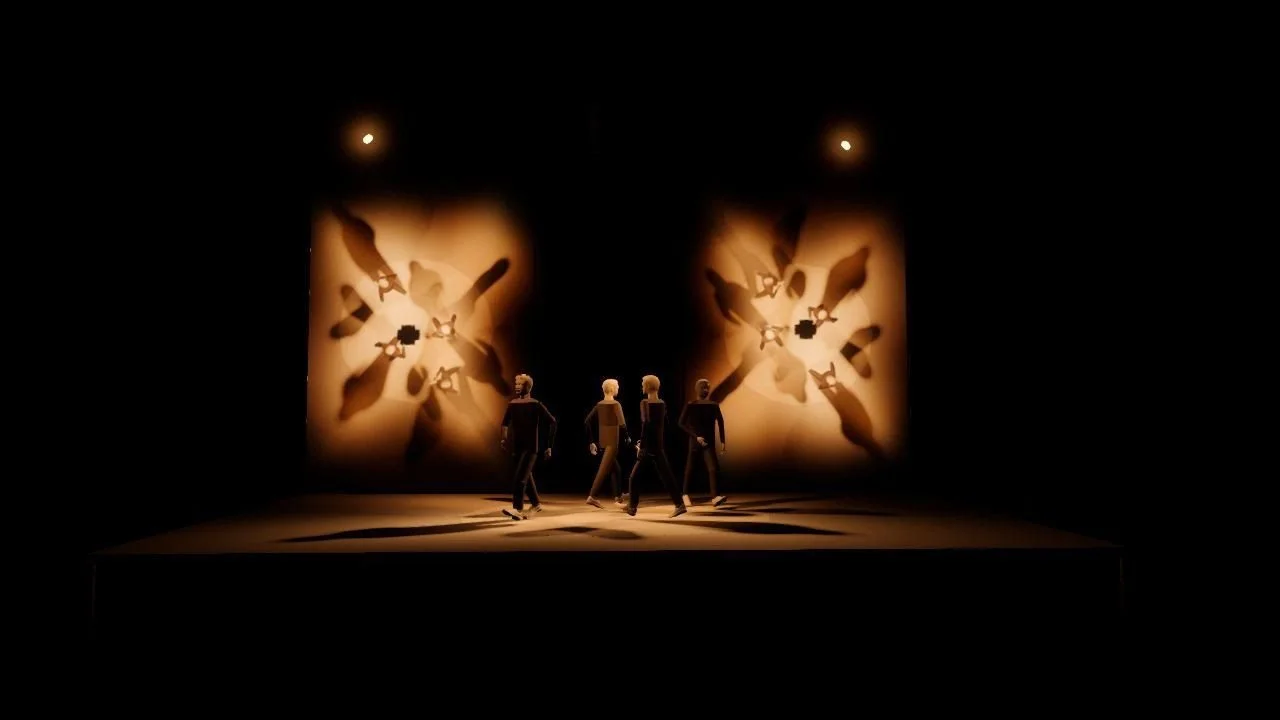
I began studying movement in its raw state, observing it, analyzing it, and eventually composing it. But composition no longer meant choreography in the conventional sense. What interested me was creating situations closer to ceremonies than performances, structures in which movement could reveal something deeper about how we inhabit our bodies. After my anthropological studies and research, another curiosity began to grow in me, one that still accompanies me today. I often find myself wondering how other creatures move collectively with such harmony and precision. Ants, bees, fish, birds in flight, their movements appear coordinated, almost choreographic. And yet humans, with all our awareness and intelligence, sometimes collide with each other simply while walking down a street. I began asking myself whether this difference comes from the apparent simplicity of other creatures’ movements, clearer commands, sharper direction, stronger collective intention, or whether it is our own complexity that interrupts our rhythm. In a strange way, I sometimes felt a small sense of jealousy toward that clarity. This curiosity deeply influenced how I think about the human body, its awareness, its archive of experience, its consciousness, and its physical presence, especially when bodies move together in masses. Through this process, I began to understand that the body is not something we simply possess. It is the ground where experience accumulates, where memory, culture, and time become physical. Becoming aware of the body, then, is not a single discovery. It is an ongoing negotiation with what we are.
IN: What does your body remember that your mind has forgotten?
HN: The body remembers differently from the mind. Where the mind organizes experience into stories and explanations, the body stores impressions, tensions, rhythms, and sensations that remain long after the moment itself has passed. Some of these memories come from training and discipline. Years of movement practice leave patterns in the body, ways of standing, breathing, and responding to space. Even when I am not consciously thinking about them, they continue to shape how I move. But the body also remembers through emotions and relationships. Encounters with people, moments of intimacy or tension, often leave traces that the mind cannot easily articulate. The body carries these experiences quietly, sometimes revealing them only through small gestures, hesitations, or shifts in posture.
I am also deeply affected by sensory experiences. What I see, hear, smell, taste, or touch can leave strong physical impressions. Loud sounds, violent scenes, or even an unbalanced smell can trigger reactions in my body that linger for days. In many cases, these sensations are registered without conscious intention, entering the body’s archive almost automatically. Collective rhythms also leave a deep imprint on me. Crowds, dance circles, and rituals create moments in which individual bodies begin to synchronize. Something emerges there that is larger than the individual will. The body recognizes these patterns of collective movement in ways that the mind may not fully grasp.
IN: Who has tried to discipline your body, and how did you respond?
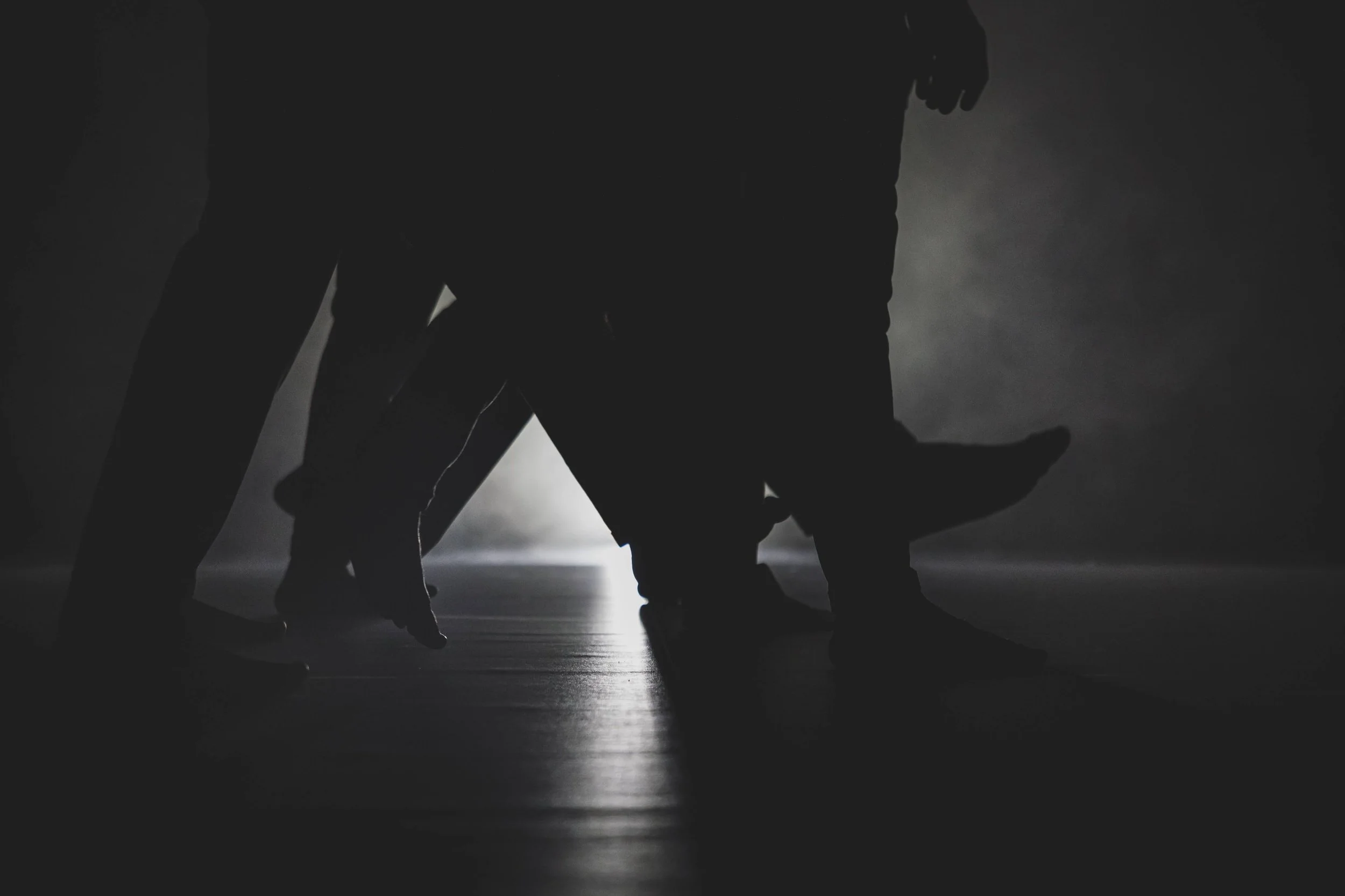
HN: Society has certainly tried to discipline my body. In Jordan, as in many places in the Arab world, the male body carries a strong set of expectations. There is almost a blueprint of how a man should behave, move, speak, and occupy space. From a young age, these expectations are communicated clearly, sometimes explicitly, sometimes silently. Choosing a path centered around the body and movement was therefore not simple. In my early years of practice, I often felt as if I were living a double life, almost inhabiting two bodies. One body that was socially appropriate, adapting to the norms around me. And another that was personal, curious, and hungry for discovery and expression. For many people in my context, the dancing male body is easily perceived as something that does not fit conventional ideas of masculinity. This often creates a feeling of standing slightly outside the society one belongs to. At some point, I realized that if I wanted to liberate my body, I also had to liberate the language surrounding it. Words shape perception. The term dance itself carries many assumptions in my environment. Over time I began to describe my practice differently. I am not simply a dancer. I am a performance artist. I am not a choreographer in the conventional sense. I think of myself more as a movement designer.
Institutional structures also played a role in shaping this experience. For many years, there were very few formal institutions in the Arab region dedicated to the study and development of movement-based practices. Cultural production was historically more associated with storytelling, literature, sculpture, painting, or other visual forms. Within many interpretations of Arab and Islamic cultural traditions, the body has not always been positioned as a primary medium of artistic expression. As a result, working with the body often meant working without clear structures, references, or institutional support. But this absence also created a different kind of discipline, one that emerged from the ground up. A grassroots discipline rooted in experimentation, survival, authenticity, and the search for a language that could connect bodily expression with land, culture, and lived experience. In that sense, my response to discipline was not resistance alone, but transformation, turning constraint into a space for inventing new ways of moving, naming, and understanding the body.
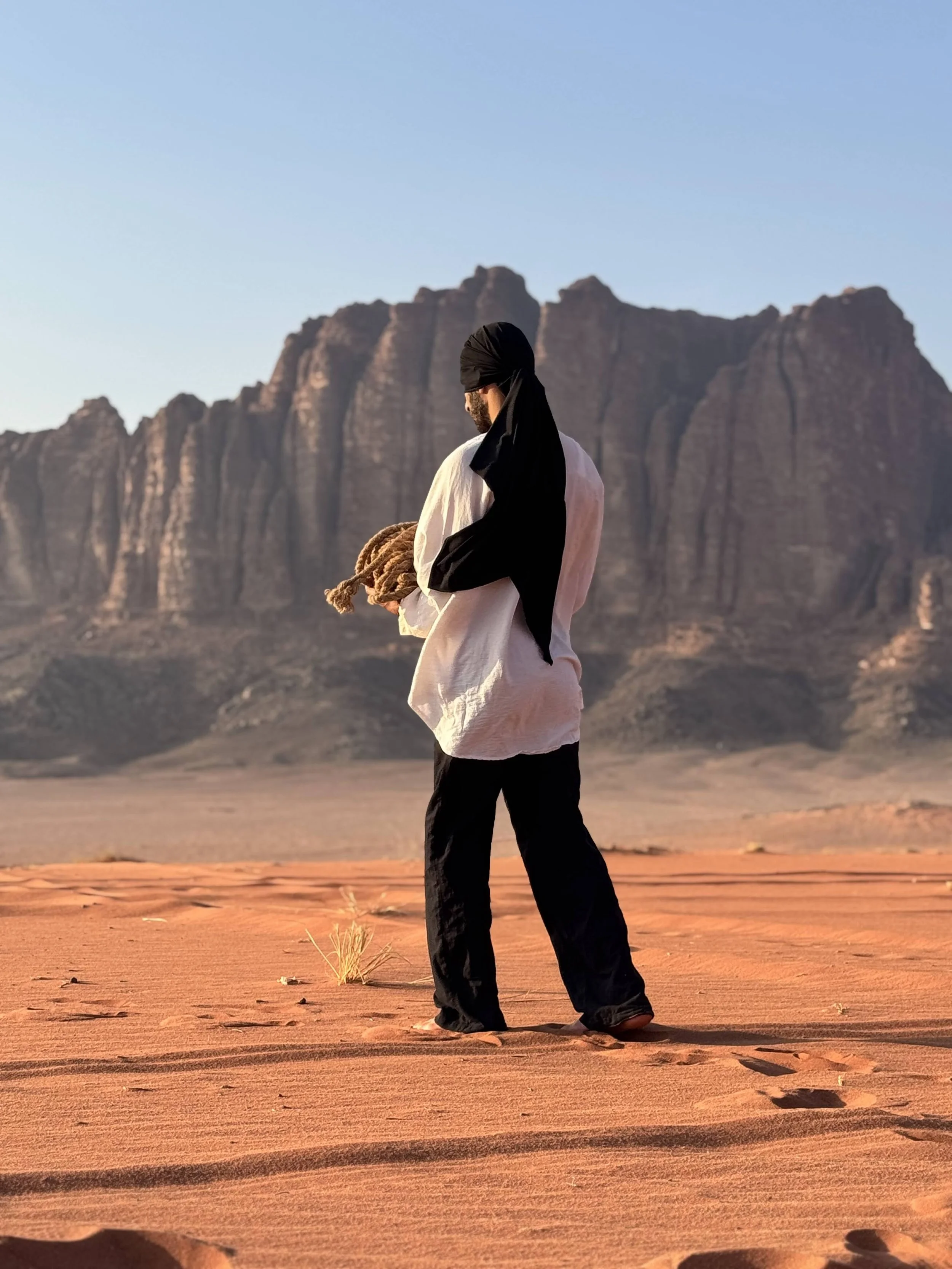
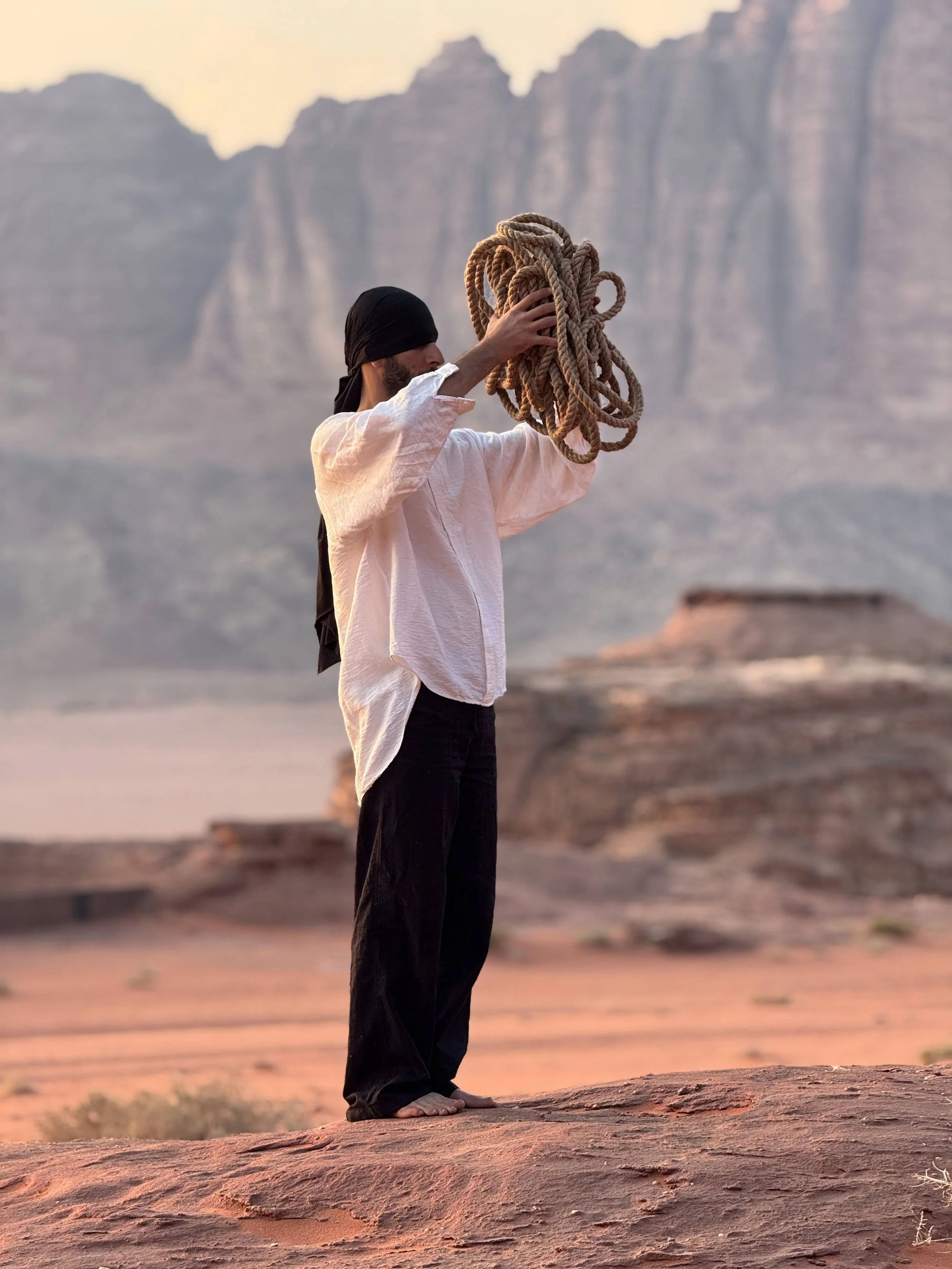
IN: How has masculinity shaped the way you inhabit your body?
HN: Masculinity has always been present as a silent framework surrounding the body. There are expectations of how a male body should stand, speak, gesture, and express emotion. Strength, control, and composure are often valued, while vulnerability or softness can easily be misunderstood. Choosing a path centered on movement and bodily expression inevitably placed me in dialogue with these expectations. The dancing male body does not always sit comfortably within conventional images of masculinity in my cultural context. Over time, I realized that my journey was not about rejecting masculinity but about understanding it more deeply and finding balance within it.
It revealed to me that both masculinity and femininity are constantly present within the body. They appear differently depending on the form, the technique, the environment, and the system of movement one is practicing. My experience in street dance, for example, was strongly masculine, driven by power, competition, and physical assertion. Traditional dances introduced another dimension, one that felt more communal and shared. Contemporary dance opened the door to fluidity and ambiguity. The ceremonial structures I create today often feel more rigid, almost genderless, as if the body is entering a space beyond these categories. Moving through these different systems allowed me to encounter multiple aspects of myself. It gave me the opportunity to explore both masculine and feminine energies within the body and to search for a balance that feels honest to my own physical and emotional landscape. In that sense, inhabiting my body as an artist has become a continuous process of listening, trying to understand how these different forces coexist, and how they can be expressed in ways that remain truthful to the body and the soul.
IN:How does your body change when it is watched?
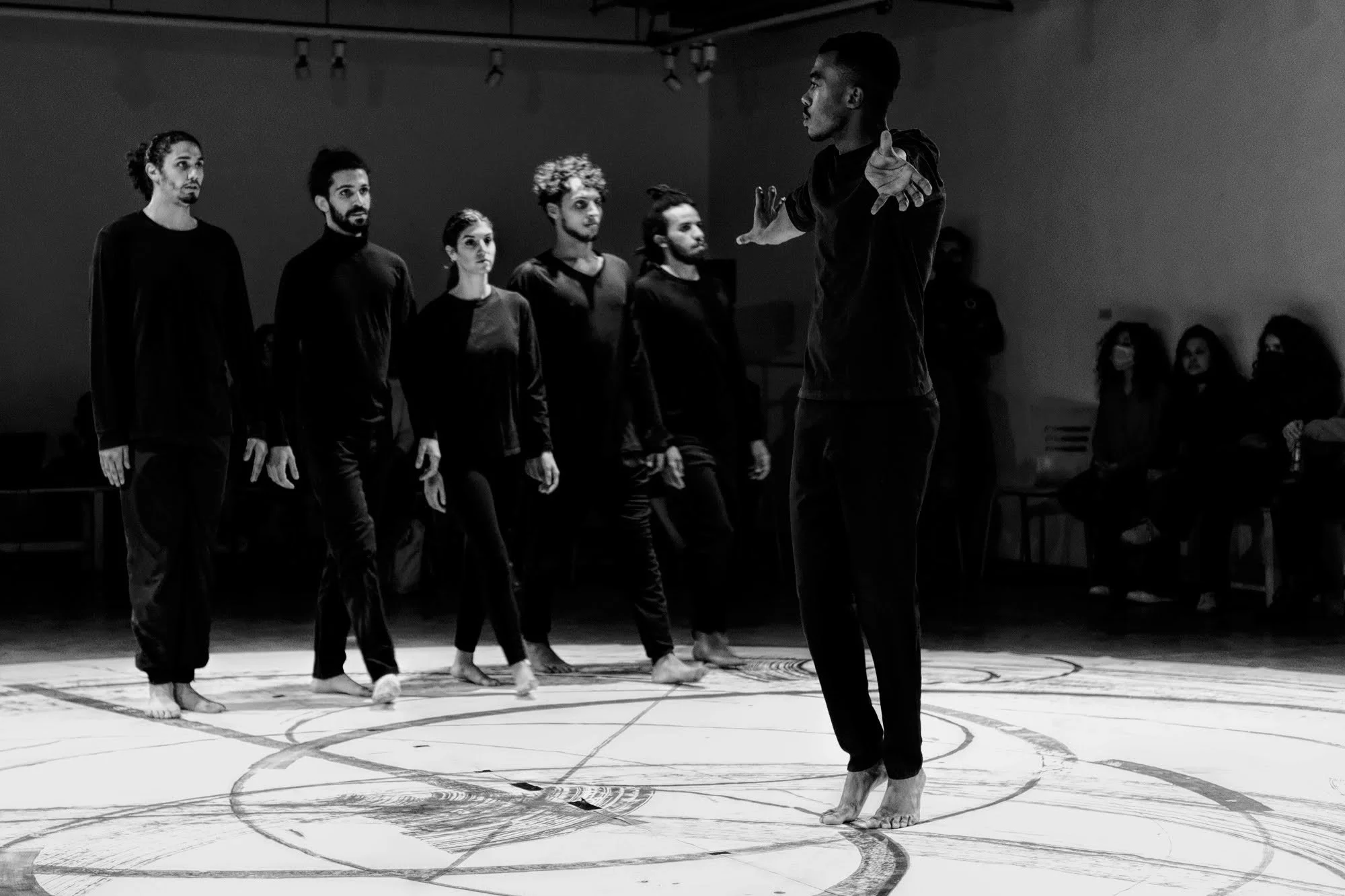
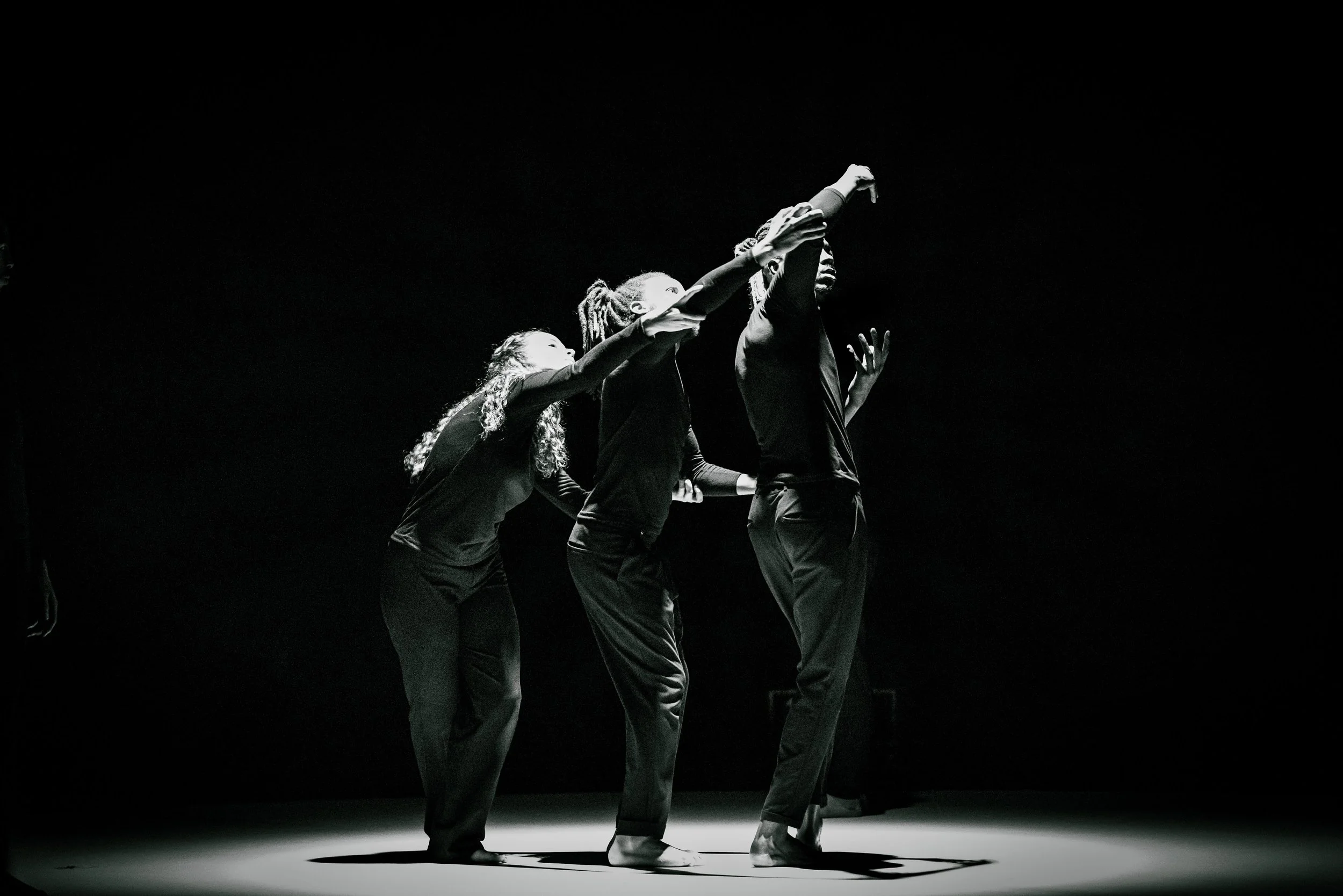
HN: I chose to reveal my body partly because verbal communication has never been my strongest language. Since childhood, speaking in front of others has not come naturally to me. In a way, my throat was never the center of my expression. The body became another language through which I could articulate ideas, emotions, and questions. Not because it is easier than speaking, but because movement occupies its own time and space. When a body moves, it creates a form of communication that is difficult to interrupt. Those who choose to witness it can either stay and engage with it or simply leave. Yet the presence of the gaze always changes the body. I remember a moment in the middle of my choreographic career while performing one of my works with seven other male dancers on stage. In the middle of the performance, my knees began to shake uncontrollably, almost hitting each other as if they were trembling. I found myself wondering, at that very moment, why this was happening after so many years of performing.
For a long time, I believed that I moved best when I forgot that anyone was watching. But the stage inevitably reminds the body of the gaze. Since that moment, my relationship to performance began to shift. Gradually, I stepped back from performing myself and became more interested in shaping performances holistically, working with text, sound, light, movement, and scenography in collaboration with other artists. When I am alone in my room and I move, I often feel extremely light, almost weightless. In those moments, movement feels peaceful and free. In front of an audience, however, the body sometimes becomes heavy, as if invisible strings were pulling on it. This tension led me to search for other states of presence. One of the reasons I began approaching my work through ceremonial and ritual structures was to access a different state of attention, a state closer to trance. In that state, the body is less occupied with the noise of observation and more connected to the flow of movement itself. Being watched, then, does not only change the body. It reveals the delicate negotiation between presence, vulnerability, and the desire to remain truthful to one’s movement.
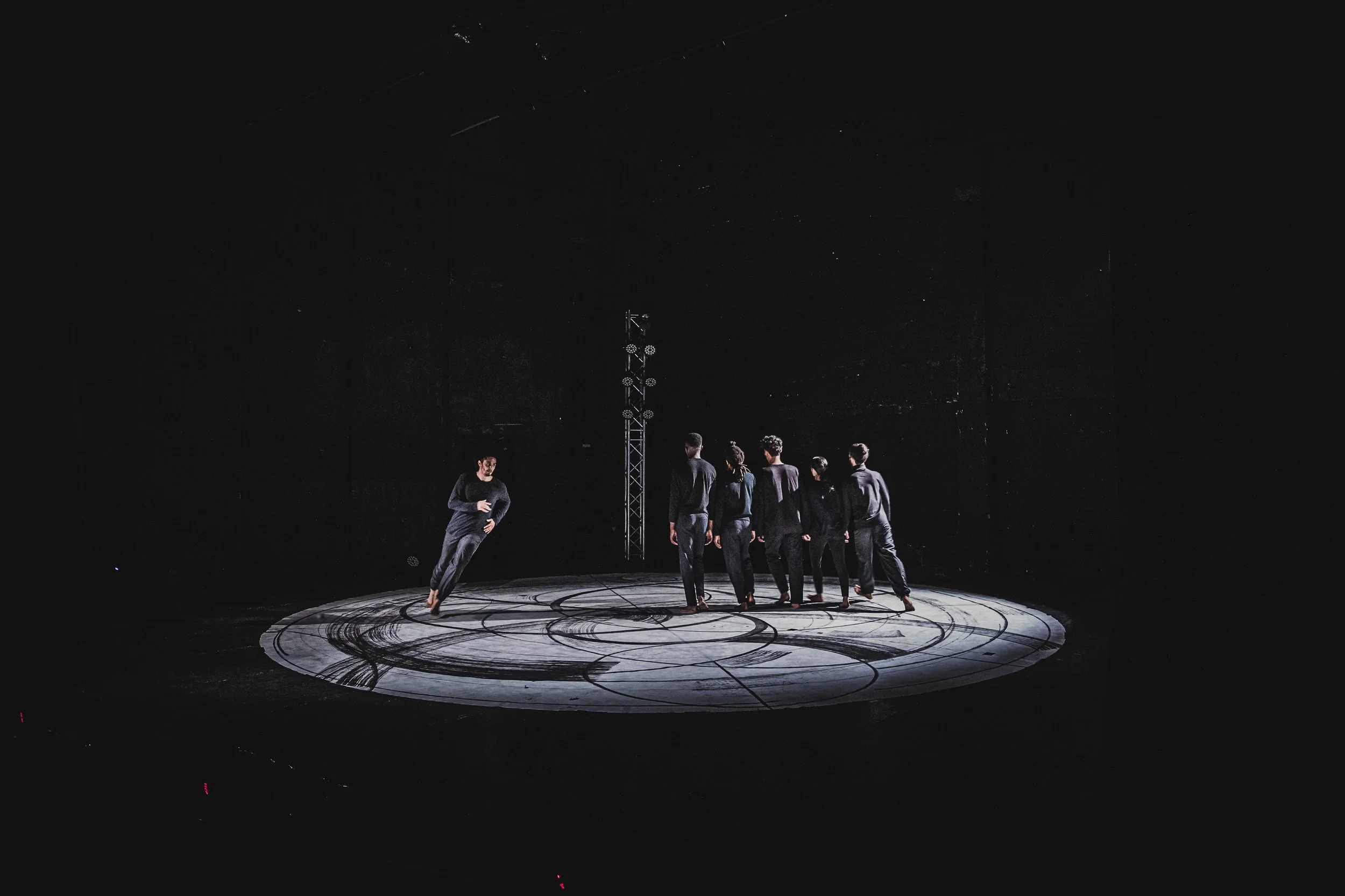
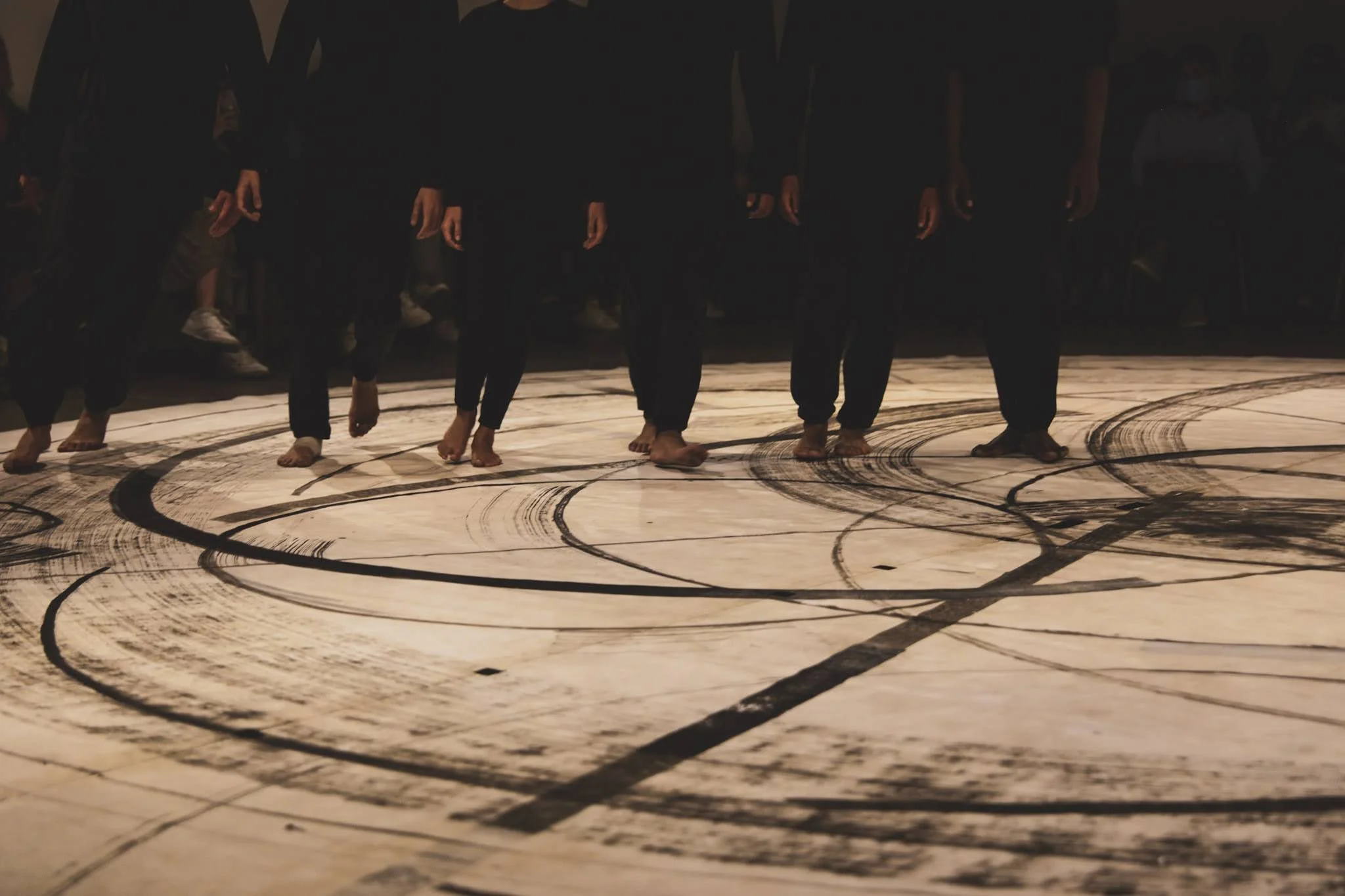
IN: Is there a difference between your performing body and your private body?
HN: Yes, there is a difference, but it is not always a clear separation. The private body is the place where movement begins without negotiation. It is curious, instinctive, and often quiet. When I move alone, at home, in a studio, or in an empty space, the body feels lighter. There is no need to justify the movement or translate it for someone else. It simply unfolds. The performing body, on the other hand, enters into a relationship with the gaze of others.
For many years, I tried to make the performing body behave like the private one, to move with the same freedom and forget that anyone was watching. But over time I understood that the stage creates a different ecology. It is not the same environment as solitude. Rather than trying to erase this difference, I became interested in negotiating it. In my work, I often design situations, through rhythm, repetition, or ritual structures, that allow performers to enter a state where the boundary between private and performing body becomes more fluid. The aim is not to eliminate the gaze, but to create conditions in which the body can remain truthful while being witnessed. In that sense, the performing body is not simply a version of the private body exposed to others. It is a transformation, a state that emerges through the negotiation between authenticity and observation.
IN: What happens when the body refuses you, through injury, exhaustion, or doubt?
HN: In my experience, the body’s refusal can be one of the most disorienting moments in a person’s life. I have encountered this refusal in different forms. At times, it led me into difficult states, moments of deep uncertainty, an identity crisis, and a sense of separation from the direction I thought I had. And yet, these moments also shaped the path I follow today. Injury, for example, forced me to reconsider the way I move. It shifted my interest away from virtuosic physicality toward something more humble and raw. I began searching for a physical language that was more honest to my mental and bodily conditions, a movement that emerges from the body’s reality rather than from the desire to impress.
Exhaustion, on the other hand, has often been an invitation to pause. It slows the body down and creates space for reflection. Sometimes it is simply a reminder that movement cannot always be continuous. Doubt can be even more complex. There was a period in my life when doubt led me to step away from dance entirely for almost two years. During that time, I felt as if I had lost part of my identity, my sense of direction, my passion, even parts of my personality. Returning was not immediate. It required time and patience. Today, I try to listen to these moments differently. When the body stops, I no longer see it only as failure. Sometimes it is simply a signal that something needs to shift. I create only when there is a concept or a feeling that genuinely compels me, something that I feel the need to crystallize into a structure of movement. When that impulse is absent, I allow the pause to exist. In that sense, the body’s refusal is not always an end. Sometimes it is the beginning of another direction.
IN: If your body had a mother tongue, what would it be?
HN: It would probably be a language closer to rhythm than to words. A language shaped by repetition, patterns, and cycles, something almost mathematical in its structure. Movement often reveals a quiet logic, gestures returning, rhythms organizing space, bodies responding to invisible structures. At the same time, it would feel ritualistic. A language that connects the body to something older than the individual self. Many movements that feel most truthful to me carry a sense of continuity, as if they belong to a much longer human memory. In that sense, the body’s language feels both ancient and immediate, almost primitive yet deeply present.
It would be a set of vocabularies and grammars that are not heard but sensed through different faculties of perception, through rhythm, weight, breath, and the subtle awareness of bodies sharing space. This language is not spoken, yet it is understood. Perhaps that is why movement can travel so easily between people who do not share the same spoken language. The body speaks through rhythm, repetition, and presence. So if my body had a mother tongue, I imagine it would resemble a quiet ceremony, mathematical in its precision, ritualistic in its structure, and universal in its reach.
IN: What cannot be said except through movement?
HN: It would probably be a language closer to rhythm than to words. A language shaped by repetition, patterns, and cycles, something almost mathematical in its structure. Movement often reveals a quiet logic, gestures returning, rhythms organizing space, bodies responding to invisible structures. At the same time, it would feel ritualistic. A language that connects the body to something older than the individual self. Many movements that feel most truthful to me carry a sense of continuity, as if they belong to a much longer human memory. In that sense, the body’s language feels both ancient and immediate, almost primitive yet deeply present.
It would be a set of vocabularies and grammars that are not heard but sensed through different faculties of perception, through rhythm, weight, breath, and the subtle awareness of bodies sharing space. This language is not spoken, yet it is understood. Perhaps that is why movement can travel so easily between people who do not share the same spoken language. The body speaks through rhythm, repetition, and presence. So if my body had a mother tongue, I imagine it would resemble a quiet ceremony, mathematical in its precision, ritualistic in its structure, and universal in its reach.
IN:What does freedom feel like physically?
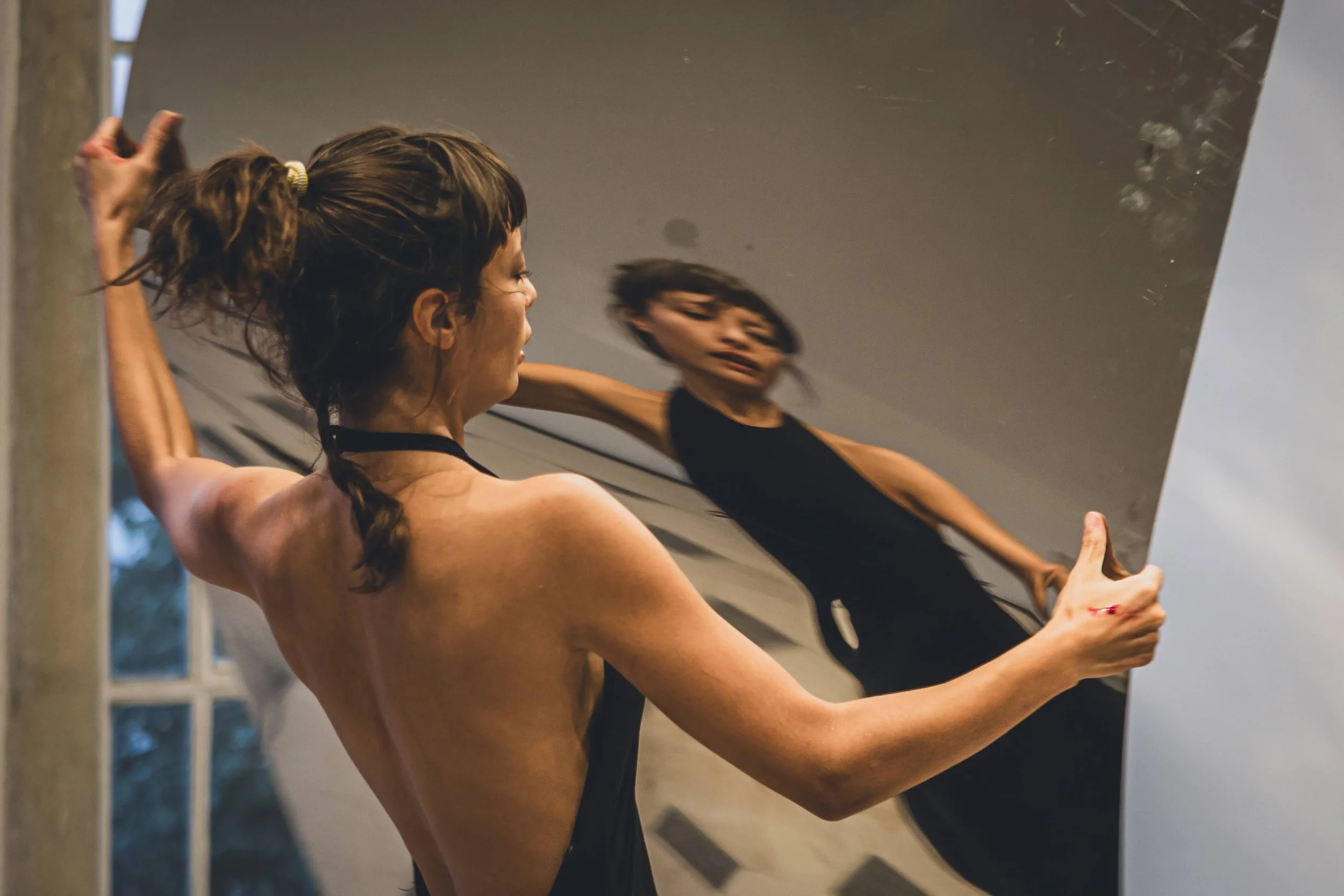
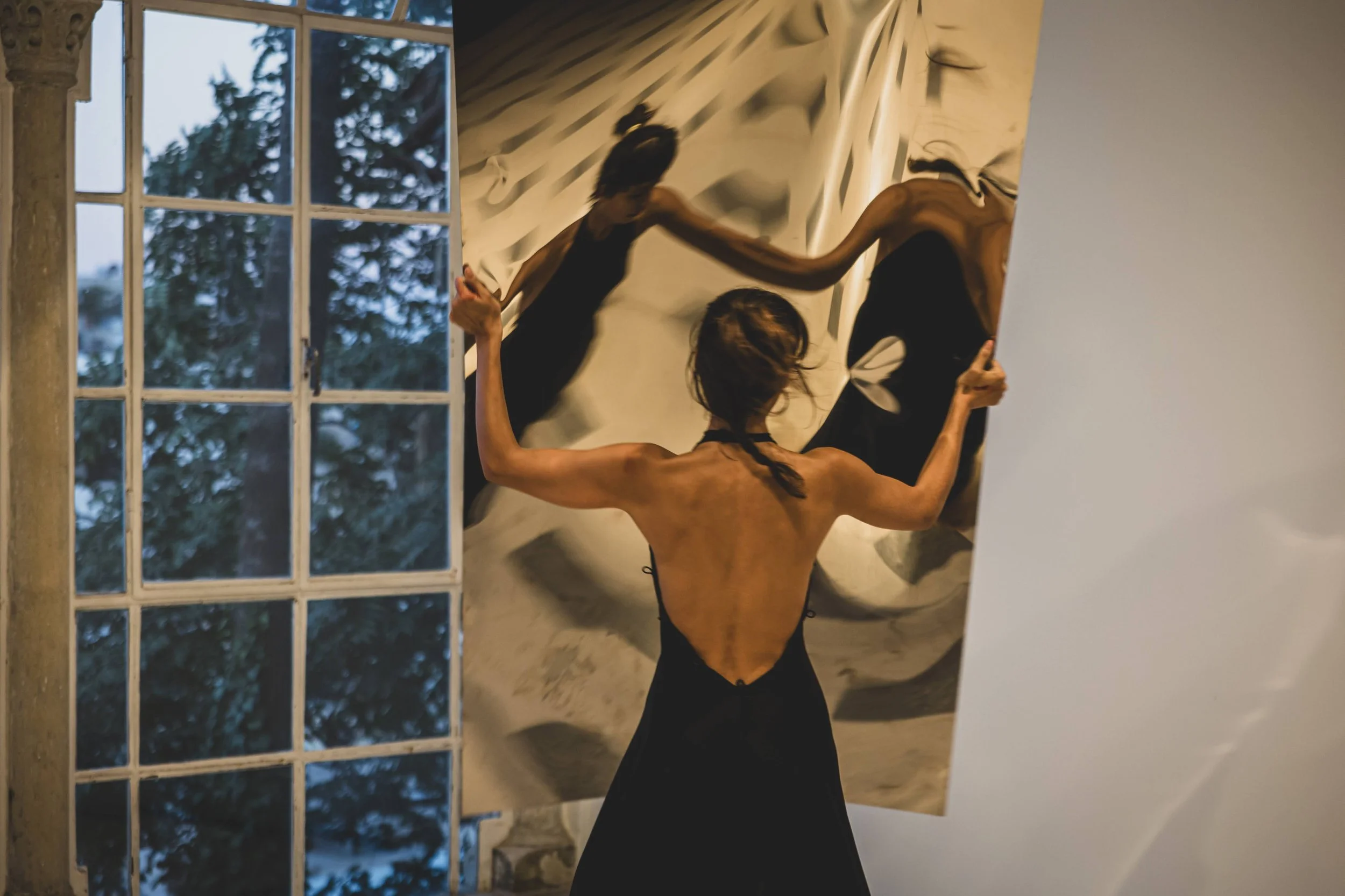
HN: For me, freedom often appears through simplicity. The simpler my movement becomes — less intention, fewer ideas, fewer expectations, fewer justifications — the closer I feel to freedom. When the body is not overloaded with meaning or pressure, movement becomes clearer and more honest. In those moments, the body moves with a certain ease. Breathing settles, gestures become lighter, and the body feels less burdened by the need to prove or explain anything.
I experience this freedom most strongly when I move alone. When I move in front of one or two people, the feeling is still present. In front of a small group, it becomes slightly more fragile. And when performing in front of a large audience, the sense of freedom can become more difficult to access. Part of my ongoing practice is to keep working toward that freedom, to build resilience and strength so that the body can remain simple and truthful even under the gaze of many. In a way, my work is a continuous search for structures that support this state, simple systems of movement, simple rituals of attention, and simple ways of inhabiting the body. Because in simplicity, I often find the closest sensation to freedom.
Ibrahim Nehme is a writer, editor, and cultural organizer based in Beirut. He is the Director of Beirut Art Center and the founding editor of The Outpost magazine. His work moves between curating, publishing, and collective imagination, exploring how art can open portals toward more livable futures. Across his projects, he is committed to practices of creativity, care, and community-building that nurture new possibilities for cultural life.