Khaled Khalifa, the Body and the Arab Dark Enlightenment
words by Usman Butt
“I felt my body to be a dark vault, damp and crawling with spiders,” says our main character on her path towards radicalization and war. An unnamed teenager with angst against her own body that is unlike normal adolescent anxieties around body image. For her, the body is both her jailer and a representation of the oppressive state of the world around her. In Praise of Hatred, by Syrian novelist Khaled Khalifa, tackles one of Syria’s greatest taboos and traumas before the 2011 Arab Spring.
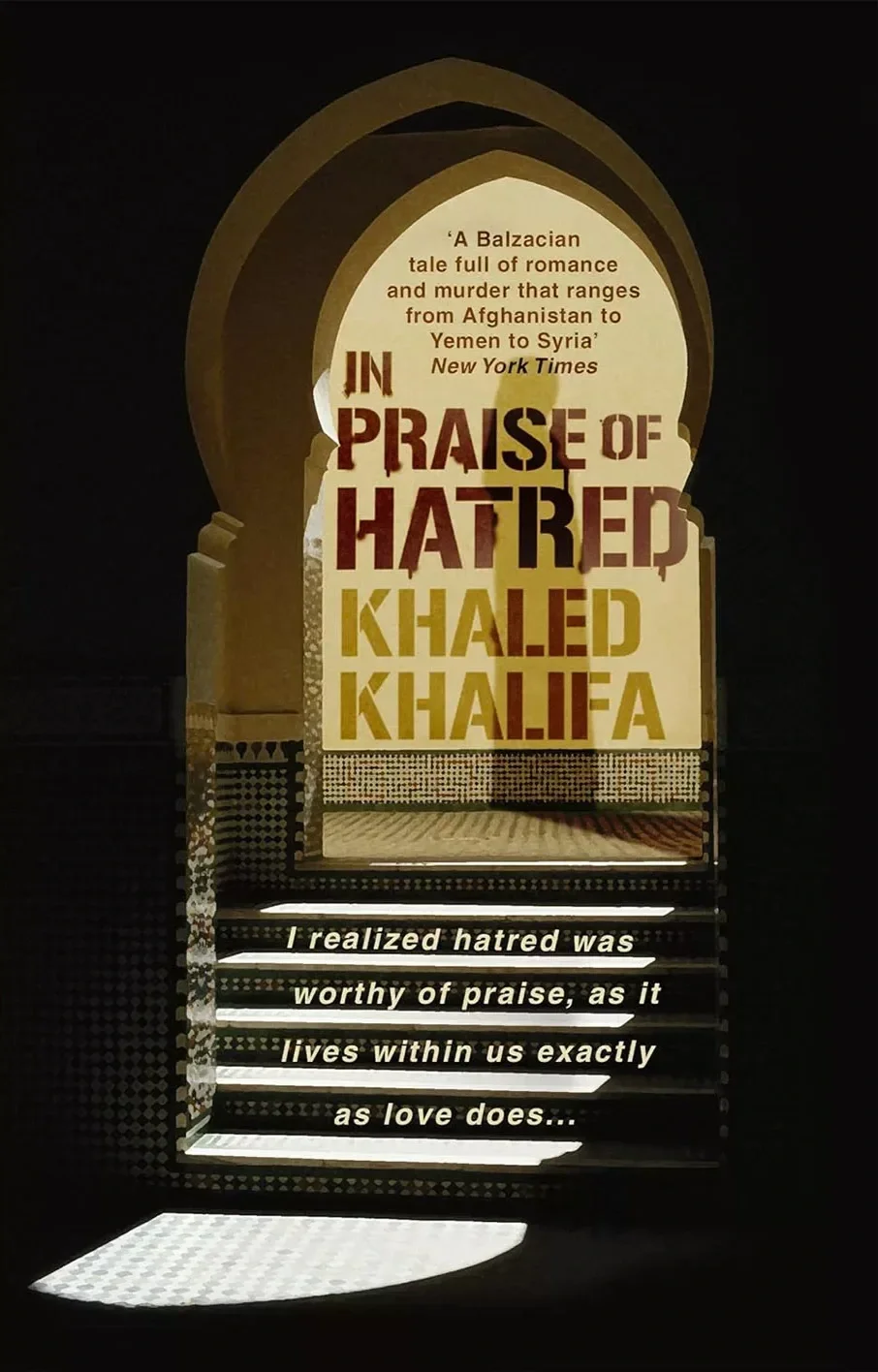
Published in 2006 and distributed secretly in Damascus, the novel deals with the 1982 Hama massacre, where Syrian governmental forces crushed an Islamist insurrection and then went on to kill an estimated 40,000 people according to the Syrian Network for Human Rights. Rarely openly discussed and referred to ambiguously as the “ahdath” or events, Khalifa explores the meaning of the trauma through the prism of a young adult in Aleppo.
The relationship to her body as well as emotions is not just about the character’s personal experience; the body is both a metaphor and a vehicle for exploring Syria’s history and a sense that something has gone wrong. Using the body to explore socio-political commentary on the ills of the age is not unique to Khalifa’s novel, but is in fact part of an Arabic literary tradition stretching back as far as the 19th century.
A second key feature of the novel is the role rage plays, while Syria’s Sufi-influenced traditions place a lot of emphasis on the role of love as a social glue. In Praise of Hatred shows us that hate can also bind us together. While in the West, our present age is labelled as the “age of feelings” as opposed to the enlightenment model of “the age of reason” shaping our politics, this separational intellectual model does not occur as neatly in the Arabic-speaking world. While the Arab World did experience its own enlightenment—which was very much connected to the European one—Arab thinkers still thought about the enlightenment through the body and emotions. In Praise of Hatred taps into this tradition to explore the “events”.
“Hatred bewilders me like love bewilders a lover.”
The Body of the Novel
The novel takes place in Syria’s second-largest city of Aleppo, which acts partly as a stand-in for Hama, but also represents the complex layers of Syrian society due to its diversity. We experience the city through the character, who sees two cities. The walls of her home are one kind of Aleppo, a place where she could feel secure. “The smell of the ancient cupboard made me a woman obsessed with bolting doors and exploring drawers.” But for all the wonders of home, there was another Aleppo, which made her feel insecure and hostile.
The school yard physically represents the dividing line for our character. She is part of a group of veiled girls who wear black shapeless clothes, known as the penguin club, and are led by a girl named Dalal. Dalal reminds the girls that “women were animated dirt.” As our character goes through her personal journey, her sense of self-loathing intensifies. Her aunt Safaa had warned her that the body was “filthy and rebellious”, which our character internalizes and informs us, “I began to guard myself against this rebellion named body. I obdurately hated my incipient breasts.”
On the other side of the school yard were other kinds of girls, who aroused disgust among members of the penguin club. “When I saw uninhibited girls undoing their bras and showing off their cleavage to the breeze and the sun in the small square or for the titillation of the young men crowding around the entrances of the girls' school, I felt rage at their filth.” The physical space of the school, usually thought of as a kind of sanctuary from the outside world, to our character represents a threatening space to our character. What makes this space more threatening is the presence of Mukhbarat men (members of the Syrian security forces), who pick which “uninhibited girl” to take on as a lover. The corruption of Syrian society is on display in this school’s courtyard.
What adds to our character's radicalization journey is betrayal. Ghada, a member of the penguin club, switches sides and befriends the group’s nemesis, Nada. Nada wears commando camouflage suits, marches and shouts, and regularly gets into the cars of Mukhbarat men. Wearing military fatigues at school was a common feature in Syrian schools in the 1980s and 1990s. The Nada archetype is recognizable to Syrian readers who went through the education system during that time period. Ghada unveiled and joined the other side when our character tried to get her to repent. Ghada merely remarked, “You haven’t tasted happiness yet.” Our character misses her deeply, despite her words, “she [Ghada] smelt like a corpse.”
The atmosphere inside Aleppo becomes intense, and our character describes the desire for martyrdom as her uncle brings her into an Islamist fold. “All I wanted was to become a martyr borne up by white birds, pure, sins forgiven, to that paradise.” Her group embarked on a campaign of assassinations of government officials. “By the end of the summer, hatred had taken possession of me. I was enthused by it; I felt that it was saving me. Hatred gave me the feeling of superiority I was searching for.”
The government attacks and lays siege to Aleppo, and the environment only intensifies our character's sense of rage. The shrinking social circles, claustrophobia and war environment make our character denounce her own father as an apostasy, for his praise of people from other sects and friendships with Syrians from different backgrounds, all of whom our character sought to eliminate as part of the war plan. She says of her father, “I was saddened to the core when I imagined him going to hell.” After he leaves for Beirut and our character declares that memories of his sweet face fade, this represents a clear generational rupture between two different experiences of Syrian history.
Our character is eventually arrested by the regime and imprisoned. Prison saw new pain inflicted on her body, “The scars from their whips, electrodes and cigarettes would remain as tattoos, which even henna patterns couldn’t hide. In later years, whenever I uncovered them and stood in front of the mirror, I realized that hatred was worthy of praise, as it lives within us exactly as love does. It grows moment by moment to settle finally in our souls, and we don’t want to escape it even when it causes us pain.” Her release from prison sees our character’s life take on a new direction, but only if you read the Arabic edition of the novel, as the English version deletes the last chapter from publication.
In the Arabic edition, our character makes her way to London, where she is now free of her black veil, and walks the streets from bar to bar with a new sense of power and carelessness. A sexually liberated woman, yet she still doesn’t feel free as the novel concludes, “Alone, I went back to central London. Darkness settled, and I still felt the numbness in my feet and in my body. Alone, I look for the pictures of the dead so I may exchange them with others like an ugly virgin lizard.” The feelings of bodily displacement carry on no matter how our character tries to project herself outwardly. One of the purposes of the novel is to explore the clash of the fundamentalists as a bodily experience between two gangs, supporters of the Assad regime and the Islamist insurrection. Despite differences in appearance, both are bound by the same hatred, which is felt deeply within the body itself.
An Arabic Literary Tradition
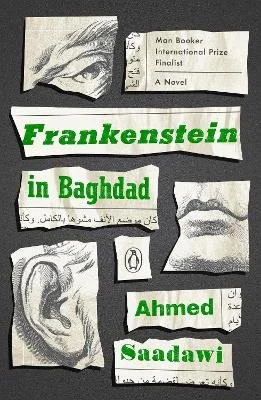
Exploring politics through the body is not unique to Khalifa, we can think of the Iraqi novel Frankenstein in Baghdad by Ahmed Saadawi, where following the 2003 US invasion of Iraq, a junkyard dealer named Hadi Al-Attag collects body parts from different people killed in suicide bombings and stiches them together and names the newly formed being “Whatitsname”, who seemingly comes to life and seeks to avenge their killings by killing those responsible.
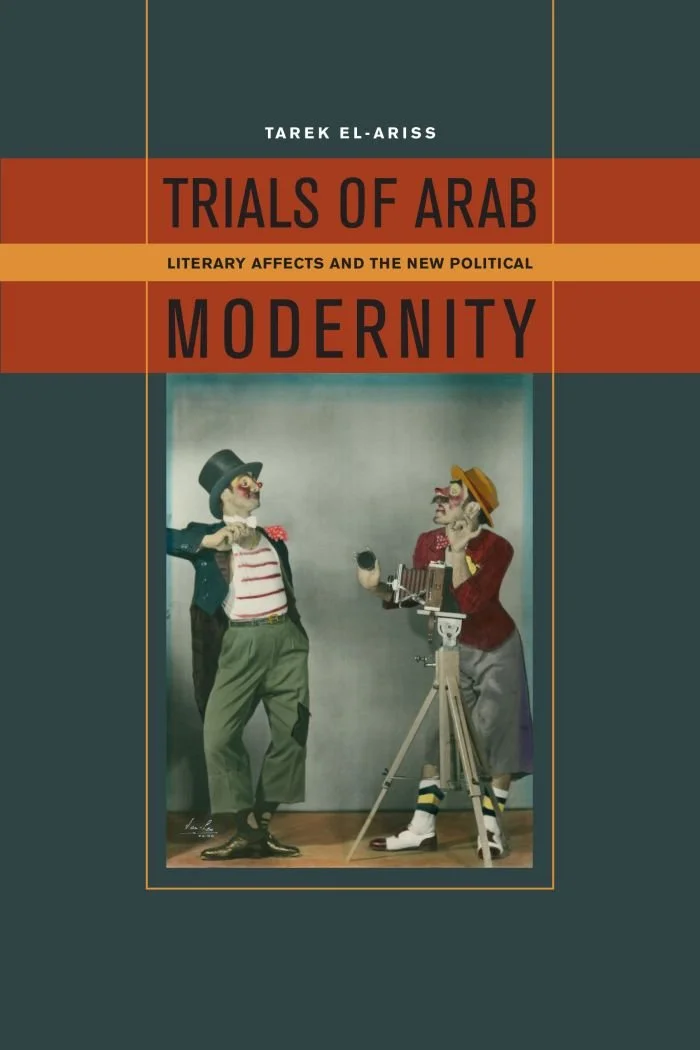
Middle East Studies professor Tarek El-Ariss argues in his book Trials of Arab Modernity: Literary Affects and the New Political Modernity, that Arab writers experienced the enlightenment not as purely a rational process as was the case in Europe, but also as a physical and emotional change. El-Ariss looks at the work of exiled Arab thinker Ahmad Faris Al-Shidyaq, who in 1863 published his account of living in England and France for nine years. While Al-Shidyaq is full of praise for European modernity, he cannot reconcile the civilisational accomplishments of Great Britain with its dull and unhealthy food. The cuisine makes him sick, and it's like his body is rejecting European-style modernity.
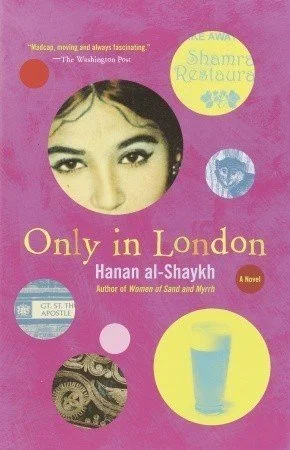
Later literary developments explore sexuality as a site of resistance to homogenizing trends of modernity. El-Ariss looks at Lebanese novelist Hanan Al-Shaykh's novel Only In London. London, which is supposed to represent freedom and modernity, becomes a place where Arabs can freely explore themselves, only to find themselves restricted in different ways. This can be seen clearly through Samir, a married and gay Lebanese man, who views his move to London to be where he can finally realize his same sex desires. However, Samir, who oscillates between mental states, has trouble deciphering British society and how to achieve his romantic conquests. Seeing an advert for an HIV clinic with two men kissing, Samir wrongly assumes it's a brothel and is left confused when he turns up at a clinic and is questioned about his sexual activities by the receptionist. This forces Samir to question the English approach to sex and induces rage within him; he starts to see England as too rigid and pines for the greater sexual freedom of Lebanon in his imagination.
All of these books showcase the different ways politics is felt in the body and mind. Many people today who are not directly caught up in global events but who care deeply about what is happening often describe having a physiological reaction or feeling the weight emotionally and physically. This two-century-old Arabic literary tradition may help them explore these feelings and articulate the ways the body keeps score, as well as help them understand and make sense of the history unfolding around us. Khaled Khalifa’s novel offers us this insight and perspective on the Syrian experience of trauma and exile. No nation can recover until it makes sense of its demons, and these demons show up everywhere.
About the author:
Usman Butt is a multimedia journalist, broadcaster and writer with a passion for the Arab world, art, culture and history.