Q&A with Souad Abdelrasoul
In the paintings of Souad Abdelrasoul, bodies are never fixed. Human forms merge with plants, animals, maps, and imagined creatures, unfolding into dense psychological landscapes of memory, transformation, and survival. Born in 1974, Abdelrasoul lives and works in Cairo. Trained at the Faculty of Fine Arts, where she later pursued graduate studies in art history, her practice spans painting, drawing, sculpture, and graphic design, often moving between abstraction and figuration.
Across her work, Abdelrasoul rethinks the relationship between humans and the natural world, tracing connections between the body, water, plants, animals, and the emotional weight they carry. In this conversation, Abdelrasoul reflects on the body as a site of inheritance and lived experience, speaking about childhood, motherhood, vulnerability, and the rhythms that shape her practice. She discusses painting as a space of both confrontation and care, where intuition and the subconscious gradually take visual form.
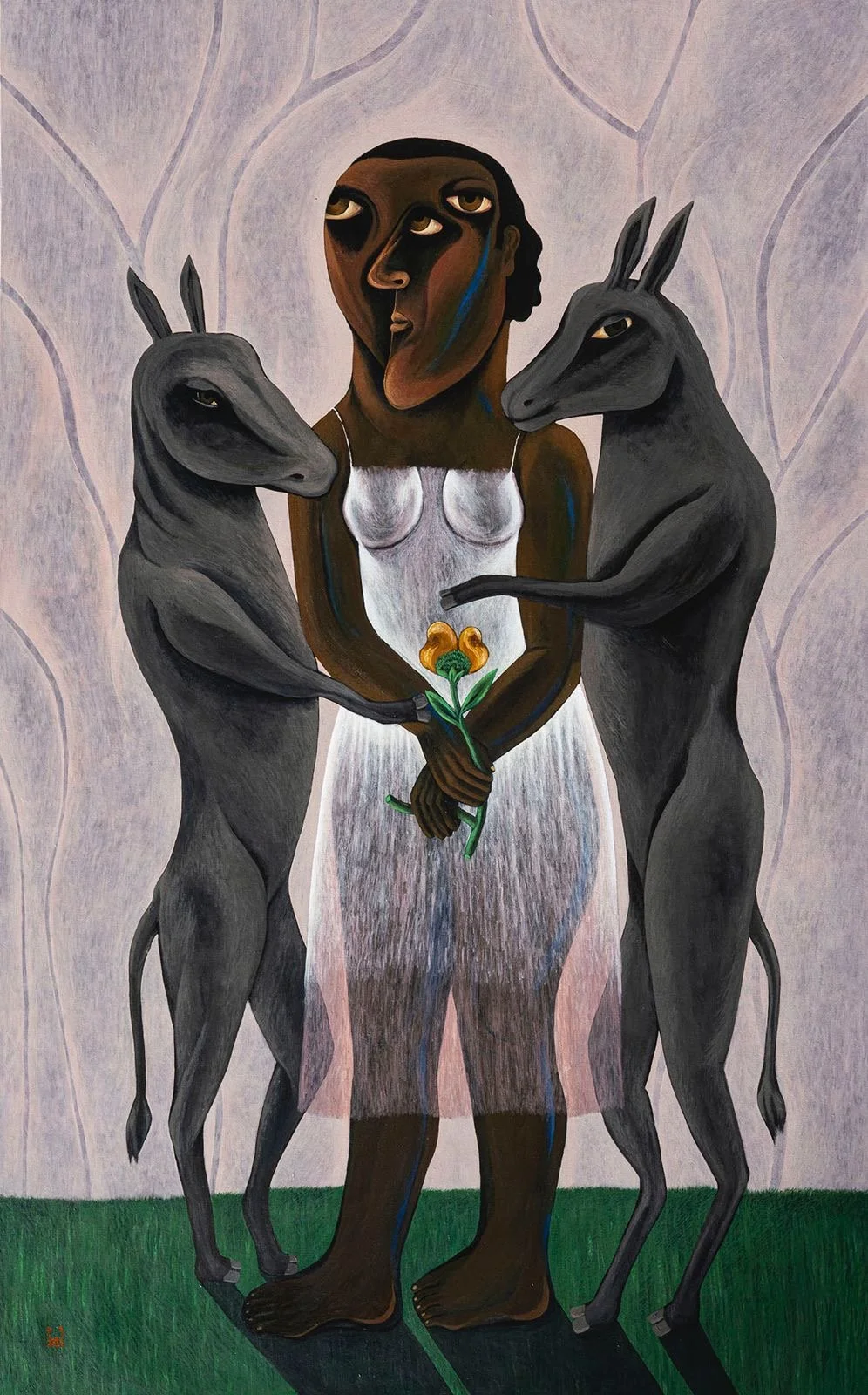
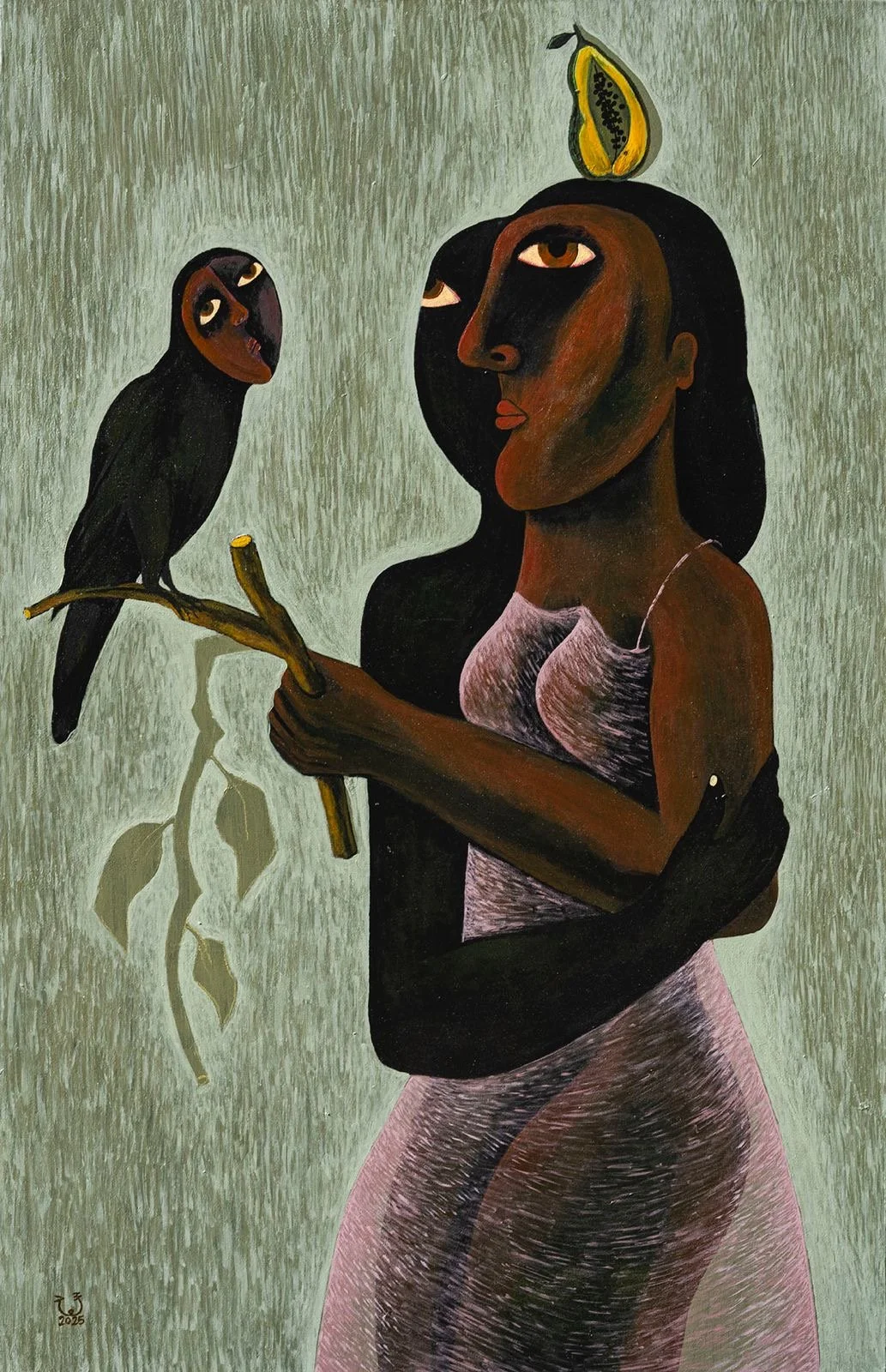
A Forced Relationship, 2025
Nour Daher: Can you tell us how you first came to art? Were you initially drawn to it as a way of expressing what your body had experienced, or did that understanding emerge later through your practice as an artist
Souad Abdelrasoul: I came to art very early, almost instinctively. Drawing felt like a parallel language through which I could understand the world and survive it at the same time. At first, I was not consciously thinking about the body as a concept. I was simply responding to emotions, fears, tenderness, and contradictions I could not articulate verbally.
Over time, I realized that the body had always been present in my work, not as anatomy alone, but as a psychological and emotional landscape carrying memory, inheritance, trauma, desire, and transformation. Painting became a way of reading what the body remembers, even when language fails. My understanding of the body emerged gradually through the practice itself, as if the paintings were teaching me something I already knew unconsciously.
ND: What was 12-year-old Souad Abdelrasoul’s experience of her body? And how does your present self reflect on or reinterpret those early bodily experiences today?
S.A: At twelve, my body felt both mysterious and fragile. It was a space filled with curiosity, confusion, fear, and imagination. Like many young girls growing up within social expectations, I became aware very early that the female body is constantly observed, interpreted, and controlled.
Today, I look back at that young girl with tenderness. I understand that many of the fears and silences she carried were not personal weaknesses, but inherited cultural conditions. In my work now, I try to give that younger self a different space—a space where the body is not judged or reduced, but allowed to exist in all its complexity, vulnerability, and power.
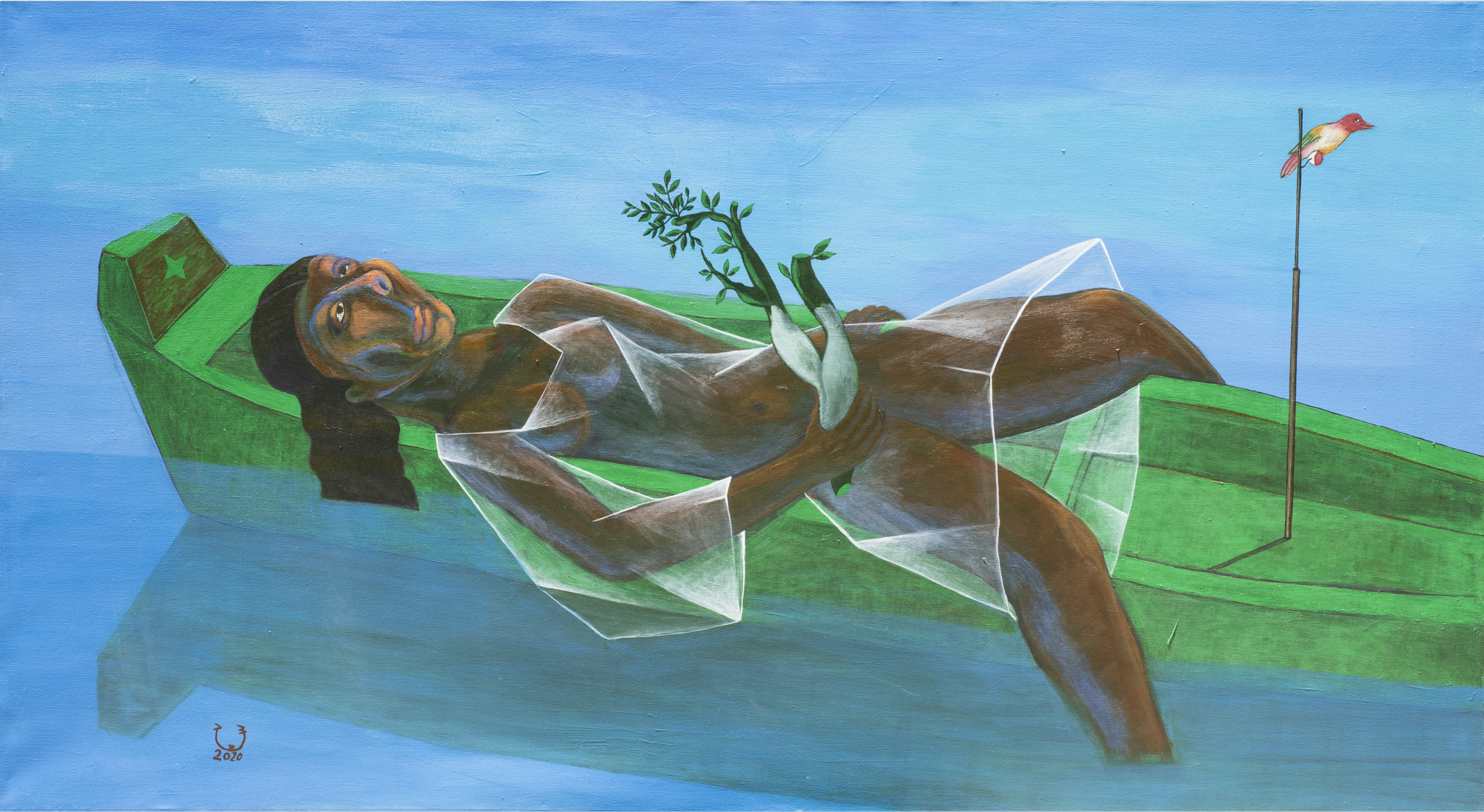
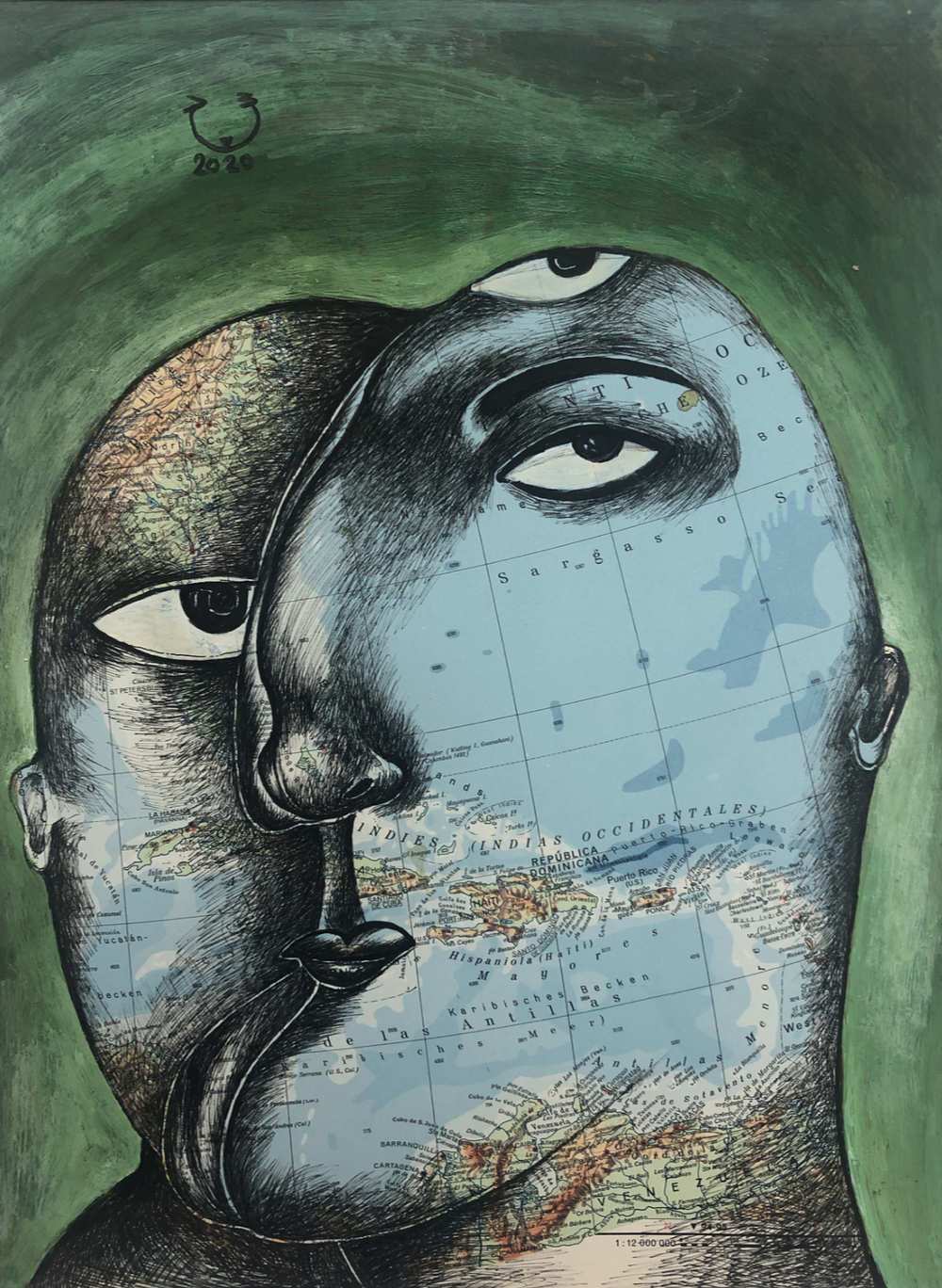
The River, 2020
ND: Painting is often spoken of as a visual language, but it is also a deeply physical act. How do you experience your body while you paint? Do you need to be in a particular state to begin? Does the act of painting shift your emotional or mental state as you work?
S.A: Painting is an intensely physical and emotional experience for me. My entire body participates in the process—the movement of my hands, the rhythm of my breathing, even exhaustion becomes part of the work.
I do not wait for complete clarity before beginning. In fact, I often start from emotional uncertainty or tension. Painting becomes a way of entering the unknown rather than escaping it. As I work, my mental state shifts gradually; anxiety transforms into concentration, and chaos slowly reorganizes itself visually. Sometimes painting feels almost like meditation, and at other times like confrontation.
The studio is one of the few spaces where I feel my body and mind speaking honestly to each other.
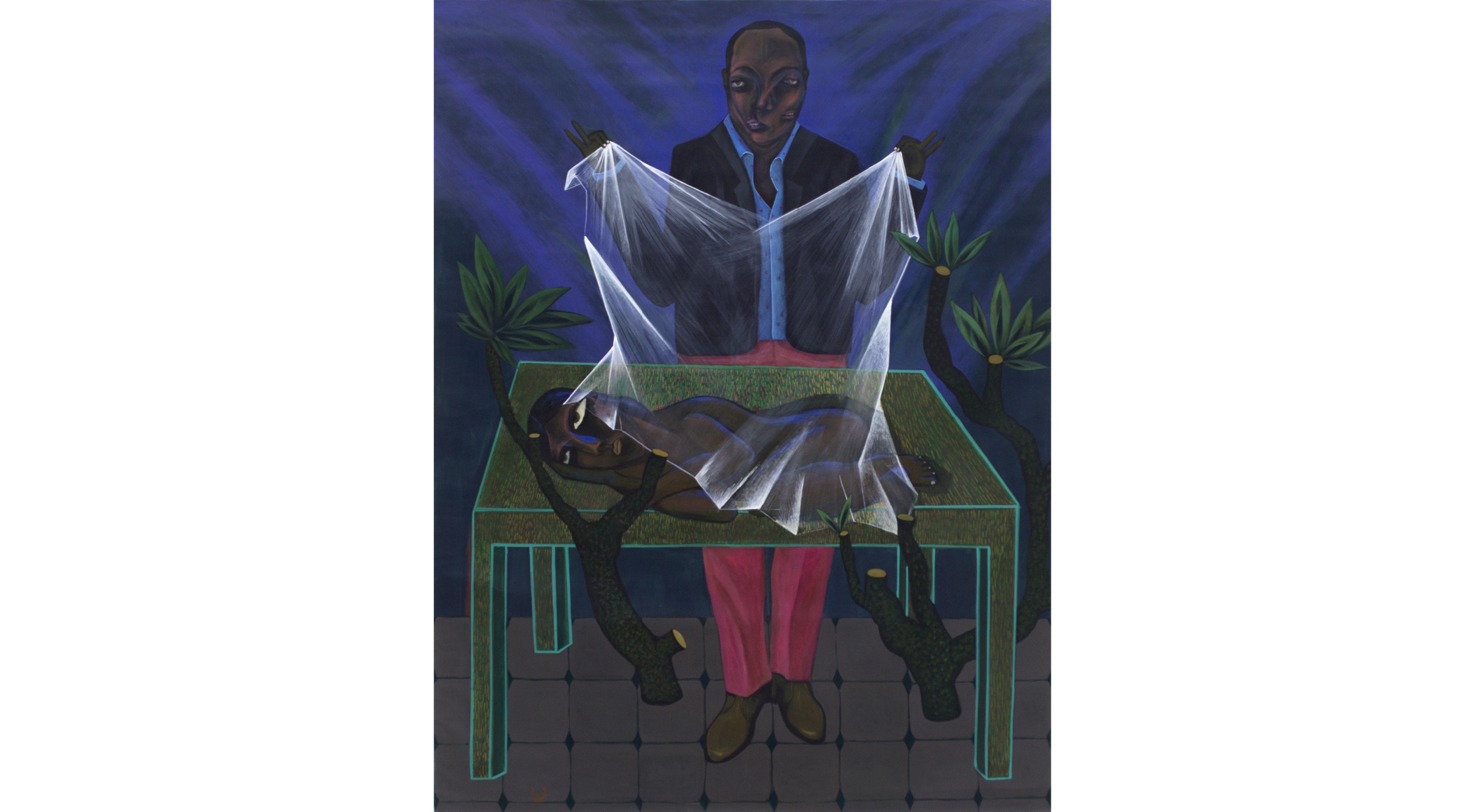
The Magician, 2021
ND: Your visual language is often surreal and imaginative. Could you walk us through your process of composing a work? How does a painting begin for you, with a sketch, an image in your mind, or something more intuitive that unfolds directly on the canvas?
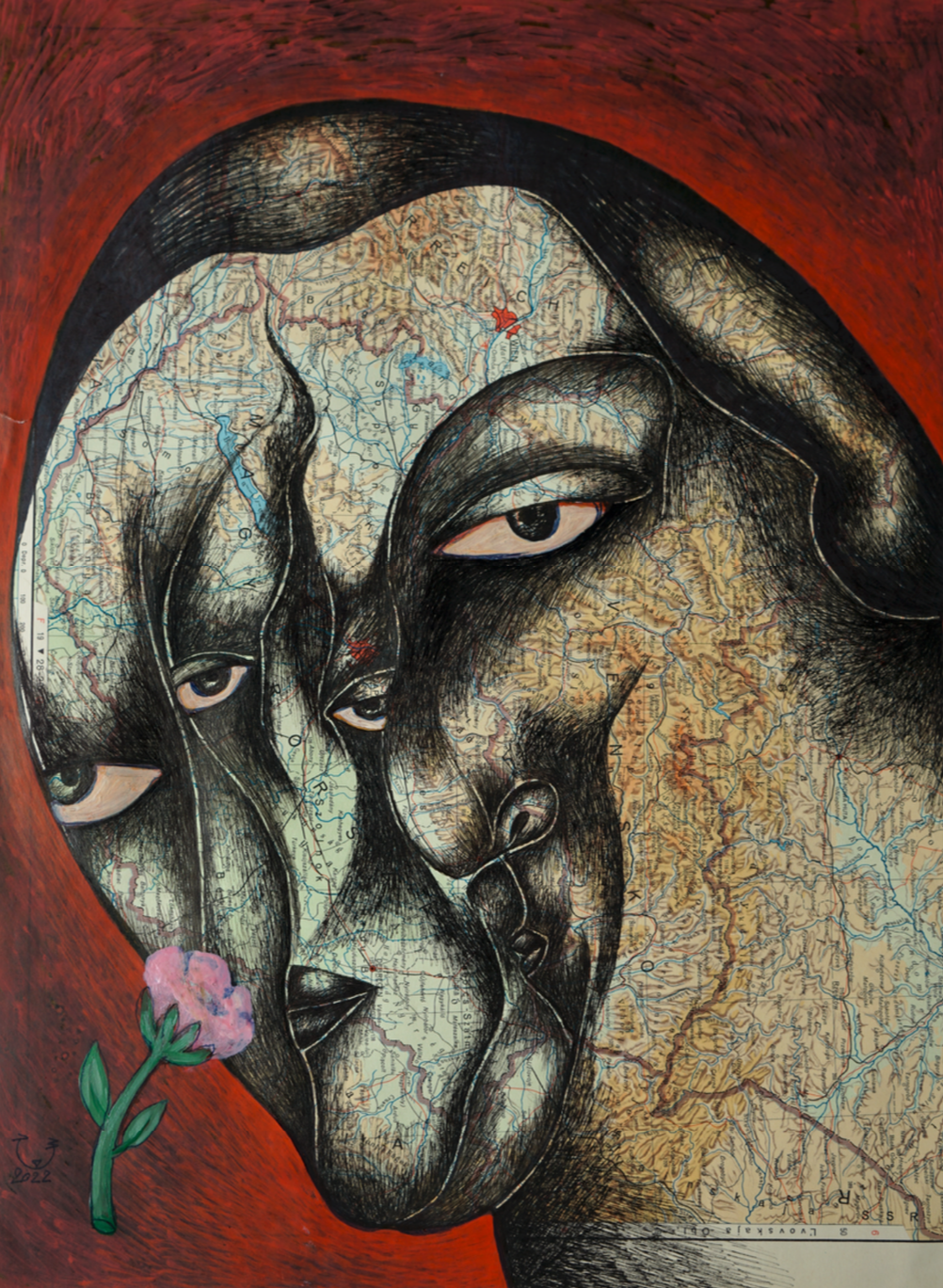
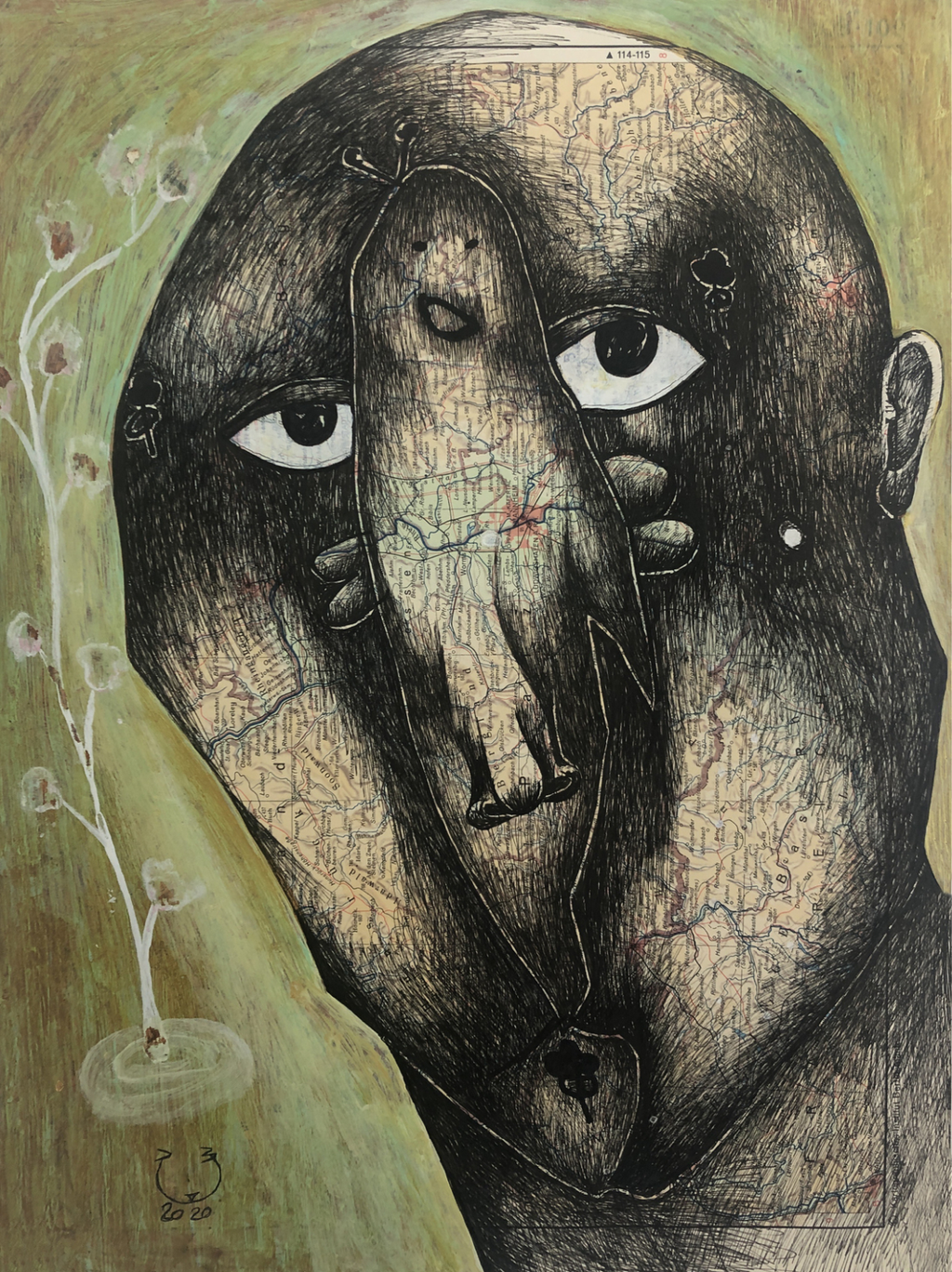
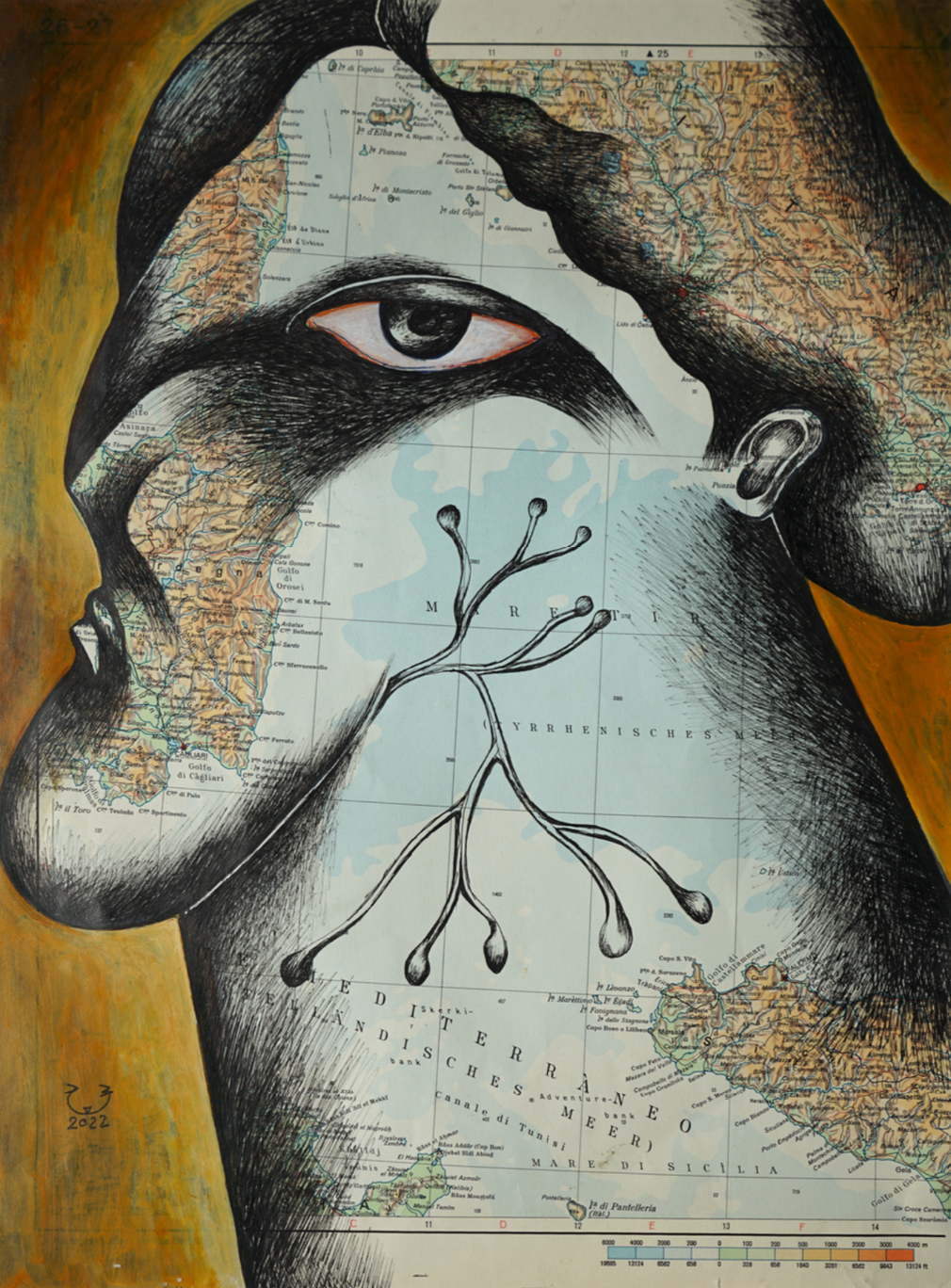
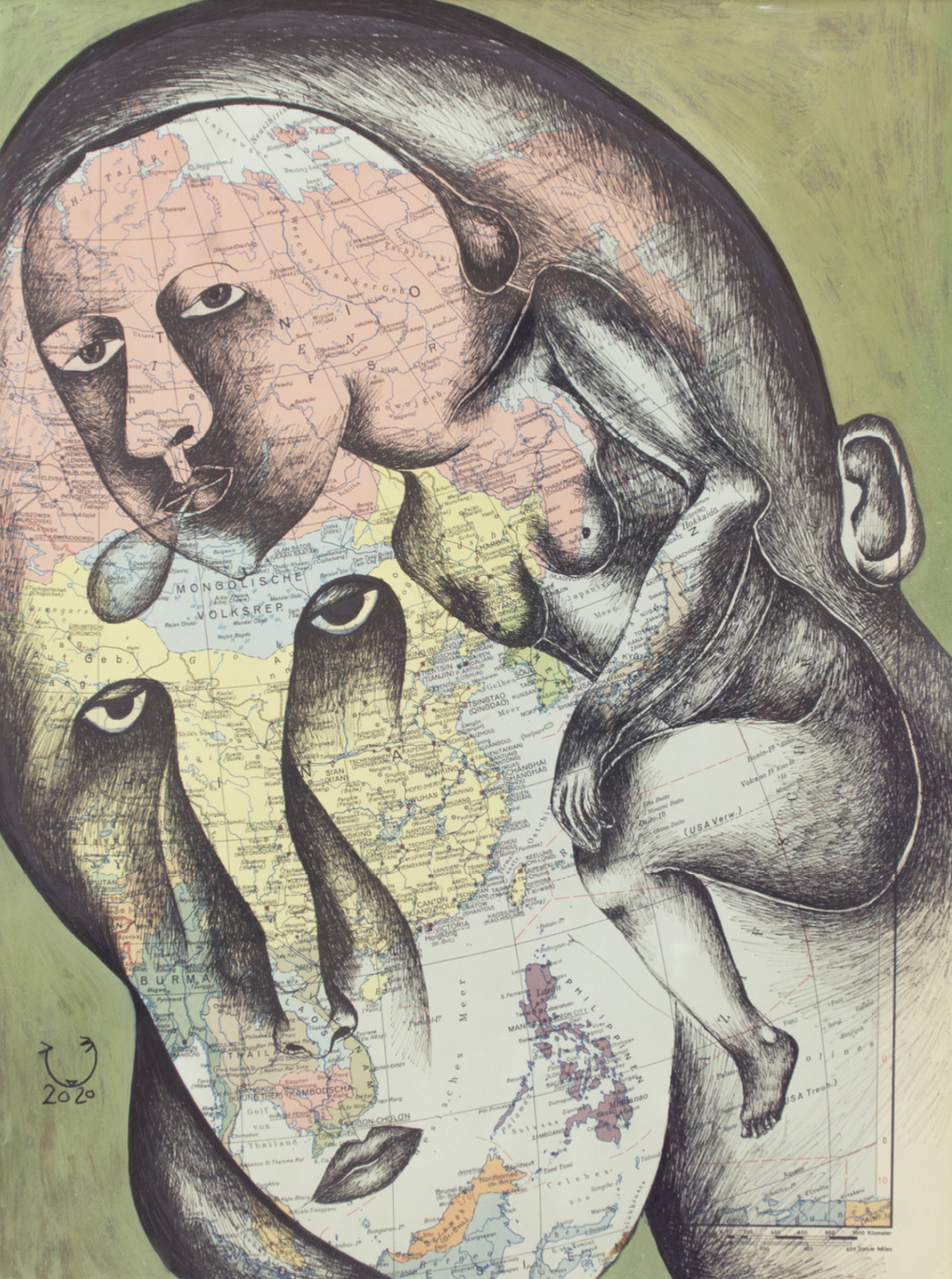
S.A: My process is largely intuitive. A painting rarely begins with a fixed image. Usually, it starts with a sensation, a memory fragment, a dream, or an emotional state that I cannot fully explain. Sometimes I make small sketches, but they are more like traces than plans. As I work, the painting reveals itself gradually. I think of my canvases as psychological maps where bodies, plants, animals, organs, and imagined creatures coexist and transform into one another. I am interested in moments where boundaries collapse, between human and nonhuman, interior and exterior, biological and metaphysical.
The surreal aspect of my work comes naturally because memory itself is not linear or logical. The subconscious speaks through symbols, mutations, and hybrid forms.
ND: Are there particular thinkers, artists, or figures who have shaped your understanding of the body and influenced your practice?
I have been influenced by many artists and writers who approached the body as a complex emotional and philosophical territory rather than a static form. Artists like Frida Kahlo and Louise Bourgeois deeply moved me because they transformed personal pain and vulnerability into universal visual languages.
I am also influenced by mythology, psychology, medical illustrations, African and Egyptian visual traditions, and literature that explores memory and transformation. My academic background in modern art history also shaped the way I think about representation and the politics of the body.
At the same time, much of my understanding comes from lived experience itself—especially observing women’s bodies, silences, resilience, and invisible emotional labor across generations.
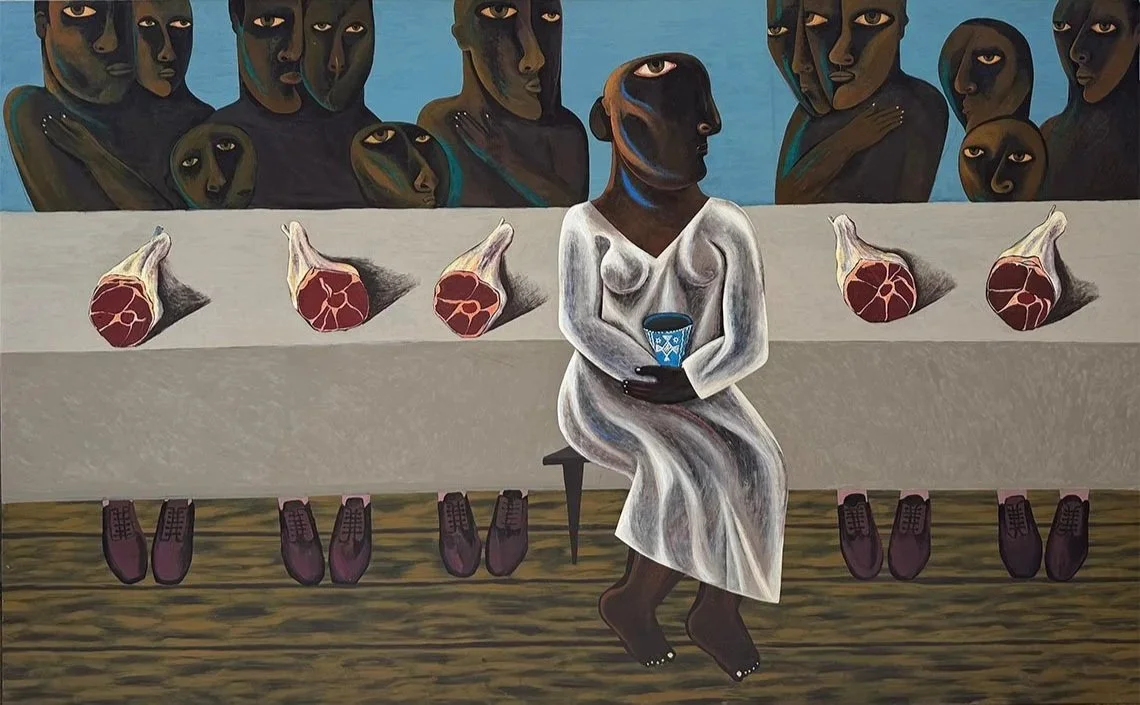
Female Slaughter Is Prohibited. 2025
ND: Developing an artistic practice demands years of commitment and discipline. What kind of physical or emotional care does your body require to sustain that level of dedication over time?
S.A: For many years, I ignored my body while trying to produce work constantly. But I gradually understood that artistic practice cannot survive without care. Rest, solitude, emotional boundaries, and moments of silence have become essential for me. Emotionally, I need honesty and periods of withdrawal from noise. Painting requires openness, but openness can also be exhausting. I have learned that protecting my inner world is part of protecting the work itself.
Motherhood also changed my understanding of care. It made me more aware of the body not only as a site of struggle, but also as a source of tenderness, endurance, and renewal.
ND: Your work is deeply rooted in the body as a site of memory and lived experience. These experiences are often shaped by visible identity, race, gender, and age. Has your understanding of these identities shifted or evolved through your ongoing engagement with painting the body?
Yes, absolutely. Through painting, I became increasingly aware that identity is not fixed; it is layered, unstable, and constantly negotiated. Gender, race, and age are not only social categories, they are experiences lived physically and psychologically through the body. As my work evolved, I became less interested in representation as description and more interested in the invisible emotional structures surrounding identity: fear, inheritance, survival, exclusion, desire, and memory.
I think painting allowed me to move beyond simplified definitions of identity toward something more fluid and human. The body in my work is never only an individual body. It carries collective histories and shared emotional experiences.
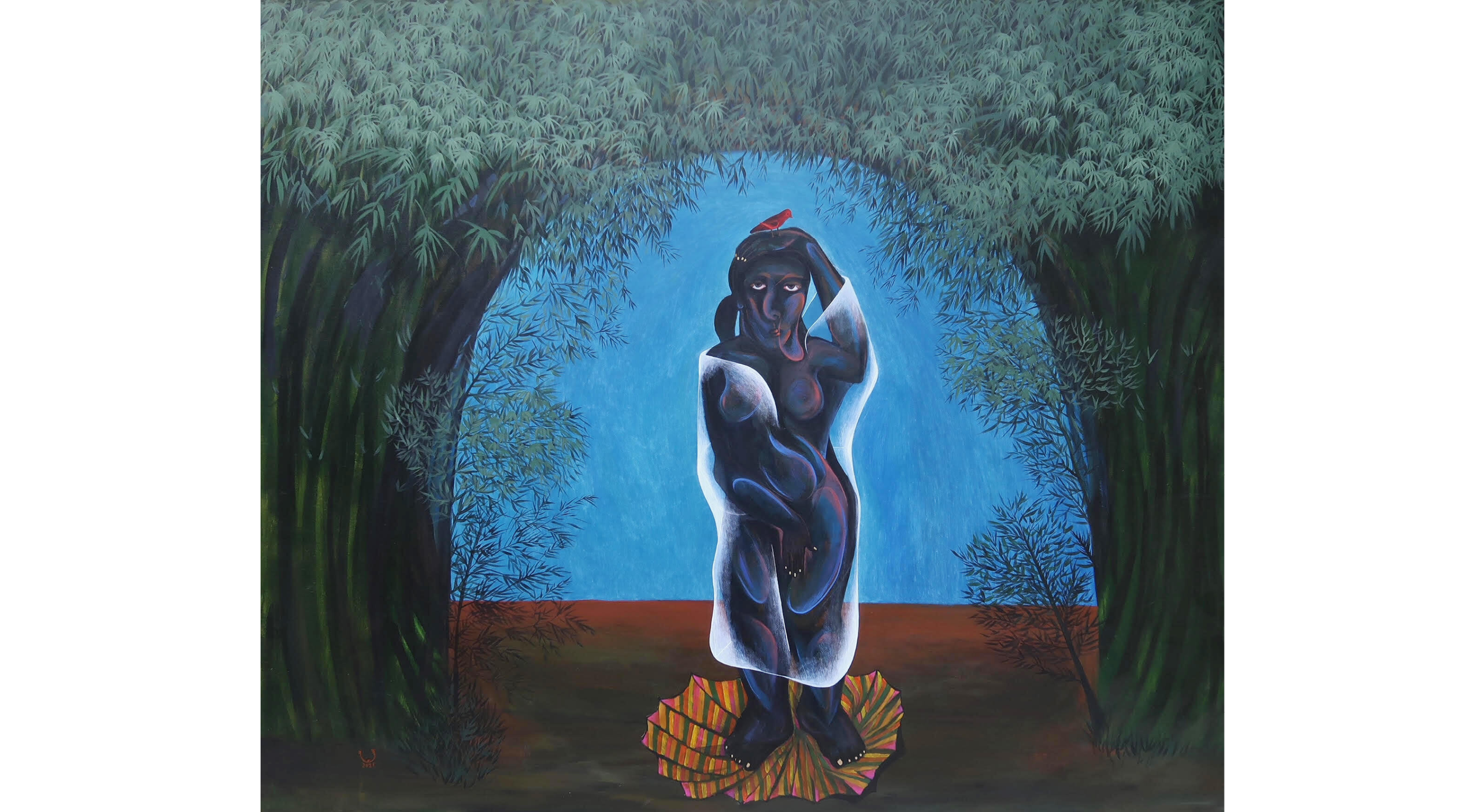
Venus Rebirths, 2021.
ND: The female body undergoes continuous transformation—daily, monthly, and across different life stages such as puberty, adulthood, pregnancy, and menopause. Which of these rhythms or transitions most influences your representation of the female body in your work?
S.A: What interests me most is transformation itself, the idea that the female body is never static. I am deeply drawn to moments where the body changes psychologically and physically at the same time.
Pregnancy and motherhood, for example, profoundly influenced my understanding of the body as something multiple rather than singular. It became impossible for me to think of the body as isolated; it felt connected to cycles of creation, vulnerability, nourishment, and loss.
But I am equally interested in quieter transitions—the invisible emotional mutations that happen with age, memory, disappointment, desire, and survival. These subtle transformations often appear in my work through hybrid bodies that seem to grow, dissolve, or merge with other living forms.
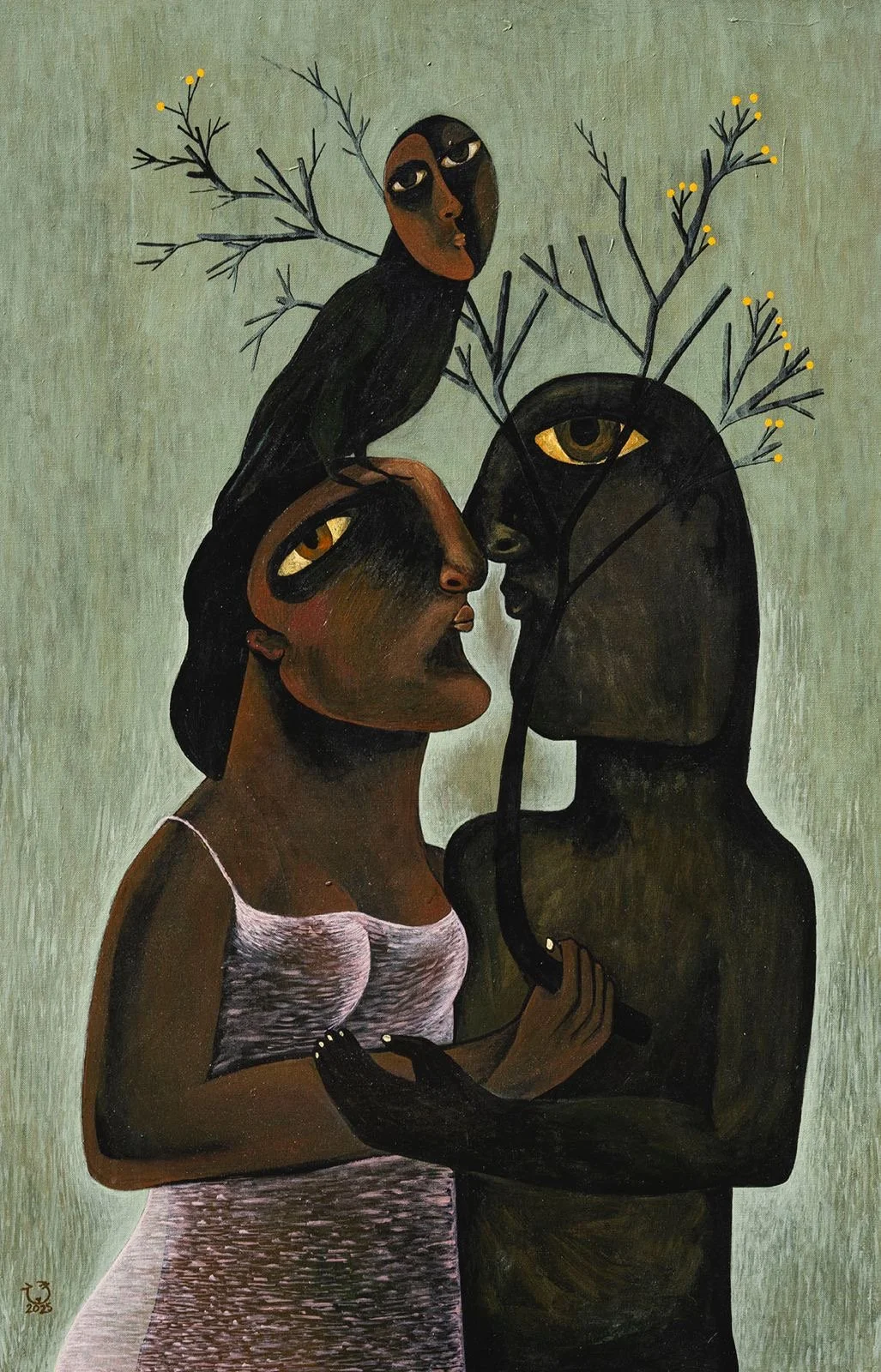
ND: What are one vulnerable and one affirming bodily experience you’ve had that have significantly shaped your relationship to your body?
S.A: One vulnerable experience was realizing how much fear and silence the body can carry without speaking. There were moments in my life when emotional pain manifested physically, and I understood that the body records experiences long before the mind fully understands them. That realization deeply shaped my work.
An affirming experience was motherhood. It transformed my relationship with my body completely. It allowed me to experience the body not only as something exposed to judgment or vulnerability, but also as a source of creation, protection, and immense emotional strength.
Through both experiences, I learned to see the body less as an object to control and more as a living archive of survival, tenderness, and transformation.
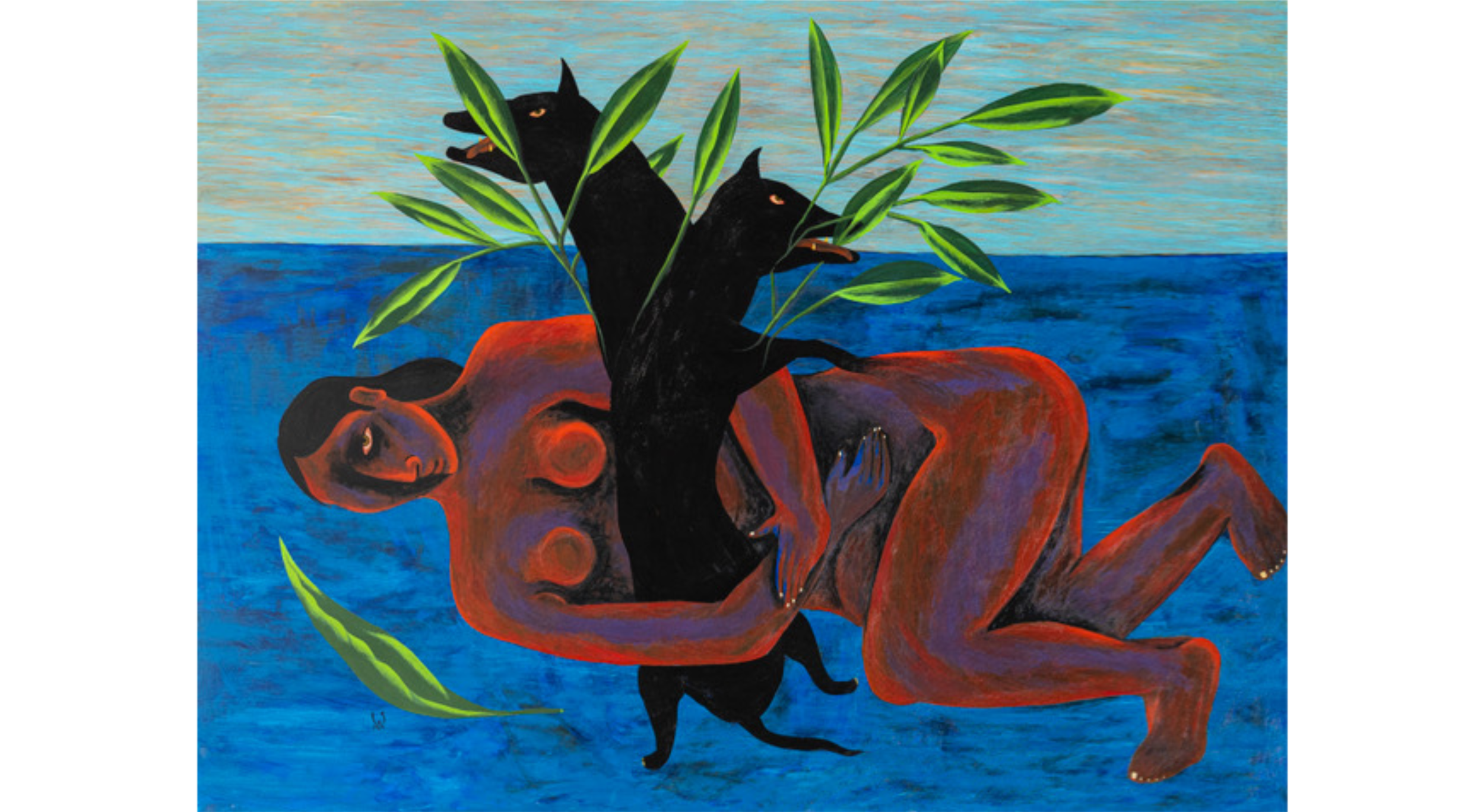
My Forest 2024