Pick your Dubai. Or don't.
Words by Chandni Jeswani
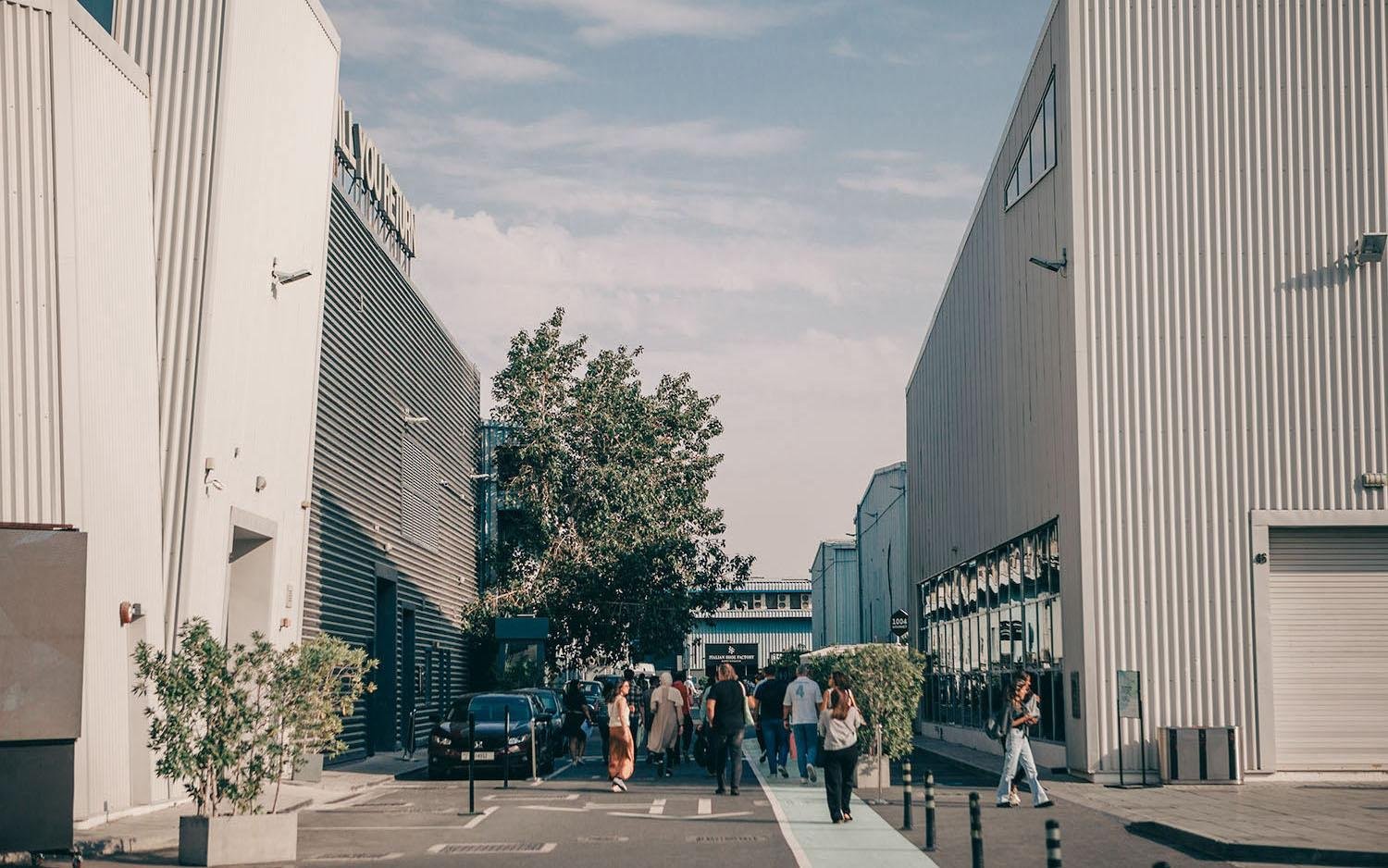
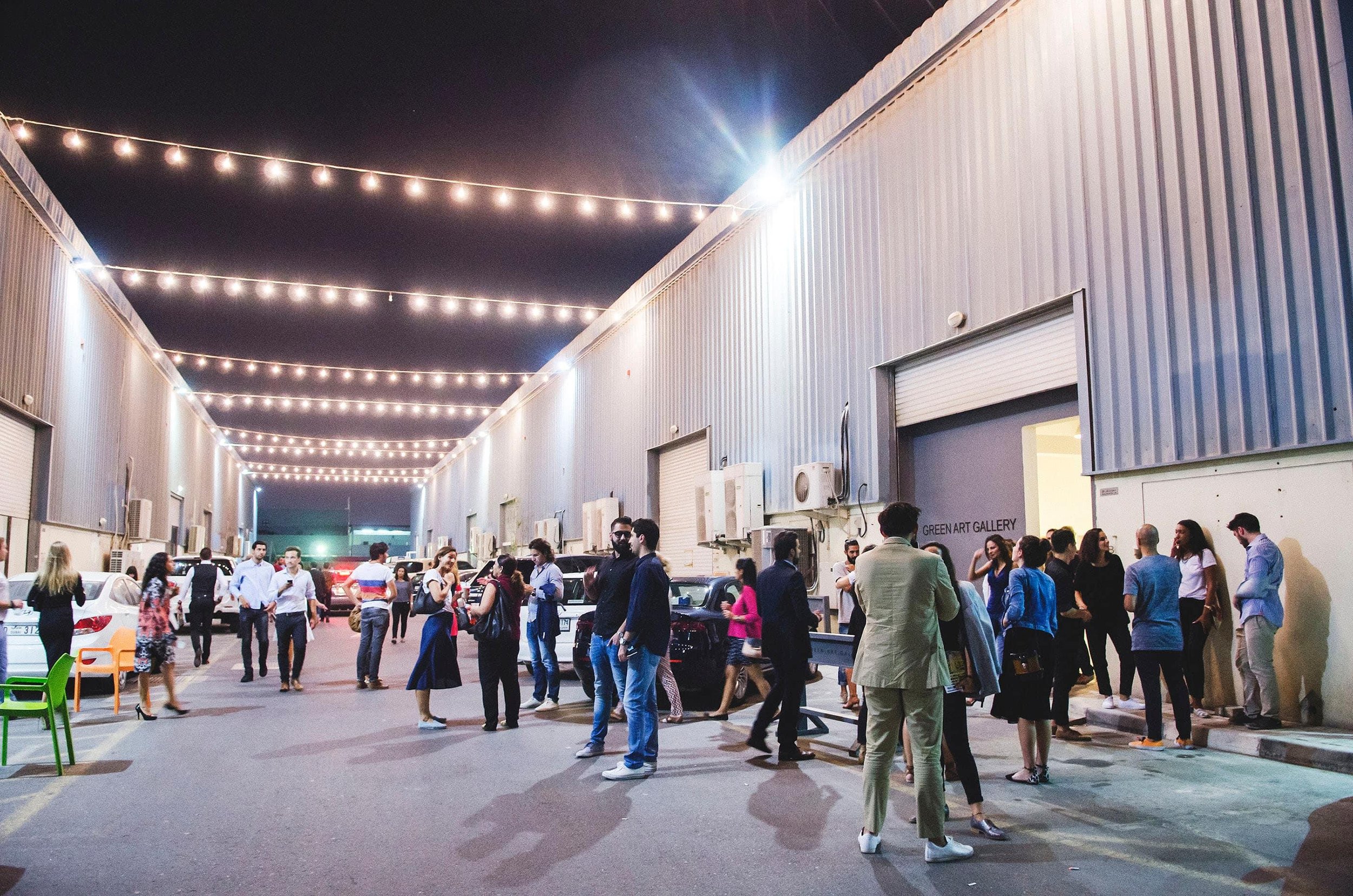
Two hundred metres apart, in the same six blocks of Al Quoz, Dubai's old industrial district, two points exist: a one-dirham karak tea and a samosa from a hatch in a workshop wall, or a careful V60 and a forty-dirham croissant at a café inside Alserkal Avenue, a cluster of converted warehouses that now holds contemporary art galleries, design studios, and two yearly art weeks that draw visitors from well beyond the city. Around both, the district carries on as it always has — workshops, fabricators, spare-parts dealers, tyre shops, the ordinary infrastructure a city needs but rarely looks at. The easy way to read this is contrast: cheap against expensive, old against new, overlooked against discovered. That reading isn't wrong. It's just a description of what the place looks like, and it stops one step short of what the place actually does for the people standing in it.
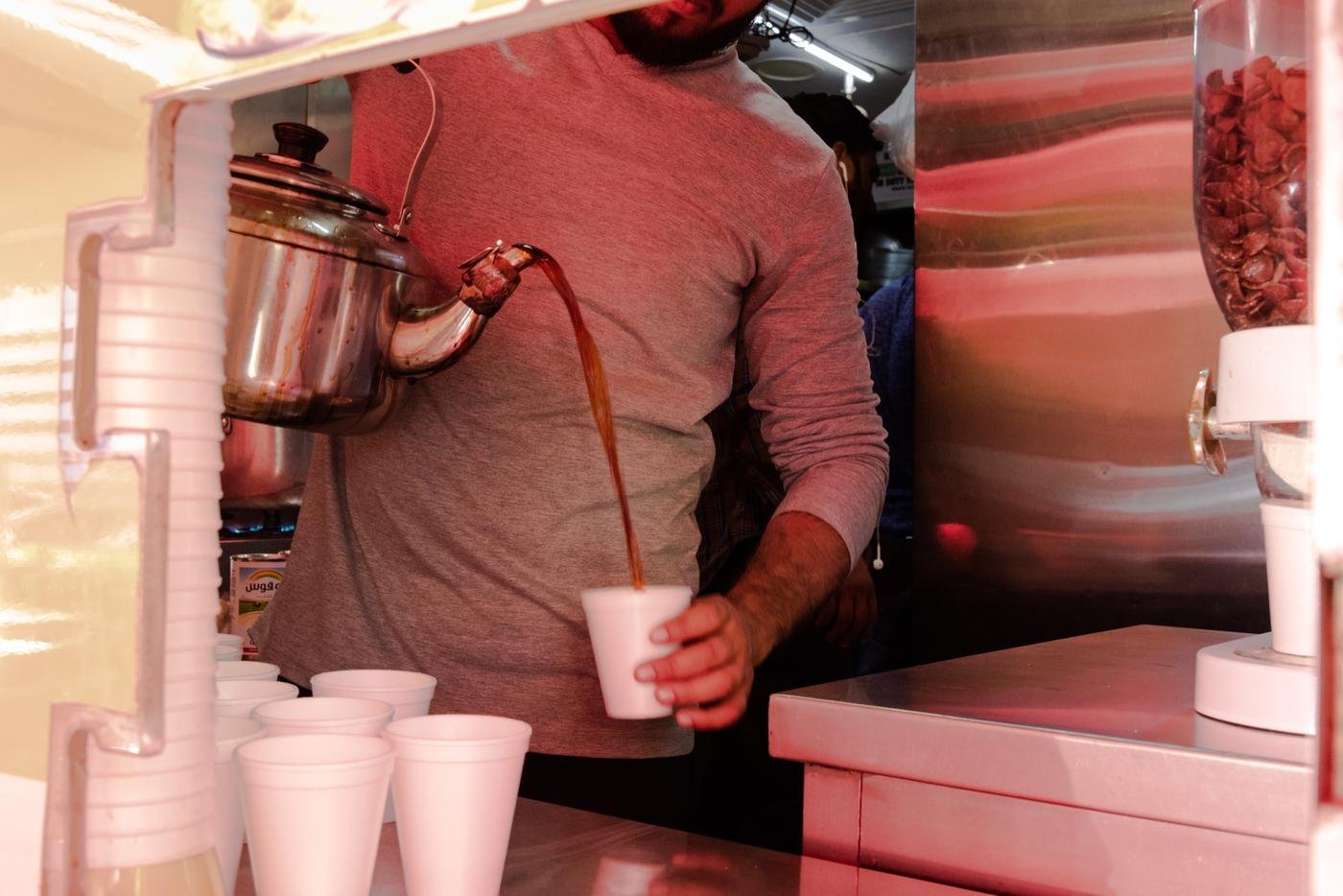
None of this is an accident of contrast for its own sake. Down the road from the gallery cluster — where paintings endeavour to explain, and sometimes challenge, the human condition — the conditions are actually being lived. The tea is saccharine, the samosas are hot and crispy. The same three or four regulars lean against that wall most evenings — not passing through, not in a hurry, the kind of group with its own running jokes, its own woes, and its own opinions about who's slacking on shift and who isn't. It is, by any reasonable measure, a gathering, the same kind that happens two hundred metres away over eighteen-dirham coffee, or champagne in crystal flutes after an opening. Nobody has found a critical vocabulary for the first one. Nobody needed to invent a vocabulary for the second; it arrives pre-installed, the way "interrogates" and "holds space for" arrive with the art itself.
The two sides are not strangers to each other in every sense. These worlds do collide. Galleries hire the workshops, sometimes — a plinth, a crate, a piece of install furniture too specific to order from a catalogue. It is need-based and not much else: no shared opening, no shared audience, no expectation that the fabricator will see the finished show or that the gallerist will learn what else that workshop builds in an ordinary week. Contact happens. It simply never becomes a relationship.
This is, I think, the most interesting fact about Al Quoz, and it is easy to miss because it sounds at first like a small, almost bureaucratic detail. No masterplan specifies that the workshop should remain so the gallery next door keeps its edge. No lease requires it. The contrast holds by accident, not by protection. Deliberate placemaking spends fortunes trying to manufacture exactly this condition — an "authentic" district with working-class roots and design-fair polish both intact — and routinely fails, because the moment a quarter is curated into having both, it stops having either. Al Quoz got this for free, by not being noticed for twenty years, and now cannot quite be designed away from it on purpose either.
In the language the art world already has for this — the jargon that gets said about a painting, not about a district — red does not register as red against anything paler than itself. It needs a darker ground, black or charcoal or shadow, to read as vivid at all. Say the same thing about Alserkal and the warehouses around it, and it sounds almost too neat: the gallery's polish is legible as polish only because the buildings near it, still warehouses, are not. Whether that is the right way to describe two entire worlds, or just the only metaphor the watchers and lookers have on hand, is itself worth wondering about. It is, at minimum, a metaphor built for looking, not for living — and the people in the workshop are not arranging their evening around being someone else's contrast.
Preserving a city for the future can mean freezing a story behind glass vitrines and museum labels — one curated past, walkable in an afternoon, contradictions smoothed for legibility, in bilingual text no less. Al Quoz preserves nothing and freezes nothing. It just keeps two entirely different economies in the same six blocks, neither one required to justify itself to the other, both still becoming whatever they're becoming next. A sealed building can hold what a place once was. It cannot let a place keep becoming something else. Al Quoz can. If preserving "the real Dubai" for the future means anything, it might mean protecting the conditions for this kind of accident, not the buildings that happen to result from it.
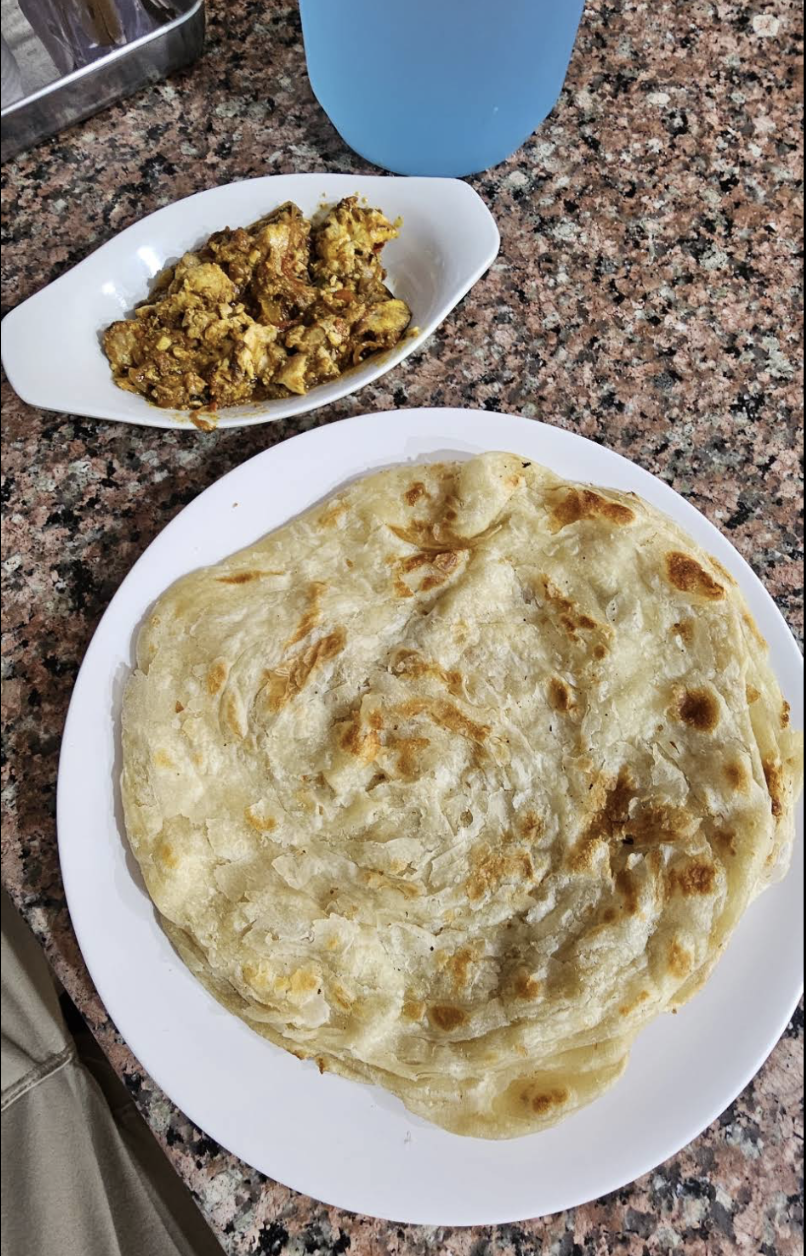
Al Mahrajan Restaurant - Sulthan Ali
Call this lamination, not friction. Friction means two surfaces wearing at each other, fusing or breaking under pressure. Lamination is calmer: two fully formed worlds on the same six blocks, transacting when useful, otherwise pressed together at the seam and never mixed. The gallerist does not need the welder's blessing for the work to mean what it means to her. The welder does not need the gallery's recognition for the karak to taste right at eleven in the morning under the beating sun. Al Quoz is a compressed model. The rest of Dubai runs on the same principle, scaled up from a workshop wall to a population of millions holding millions of versions of home.
You see it most clearly when something happens. A World Cup match ends, and the city erupts — not as one thing, but as several things simultaneously, each complete, none cancelling the others. One street is Egypt, another is Argentina, a rooftop somewhere is both at once and neither thinks to resolve the contradiction. A cricket final goes to the last over, and an entire population that has no formal claim on the result is devastated or ecstatic, because this city lets you claim what you love without asking for your passport first. Nobody is performing tolerance or managing diversity. The city is simply, structurally, built for this.
What lamination produces, at city scale, is something harder to name but easy to feel. Meena Bazaar smells of cardamom and printer toner from the photocopy shops lining its arcades, right now, today, not as a preserved fragment of an earlier Dubai. A Filipino supermarket two streets over stocks three brands of banana ketchup its neighbours on either side have never tasted and have no particular reason to. None of this needs translating for anyone. The distance between things collapses while the things themselves do not. What you get, living inside that condition, is the rarest thing a city can offer: the freedom to be fully what you are, two hundred metres from someone who is fully something else, with no pressure on either side to resolve the distance into agreement.
This is also, probably, the actual reason people build a life in this city rather than just pass through it. Nobody who moves to Dubai is asked to become one thing. An Indian family keeps its language and its kitchen and its gods in one room and walks into an air-conditioned mall in another, without translating itself in between — just as the supermarket two streets away stocks Russian cottage cheese, tofu, halloumi, and Indian paneer on the same shelf, none of them there for the others' benefit or asking them to explain themselves. The choosing is the part nobody has to do here. That, more than the skyline, is probably what people mean when they say this city let them belong.
For the children raised on that shelf, or in that household, the lamination runs deeper still. An expat holds multiple selves against the memory of one place they could, in theory, go back to. A child raised here rarely has that anchor. They were never one thing first and plural second; plural is simply what they have always been. Ask a Dubai-raised twenty-something what they are and the honest answer is rarely a single word — it is a list, delivered without apology, because nobody around them ever modelled anything else. This is not rootlessness, whatever the word suggests. It is a different way of having roots: not down into one ground, but sideways, into several at once, the exact shape of the district that raised them. Much of how we're taught to think about identity assumes you begin as one thing and become multiple — through migration, encounter, loss, adaptation. Dubai quietly produces people who began plural and never received the question that assumes otherwise. The hyphen was never issued. There was nothing to hyphenate.
A reader could fairly ask whether this is the city's genius or its failure. Maybe letting two worlds sit two hundred metres apart, never required to meet, is exactly how a place like this works — room for everyone, on their own terms, with no one made to translate themselves for anyone else. Or maybe the gap between a one-dirham karak and a forty-dirham croissant is simply left where it started, and the freedom not to choose is just another way of saying nothing ever has to change. I'm not sure the city has ever needed to decide — and I'm not sure the question survives contact with a place this good at making the asking feel beside the point.
This is also why the city held the way it did when it was threatened. What people felt they were defending was not a single Dubai but the right to be laminated themselves — to carry a self for Meena Bazaar and a self for the gallery opening without either one dissolving into the other, without ever being made to pick. The grief was not for a landmark or a skyline. It was for a structure of living that most people had never named but immediately recognised losing — the arrangement that said you could be from everywhere and of here, fully, without those two things contradicting each other. Most cities eventually ask their residents to settle on one loyalty — a quarter you're from, a community you belong to, a single answer to where home is. Dubai's only real demand is that you hold several at once, unintegrated, and call all of them home without filing a report on which one is real.
Pick your Dubai. Or don't.
About the Author:
Chandni Jeswani is an architectural historian and cultural strategist based in Dubai whose work asks how places retain meaning under conditions of transformation. Her research extends and challenges Norberg-Schulz's genius loci framework across sacred urbanism, heritage governance, and diasporic spatial memory - from South Asian sacred cities to Gulf industrial districts. She consults for Alserkal Arts Foundation and has curated public programmes for Art Dubai and Dubai Design Week. Her work appears in The Historic Environment: Policy & Practice, the Journal of Curatorial Studies, Colnaghi Studies Journal, and Springer Nature.