Words by Jack Bettar
The history of the Levant and Egypt pulses with women who defied the zeitgeist of their epochs and rewrote the terms of power on their own. Antiquity gave us queens whose names have outlasted the empires and traditions that produced them: Semiramis, the legendary embodiment of Babylonian greatness; Hatshepsut, who ruled Egypt not as a regent but as a king in her own right; Dido of Tyre, the Phoenician exile immortalized by Virgil as the founder of Carthage; and Samsi, evoked in Assyrian royal inscriptions as “Queen of the Arabs.” Yet few women of the ancient world left a mark as audacious, as far-reaching, or as enduring as the self-declared queen of a desert oasis city on the Silk Road – Zenobia of Palmyra.
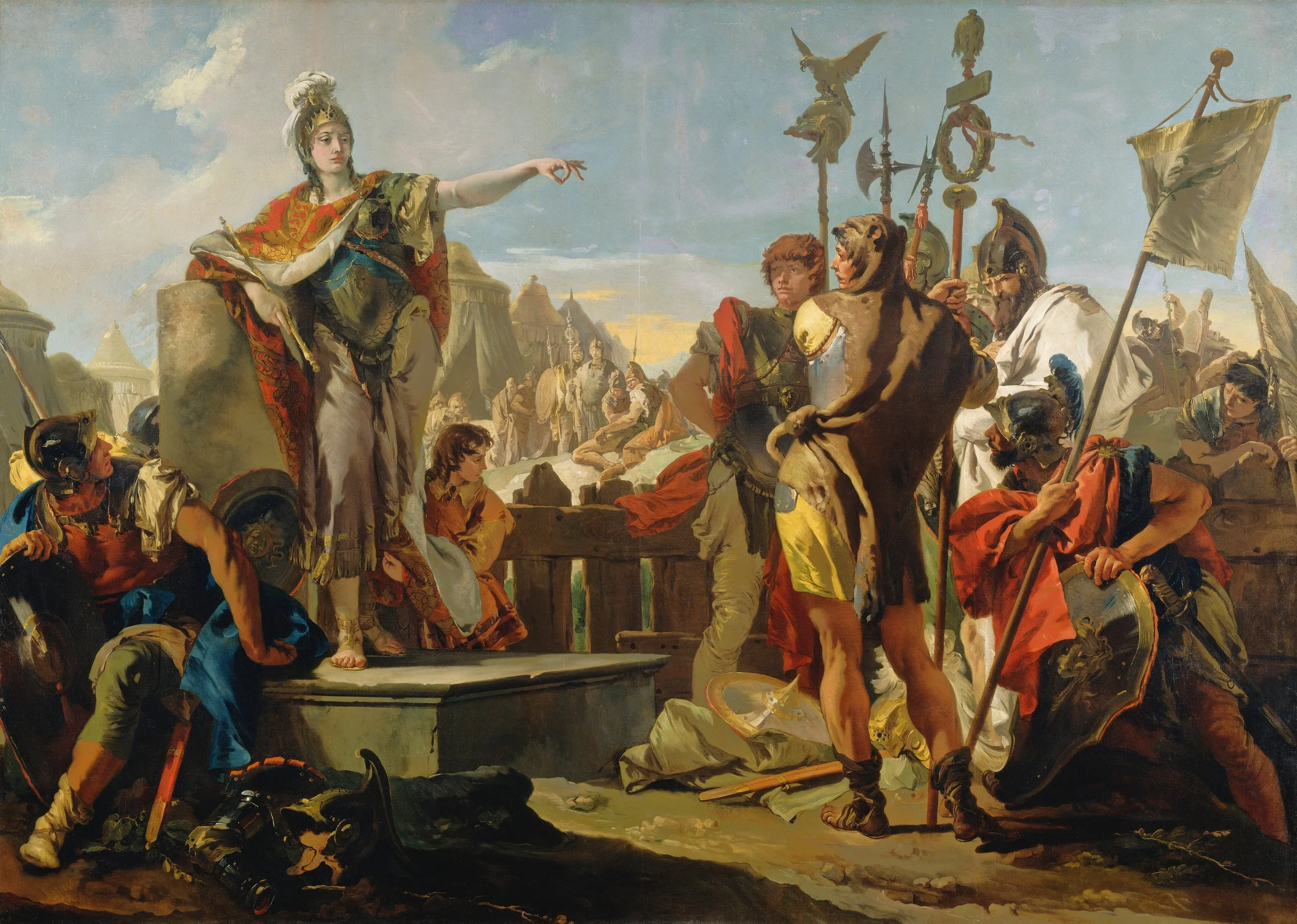
18th century painting entitled "Queen Zenobia Addressing Her Soldiers" by Venetian artist Giovanni Battista Tiepolo. Collection of the National Gallery of Art, London.
As someone of Syrian heritage, Queen Zenobia was an enigmatic fixture of my formative years, her story passed down to me somewhere between reality and myth. Years later, as a member of the Australian Archaeological Expedition to Egypt, I found myself encountering traces of that same world in an unexpected place: the Grand Egyptian Museum in Cairo. During one visit, I was leaving through a gallery of classical artworks when something caught my attention. Among the familiar forms of the ancient Mediterranean, I noticed funerary busts that appeared distinctly non-Egyptian in style. Carved from limestone and sandstone, the artifacts from Coptos and Thebes bore the unmistakable frontality of Palmyrene sculpture and revealed an extraordinary narrative of cross-cultural exchange – one that reached its peak during the third century AD, when the Palmyrene Empire extended into the Nile Valley.
In such a vast and impressive Museum, it is easy to walk past a handful of modest busts. But, for those visitors attuned to the artistic vocabulary of Palmyra, these objects reframe the historical record to show that Egypt’s history was never insulated, but that it remained a place where outsiders arrived, settled, and left their mark. Certainly, the prosperity of Palmyra, or Tadmor (as it was known to its Semitic inhabitants), depended upon long-distance commerce which connected the Syrian badiya to the Red Sea, Central Asia and Egypt. Extant evidence indicates that there were enclaves of Palmyrenes in the Egyptian cities of Coptos, Dendera and Berenice from at least 215 AD, illustrating that connections were forged by merchants, families and soldiers who moved across the region generations earlier.
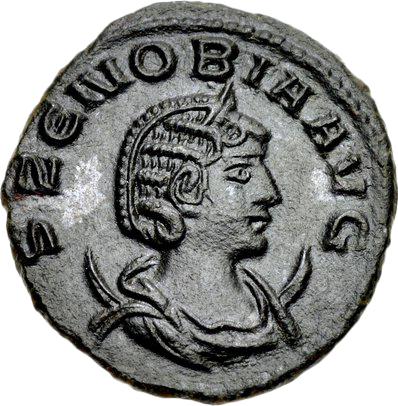
Zenobia depicted on a coin minted in Antioch in 272 AD. She is seen wearing a stephane.
To understand Zenobia’s influence and contribution across the Arab world, we must look beyond the familiar or romanticized image of a beautiful warrior queen who defied Rome. Her true significance lies above all in the scale and scope of her ambition. Zenobia emerged from the rich demographic landscape of Palmyra. In Aramaic, Zenobia is known as ‘Bat-Zabbai’ (daughter of Zabbai), while other official inscriptions name her as a daughter of Antiochus. The Polish archaeologist Michał Gawlikowski believes that Zenobia’s father was “…probably a member of a line going back to a certain Zabbai”. Although the precise composition of Zenobia’s ethnicity remains difficult to reconstruct, it is generally accepted that she is partly of Arab descent. Either way, by her lifetime, the family was firmly embedded within Palmyra’s wealthy urban elite, a social class which itself reflected a cosmopolitan city built upon a fusion of Aramaic, Arab, Greek and Roman influences. In this sense, Zenobia represents a quintessentially Levantine figure, drawn from a diverse society that resists reduction to a single identity or monoculture.
Following the assassination of her husband, Odaenathus, Zenobia assumed authority in 267 AD as regent on behalf of their young son, Wahballath (interestingly, a preclassical Arabic name). The Roman Empire was then experiencing one of the most turbulent periods in its history. Emperors rose and fell, Germanic tribal invasions threatened the western provinces, and Rome struggled to maintain control over its eastern territories in the face of the Sasanian Empire. Initially, Zenobia maintained an appearance of loyalty to Rome’s imperial agenda. However, as Roman authority waned, Palmyra increasingly acted as an independent power. A shrewd strategist, Zenobia calculated that Rome’s preoccupation with crises in Europe would delay any definitive response to troubles in the east and thus turned her gaze to the Nile.
What catalyzed this sudden expansionism is debated, but it could have been linked to a desire for economic renaissance. Whatever the cause, Zenobia’s connection with Egypt appears quite strong. She fictitiously invoked descent from Cleopatra VII and developed a working knowledge of the Egyptian language. These actions could be interpreted as political theatre – an attempt to represent to the Egyptian populace that she was the rightful successor to their last queen. In either 269 or 270 AD, a Palmyrene invasion force of some 70,000 men met a considerably smaller Roman and Egyptian garrison of approximately 50,000. The defenders fought tenaciously, inflicting at least two defeats on the invaders and briefly driving them back, before Zenobia’s commander, Zabdas, prevailed. In a final engagement at the Babylon Fortress in what is now Old Cairo, the Roman governor of Egypt, Tenagino Probus, was captured and took his own life, rather than face further defeat.
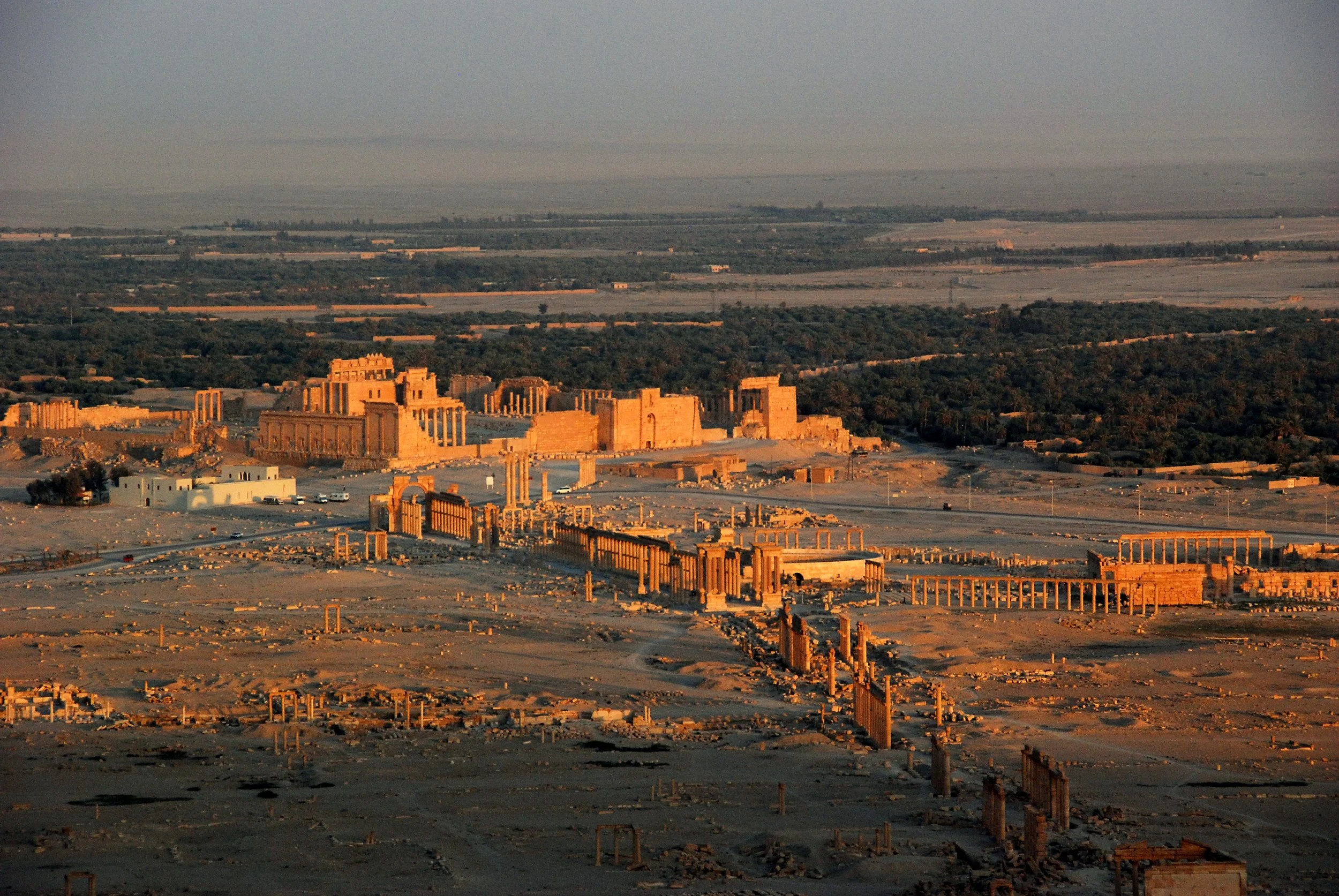
View of the ruins of Palmyra, Syria, from Fakhr-al-Din al-Ma'ani Castle.
The conquest was brief, but its significance cannot be overstated. By the beginning of 271 AD, Palmyrene control was consolidated, and a new administration was installed. It seems that Zenobia attempted to foster the interest of the Egyptian population, particularly in Alexandria. She has been credited with reviving older traditions dating to the Ptolemaic period and is thought to have undertaken the restoration of neglected ancient monuments, including the so-called Colossi of Memnon, depicting Pharaoh Amenhotep III. But Zenobia’s control of Egypt was no provincial squabble. Egypt was Rome’s granary and a crucial commercial hub between the Mediterranean and the Red Sea, through which goods flowed into the Roman economy. In seizing Egypt, Zenobia was not only challenging Roman hegemony but actively destabilizing its foundation. By early 272 AD, Zenobia bestowed upon herself the title of Augusta, the highest honorific available to a Roman empress, and an unmistakable provocation to Rome. Coinage minted in her name in Palmyra, Antioch and Alexandria depicted Zenobia crowned with a diadem in the manner of Rome’s own imperial women.
When we reflect on Zenobia, as historian Iain Browning observed, no one before her had challenged the Roman Empire in such a manner and with such success. At its zenith, the Palmyrene sphere of influence probably extended from Ankara in central Anatolia to Upper Egypt. Rome attempted appeasement, offering to confer upon her son the titles and honors his father once held. Zenobia did not accept such a subordinate settlement. Believing herself the equal of the Roman emperor, her son adopted the title of Augustus. Rome could not let this stand.
By then, Rome was led by Aurelian, a soldier-emperor intent on reuniting a fractured empire. At the gates of Antioch, Aurelian forced Zabdas to retreat towards Emesa (modern Homs). Roman forces inflicted defeat after defeat on Palmyra’s depleted army. Zenobia attempted to slip through the siege lines and make for the Euphrates, presumably to seek assistance from Persia. She was allegedly detained while crossing the river and brought before Aurelian. Zenobia’s fate is as fragmentary and mysterious as the many fascinating vignettes we get of her life and accomplishments. Some accounts hold that she died on the journey to Rome, while others recorded that she survived to be paraded through the streets in Aurelian’s triumph, living out her remaining years at a villa in Tivoli, north-east of Rome.
Ultimately, Zenobia’s experiment lasted barely two years; still, this bold act of imperial hubris and defiance cemented a legacy that has only grown since, providing artistic and literary inspiration to the likes of Geoffrey Chaucer, Petrarch and the Rahbany Brothers. Zenobia was not an Arab ruler in the modern national sense, but her story is a reminder that the history of the Arab world has never been confined to the borders drawn on contemporary maps. Long before those borders existed, its peoples were already moving across them.
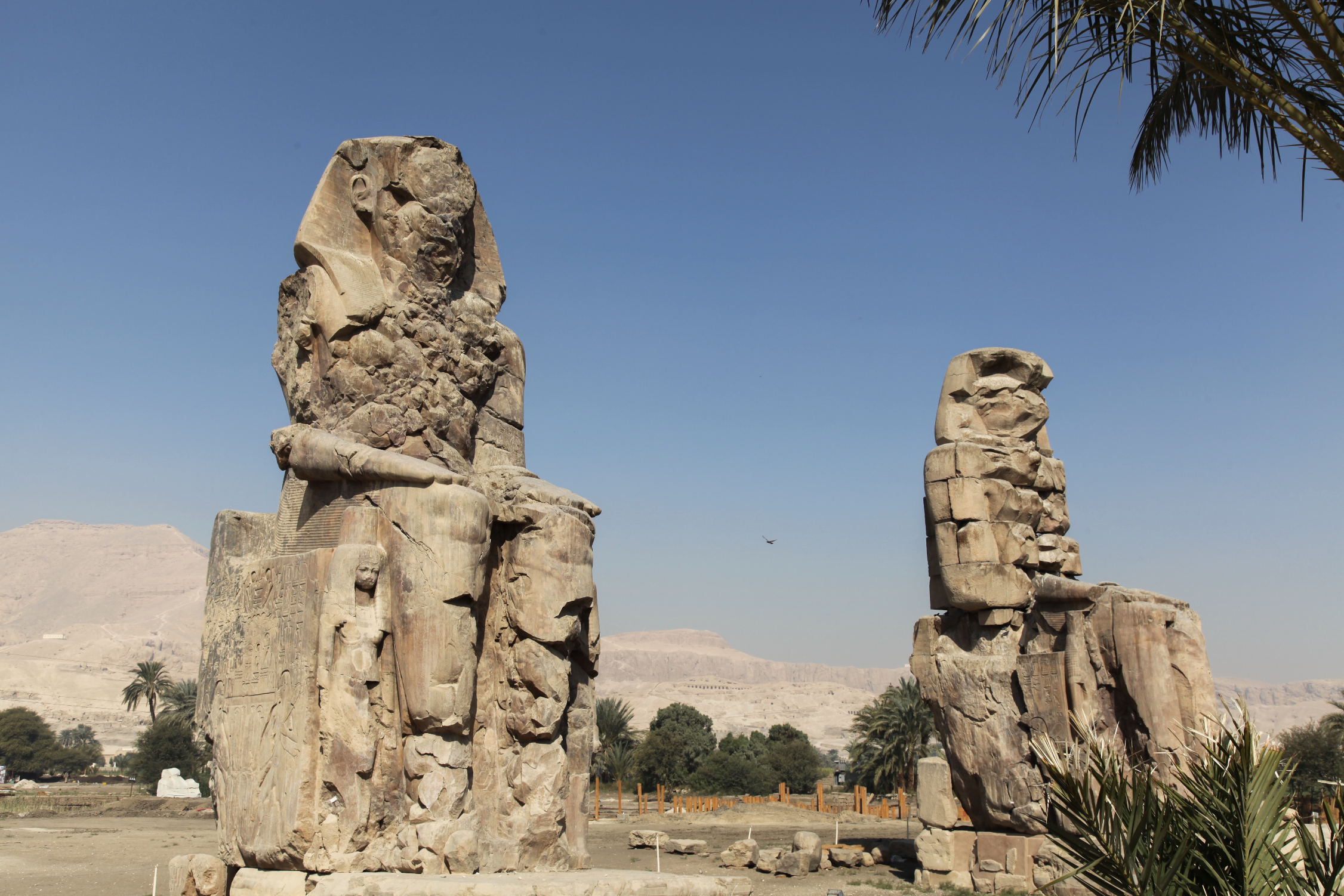
The Colossi of Memnon in Luxor, Egypt. Photo by author.
References:
Abdalla, Aly. Graeco-Roman Funerary Stelae from Upper Egypt. Liverpool: Liverpool University Press, 1992.
Andrade, Nathanael J. Zenobia: Shooting Star of Palmyra. New York: Oxford University Press, 2018.
Bowersock, G. W. “The Miracle of Memnon.” Bulletin of the American Society of Papyrologists 21, nos. 1-4 (1984): 21-33.
Browning, Iain. Palmyra. London: Chatto & Windus, 1979.
Bryce, Trevor. Ancient Syria: A Three Thousand Year History. Oxford: Oxford University Press, 2014.
Gawlikowski, Michał. Tadmor-Palmyra: A Caravan City between East and West. Cracow: IRSA Publishing House, 2021.
Raja, Rubina. Pearl of the Desert: A History of Palmyra. New York: Oxford University Press, 2022.
Seyrig, Henri. “Le prétendu fondouq palmyrénien de Coptos.” Dans Antiquités syriennes. Syria 49, nos. 1-2 (1972): 120-125.
Smith, Andrew M. II. Roman Palmyra: Identity, Community, and State Formation. Oxford: Oxford University Press, 2013.
Southern, Pat. Empress Zenobia: Palmyra’s Rebel Queen. London: Continuum, 2008.
Stoneman, Richard. Palmyra and Its Empire: Zenobia’s Revolt against Rome. Ann Arbor: University of Michigan Press, 1992.
Watson, Alaric. Aurelian and the Third Century. London and New York: Routledge, 1999.
Young, Gary K. Rome’s Eastern Trade: International Commerce and Imperial Policy, 31 BC-AD 305. London: Routledge, 2001.
About the author
Jack Bettar is a writer and researcher with a special interest in the cultural, political, and social history of the eastern Mediterranean and North Africa. He is a member of Australian archaeological expeditions in Egypt and has worked at Giza, Saqqara, and Beni Hassan.