Vessels of Continuity: A Collection Inspired by Druze Heritage & Rebirth
Words & work by JIHAN AZZAM
Across the mountainous landscapes of Lebanon lives a community whose faith and identity are interwoven with the rhythm of renewal. Emerging in the 11th century from Ismaili Shia roots, the Druze developed a distinct spiritual path defined by its secrecy, philosophical depth, belief in the soul’s continual rebirth, and emphasis on the oneness of God. Today, the Druze population is estimated at just over one million worldwide, primarily located in Lebanon, Syria, and Palestine.
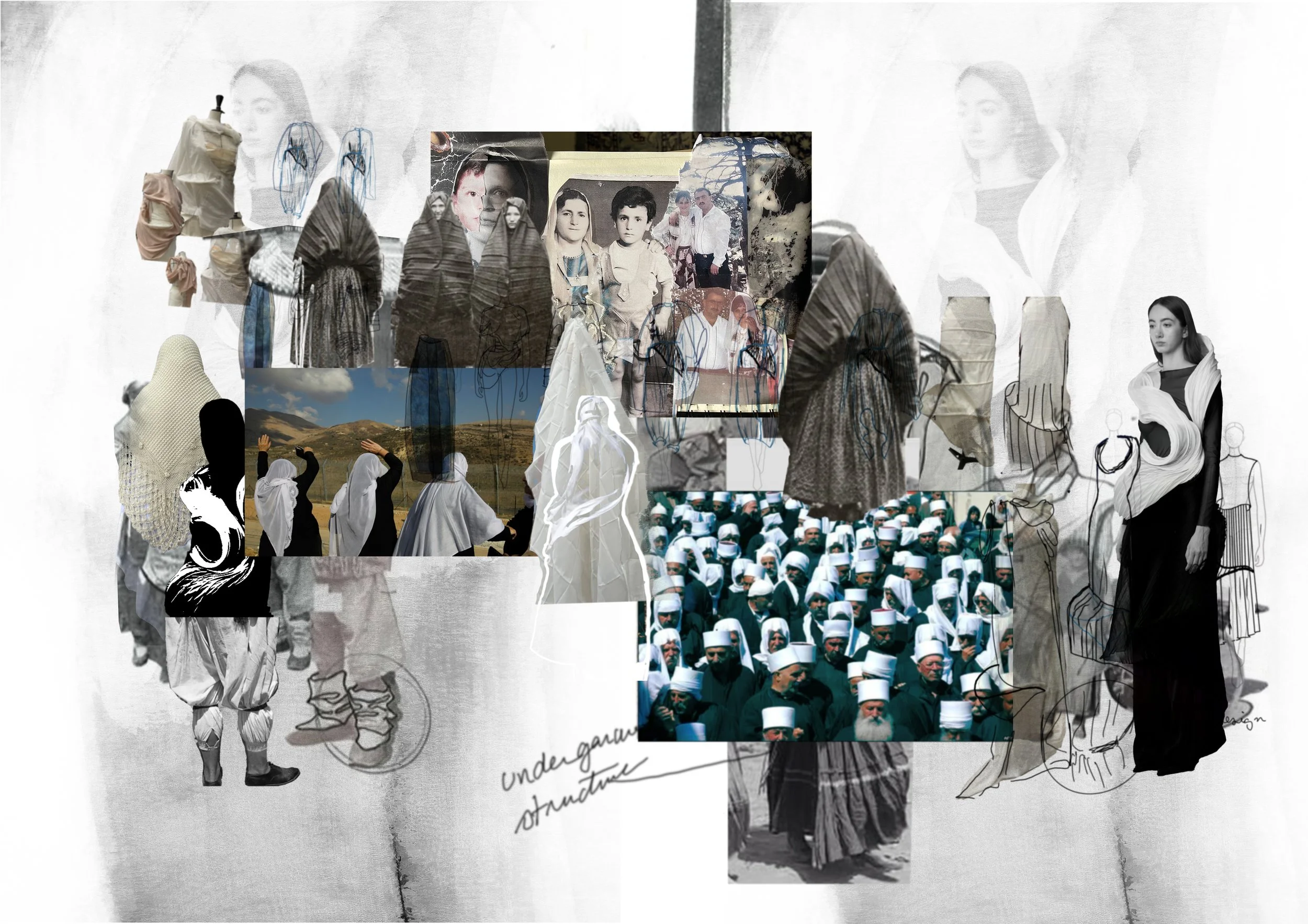
At the heart of Druze spirituality lies the concept of تقمّص, or reincarnation, derived from the word قميص, which means a shirt, describing the journey of the soul through successive human lives to reach the highest form of consciousness. Similar notions of cyclical existence appear in various world traditions from Hinduism and Buddhism to Gnostic thought, yet within the Druze faith, reincarnation is not a distant metaphysical theory but a lived understanding of continuity.
“الروح تنتقل من قميص لقميص “
— Druze proverb
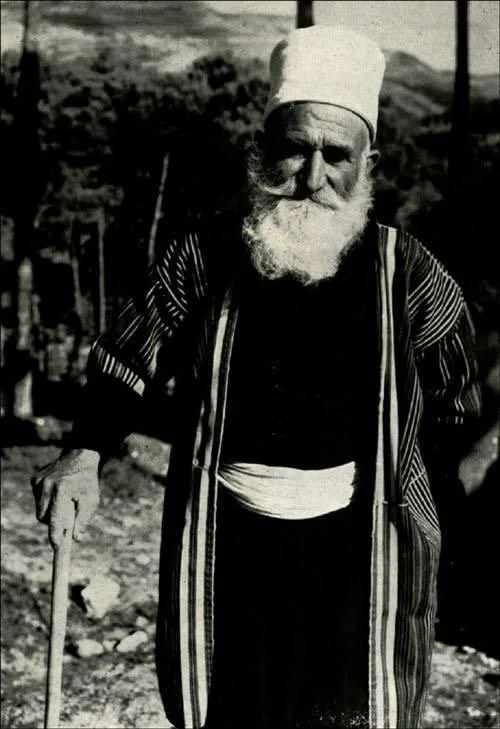
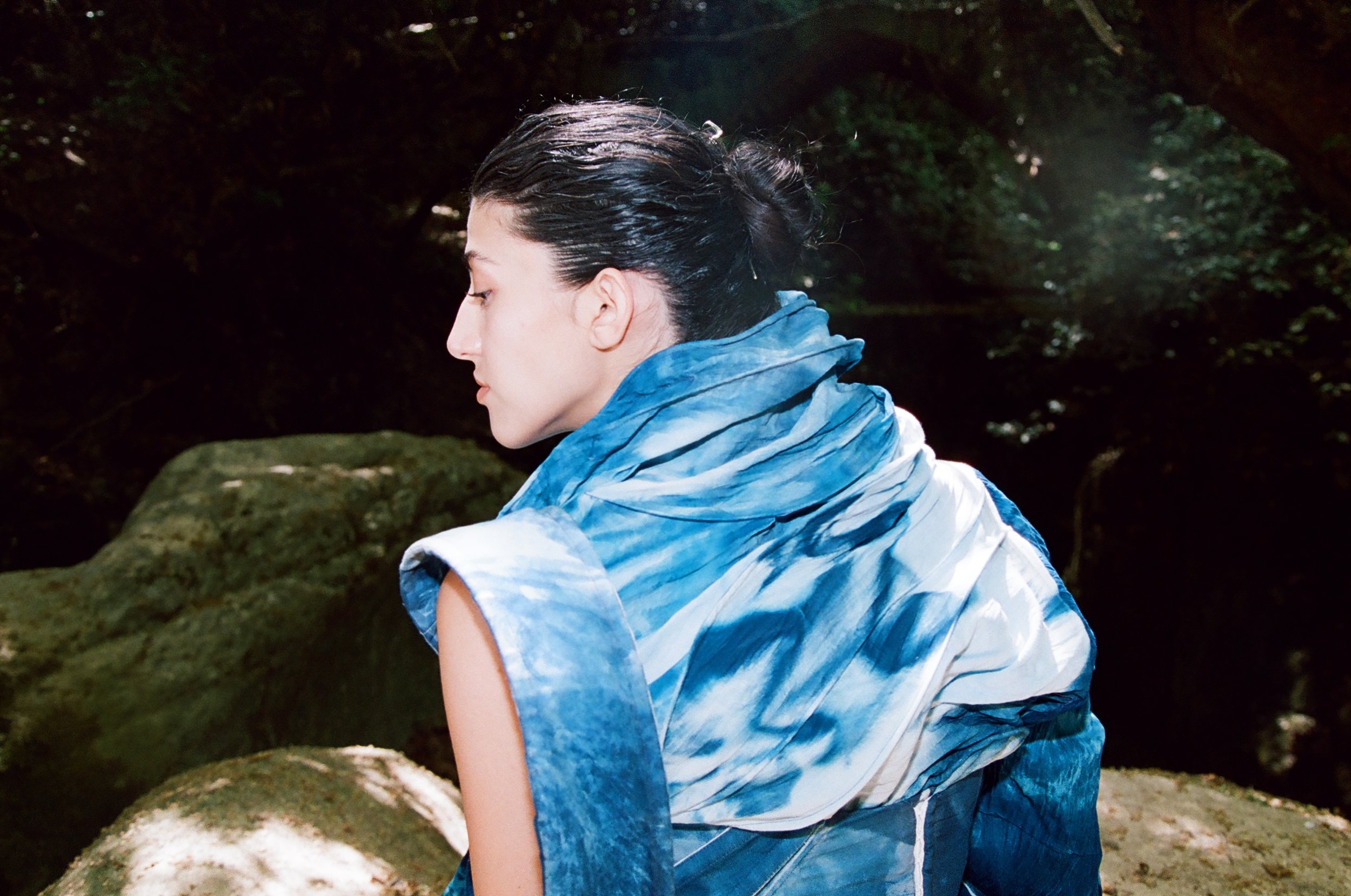
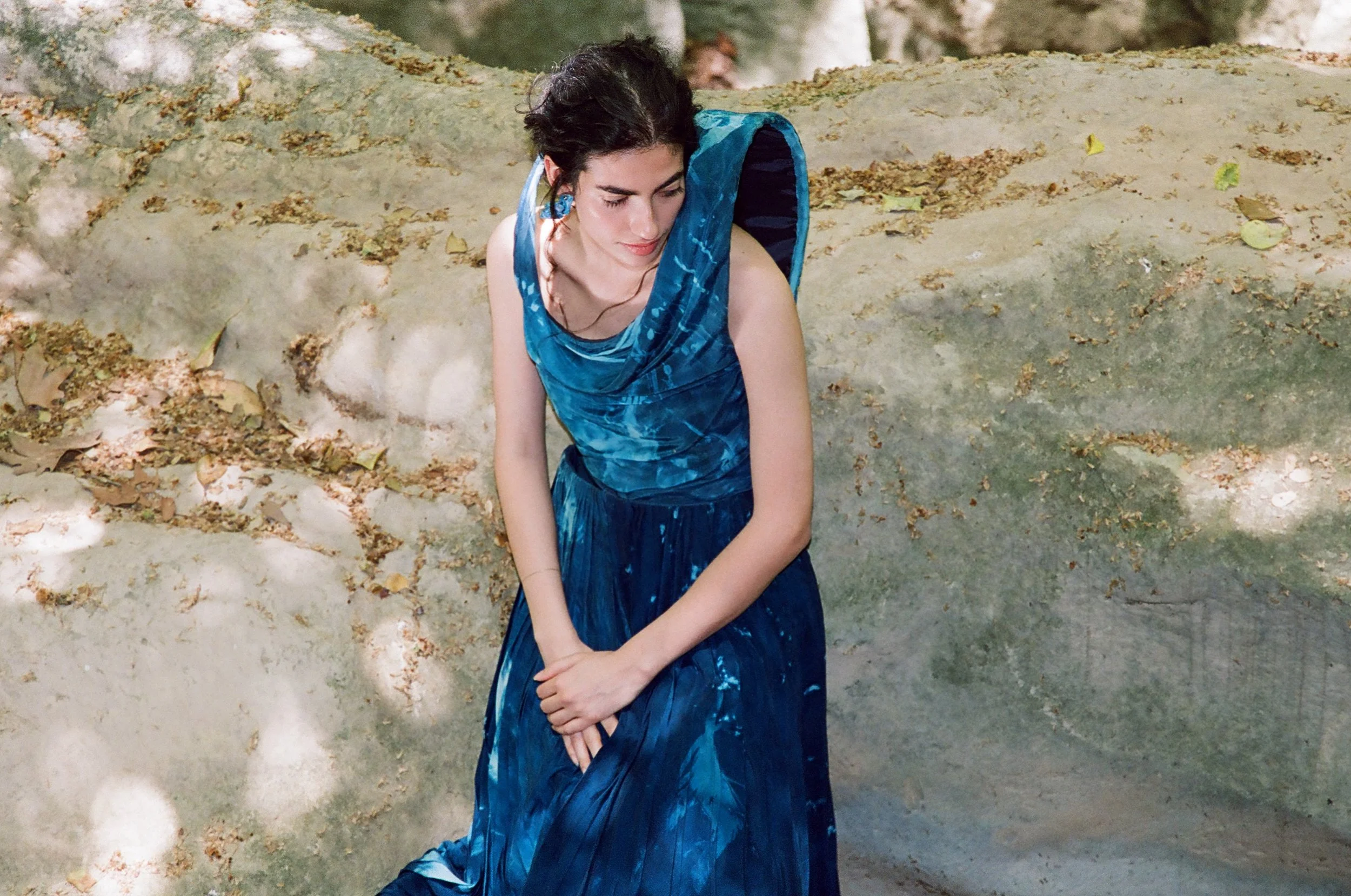
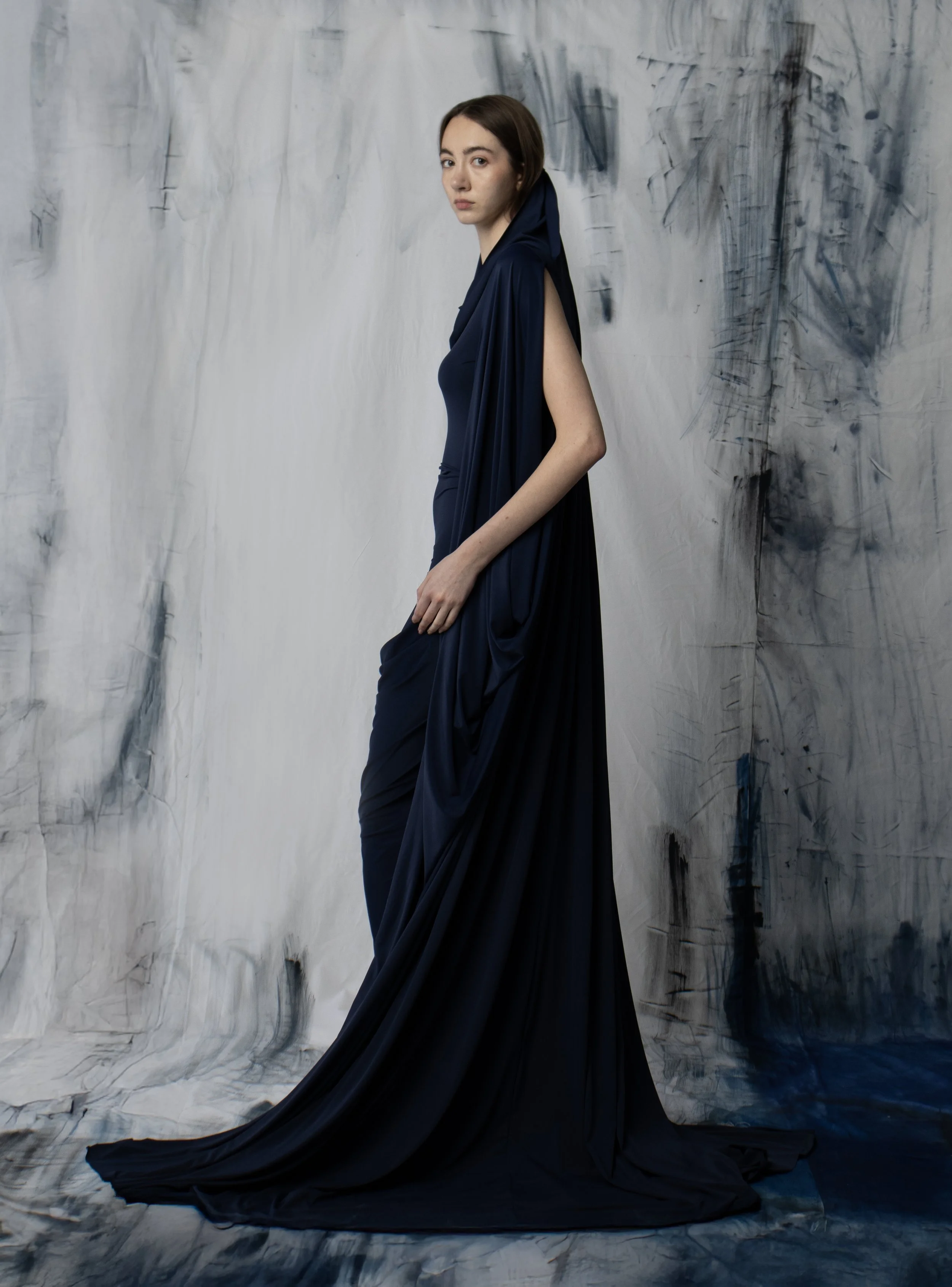
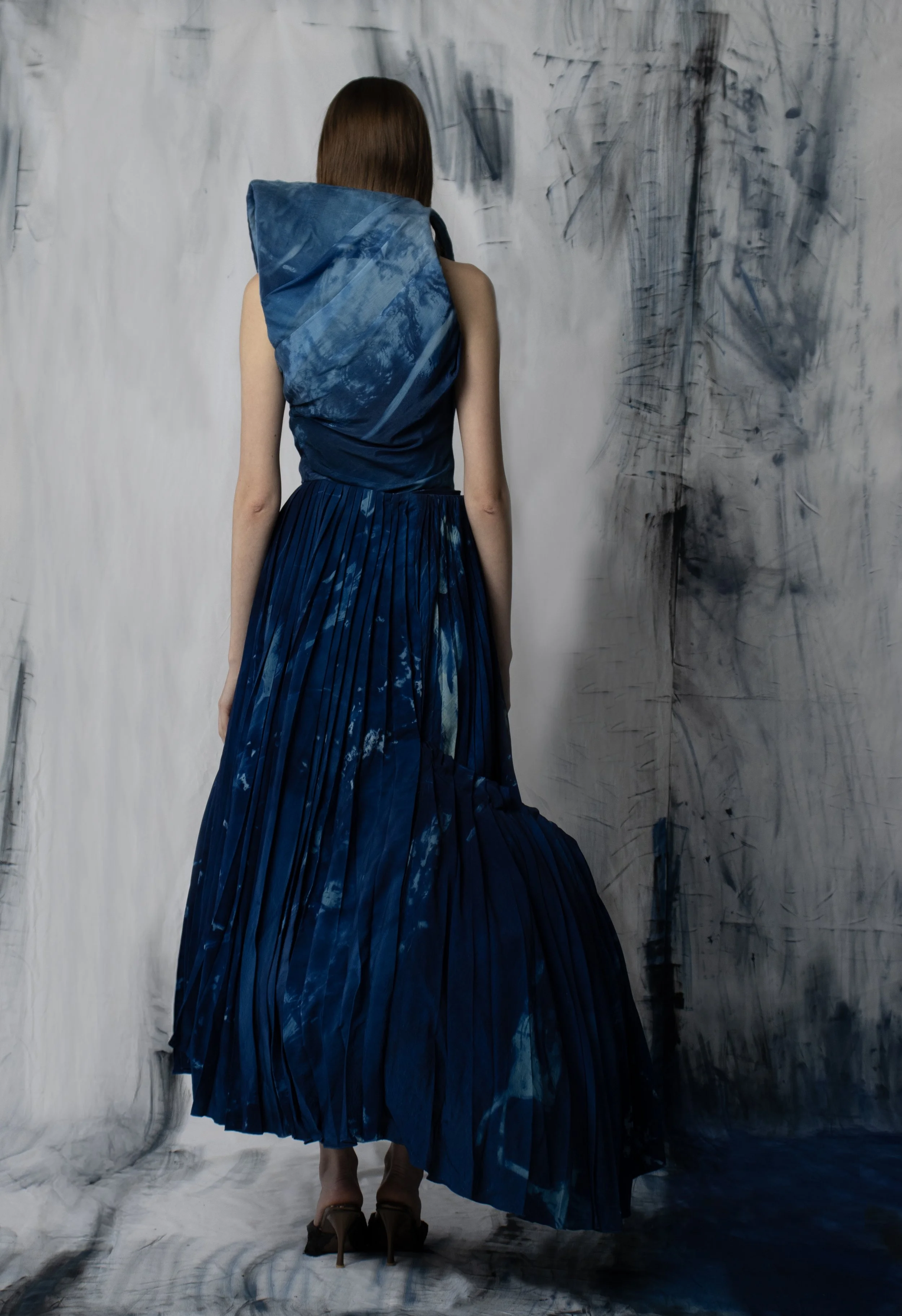
The material expression of Druze culture is reflected in their traditional attire, which is grounded in modest forms and muted tones. For men, wide black trousers (sherwal) and a simple coat (abba) tied with a cloth belt. On their heads, men often wear a white turban or a red tarboush wrapped with a white scarf. For women, it’s a long pleated black skirt, a long-sleeved top, and a distinctive white veil (mandīl) that covers their hair and drapes softly over the shoulders. To add more sophistication, the women dye their veils with rich indigo colour and hand-pleat them, all to emphasize the importance of the veil as a crown on their head. The folds, veils, and silhouettes of Druze clothing embody modesty and speak of dignity and a quiet resilience.
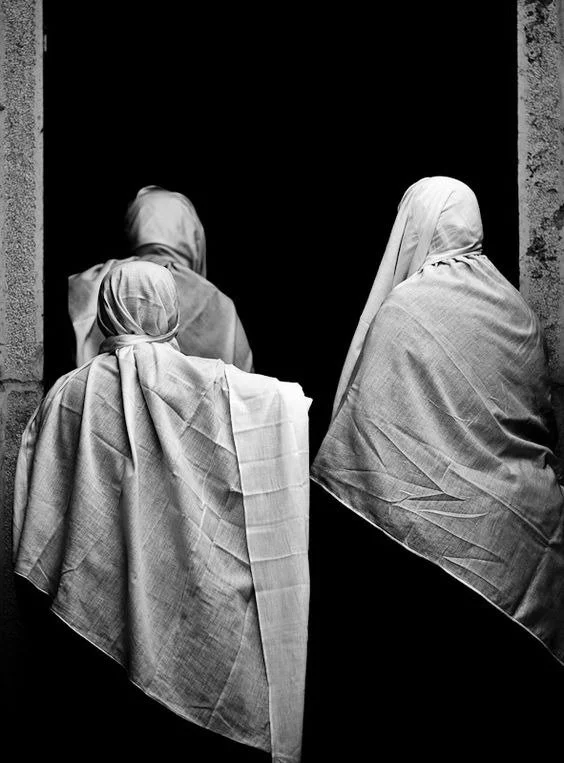
My collection, Vessels, was a contribution to this belief, which I’ve always been fascinated with. I drew on this philosophy of transformation and renewal as my guiding idea, linking it to my personal experience with death. The vessel becomes both form and metaphor: a body, a container, a bearer of memory and potential. This belief helps us have hope inside our hearts in that the souls of our beloved ones will have a chance to live a new life.
Each piece in Vessels acts as the body of a human—a container that carries the traces of its past within the soul that is in continuous flow from one outfit to another, translated with structured under garments emphasizing its presence.
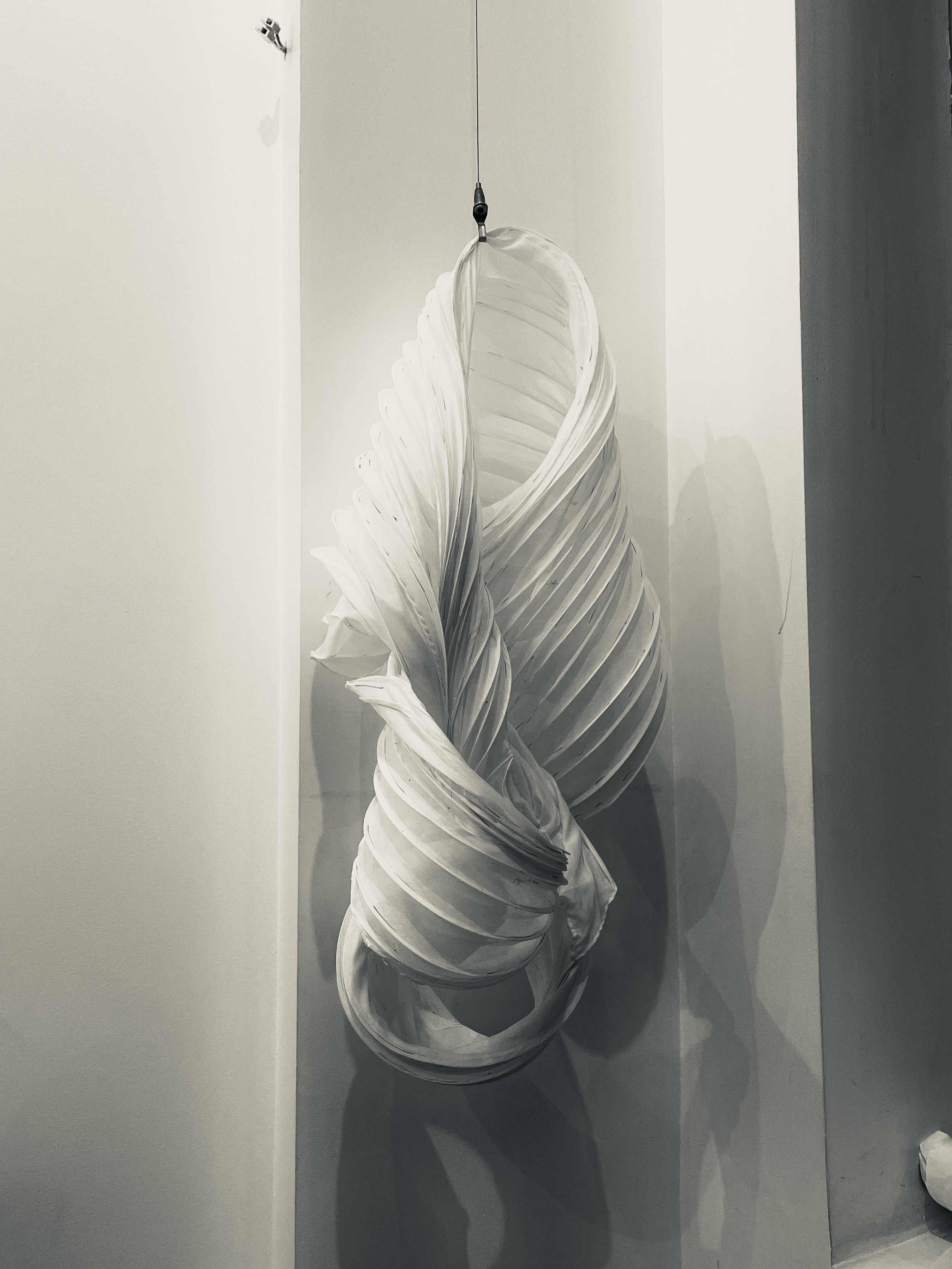
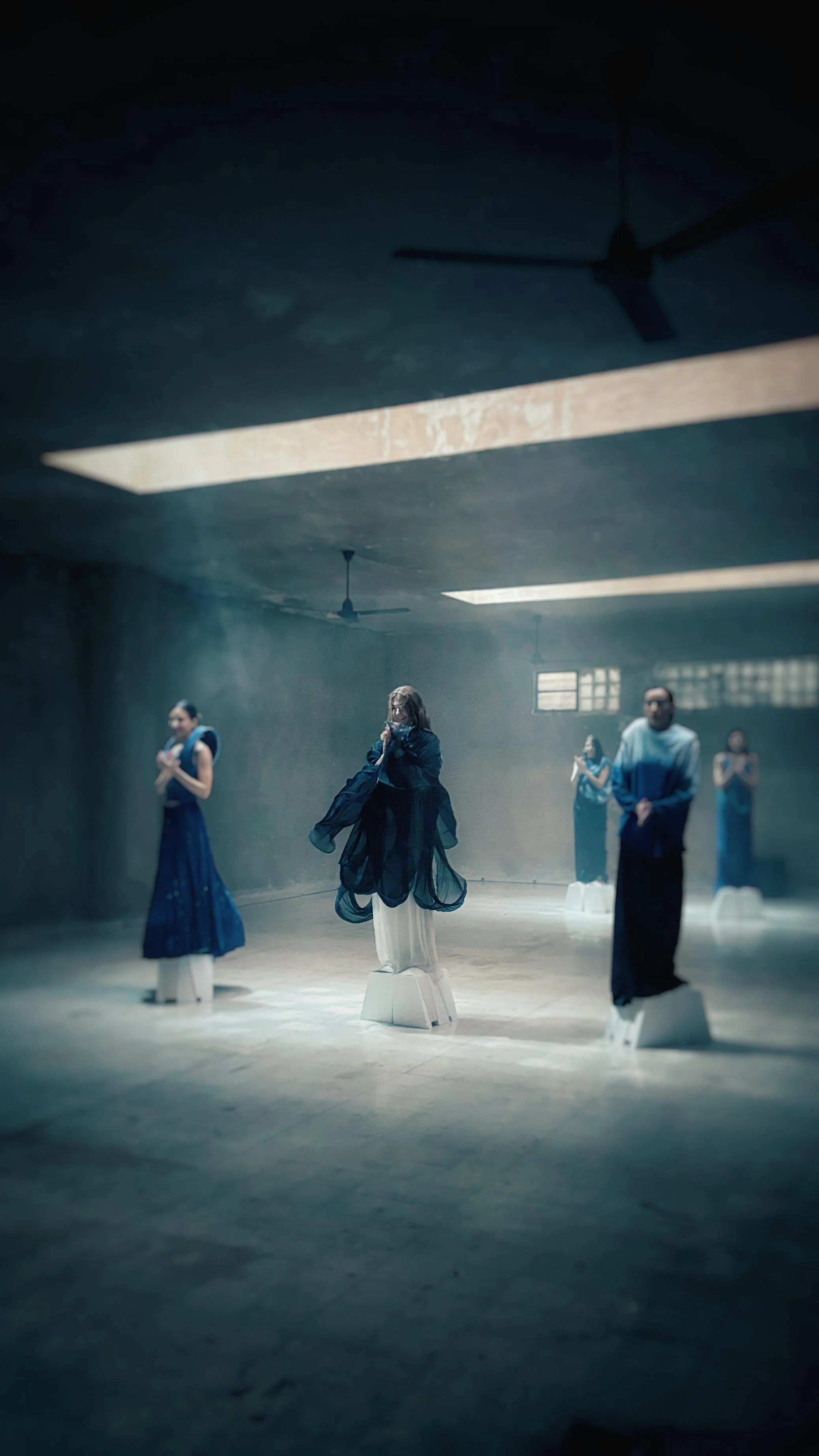
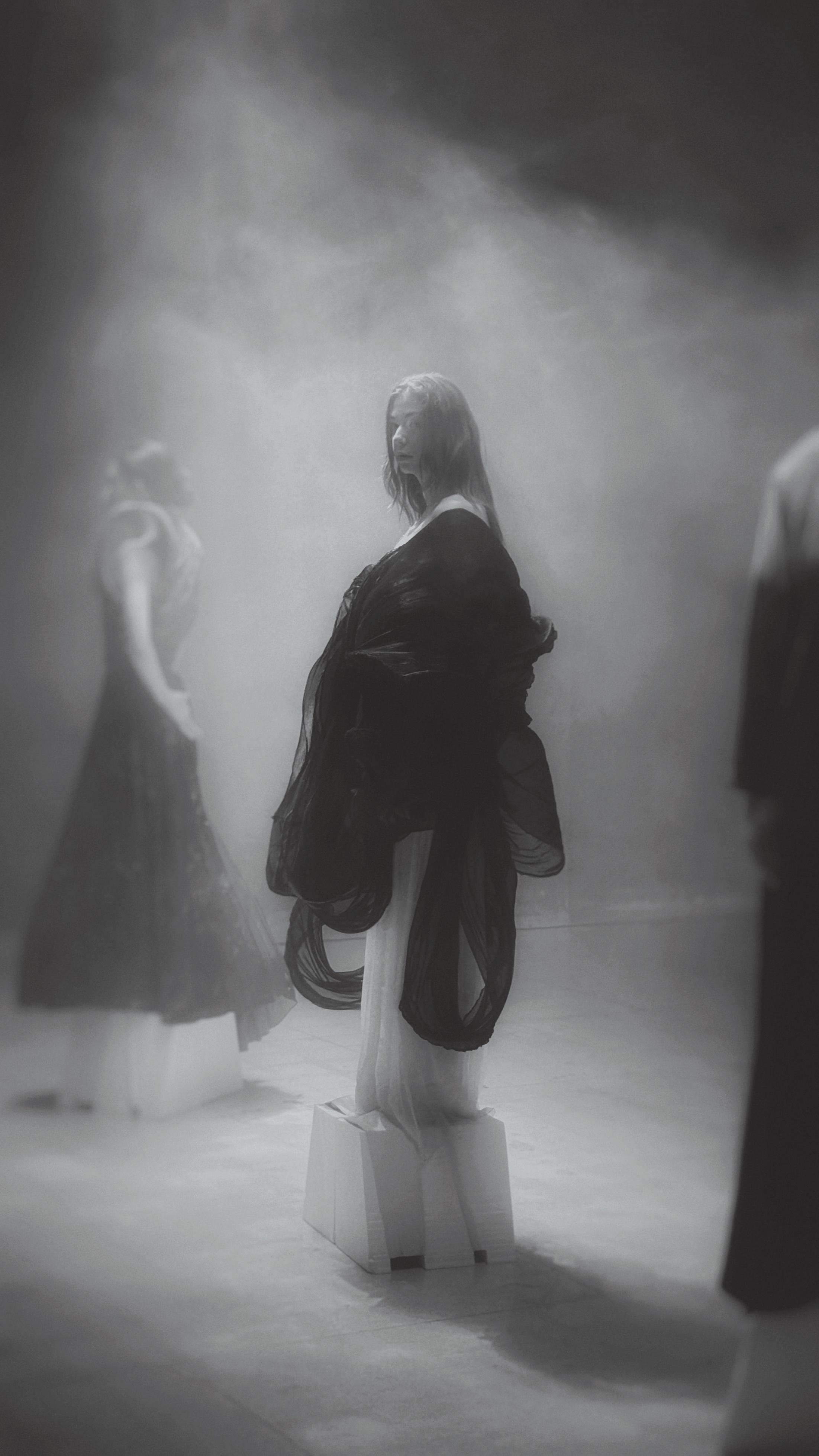
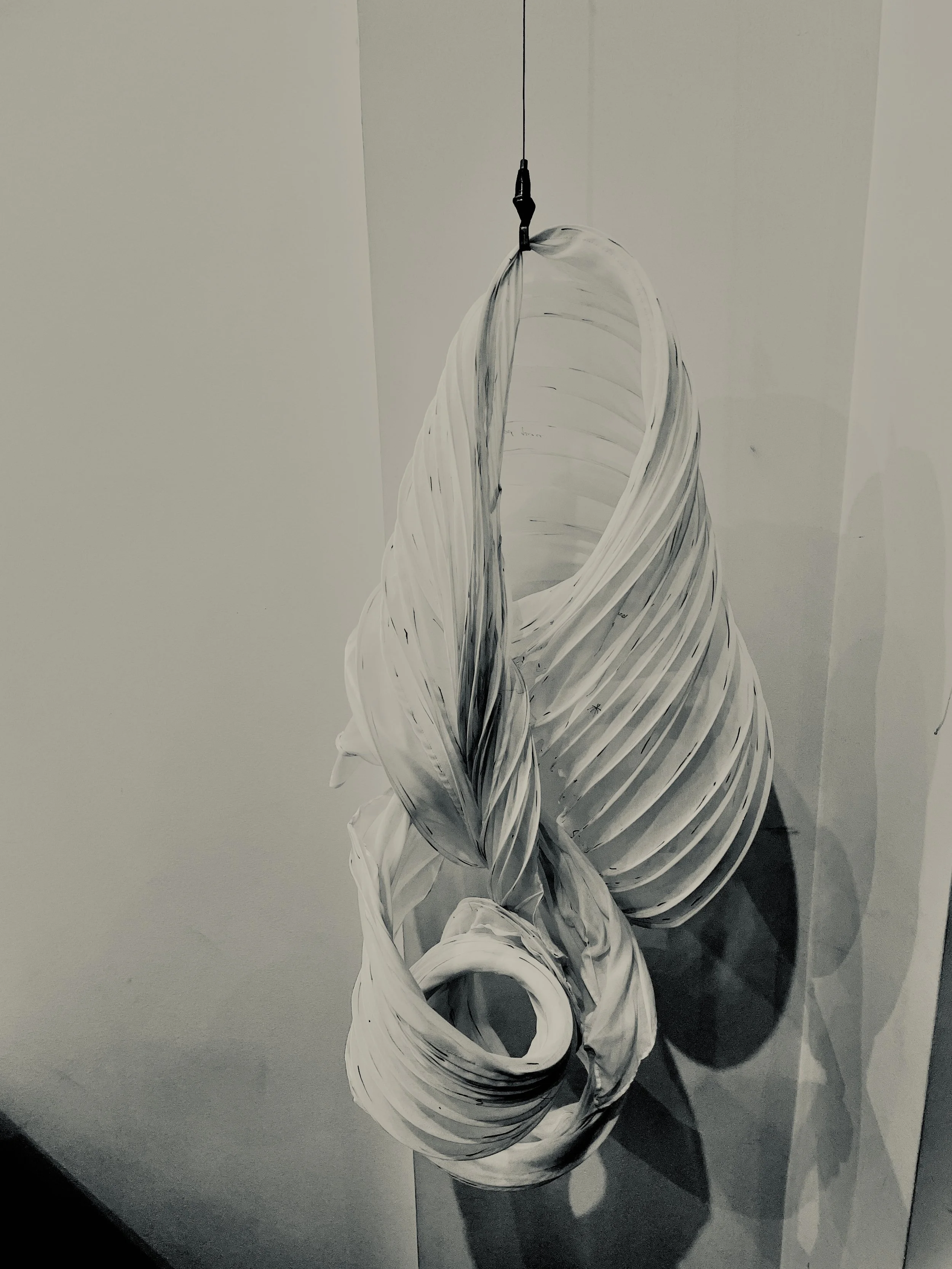
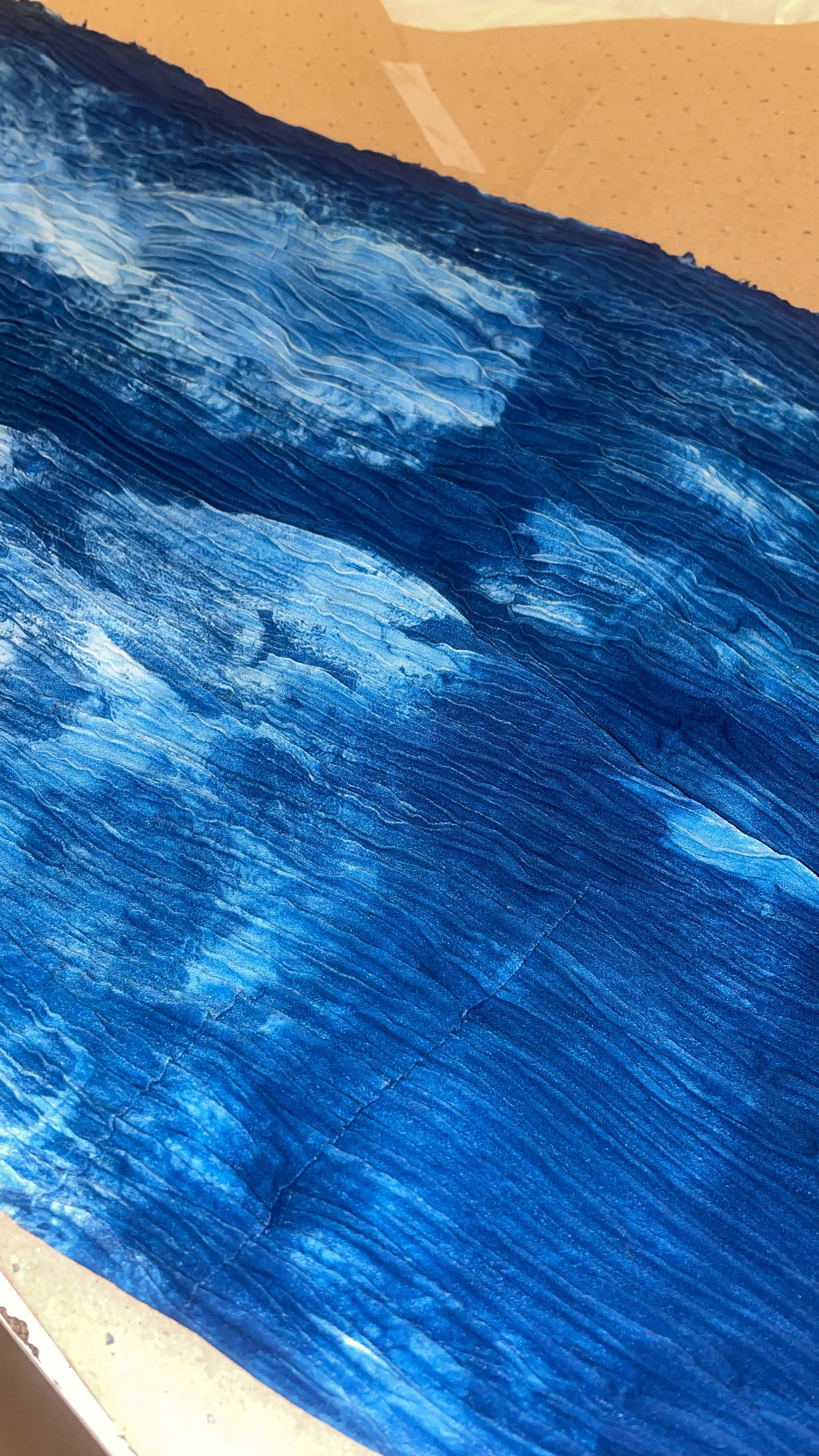
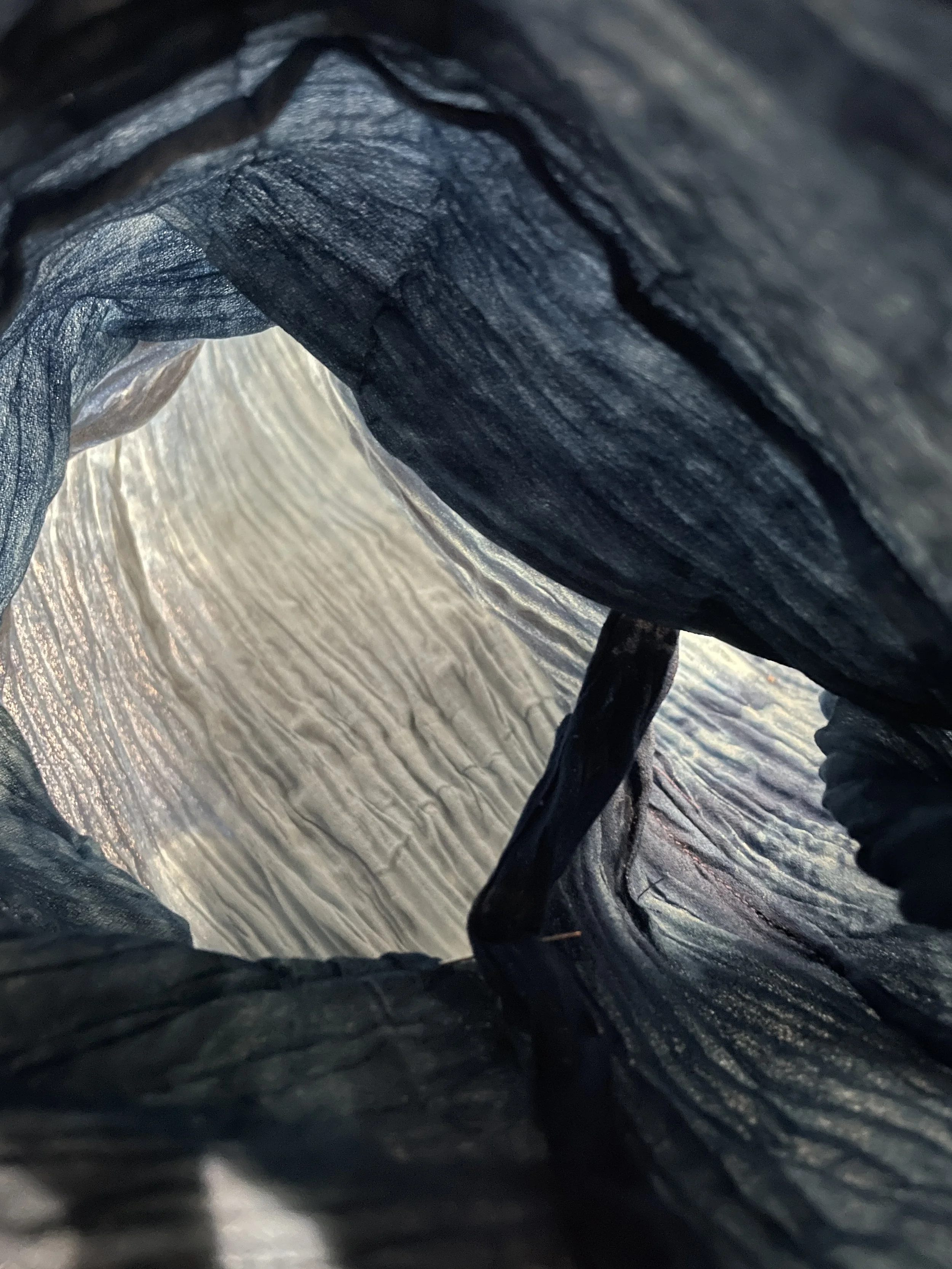
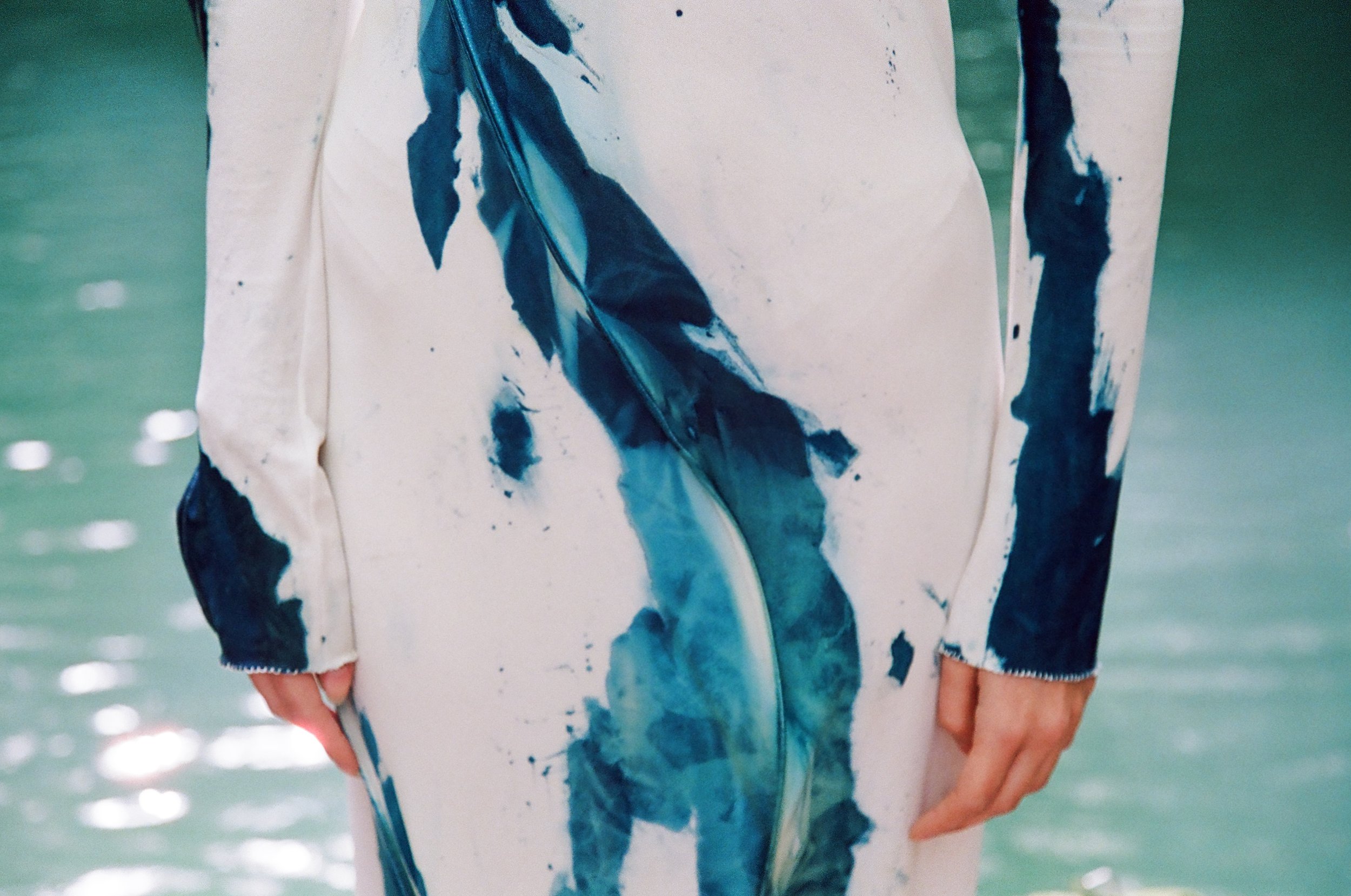
The development unfolded through an exploration of the surface as a site of memory and transformation. I focused on pleating and cyanotype techniques to create layered, tactile surfaces that echo the folds of traditional Druze attire while suggesting the passage of time. These manipulations allowed the fabric to hold depth, as if each crease preserved a fragment of experience. Within each garment, I incorporated personal photographs, images of my beloved family, and some other traces of precious moments, all collaged with my own visual archive reinterpreted through print and texture.
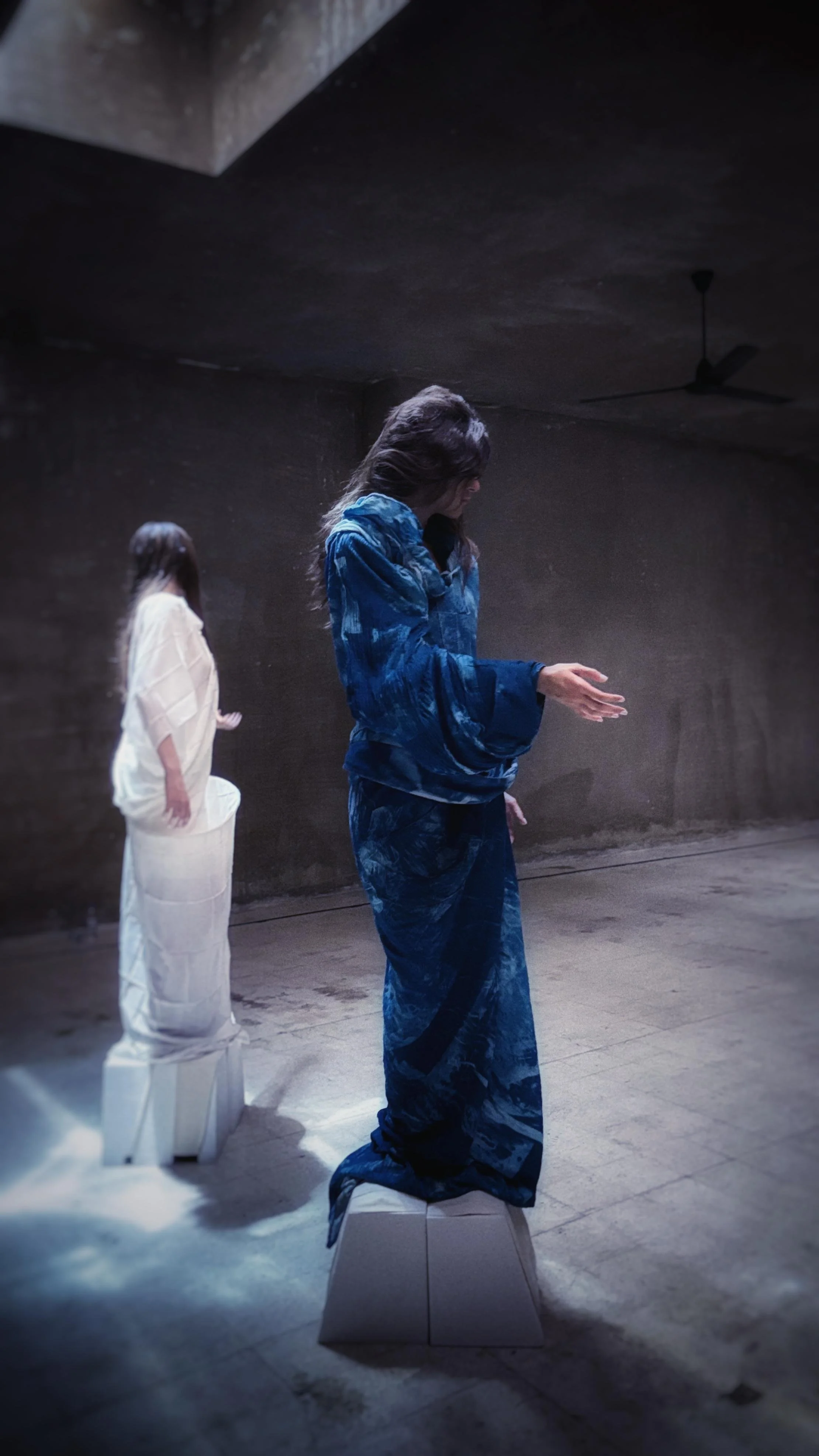
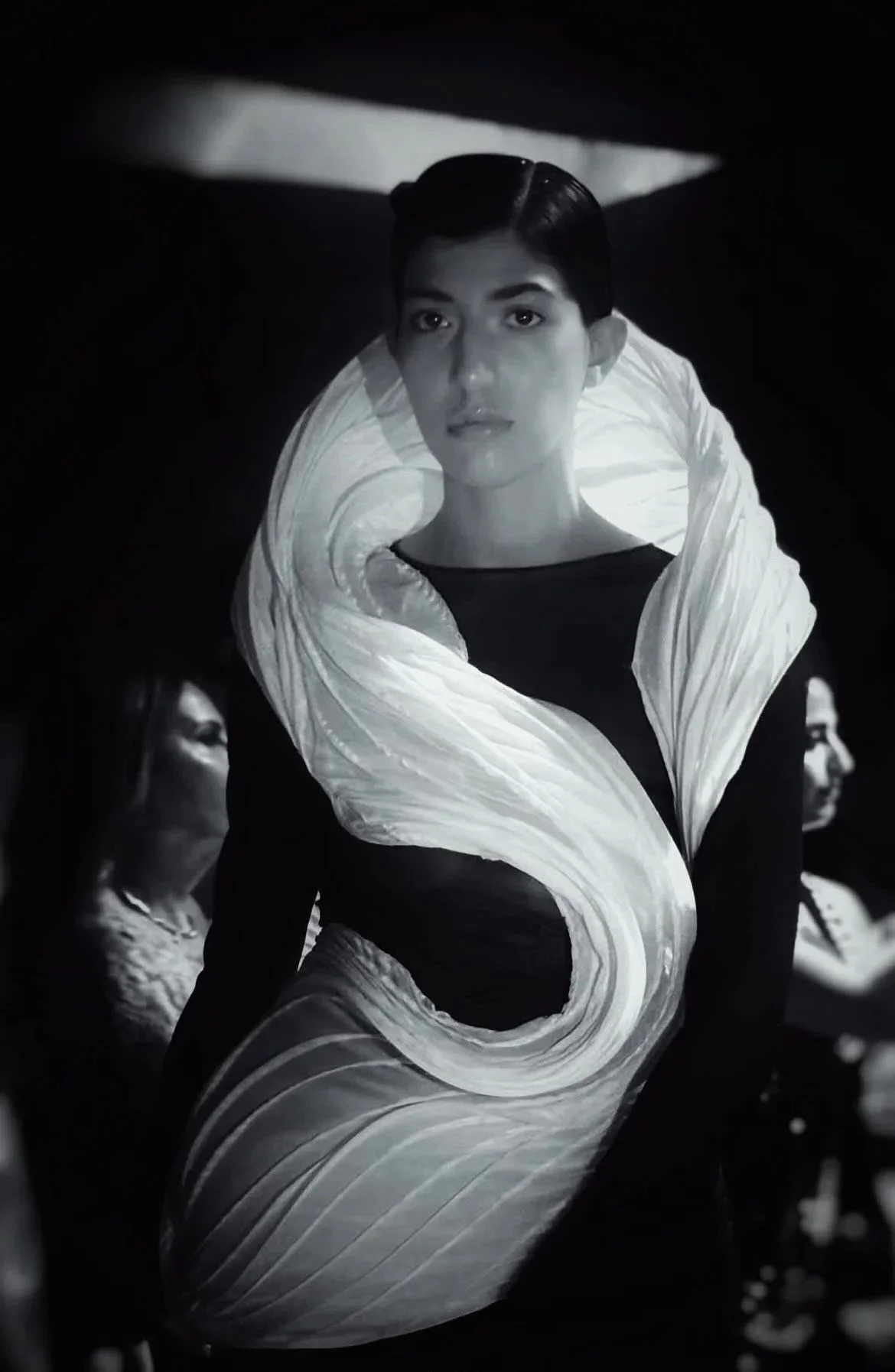
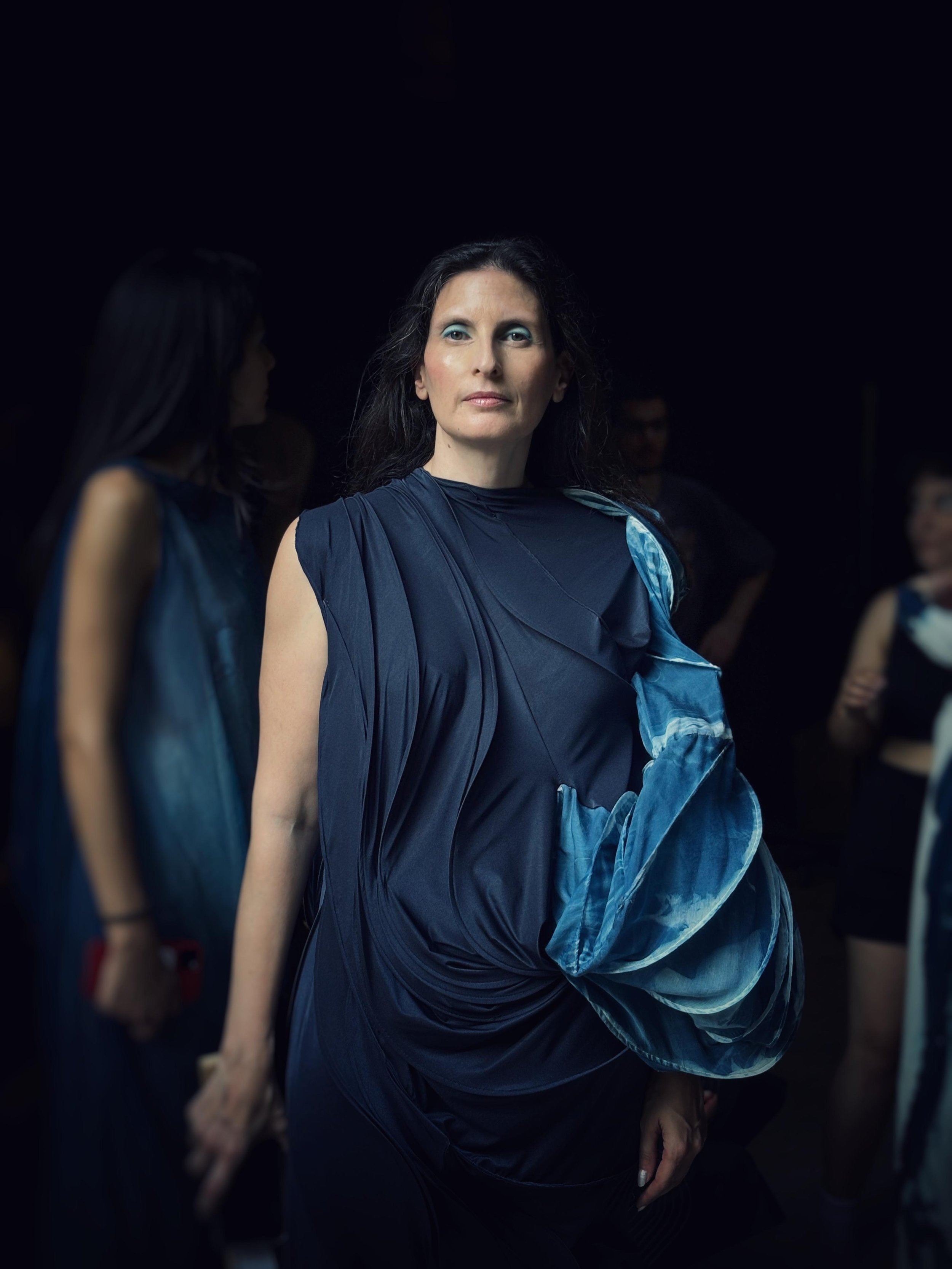
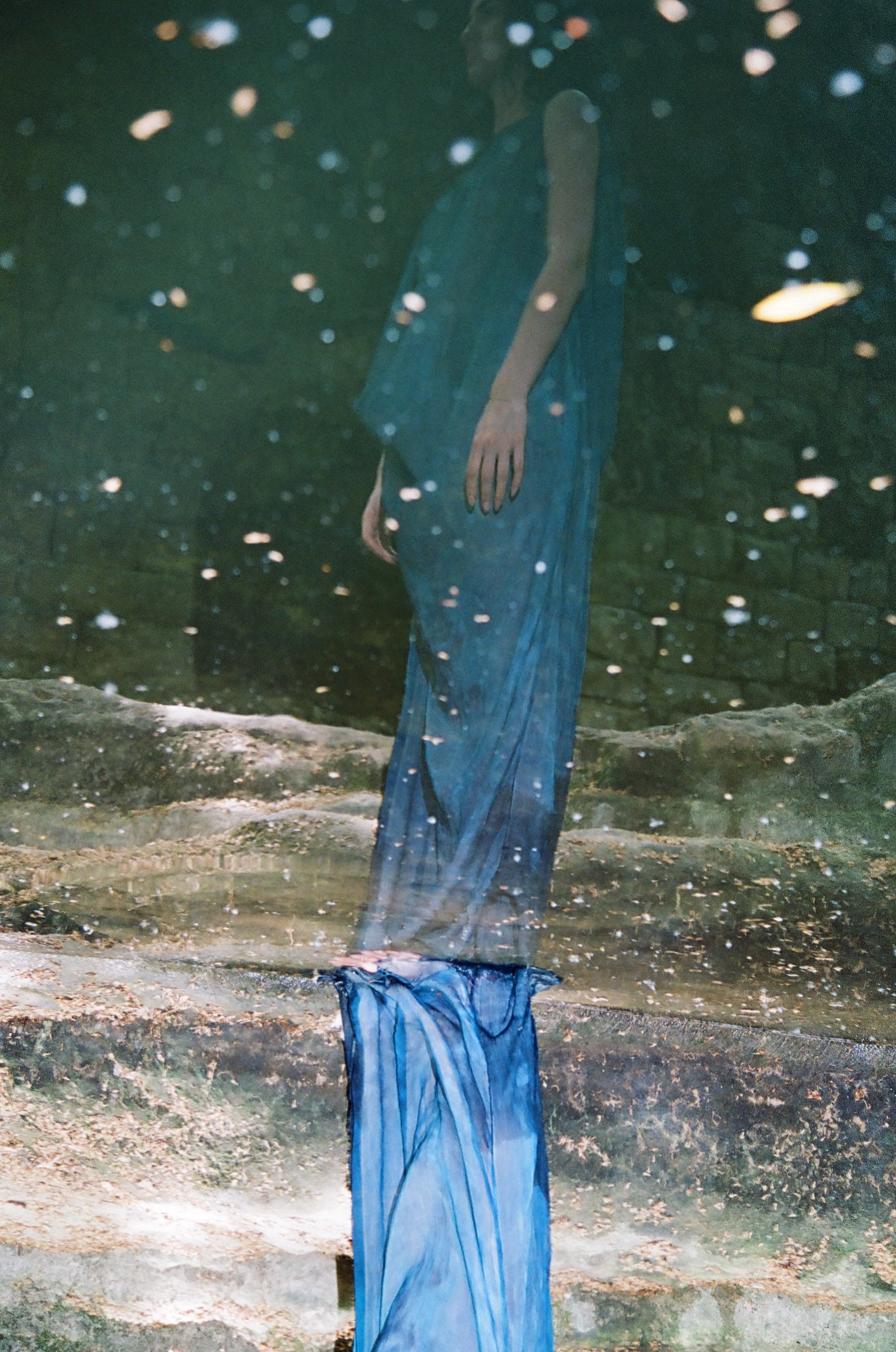
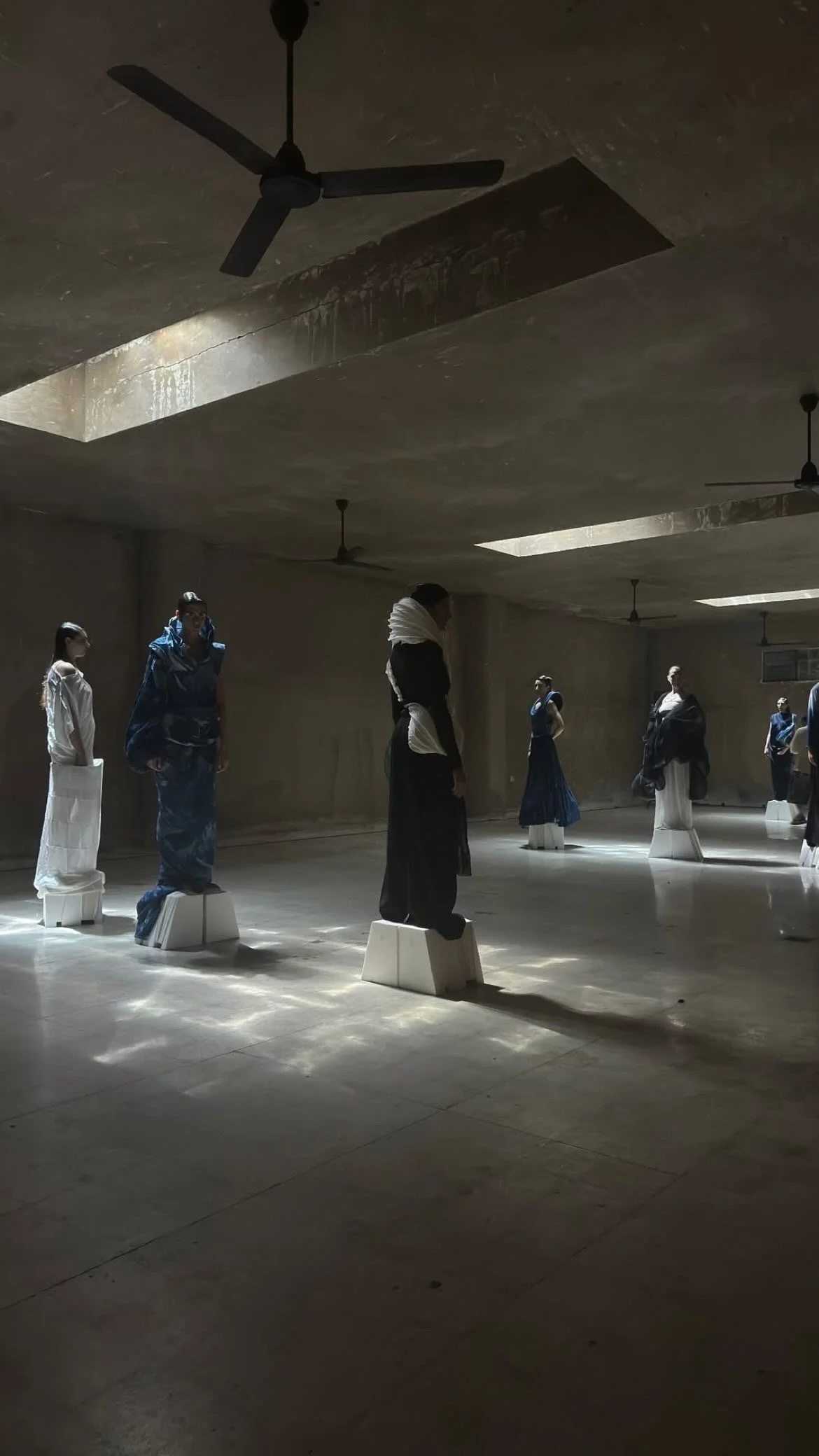
Keeping these images close to the body gave the collection an intimate dimension. This emotional layer extended into my spiritually themed fashion show, where my models embodied more than just the garments; they became living vessels with choreography depicting statues coming to life, each movement symbolizing rebirth and the continuity of the soul. Through light, sound, and rhythm, the presentation mirrored the quiet depth of the Druze philosophy that inspired the work. It was not a show of clothing alone, but a visual ritual, a passage between the personal and the collective.
I wanted the audience to feel like they were entering a sacred, holy place where they can’t touch anything. To just get mesmerized by the designs and take their time to look at the details. Ultimately, Vessels is a dialogue between body and spirit, tradition and reinvention. It stands as the pulse that will always remain the start and end of our stories in life. And the soul will have a lot of memories to imprint on the fabric of life; hence, Vessels will always be in a continuous cycle, with new chapters being written.
About the Author
Jihan Azzam is a Lebanese interior architect and fashion designer from Niha Al Chouf. She studied Interior Architecture at the Lebanese University before pursuing fashion design at Creative Space Beirut. Her work blends architectural thinking with contemporary fashion, shaped by her roots, her technical skills, and her experience in design development and production.