Where Did Women’s Voices in the Gulf Go? Tara Al Dughaither on SawtAsura
Interviewed by Nour Daher
There is a particular kind of archive that doesn't live in boxes or catalogues. It lives in an aunt's memory of a wedding song, in a cassette nobody has played in twenty years, in the fact that a certain woman in a certain village is still, quietly, the person people go to when they want to remember how something used to sound. This is the archive Sawtasura works in, not as a historian collecting artifacts, but as an artist trying to coax memory back into the body before it disappears for good.

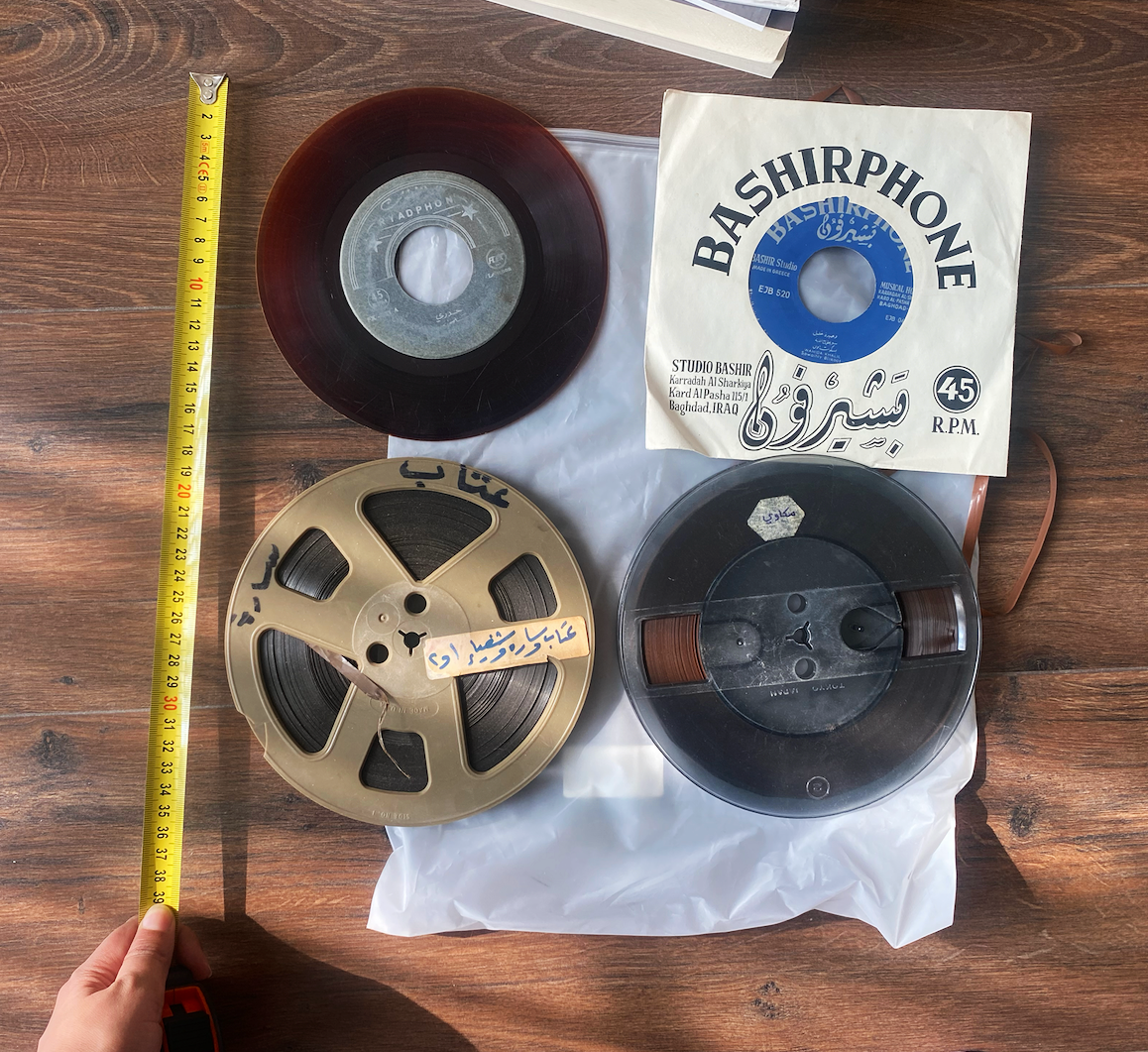
Cassette Archive
Tara Al Dughaither is a sound artist, researcher, and curator whose practice, which she calls an “embodied archive,” began in 2019 with a Prince Claus Fund grant and a single, deceptively simple question: where did the woman's singing voice go? What started as fieldwork, traveling to meet women, recording cassettes, tracing wedding singers through word of mouth, has since become something harder to categorize: part curatorial project, part ethnographic repair work, part vocal performance practice, built around the idea that some kinds of memory can only survive if they're re-embodied, sung and felt again, rather than simply archived and filed away.
We spoke with her about the traditions she's chasing before they disappear, the religious and social rupture that pushed women's voices out of public life for decades, and why she eventually stopped trying to collect the past and started trying to live it back into being.
From the archive
Can you start by telling us what sawtasura actually is? How did this project begin?
It began in 2019 with support from the Prince Claus Fund, out of a question that seemed simple at first: where has the woman's singing voice gone? I started by traveling, meeting people directly, collecting personal cassette recordings. But the country is huge, and within the first year I realized that if I kept going the way I'd started, this would need to become a full ethnomusicological research project — something way more academic and resourced than what I could sustain alone. So the methodology had to shift. I expanded from trying to collect records towards building more of an organised and intentional memory practice: understanding where the voice lives now, in cassette recordings from wedding singers, but also inside people's homes, as an ordinary, undocumented cultural practice that may or may not still be alive. From there I started commissioning other artists — people who actually come from the communities I couldn't access directly — to go deeper into their own family and regional histories, while I organized the larger picture. And underneath all of that is my own practice, where I try to transmute this whole history of the female voice into something new entirely: an embodied, performed form, built from working with community and with my own voice to remember, together or alone.
How do you actually find people who remember these traditions?
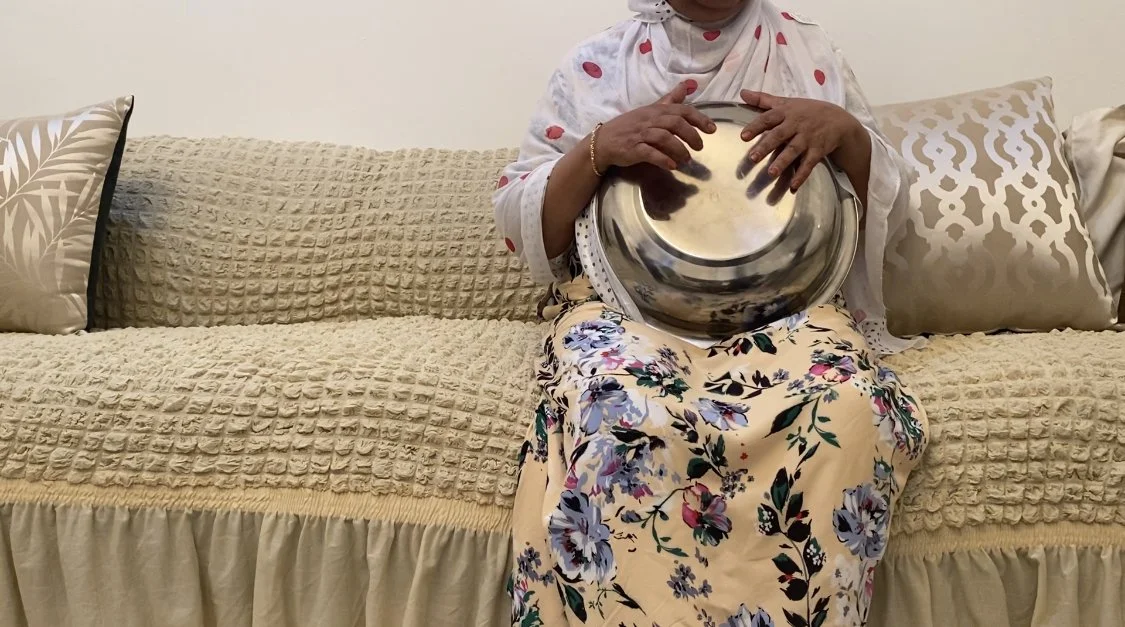
Honestly, it's rarely as simple as stumbling on an old record; most of the performers and women who remember folk songs are gone now; they're just not there anymore. And a lot of the singers used different stage names, so even the recordings that survive are hard to trace back to an actual person. What's more reliable is that the singer tends to be remembered through community rather than through the recordings themselves. So you find one person, and through them, a phone number, and through that, another name. What I'm really looking for is a social role that has almost entirely disappeared — the role of the storyteller, which eventually narrowed into “the wedding singer,” and then narrowed again into something closer to a commercial function. It's a contested process, too, because women won't just perform or sing in front of anyone. A lot of it comes down to knowing the social code: if you understand how to ask, and who to ask, someone always knows somebody.
Wedding band leader
From the print archive
You've spoken about a specific historical rupture behind a lot of this silence. Can you explain what that period was?
We call it the Sahwa, the religious awakening, and it was, without question, the strictest religious period the region has lived through, not only in Saudi Arabia but across a lot of the Islamic world — Iran, Afghanistan, as far as Pakistan. In Saudi Arabia specifically, the turning point people point to is 1979, the siege at Mecca. In the years after that, through the early 1980s, entertainment spaces that were already slim closed down almost entirely. Segregation intensified to the point that within some families, men and women stopped sharing the same room — suddenly that was forbidden, you know? The woman's voice itself became something to be minimized; you didn't answer the phone in case a stranger heard you, you kept your voice low in public, and even a woman's shoulder on a cassette cover might get blacked out. That lasted for two, three decades. It's tainted how the region is seen from outside, as if this was always how it was — but my friends who are in their forties and fifties remember clearly what came before, during, and after. I was born in the middle of it, so I don't actually know what “before” was. That's exactly why I started researching it. Because growing up, I kept hearing that singing and performance were just taboo, and I was like: really? That was never true.
How did any of it survive?
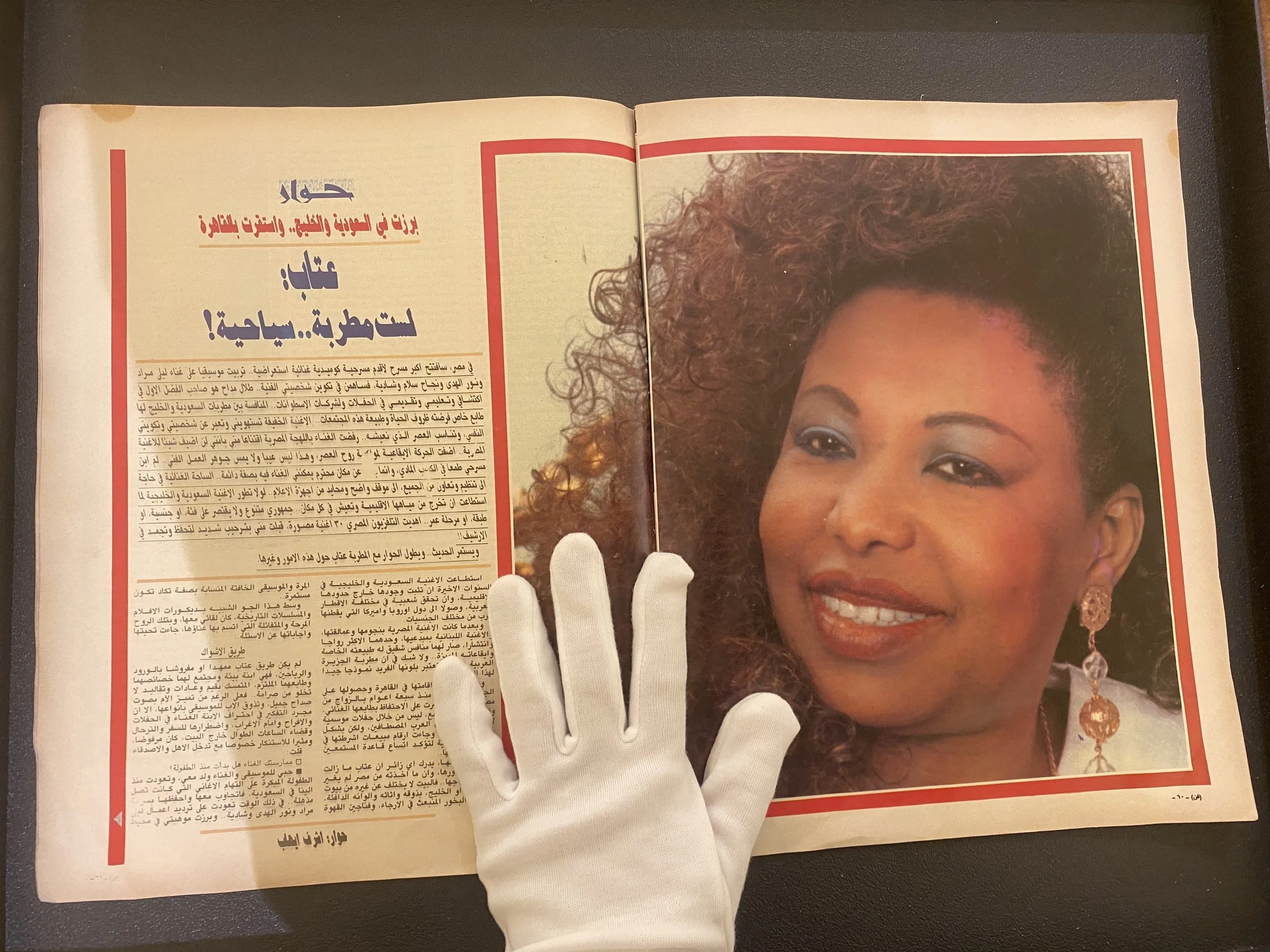
Through weddings and ceremonies, almost entirely. But the one place where the singing tradition never fully disappeared was the informal wedding economy, where women bands kept performing and, strangely, thrived, as for a long stretch that was the only form of entertainment around, so the women doing this labor became something close to a local pop star. But there's a harder layer underneath that survival story: it wasn't distributed evenly. The people who ended up forming these bands were disproportionately from lower-income and racialised communities. That class and racial dimension of visibility and invisibility has genuinely never been written about or discussed openly. Less urbanised families native to their provinces kept musical traditions tied to folk practices alive, but this is generally done in private at home and not as part of the informal economy that was accessible to me through records — but broadly, the labor of keeping the sound alive publicly fell to people with the least social protection to do it.
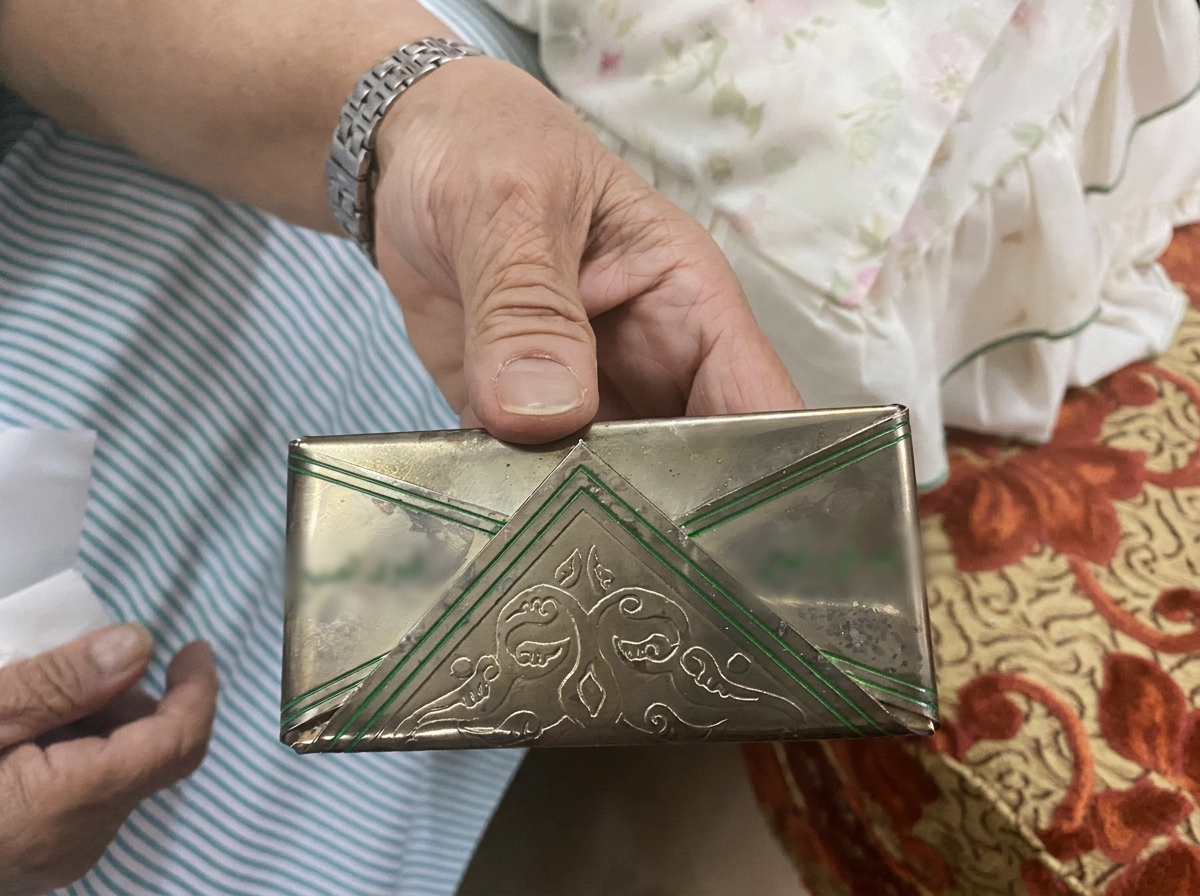
Wedding Invite (2005)
Tell us about your own creative practice, how does it draw on what you've learned from this research?
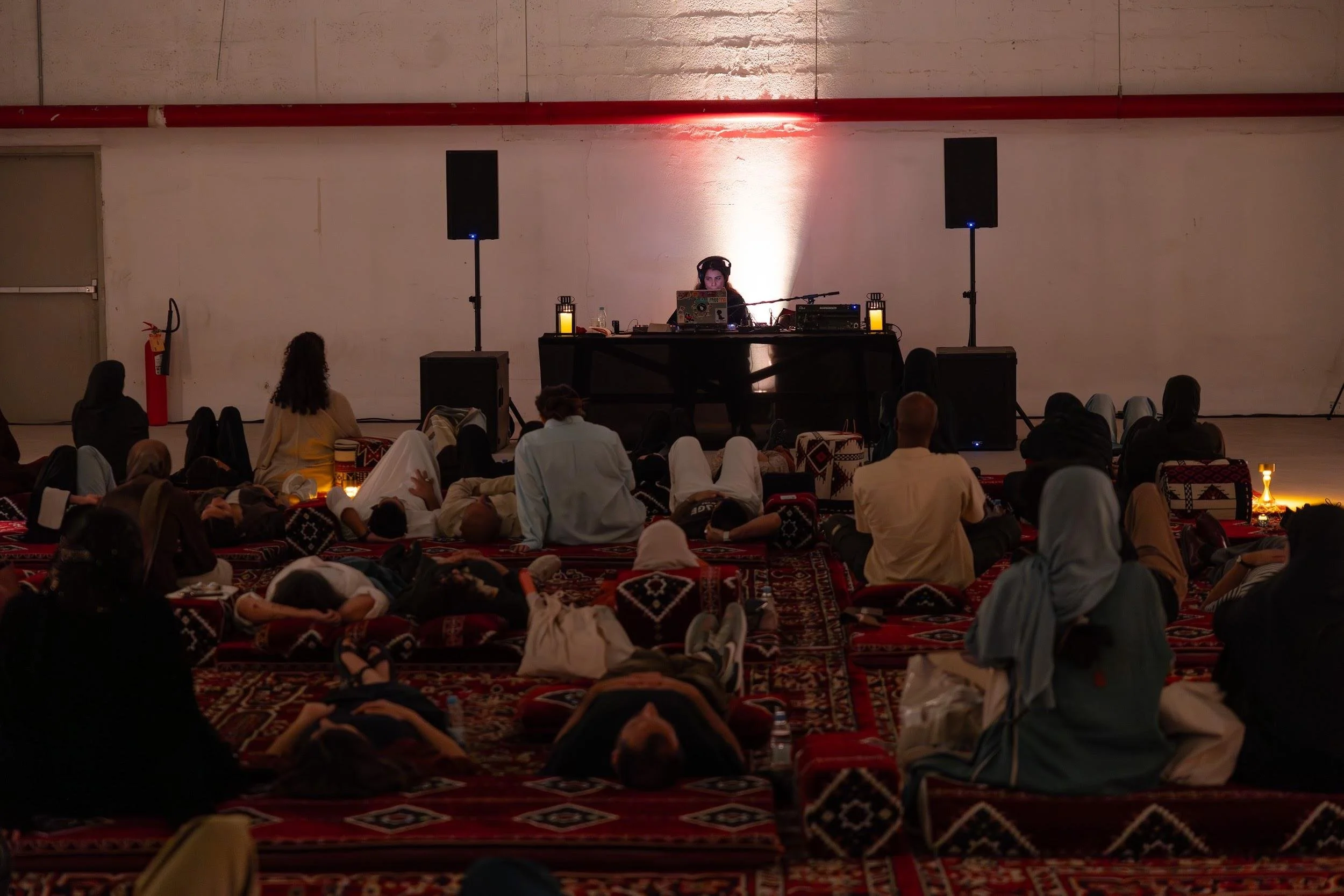
The throughline for me is the idea of gathering itself, creating a space, a samra, where a moment can exist long enough for a memory to actually sink into the body. That's the tradition I'm drawing from, whether it's a wedding, a spiritual gathering, or just a celebration. Technically, my setup is a kind of triangulation: a synthesizer and loop pedal, an analog layer; cassette or vinyl playing alongside everything else, and my voice in the middle, holding it together. The biggest difference between what I do and the traditional practices I'm drawing from is that almost none of it is percussive. There's no fixed tempo at all. This is because I hail from an urbanised family, and my experience of music has been the commercialised solo artist experience. Not the traditional gathering or band, but through synths and production I try to emulate the essence of that collective listening tradition. I just move across melodic lyric and harmony without anything keeping time, so people often lose track of how long a performance has actually lasted — forty-five minutes go by, and people ask if it's already over, wanting more. That's the secret, honestly: not having a tempo is kind of insane. I perform in intimate spaces on purpose, for the same reason: to keep the intentional/non commercial gathering tradition alive. During one open studio, rather than set up an auditorium-style room, I left the beds in place and put chairs around myself in the middle. So everyone was close enough that any small sound or movement became part of it, whether they meant it to or not.
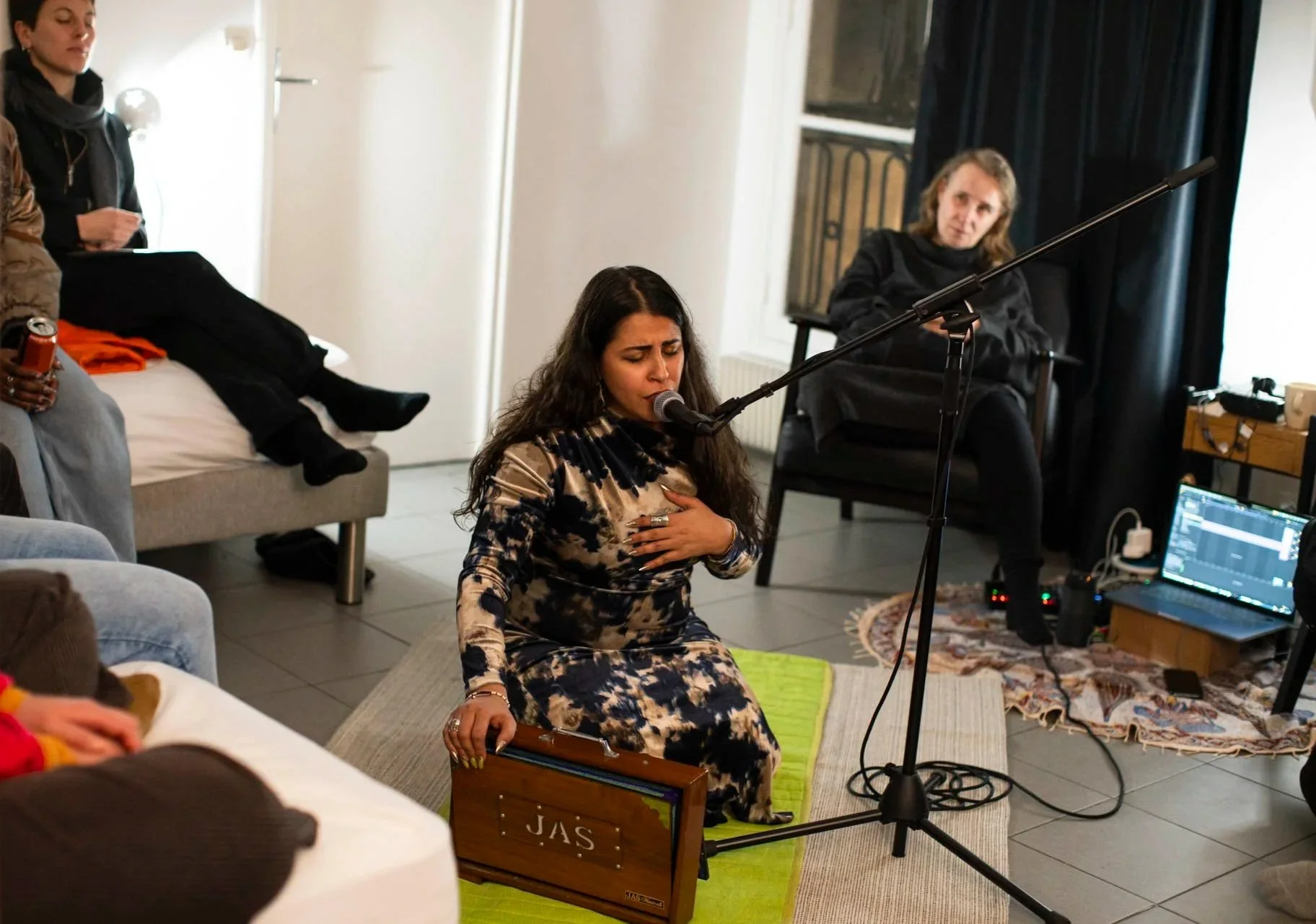
Cité internationale des arts © Maurine Tric
You mentioned music wasn't an encouraged path for you growing up. How did you end up here?
There was no formal path to it, and for a long time it was actively discouraged, like, not an option at all. I studied mass communication, with some architecture before that, and it was actually my father who suggested I move toward curatorial studies for my master's. He could see cultural institutions arriving in the country and understood that as one of the only legitimate jobs for me to have. It’s been helpful to understand how to mediate these traditions into institutional settings; now that our economy is reforming into capital and gain, institutionally backed projects are important. Performing itself was a different story; my family only came around to it once they understood I was doing it as a socially engaged, critical practice, sometimes with government support, rather than chasing pop stardom or commercial success. I never had formal musical training. I don't think I'll ever fully get over that, but that's the truth. I've just spent years around musicians, watching, listening, taking the occasional voice or piano class to relearn the basics. Recently I’ve also started learning production on Ableton and am excited for that layer of sound-making, as it's really helpful especially in a place with very few musicians to collaborate with and even fewer venues.
Is there a project that best captures what this embodied practice looks like in action?
One clear example is a project connected to Al Ahsaa, looking at how recent urban development around the oasis actually dried out land that had sustained the area for generations. The question driving it was: where did the water go, and where did the memory of the water go with it? I worked with women over three or four workshops, using voice and movement to help access and articulate memories that hadn't been given space before. It's all embodied, has to be, because the thing being recovered lives in the body, not in a document, so it has to be worked through the body to come back at all.
Do you feel there should be a sense of urgency for this work?
Yes, and it's not abstract. Roughly seventy-five percent of the population is under thirty-five. The elders who still hold this material in memory, rather than in any recorded form, are a shrinking group, and once a place becomes fully urbanized, that access just closes. I'd say we have maybe fifteen, twenty years before this generation's memory of “before” isn't reachable at all. That's the real reason this work has to happen slowly, through relationships and trust, rather than through some big institutional archive; there isn't time to wait for the institutions to catch up.

Sawtasura Honoring the Voice of Sara Othman