Tsawwar… Rita Kabalan
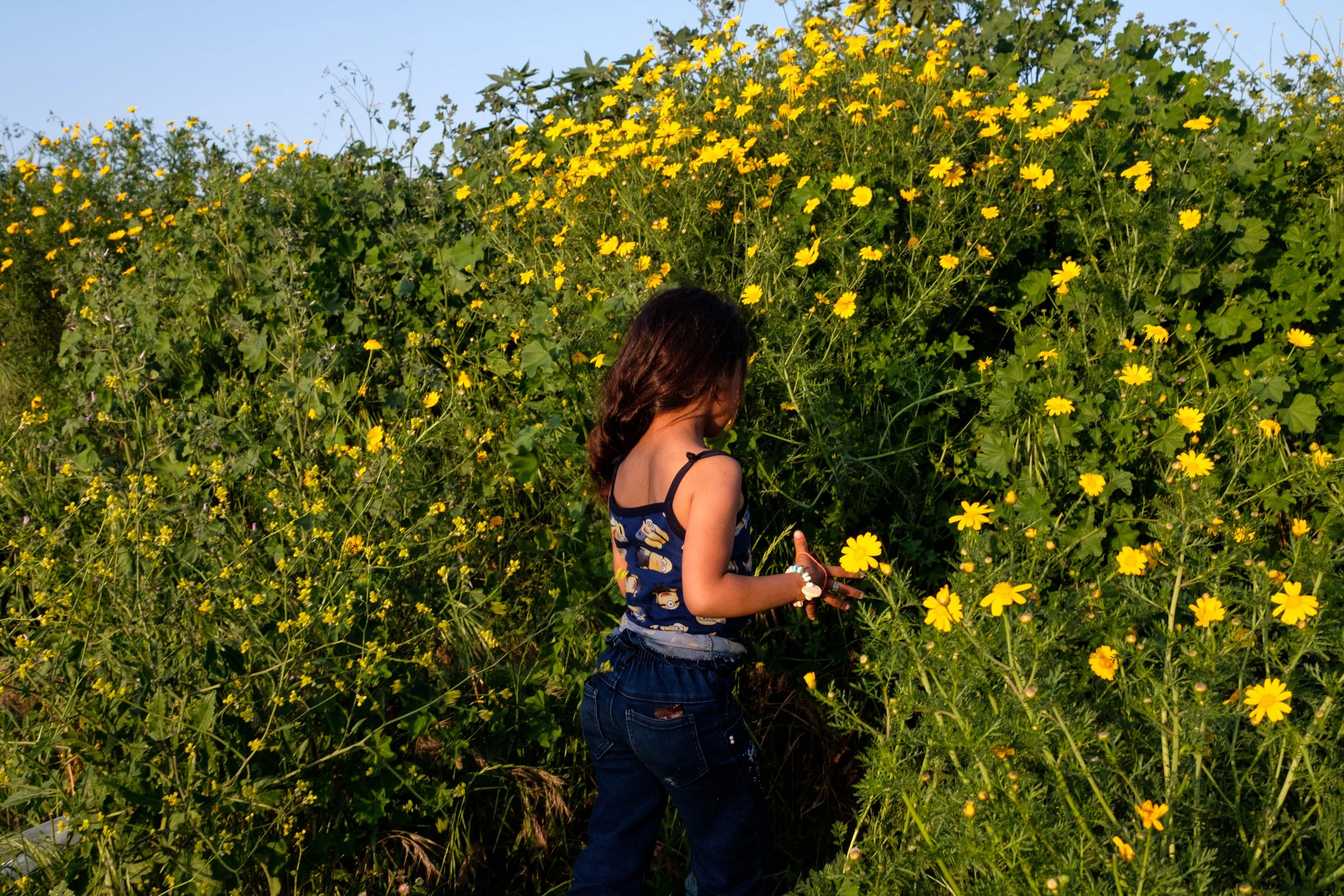
Displacement, April 13, 2026
"This photo was taken in Biel, Beirut, where hundreds of fragile tents housed displaced people, the majority of whom are from south Lebanon and Dahieh. A 10-year-old girl asked to get her photo taken. We chose a bush of yellow flowers. A frame similar to one she may have picked in her village.
This mass displacement was caused by Israel's bombardments and forced evacuation notices. Displacement is often depicted as survival, but it keeps one in survival mode. Everyday simple tasks become a struggle, from water to restrooms, to food, to sleep. It removes kids from their homes, schools, and routine. All the predictability of life that provided a sense of security is ripped away to a life of chaos, loss, and boredom. A life waiting to go back to its old self. Waiting to go home without knowing when."
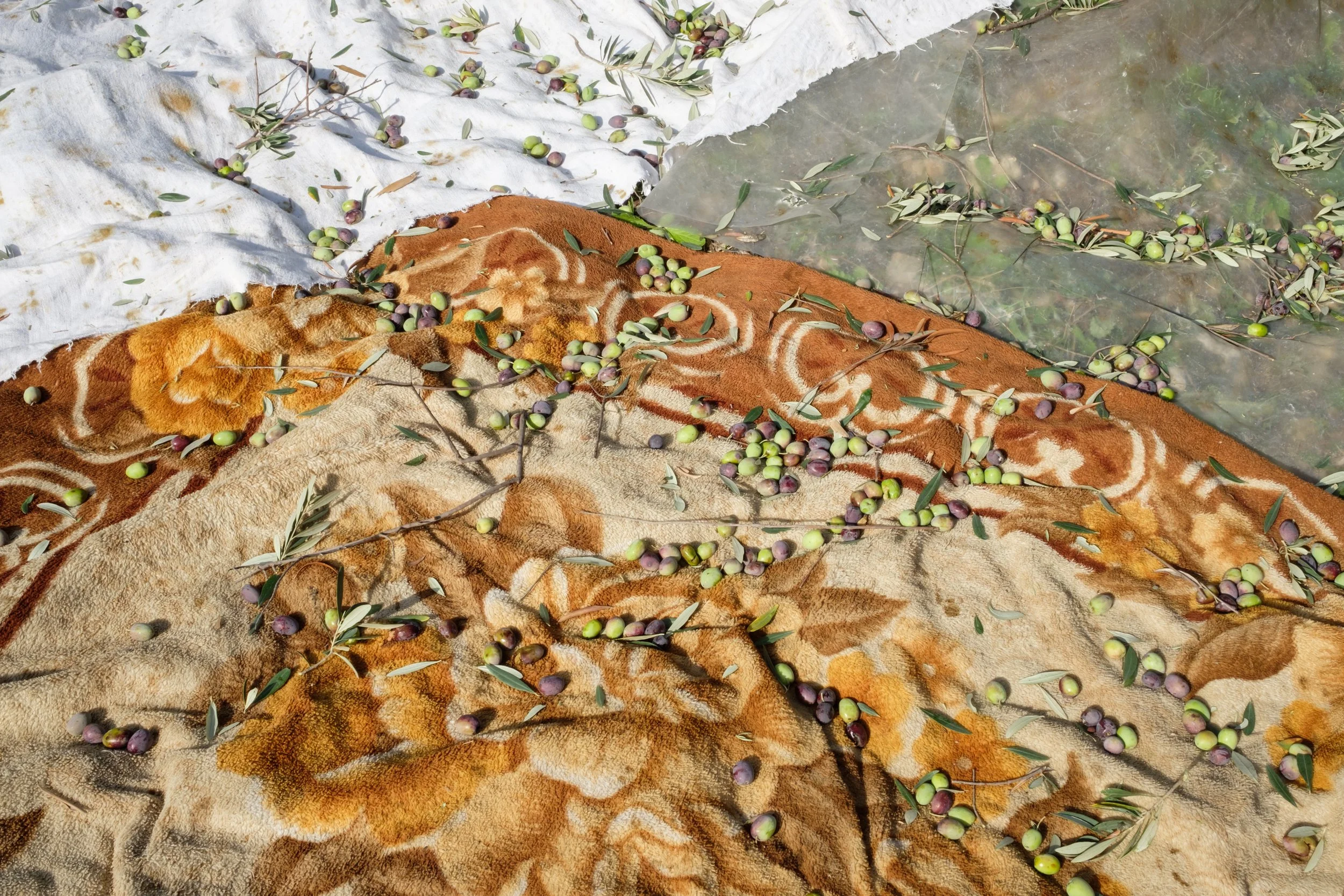
“In October 2023 I was supposed to go to my friend's family olive grove in a village in south Lebanon, but it was no longer safe to go due to Israel's bombardment. Instead, I went to my aunt’s small grove in Chekka where this photo was taken. The blanket, white sheet, and plastic cover were laid under the tree to catch the olives that were shaken from above. Something about the way they were connected reminded me of Blad el Sham. My initial feelings were that the white sheet was Lebanon's mountains, the brown and orange blanket was what I imagined were Syria's farmlands and sunrises, and the plastic was Palestine being suffocated under occupation, but a thin and see-through occupation that is weak and temporary. I considered rotating the image to somewhat match the actual map, but decided to leave it the way I initially took it – underneath, it is land that binds us.
Most people outside the Levant don’t know or understand our ties to olive trees. Many are hundreds of years old. They’re planted by our ancestors and passed on. They’re rooted to the land and our history. They provide olive oil, a main component to our food. Mostly, they represent a love that our great-grandparents had for us; descendants they would never meet. Their joy in knowing the future will be nourished by the hard work of their hands. Attacking olive trees, as the Israeli military has done to thousands, is no accident. It is intentional and deeply rooted in erasure.”
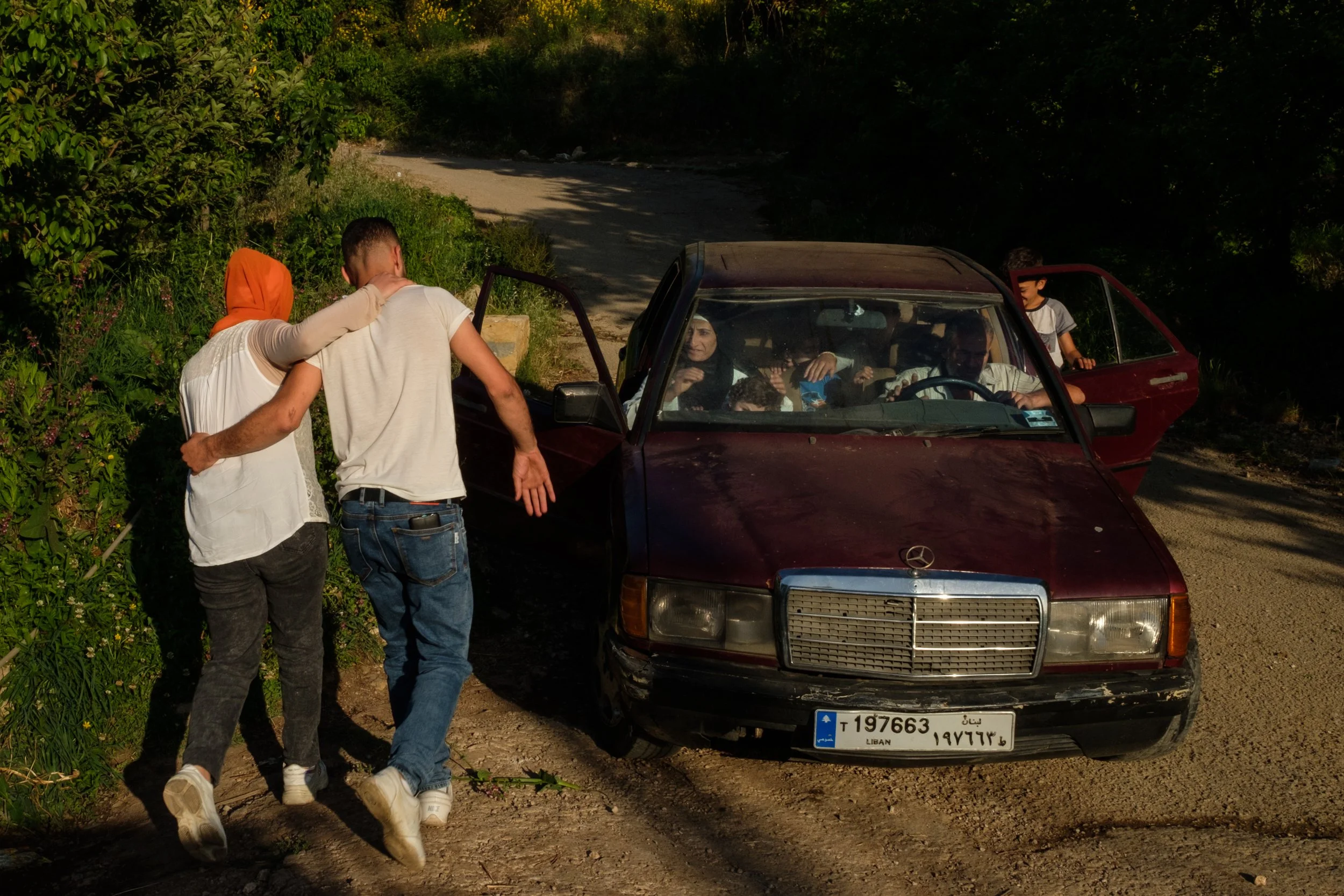
"In May 2021, my friend Khaled left Lebanon to find work overseas. This photo was taken on his last day in his hometown of Dunniyeh when he was saying goodbye to his sister's family. Khaled first went to Turkey and then Iraq. He returned to Lebanon several times only to leave again in order to find employment. In 2021, things seemed dire financially. His circle of friends was leaving or attempting to leave one by one to support themselves and their families. However, it was always with the plan of return. Leaving Lebanon was an "investment" in order to find a way to make Lebanon sustainable and a place to build a future. The financial crisis has only worsened in the years to follow. Now, with the continued bombardment from Israel on the south and all over the country, things have become more difficult and uncertain. The cycle of violence that has pushed young people out has continued as it has in the decades before."
Rita Kabalan is a Lebanese American photojournalist and documentary photographer based in Beirut. Her work has focused primarily on cultural heritage, displacement, migration, and uprisings. Her work has been published in Al Jazeera English, Le Temp, Foreign Policy, Middle East Eye, Guernica Magazine, and The Public Source, among other outlets. Rita also teaches photography workshops and is a contributor to the EveryDay Middle East Instagram account.
Tsawwar is an ongoing visual series in Daftar which explores the stories behind a photograph, taken in the region or by an Arab photographer, written in their own words.