Civilizations Thrive When Human Creativity Is Protected: The Living Pedagogy of the Wissa Wassef Art Center
Words by NOUR DAHER
The Wissa Wassef Art Center is often described, mistakenly, as a traditional craft institution. Looms, wool, natural dyes, and patient hands seem to invite such a classification. But to frame the center as a site for heritage preservation alone is to miss its radical core value. What unfolds in Haraniya village, on the western edge of Cairo, is not the conservation of tradition but the sustained experiment of imagination. “We are not a traditional craft center,” Ikram Noshi, the director and son-in-law of Wissa Wassef, insists. “We are using a traditional craft to make art. And that is what makes this place unique.”
An Experiment Rooted in Belief
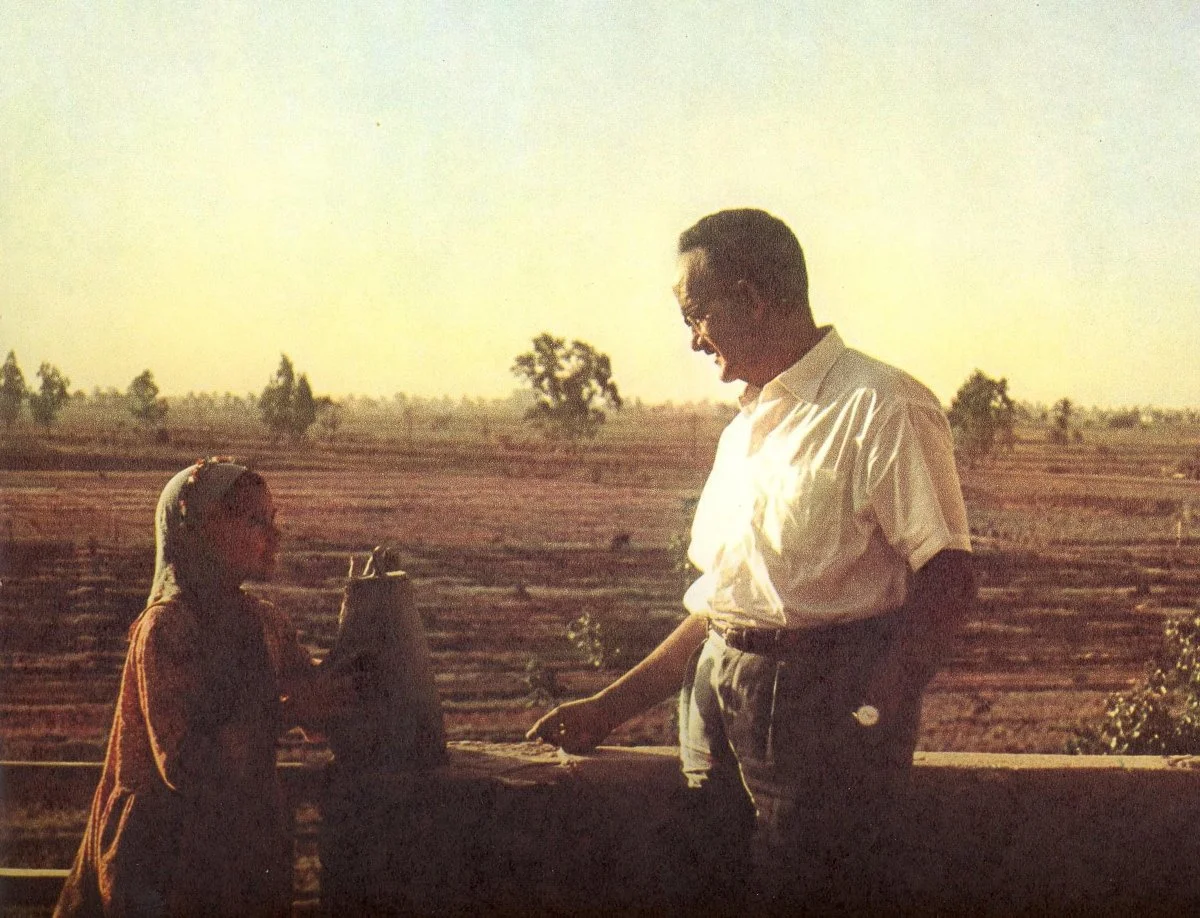
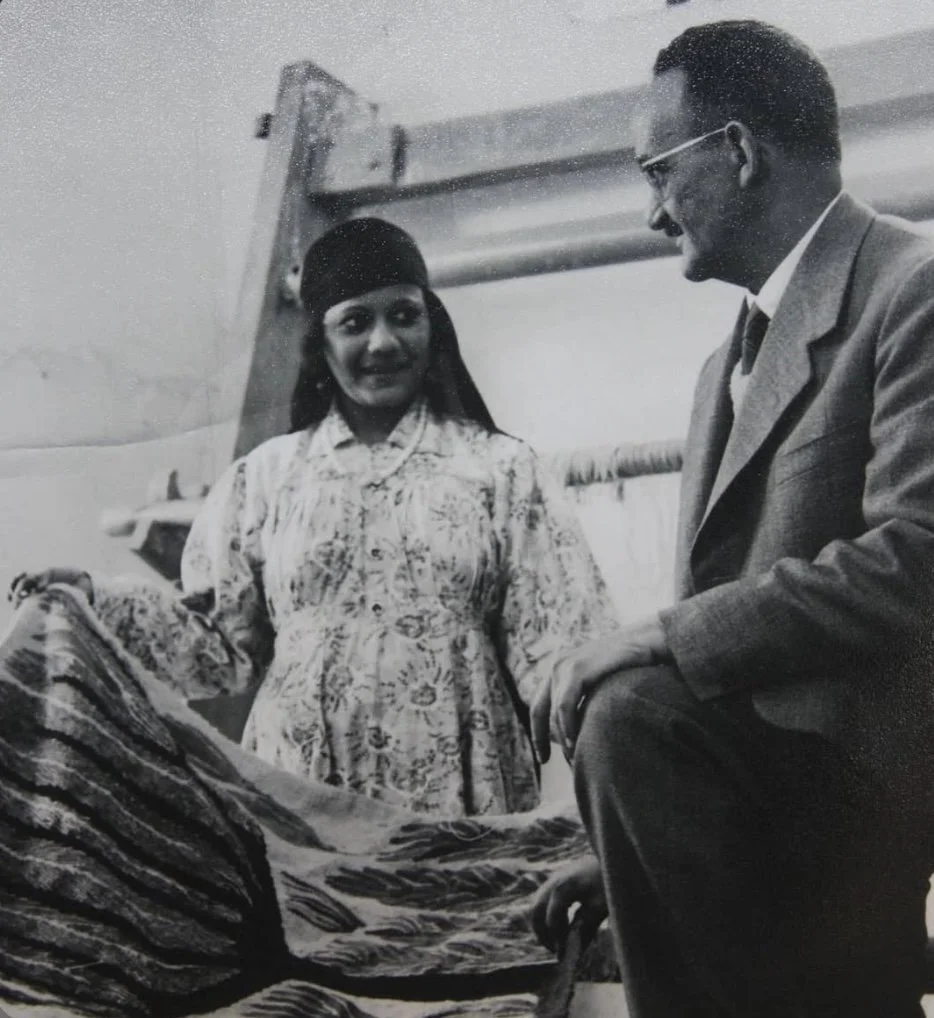
The center’s philosophy begins with its founder, Ramses Wissa Wassef, an architect and professor of art and architecture history. His training led him to study civilizations through the conditions that allowed them to grow, flourish, and decline. His conclusion was both simple and demanding: civilizations thrive when human creativity is protected.
Wissa Wassef believed that every child is born with creative energy, but that this energy is fragile. It can disappear if interrupted too early, corrected, compared, disciplined, or replaced with borrowed images. To protect it, he believed children should encounter a craft they could practice with their own hands at a young age of around nine, 10, or 11, but under one essential condition: total freedom. This belief needed to be tested.
The experiment began in the 1940s in Old Cairo, when Wissa Wassef was commissioned to design a school. Weaving was introduced as an after-school activity, but the constraints of wartime shortages and institutional expectations soon made it clear that true freedom was impossible within that framework.
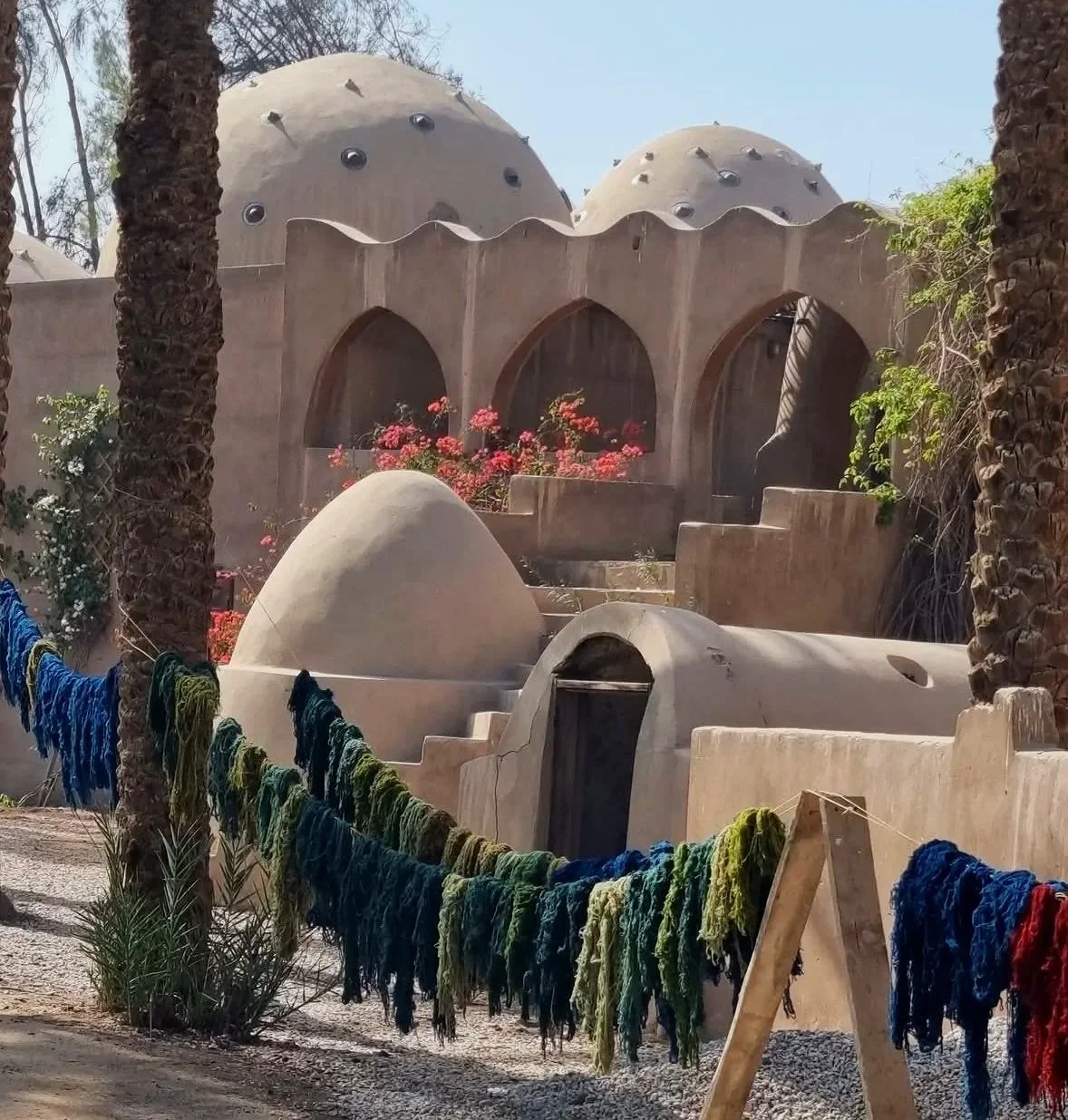
By the early 1950s, he made a decisive move to Haraniya, a farming village near the pyramids. The choice was deliberate and ethical. Haraniya had no history of weaving, pottery, or craft production. People worked exclusively in agriculture. In the city, a child who does not apprentice by the age of 15 risks having no viable future. In the village, failure would not mean displacement or loss. Creativity could be tested without exploitation. “If the experiment failed, the children would return to farming. Their lives would not be damaged,” Noshi explains.
Why Weaving, Why Slowness?
Weaving was not chosen for its decorative value, but for its resistance: it is slow; it is difficult; and it demands sustained attention. “If you give a child something too easy, he might enjoy it for a while,” says Noshi. “But it is not challenging enough to continue. Difficulty creates effort. Effort creates achievement.”
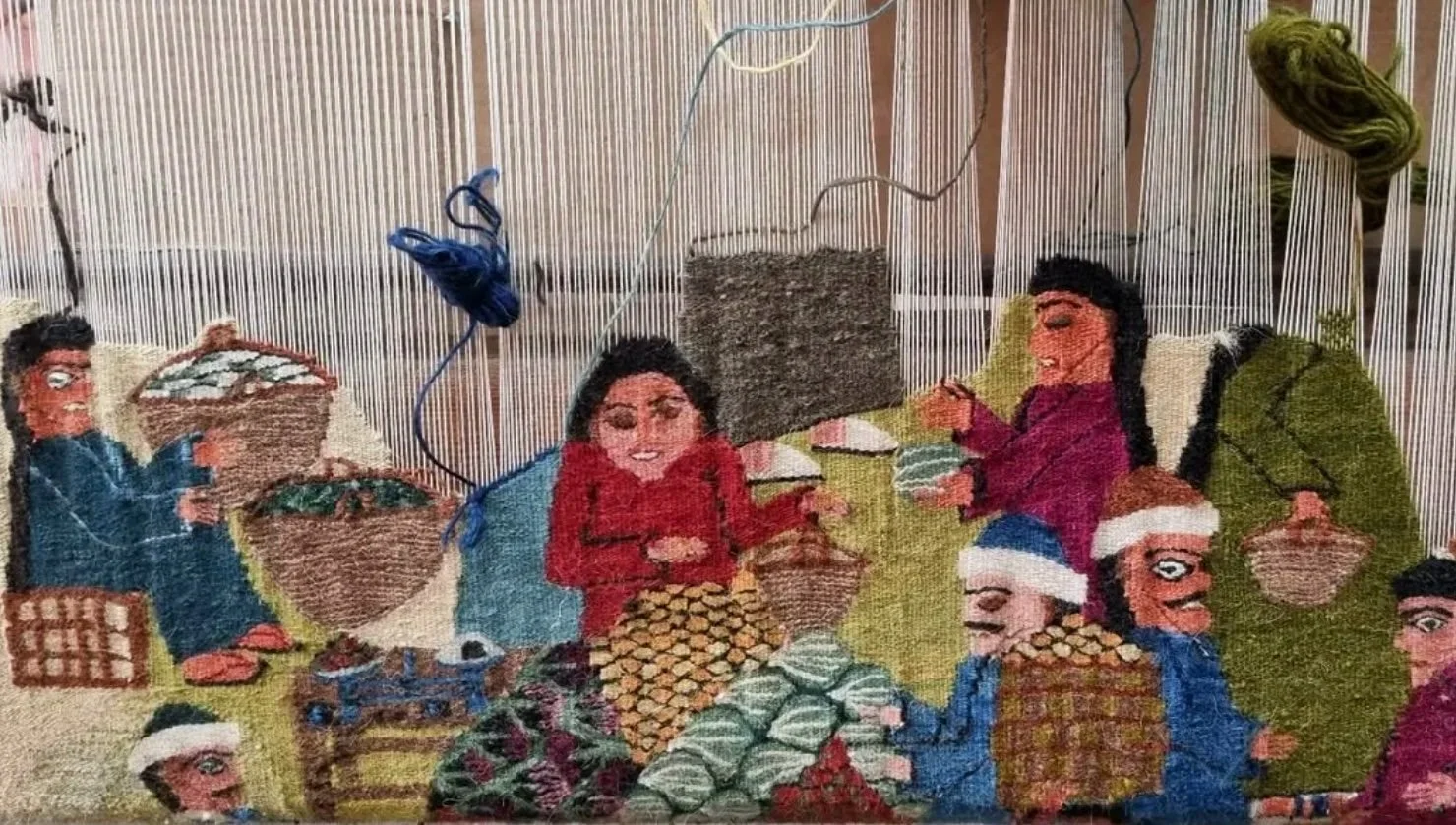
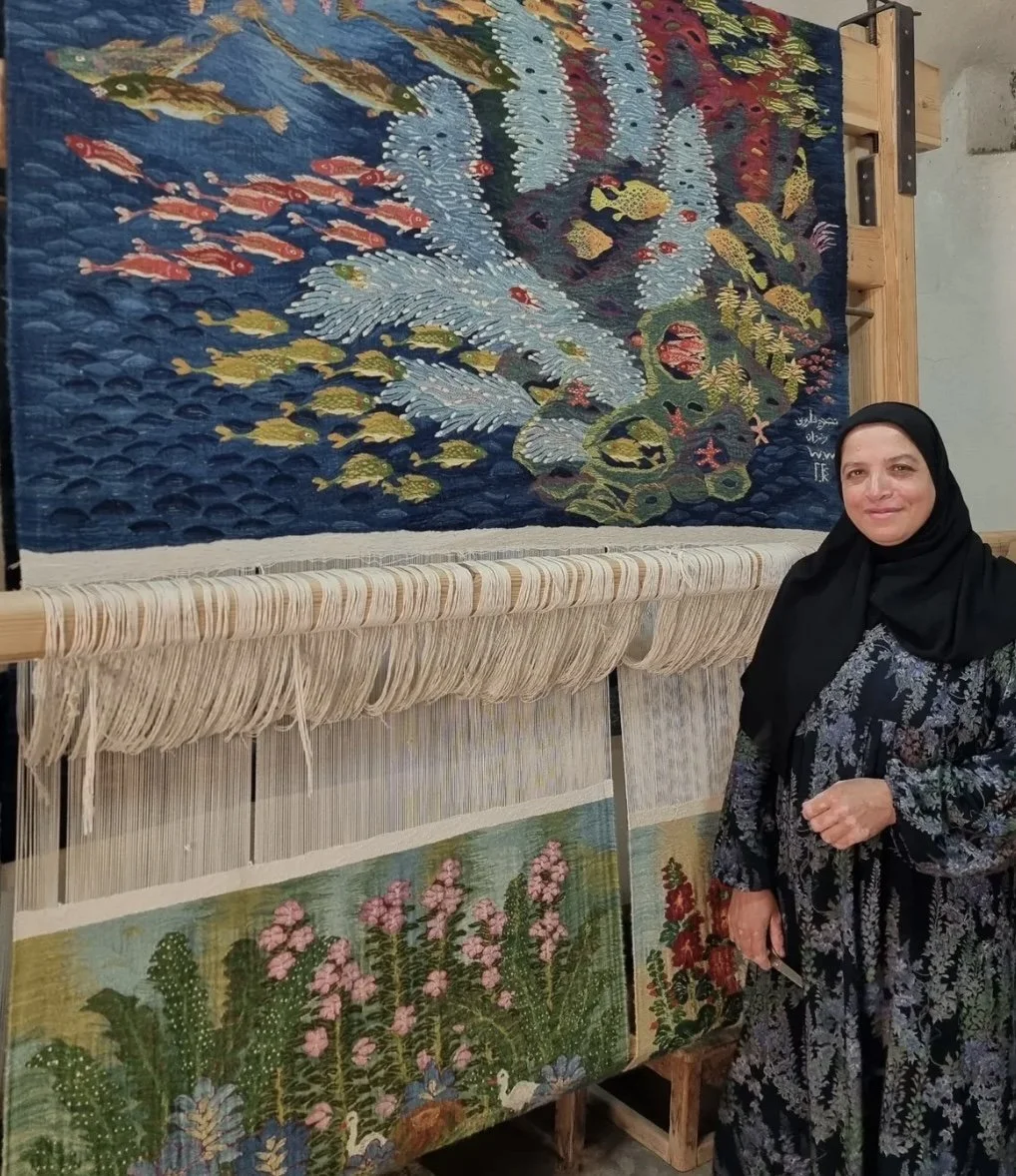
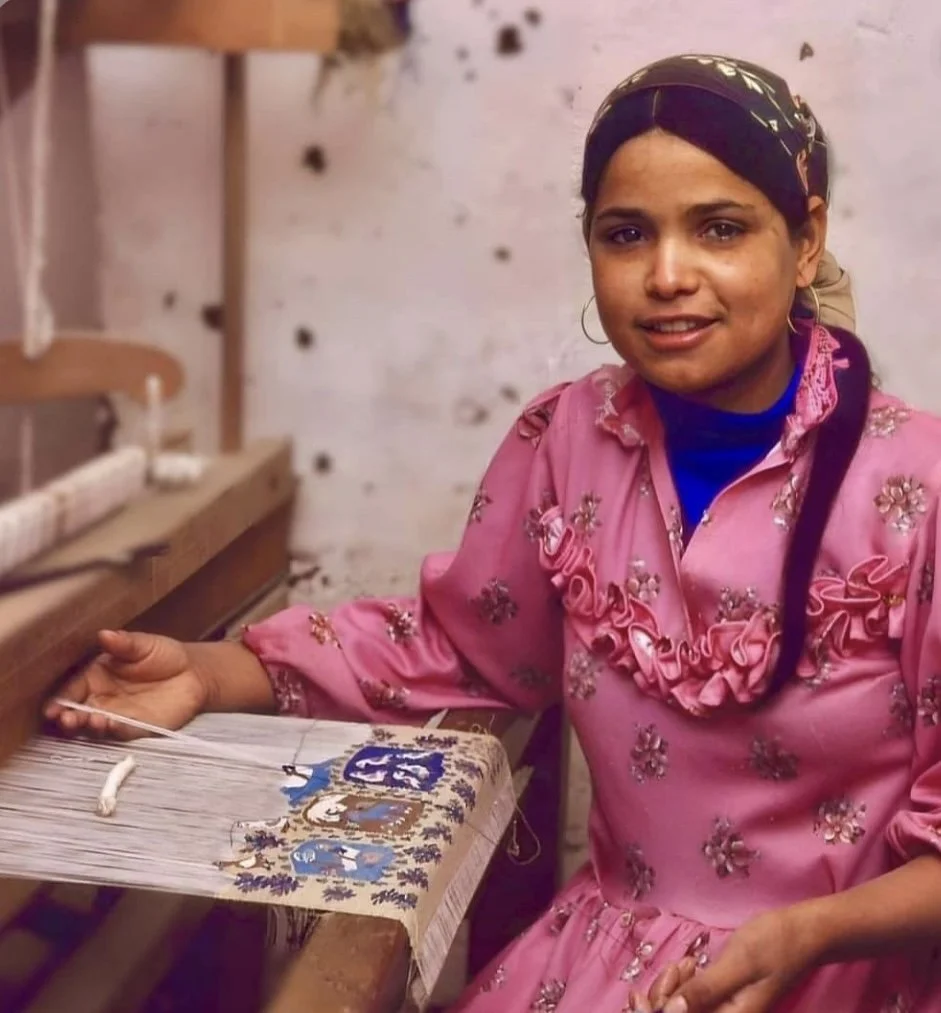
A single small section of woven cloth can take days. A full tapestry can take six or seven months, sometimes longer. This slowness is not incidental; it is pedagogical. Sitting in front of the loom, working at one’s own pace, imagination has space to surface. Ideas arrive not through instruction, but through time.
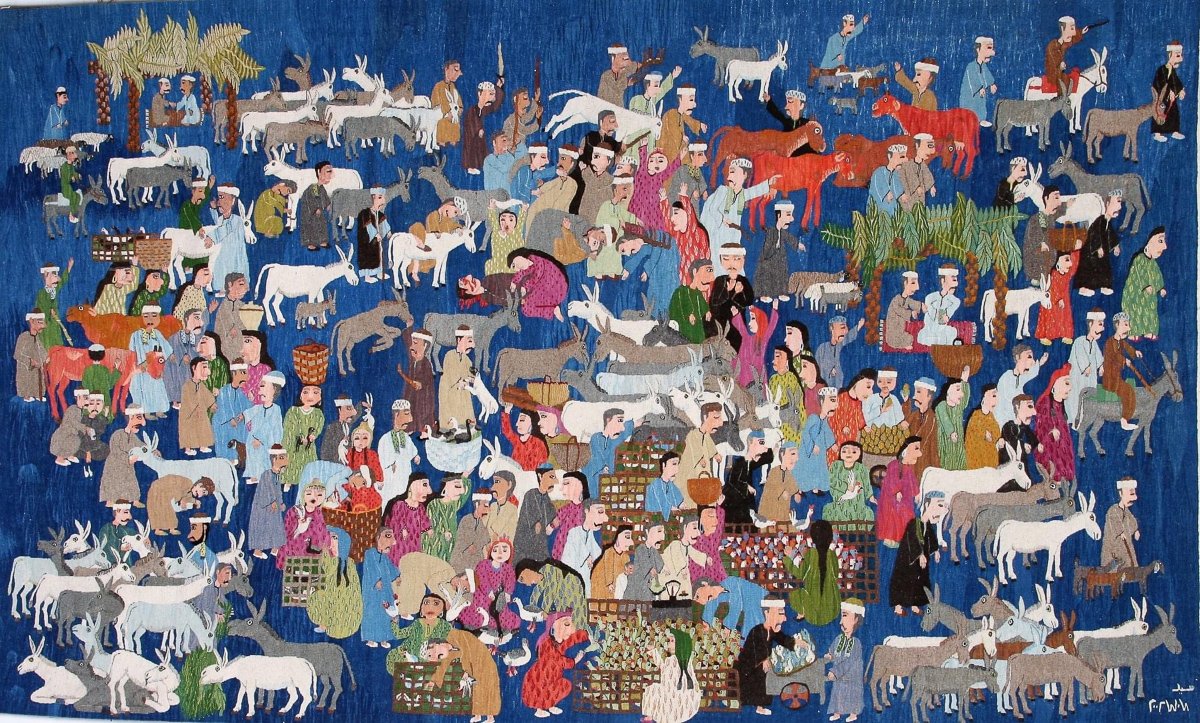
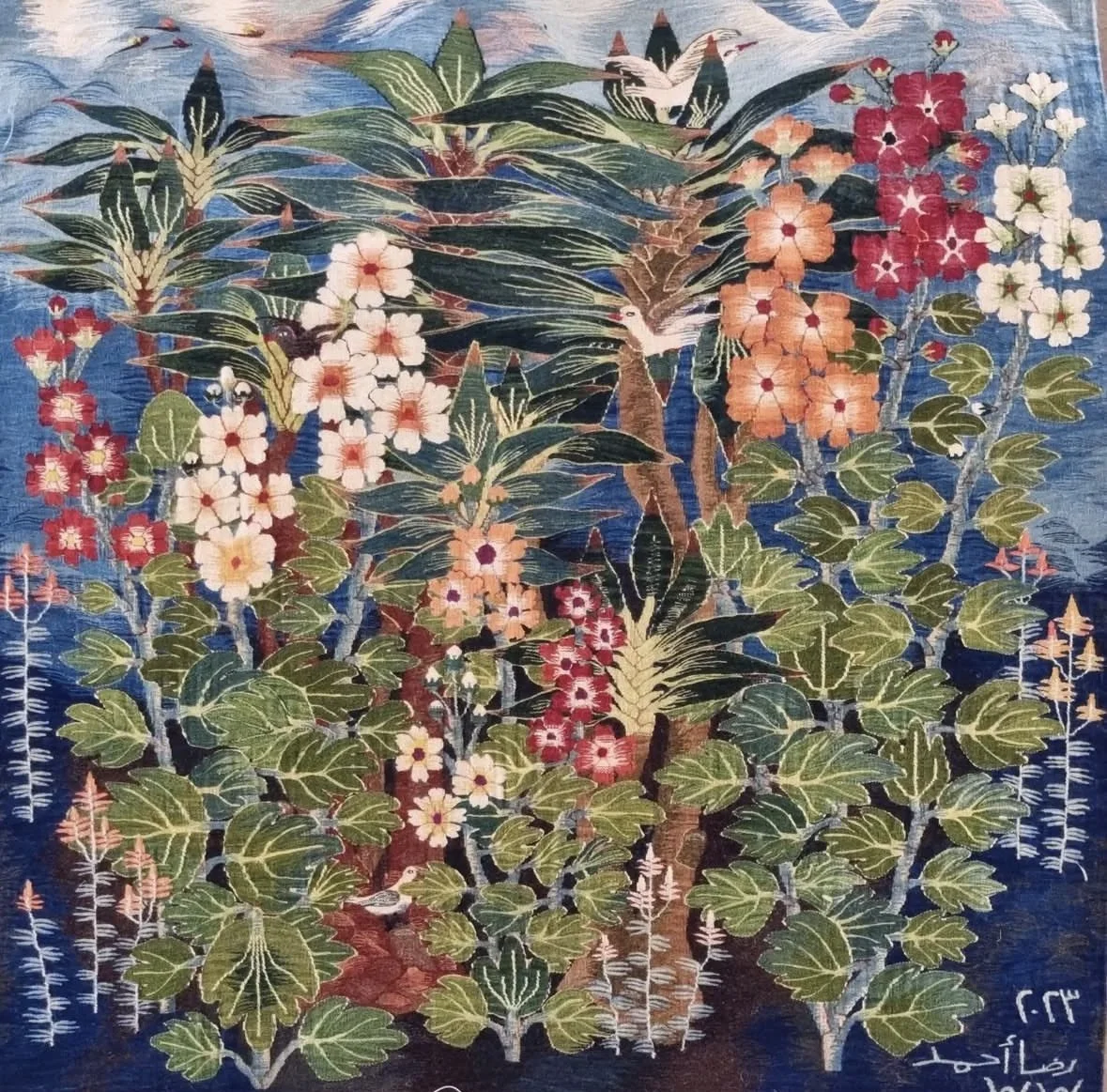
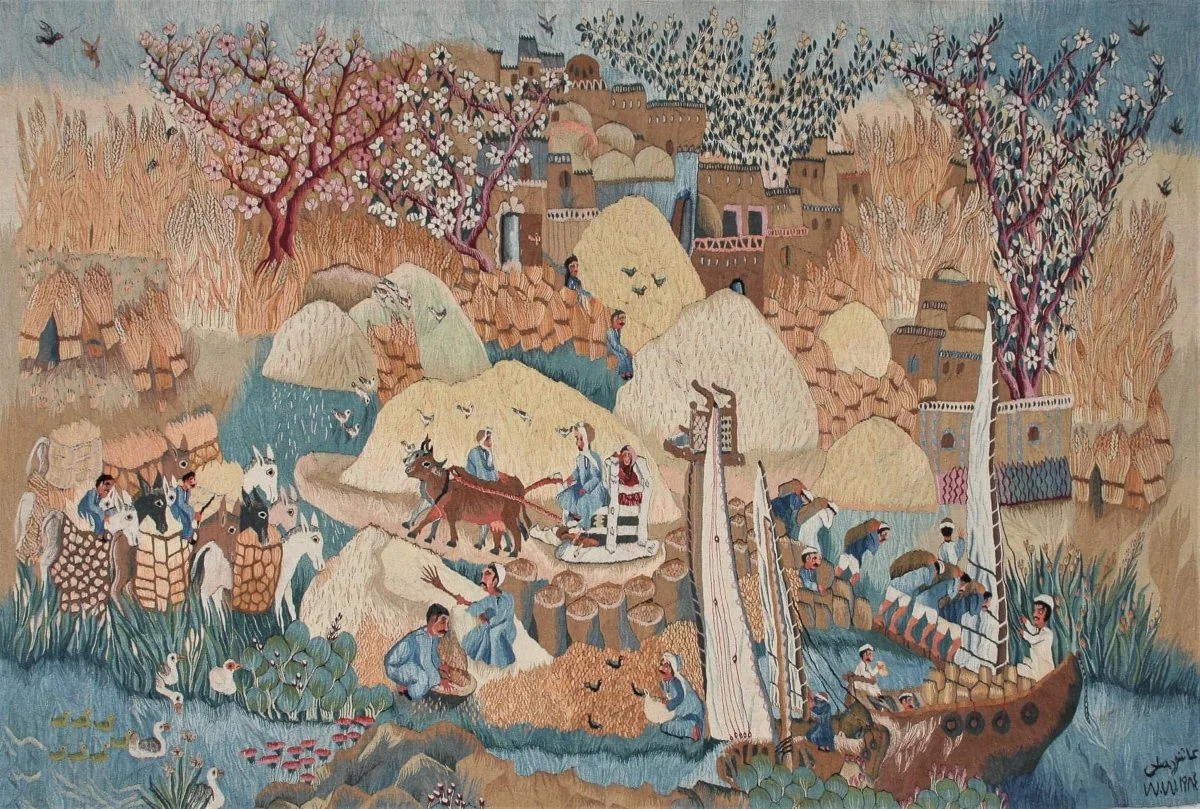
Crucially, children are trained from the beginning not to sketch, plan, or copy. There is no preliminary design. What appears on the loom is translated directly from the mind, thread by thread. Over time, imagination expands rather than narrows.
From the outset, Wissa Wassef established three uncompromising rules:
First: the teacher will not tell the child what to do.
No photographs, no models, no templates. The child weaves what comes into their mind directly on the loom.
Second: no museums, no galleries. Art museums contain the creative energy of others, not the child’s own. Introducing them too early creates benchmarks and hierarchies, ideas of what art should be. Instead, children were taken to the desert, the sea, the Nile, to weddings, and through everyday social life. Inspiration came from lived experience, not institutional culture.
Third, and most important: no criticism. Mistakes are not corrected. The role of the mentor is to find something positive in what has been made and reflect it back. This builds self-confidence and individuality. No two artists are meant to look alike. No one is meant to become a replica of the teacher.
Materials, Land, and Time
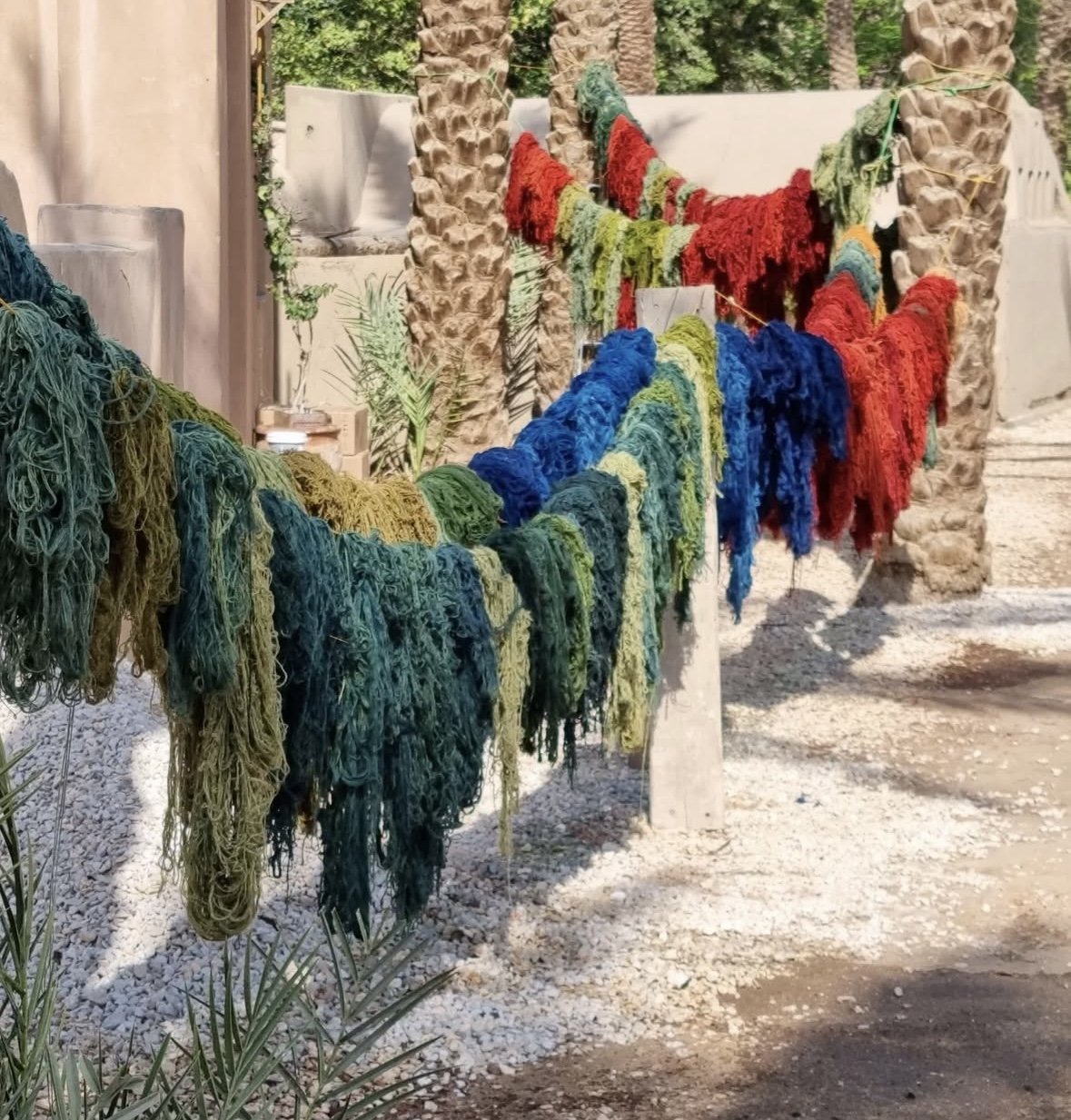
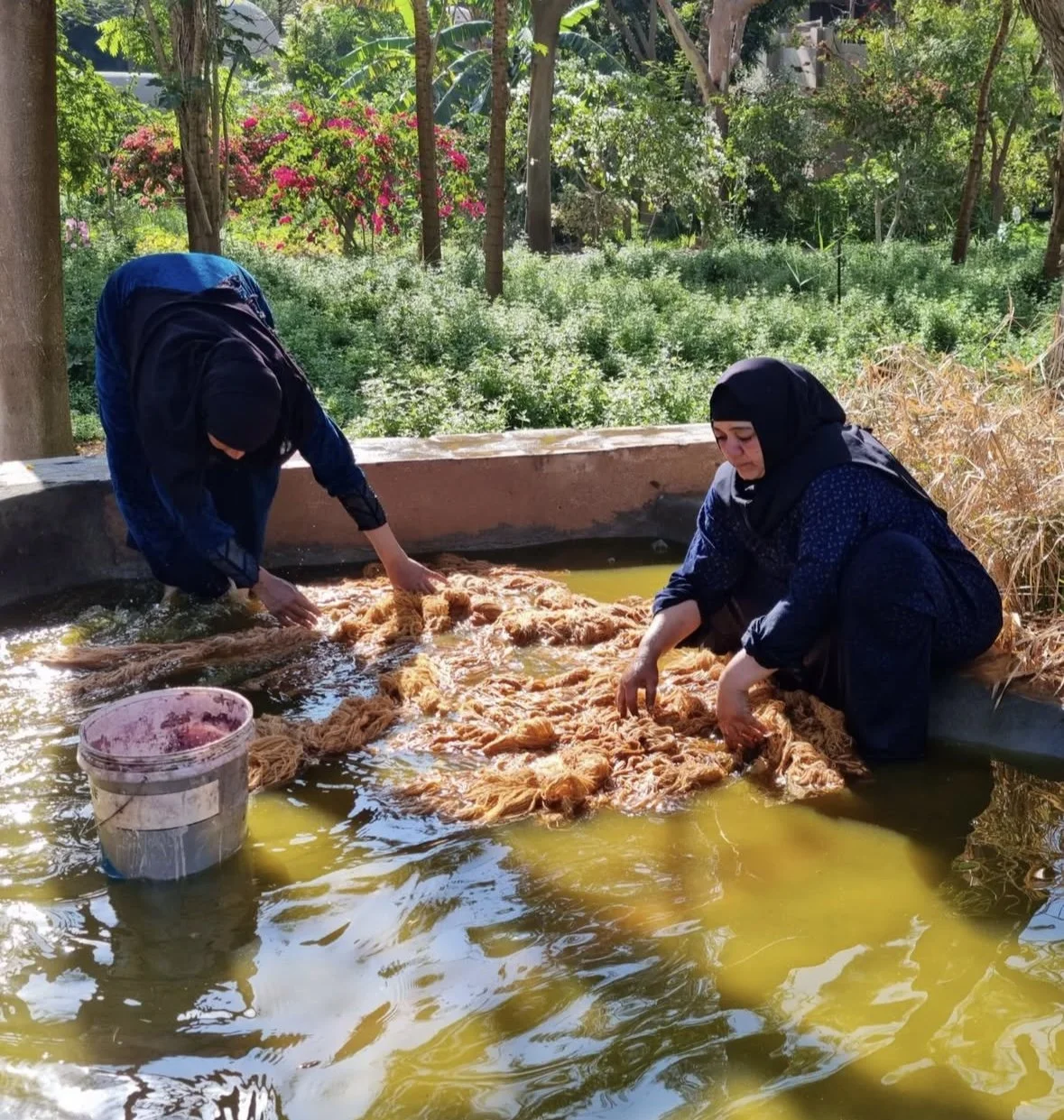
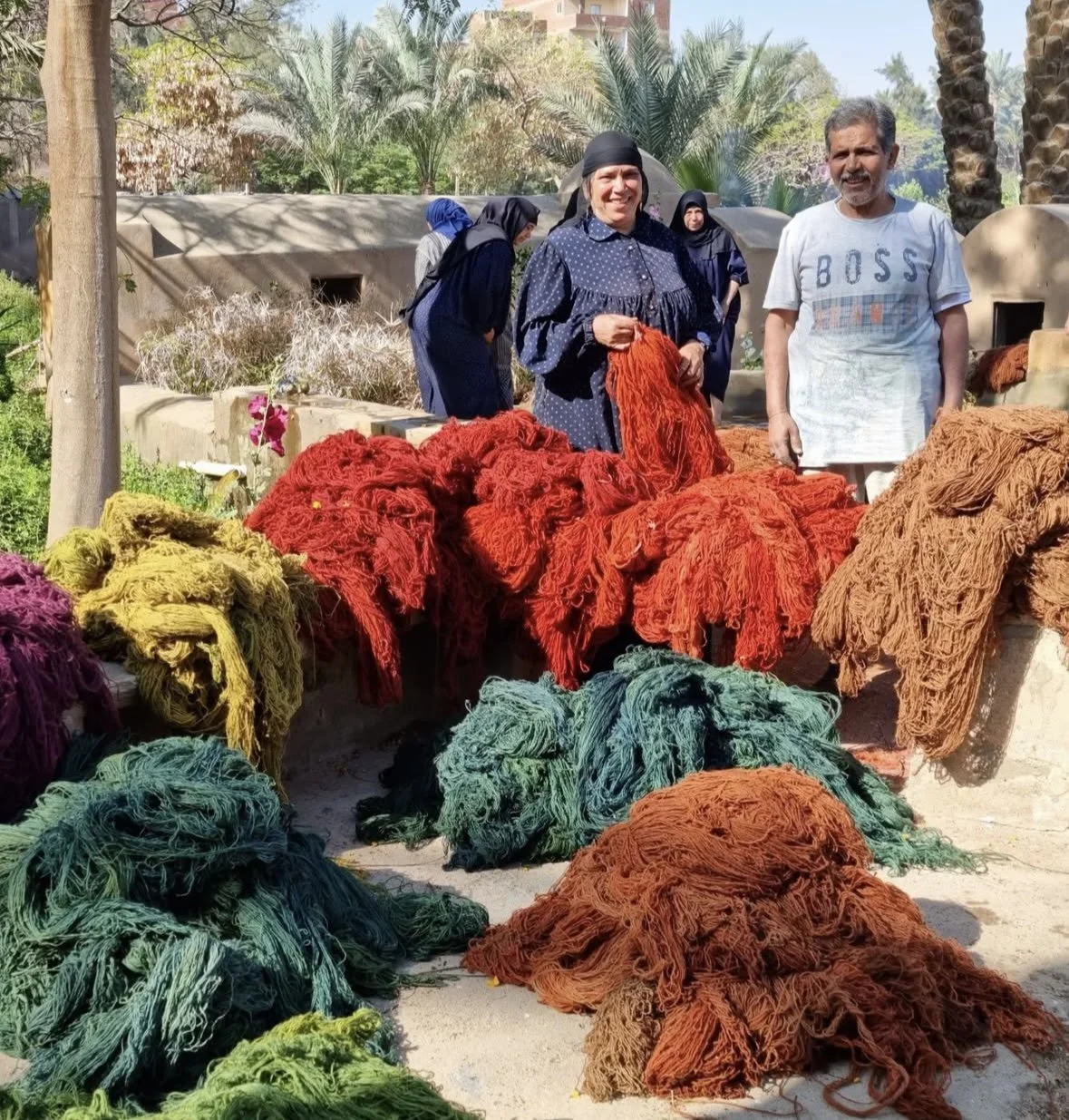
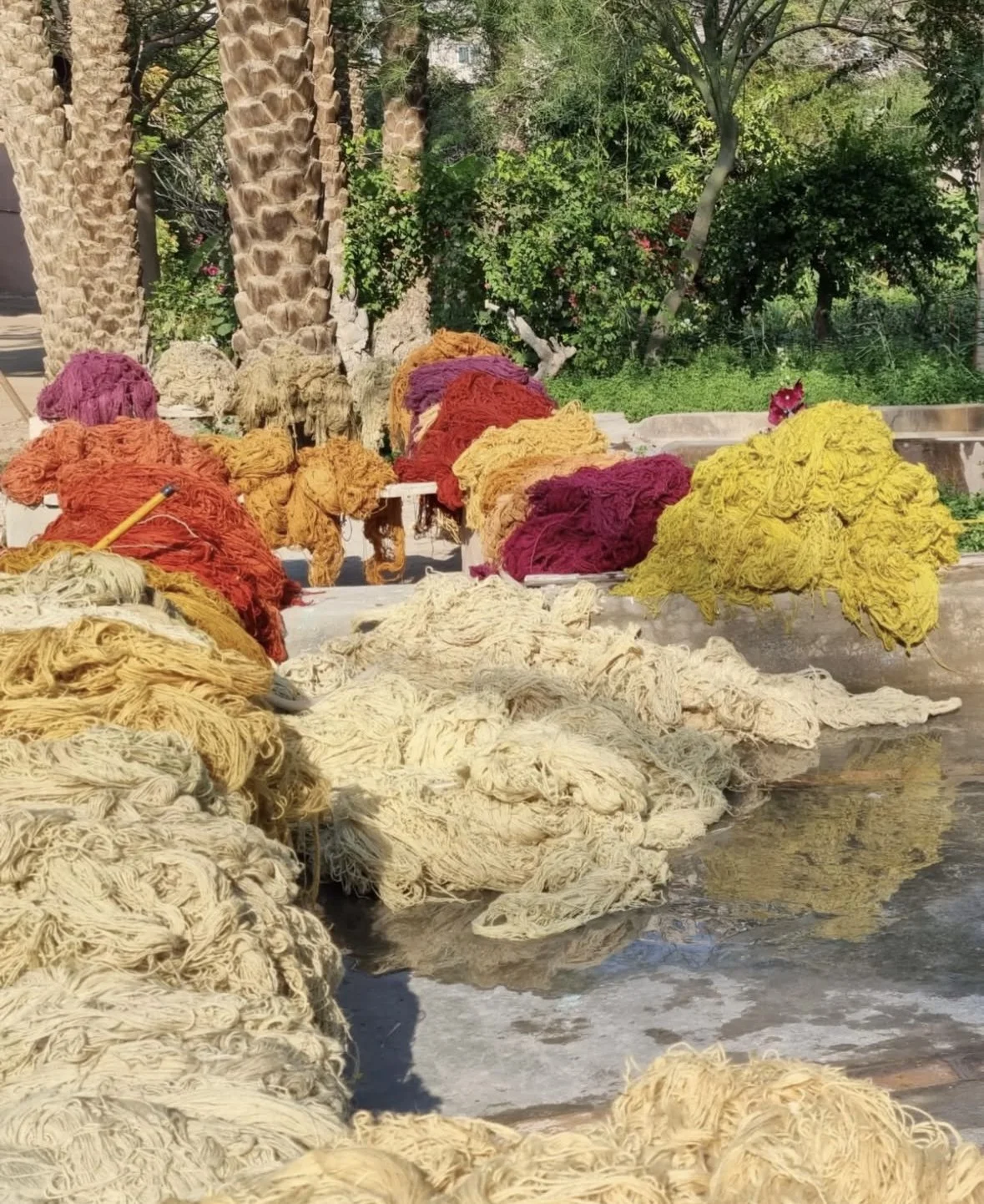
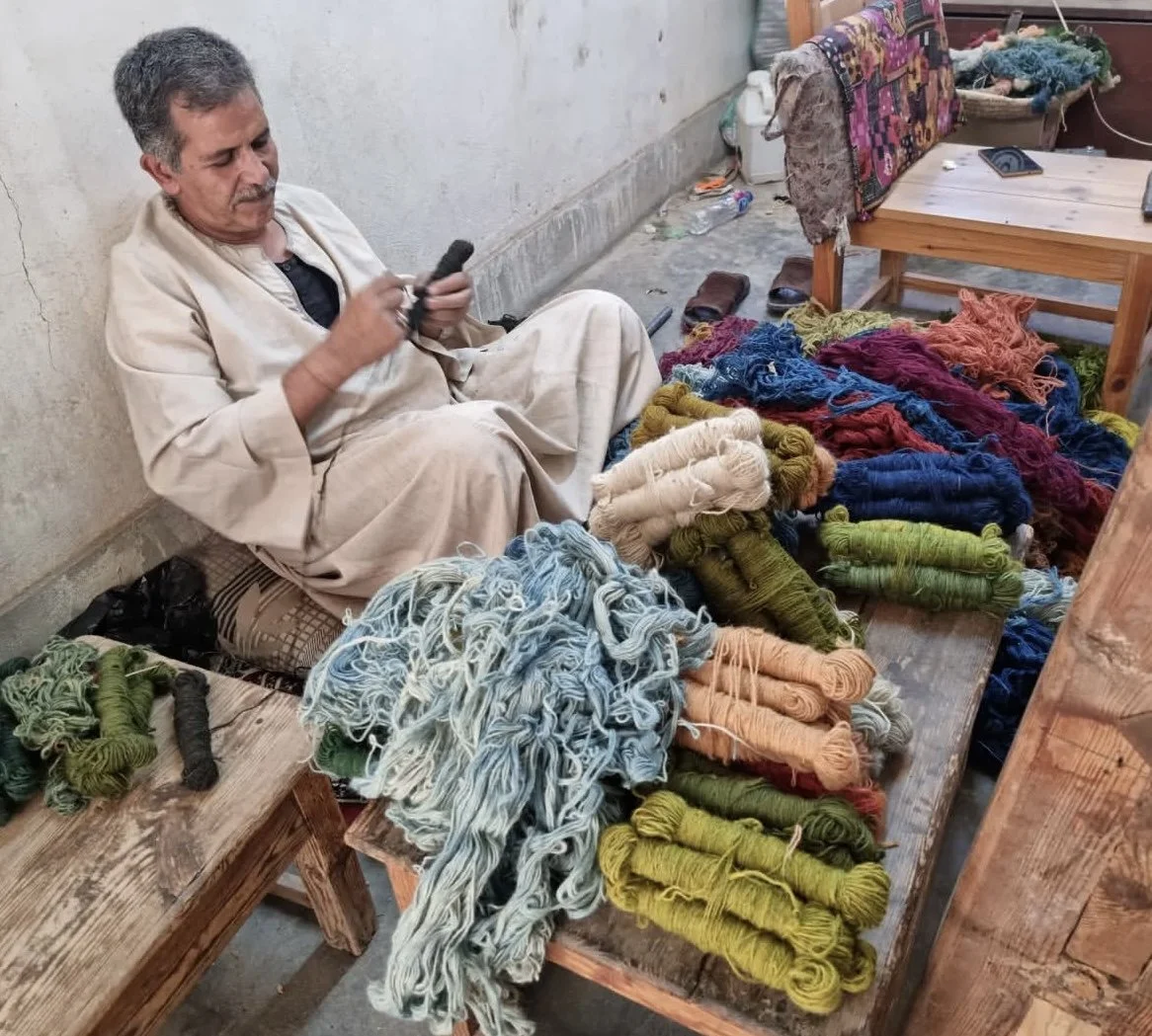
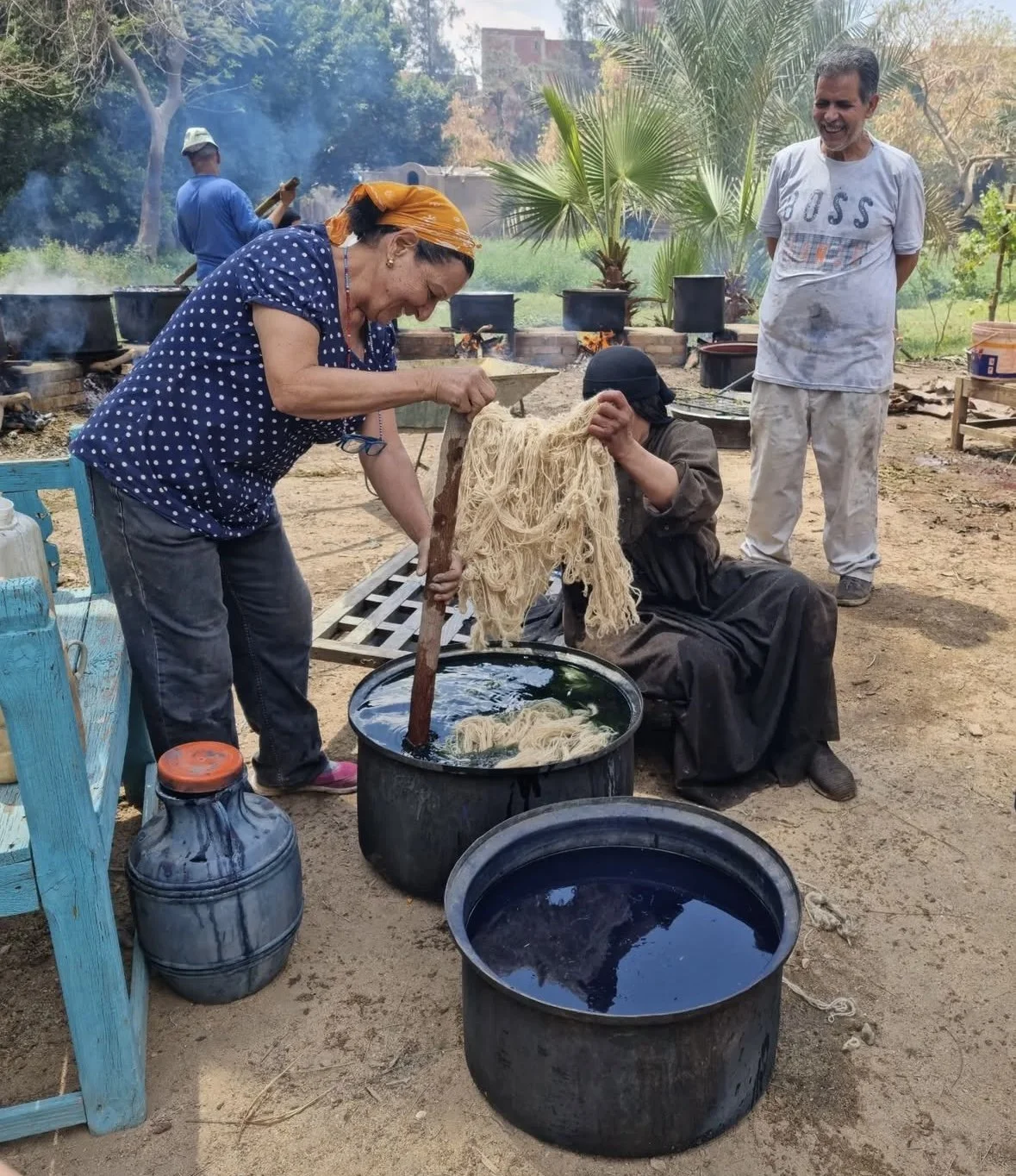
Everything produced at the center is grounded in local material systems. The warp — the structural body of each tapestry — is made of 100% Egyptian cotton. The weft is Egyptian sheep wool. All dyes are natural and plant-based. Indigo for blue, madder root for red, and reseda for yellow form the core palette, expanded through mixing. These plants were cultivated on site beginning in the mid-1950s, long before sustainability became a buzzword.
Wissa Wassef believed that if textiles made thousands of years ago still retained their color, then those methods deserved study. Each year in May, the center holds an annual dyeing festival: a communal, celebratory week that produces enough dyed wool for the entire year.
A standard-sized tapestry can take more than half a year to complete. While weaving, the artist never sees the full image, only fragments. The finished work is revealed only when it is cut from the loom: a moment the director likens to childbirth.
A System That Protects Freedom
Equally radical is the center’s economic structure. Weavers are paid immediately upon finishing a work, between 35% and 40% of its value, regardless of when or if it sells. This removes market pressure entirely. “If palm trees sells better, or Nile essence sells better, the artist would confine himself to that!” Noshi exclaims. “We do not want that.” Because the center absorbs the risk, artists are free to weave for themselves. Works may sell immediately, years later, or never. Some are retained for the permanent collection, which continues to grow and documents each artist’s evolution from adolescence to maturity.
The Center Today
The Wissa Wassef Art Center is currently home to 14 wool weavers, 10 fine cotton weavers, and three batik artists. Introduced in the 1960s, batik was deliberately chosen because it is not Egyptian in origin and requires a completely different imaginative faculty, based on layering rather than accumulation.
A third generation of children is currently being trained, primarily during summer holidays. The challenge today is different from that of the 1950s. Children arrive saturated with images from screens and social media. The work now involves undoing — stripping away borrowed imagery to recover simplicity and inner vision.
Alongside weaving and batik, ceramics also played a significant role. Stoneware pottery was Ramses Wissa Wassef’s personal practice, later continued by his wife for decades, using Egyptian clays and high-temperature firing.
A Living Global Practice
Far from being isolated, the center is deeply active internationally. Recent and upcoming exhibitions include a major presentation in Germany, a six-month exhibition in Stockholm beginning in 2026, participation in a major European museum exhibition of modern Egyptian art in 2027, and a potential exhibition in the United States. Most recently, the Jeddah Red Sea Museum acquired two tapestries for its permanent collection — an acknowledgment of the center’s significance beyond national borders. What makes this global presence remarkable is not scale but integrity. The weavers are not copying, not producing on demand, not racing against time. They are creating slowly, patiently, and proudly, often without seeing the full image until the very end, and from the imagination.