Words by Yesmine Abida
Nostalgia is a dish best served lukewarm. When overheated, it curdles into illusion, and when served cold, it loses its taste. I first came across Memory in the Flesh (1993) – later published in English as The Bridges of Constantine – during a profoundly nostalgic time of my life. The longing that permeated Ahlam Mostaghanemi’s pages felt like a language that I had been searching for, one that could articulate my growing feeling of estrangement from a homeland whose political landscape had begun to feel increasingly unfamiliar.
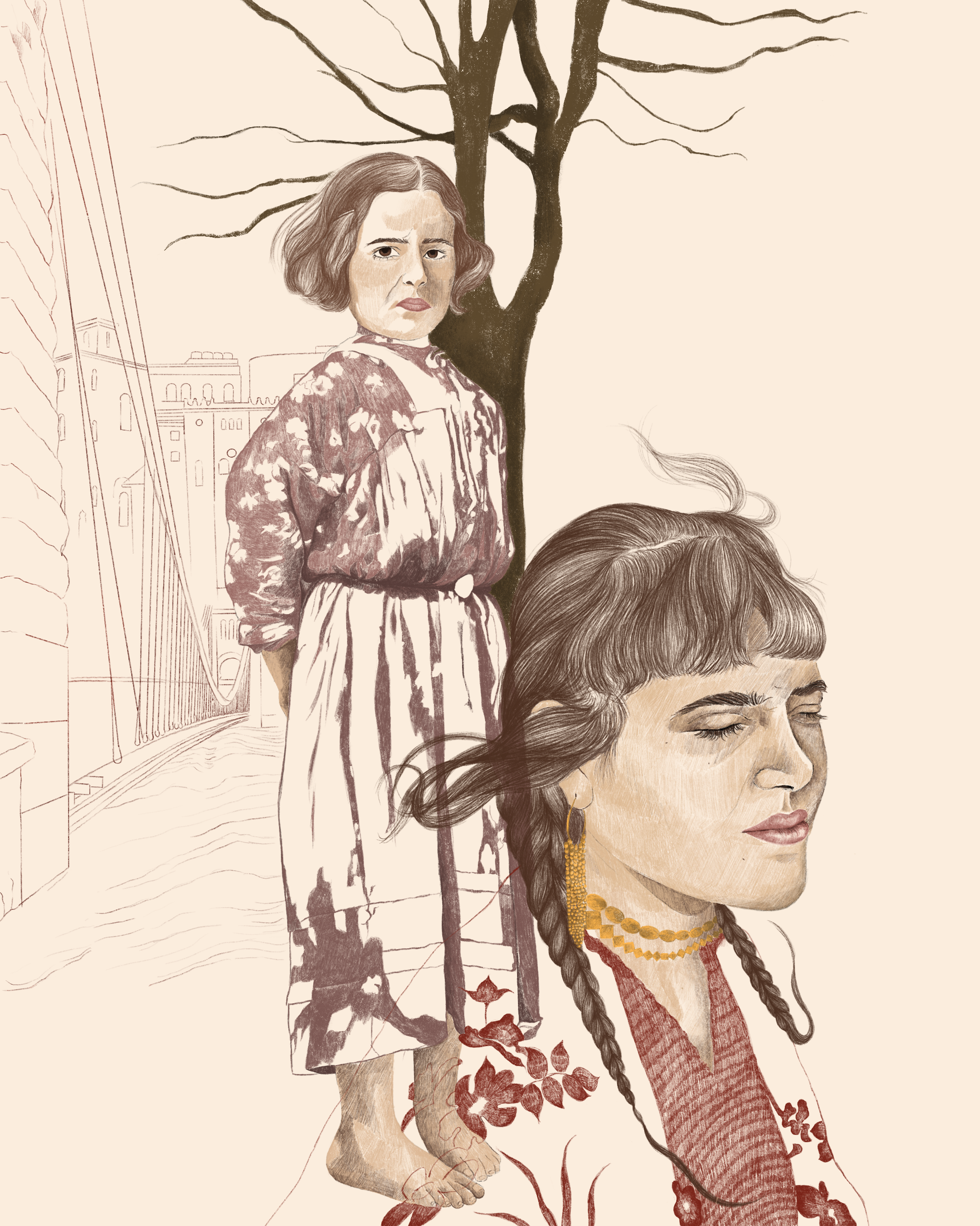
Illustration by Amina Yahia
Returning to the trilogy years later, I found myself less interested in nostalgia as a personal longing for a bygone era than in Mostaghanemi's treatment of memory as a collective and mobile entity. Across Memory in the Flesh (1993), Chaos of the Senses (1997), and Dust of Promises (2003), memory circulates through cities, bodies, photographs, stories, and political histories. These novels read as love stories, and they are, but their true subject is the haunting persistence of memory: the way a lover, a city, or a nation can become repositories for collective dreams, disappointments, and deferred futures. The past permeates the present from all sides, demonstrating how remembrance is a refraction of memory and imagination, keeping the past alive, while transforming people and places into symbols they can never fully embody.
Mostaghanemi was born in Tunis in 1953 to an Algerian nationalist family exiled by French colonial rule. Her father was imprisoned in the aftermath of the 1945 Sétif Riots, in which two of his brothers were killed. Following independence, the family returned to Algeria, where her father became involved in the government of Ahmed Ben Bella (r. 1963-1965). Yet the optimism of liberation gave way to political upheaval after Houari Boumediene’s coup in 1965; he was left resentful, confused, and disillusioned. This distance between the struggle for independence and the realities of post-independence Algeria became one of the defining tensions of Mostaghanemi’s fiction.
As the first Algerian woman to publish a novel in Arabic, Mostaghanemi’s decision to write Memory in the Flesh while pursuing doctoral studies in Paris can be read as a return to her native city of Constantine. Writing became a way of recovering language, memory, and the homeland – what French colonialism, and the following ruling class, had fragmented. When Mostaghanemi famously remarked, “When you lose a lover, you write a poem. When you love a homeland, you write a novel”, she identified loss as a literary praxis.
This practice is foreshadowed from the first few pages, where Mostaghanemi dedicates Memory in the Flesh to two men: Malek Haddad, a Francophone Algerian poet and novelist who famously swore to never write in a foreign language after Algeria’s independence, whom Mostaghanemi described as a martyr of the Arabic language, and her father, who died before the novel was published and would not have been able to read it, as he belonged to the generation educated in colonial Algeria that had been denied literacy in Arabic. She wrote, “To my father, a son of Constantine who would say, ‘There are cities where we live, and others that live in us.’ He made me fall in love with the city that lived within me and that I had not visited before writing this book.”
Memory in the Flesh follows Khaled Ben Toubal, a former freedom fighter who lost an arm during Algeria’s war of independence and later exiled himself to Paris. Years after finding success as a painter, he returns to Constantine through writing, recounting his relationship with Hayat, the daughter of a fallen revolutionary comrade. Their romance unfolds against the backdrop of post-independence Algeria, where the dreams of liberation have given way to political disillusionment.
It is not surprising that Khaled repeatedly returns to Constantine in thought, even if his narrative takes place in Paris. For him, Constantine is a repository of personal and collective histories. It contains memories of the war of independence, of lost comrades or relatives, of youthful aspirations, and of a future that never arrived. The revolutionary dreams which animated an entire generation seem embedded in the streets and bridges of the city, long after the historical moment which produced them. He walks through memory as if walking through its streets, encountering places transformed, decayed, or disappeared in his absence, while simultaneously describing a city in decline and an intense feeling of boredom. Constantine is also the principal subject of his paintings. Its bridges become a recurring motif (and the title of the new translation), reflecting Khaled’s own liminal position following the war: suspended between the past and present, memory and reality, and the revolutionary dreams of the past and political disillusionment.
Khaled meets Hayat in Paris at the opening of one of his exhibitions while she is a student. He recalls an immediate connection between them due to the history that binds them: he had carried her as an infant and given her the name Hayat, as a favor to his former revolutionary commander. But Khaled’s recollection of their relationship with hindsight reveals that he is an embittered, scorned man. Although he acknowledges his guilt of becoming romantically involved with the daughter of his martyred commander, he pursued the relationship nonetheless, making him difficult to sympathize with. The age difference becomes more than a troubling and uncomfortable moral thing. Hayat represents a past vision of the future, one that Khaled had fought for. In fact, throughout his recollection of their relationship, he rarely encounters Hayat as a person. Instead, he transforms her into Constantine and Algeria, making her a symbol of a bygone homeland. Nostalgia turns living people into monuments.
Where people become monuments, the body becomes an archive. Khaled’s amputated left arm is where Mostaghanemi first locates memory in the flesh. Khaled searches for something that would alleviate the pain of remembrance, only to discover that he carries it in his missing limb.
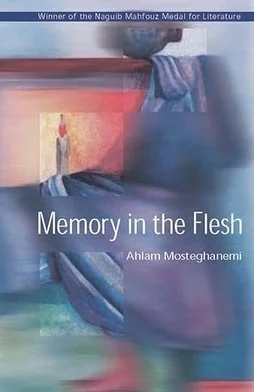
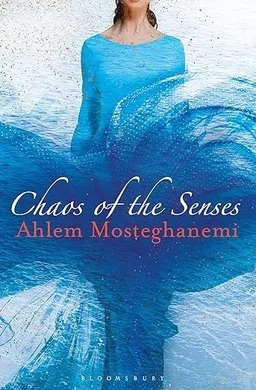
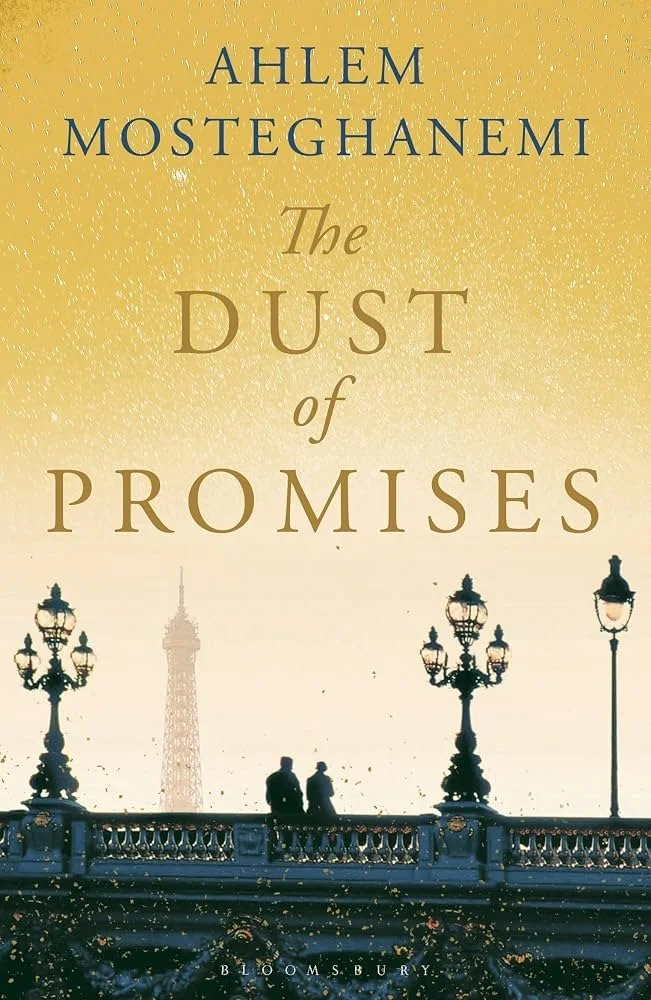
Throughout the trilogy, bodies preserve histories that political narratives often attempt to simplify or erase. Revolutionary fighters, martyrs, journalists, and civilians all carry traces of collective experiences. The body records what official histories cannot fully contain. Yet bodily memory has its own limits. Khaled seeks relief from the pain of recollection, only to discover that remembrance has become inseparable from his own physical existence. The past survives as an ongoing condition.
Martyrs recur throughout the trilogy: first the freedom fighters killed by the French military during the war of independence, then journalists, civilians and civil servants during the Algerian Civil War. Borrowing from James McDougal, embodiment is the enactment of selfhood in one’s physicality, in personal performance and individual self-presentation. Martyrdom becomes the ultimate act of embodiment, dying for freedom and a cause larger than oneself. Hayat herself is the daughter of a martyr. She leaves Khaled for Ziyad, his Palestinian poet and freedom fighter friend, who dies in the 1982 invasion of Lebanon. But in a surprising turn of events, Hayat ultimately marries into the political establishment, the very structure that undermines the revolution. Through fiction, Mostaghanemi reveals how the body is a contradictory site where desire, the homeland, and responsibility are inseparable. Once the body becomes an archive, it becomes impossible to separate personal from political memory. But the body can only carry so much, revealing that memory ultimately exceeds the flesh altogether.
This concern with embodiment becomes even more pronounced in Chaos of the Senses, where memory begins to detach itself from any stable origin. Characters inherit one another's memories through books, names, and bodily wounds, suggesting that remembrance is never exclusively one's own.
Set against the rising tensions that would become the Algerian Civil War, Chaos of the Senses follows Hayat as she navigates a loveless marriage to a politician belonging to the establishment. While attempting to write a romance novel, she begins to experience it in her waking life, as fiction and reality bleed into one another. She embarks on an affair with an unnamed man who bears striking similarities to Khaled. He has read Memory in the Flesh after a bullet grazing his left arm left it paralysed while reporting on a protest, and he signs his articles using Khaled’s name. Here, fiction does not reflect reality, but rather produces it.
Yet the novel and trilogy do not lose sight of the larger political inheritances that shape private memory. While searching through her widowed mother’s house, Hayat finds two portraits packed away together: one of her martyred father, and another of Gamal Abdel Nasser, after whom her brother was named. Once placed next to one another, the images collapse the distance between national and pan-Arabist mythologies and familial remembrance, suggesting that political history survives through domestic memory as much as through official portraits.
Throughout the trilogy, even in Chaos of the Senses, which is narrated from the point of view of Hayat, she remains largely unknowable. Neither the reader nor Khaled, nor her unnamed lover in the second book, are ever fully able to understand her psyche. While the male narrators from the first and third novels attempt to transform her into a homeland, a city, or a dream, she continually evades those meanings. She remains contradictory, secretive, and unresolved. If Khaled and her unnamed lover represent the desire to preserve memory, Hayat demonstrates the impossibility of possessing it. In fact, in Dust of Promises, the unnamed lover, having read her previous novel, attempts to extract more details about her previous relationship to be able to delineate fiction from reality, but she largely evades these attempts. None of the men she is romantically involved with are successfully able to turn her into a city, homeland, or dream. It is a burden she refuses to hold as her own.
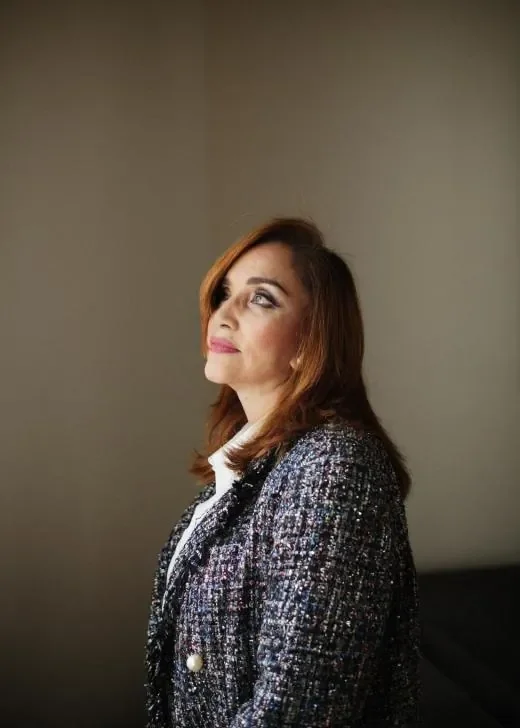
If Memory in the Flesh asks where memory resides, and Chaos of the Senses asks how memory is produced, then Dust of Promises asks who memory belongs to. In the last novel of the trilogy, the unnamed lover narrates the fateful encounter which brings him, Hayat and Khaled together. Having read Khaled’s story, and later befriending him, he inherits his memories, and through his immersion in another man’s life, we witness the way one inherits the memory of others. Nostalgia transcends its capacity for individual mythology into a larger collective inheritance, revealing both the possibility and consequences of borrowing memory. Khaled inherits revolutionary memory, Hayat inherits martyrdom, the unnamed lover inherits Khaled’s story, and the reader inherits all of them. Throughout the trilogy, memory moves across cities, generations, and bodies until it no longer belongs to anyone. Memory, then, does not belong to the past, but to the moments that summon it.
Today, I read Ahlam Mostaghenmi’s trilogy as a warning of what may happen when memory runs too hot. When we insist on living in the past, we risk turning people into symbols of bygone worlds. Reading the three novels consecutively was a maddening experience, as I found myself engrossed in the warps and gaps of memory alongside its characters.
Mostaghanemi’s trilogy points us towards where memory resides: in bodies, photographs, and in streets, bridges, rivers, and cities. She reminds us the past survives because people and places carry it forward. Yet memory is not meant to become a permanent residence. If we linger for too long, we mistake suspension for life itself. Memory, like Constantine’s bridges, is meant to be crossed.
About the Author
Yesmine Abida is a writer, researcher, and photographer based between Abu Dhabi and Nabeul. Her work explores nostalgia, urbanism, and the affective dimensions of place. She recently completed an MPhil in Modern Middle Eastern Studies at the University of Oxford (St Antony’s College), where her dissertation examined how Abu Dhabi residents navigate loss and belonging amid rapid urban transformation. Her nonfiction writing has appeared in the Markaz Review, Dazed MENA, and Postscript Magazine, and her short story “When I folded in your memories” won third place for the Azhar Prize (2025).