Words by Suzanne Zeidy & Photography by Ahmed Mansour
Every September, when the grey mullet of the Manzala Lake have grown fat and heavy with roe, a small shop near the old fish market in Port Said opens for its two-month season. The craft practiced inside - extracting the roe sac whole, cooling it to firm, removing the visible veins with patience and precision, salting, and air-drying for six days with regular turning - is a process Herodotus would have recognised. Travelling through Egypt around 440 BCE, he noted that Ancient Egyptians dried and brined their fish, and that the salted roe of the delta grey mullet was a delicacy reserved for those who could afford it.
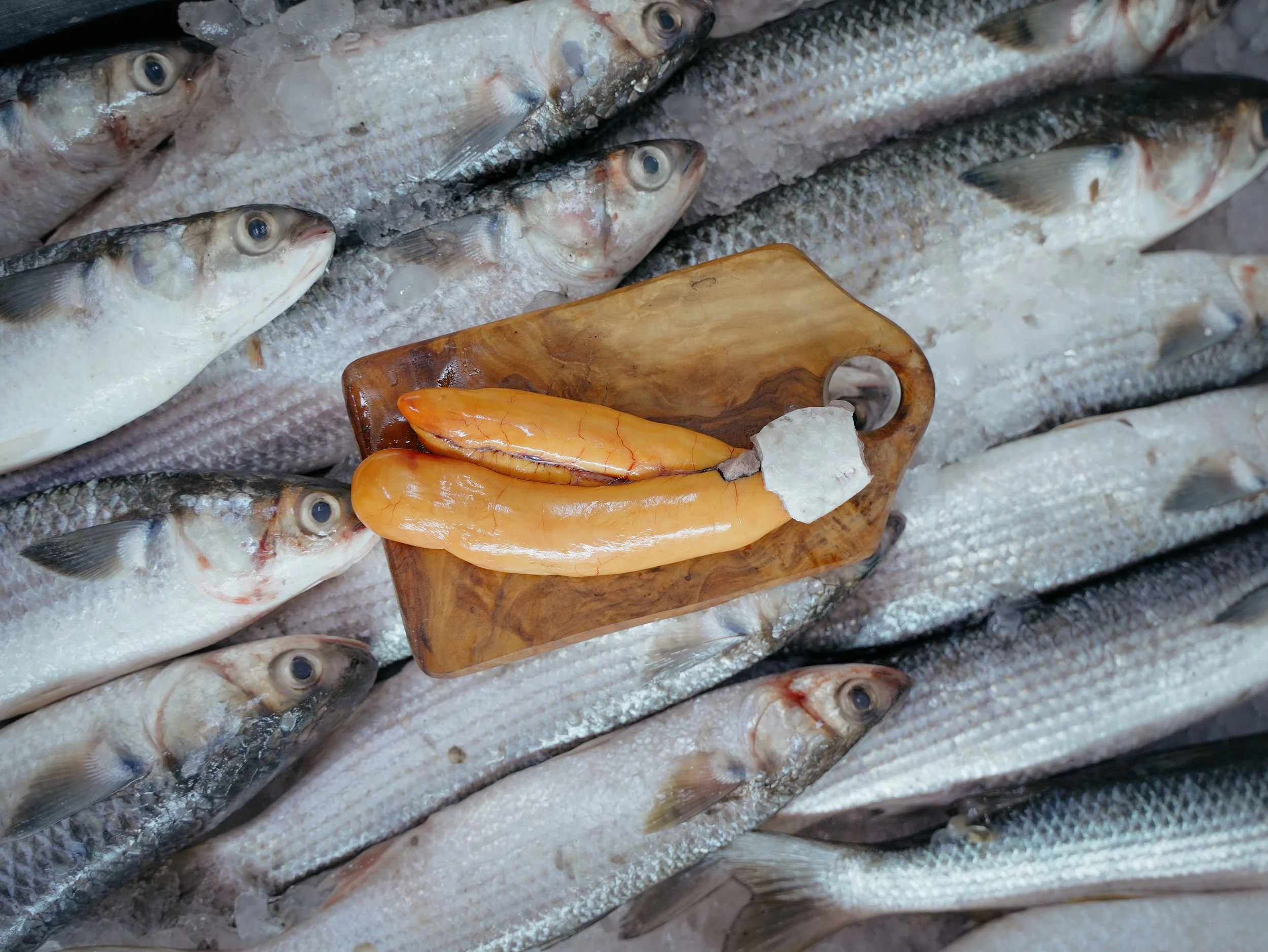
The mullet of the Nile Delta were prized long before Port Said existed - eaten fresh, eaten dried, and used as currency. Scribes recorded what was distributed to officials; leftover fish could be traded for a loaf of bread, a fresh mullet bartered for a jar of beer, a basket of dried mullet for an amulet. The roe was considered the finest part, eaten fresh or cured. And the process of preparing it was considered worth recording for eternity: fish gutters are depicted on tomb walls from as early as the 4th dynasty - seated by the river in the shade of papyrus, working at low tables, slicing the mullet from the back, lifting the organs, laying the roe sacs neatly on the ground or hanging them on a line to dry. The scenes appear in tombs such as those of Nefermaat and Rahotep in Meidum, and the later ones of Ptahhotep, Ti, and Niankhamun and Khnumhotep at Saqqara, amongst others – and I am grateful to Professor Salima Ikram, one of Egypt’s most distinguished Egyptologists, for steering me there. Each gutter is shown with the same three tools: a knife, a wooden board, a mat to sit on. The equipment in that Port Said shop today is not so different, and the process has not needed improvement.
A City Built on Mixture
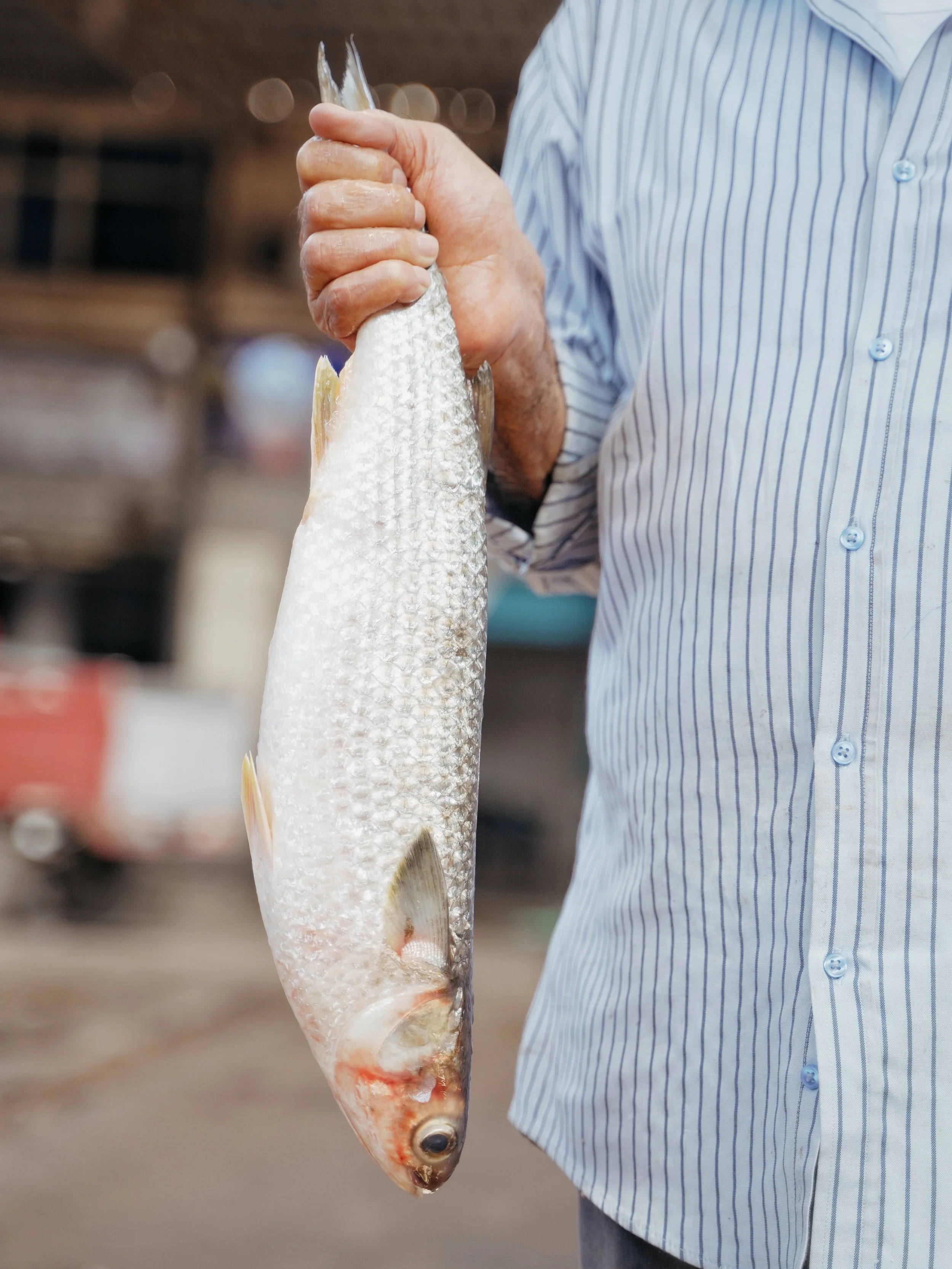
My father, Abdelsalam, is a 97-year-old native of Port Said. Everything I know about Battarekh I learned at his table. He grew up in what he described as a sophisticated European city on the Egyptian Mediterranean - a cosmopolitan hub where Greek, Italian and French residents ran the restaurants and hotels, where passengers stepped off luxury liners transiting the Suez Canal into a glittering shore-side city that felt, for a brief and extraordinary period, like the centre of the world. That particular Port Said no longer exists, but the battarekh does, made the same way it has been since antiquity, beside the same lakes.
Port Said is, by Egyptian standards, a newcomer. Built on reclaimed land in 1859 to serve the construction of the Suez Canal, it was a city assembled from ambition and labour, not history. Ferdinand de Lesseps oversaw the digging of the canal between 1859 and 1869, drawing tens of thousands of workers - most of them from the river cities of the Nile Valley - who settled in Port Said and made it their own. They brought their Nile Valley food culture with them and found it transformed by the abundance of the sea. The Europeans who followed - Greeks, Italians, French, amongst others - brought theirs to the hotels and restaurants they opened along the waterfront. A city built on transit becomes over time a city built on mixture. In a city where everyone was from somewhere else, the table became the common ground with seafood at the centre.
What makes Port Said unique is that it sits on the border of Africa and Asia, at the north-eastern tip of the Nile delta where the canal meets the sea. To the west lies Lake Manzala - vast, brackish, and teeming with life. To the east, across the Suez Canal on the Sinai Peninsula, lies Bardawil: a vast, shallow saline lagoon where grey mullet have gathered to spawn since antiquity. It is in these two lakes, where fresh water meets salt water, and the Mediterranean begins, that the finest mullet in Egypt are caught. The city may be young, but the waters are ancient. This transit hub - home to arguably the world’s finest battarekh – is connected to the far reaches of the globe via the Suez Canal.
The Season and the Sac
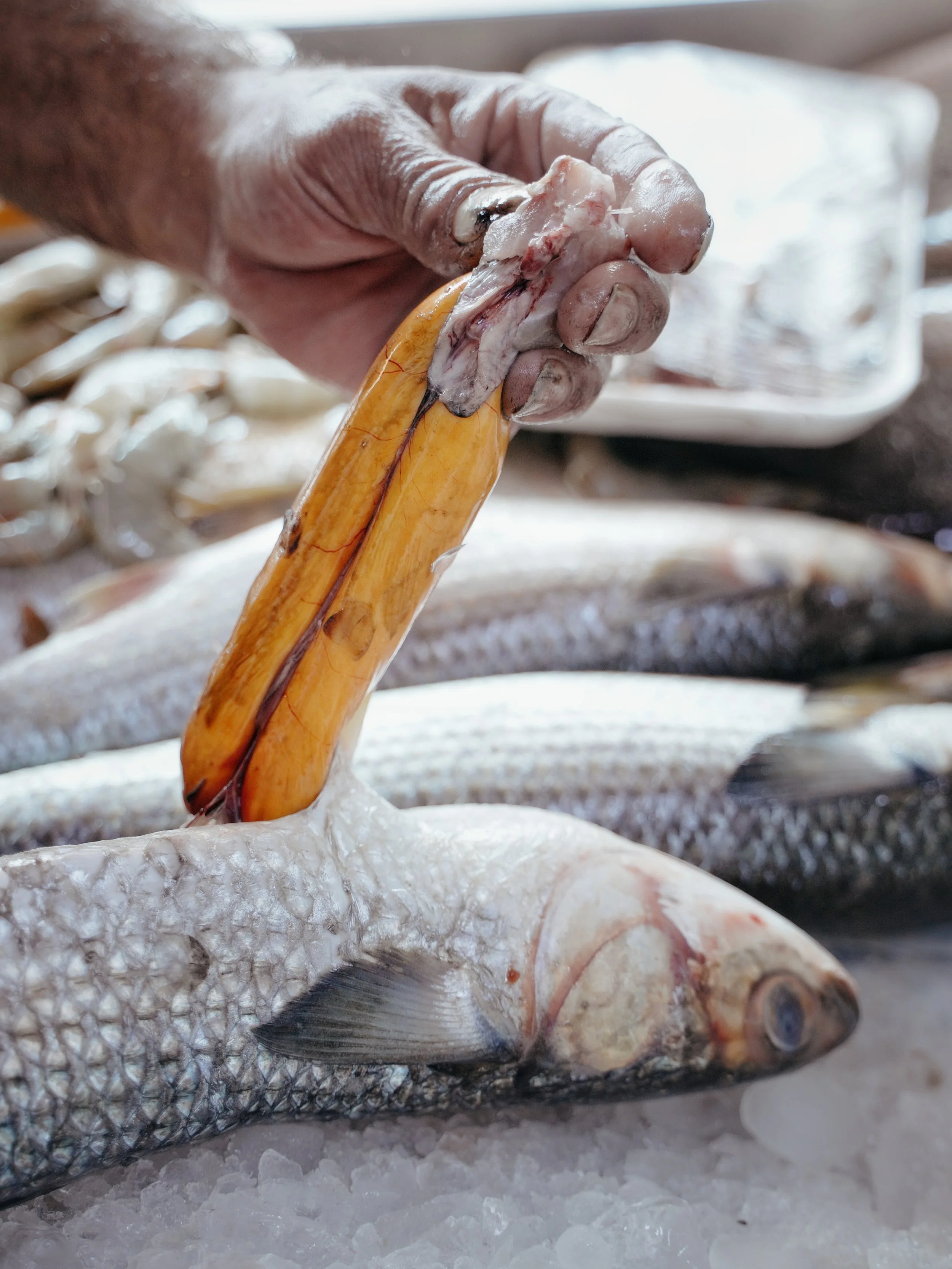
The season is unforgiving in its brevity: late September and October/ early November only, when the grey mullet has reached full size and produced a roe sac worth harvesting. Wild Grey mullet are netted in the open sea, in the brackish shallows of Manzala, or in the saline reaches of the Bardawil. To honour the integrity of the roe sac, the fish is traditionally sliced open from the back, just as the fish gutters on the tomb walls are shown doing, so the roe can be lifted out without puncturing its membrane. Some now open it from the belly for quicker, easier access, but the back is still preferred. Any tear releases what Port Said cooks call zafara: an untranslatable Arabic word for the particular greasy, fishy intensity that comes, they say, from a compromised roe. In ancient times, the rest of the fish was salted and dried. Today it goes into the oven as singari, a seasoned fish bake, so nothing is wasted.
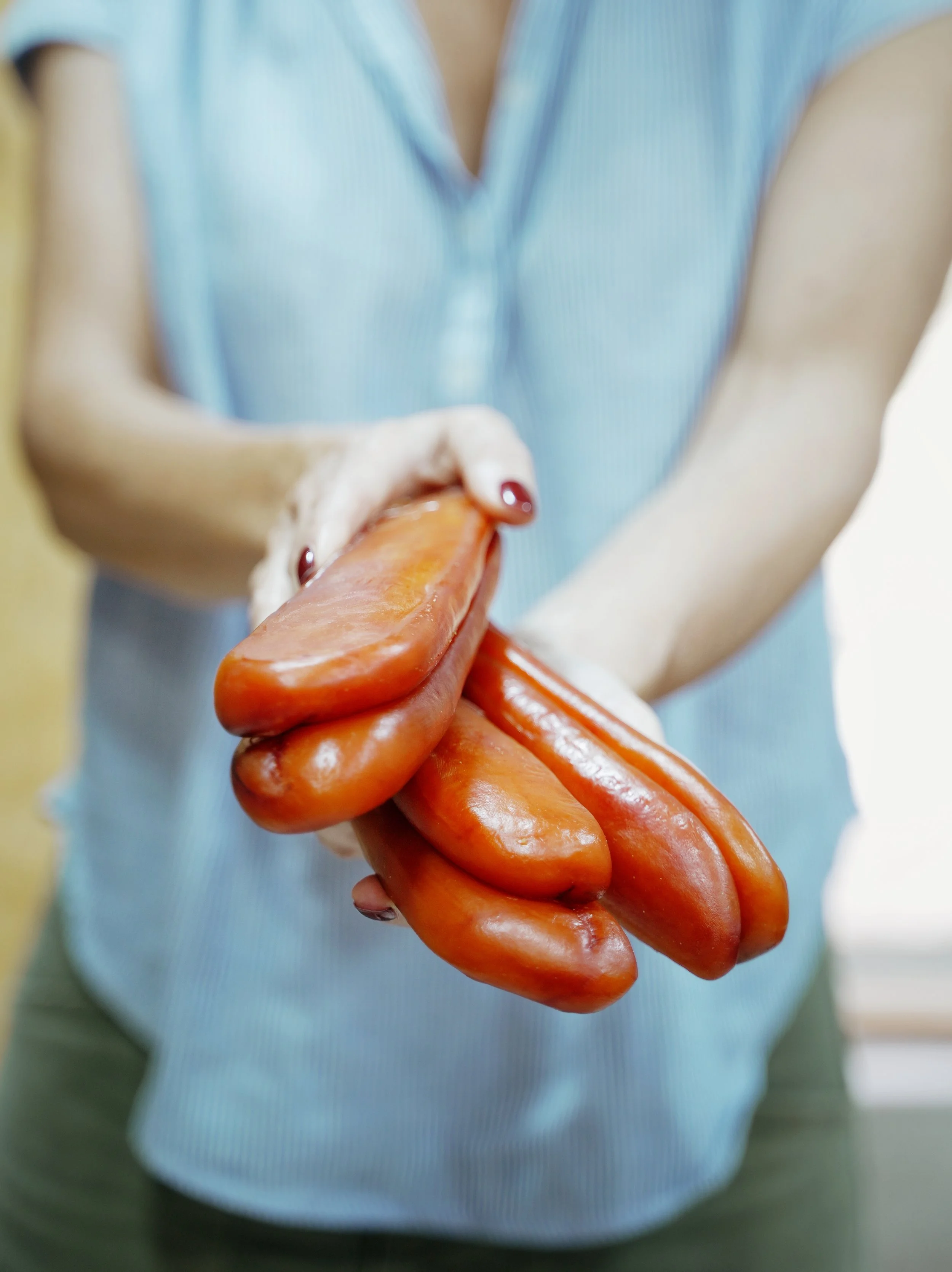
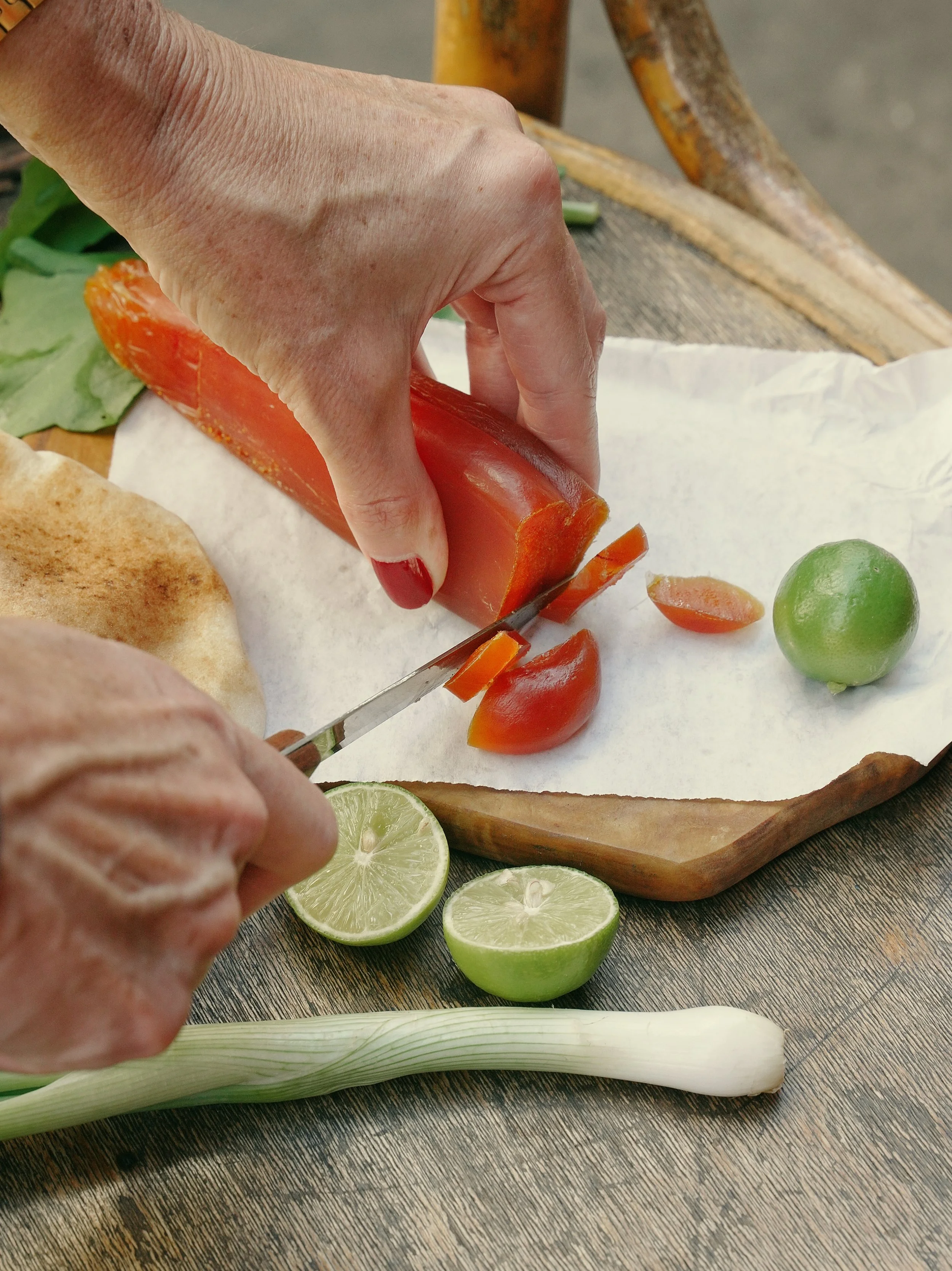
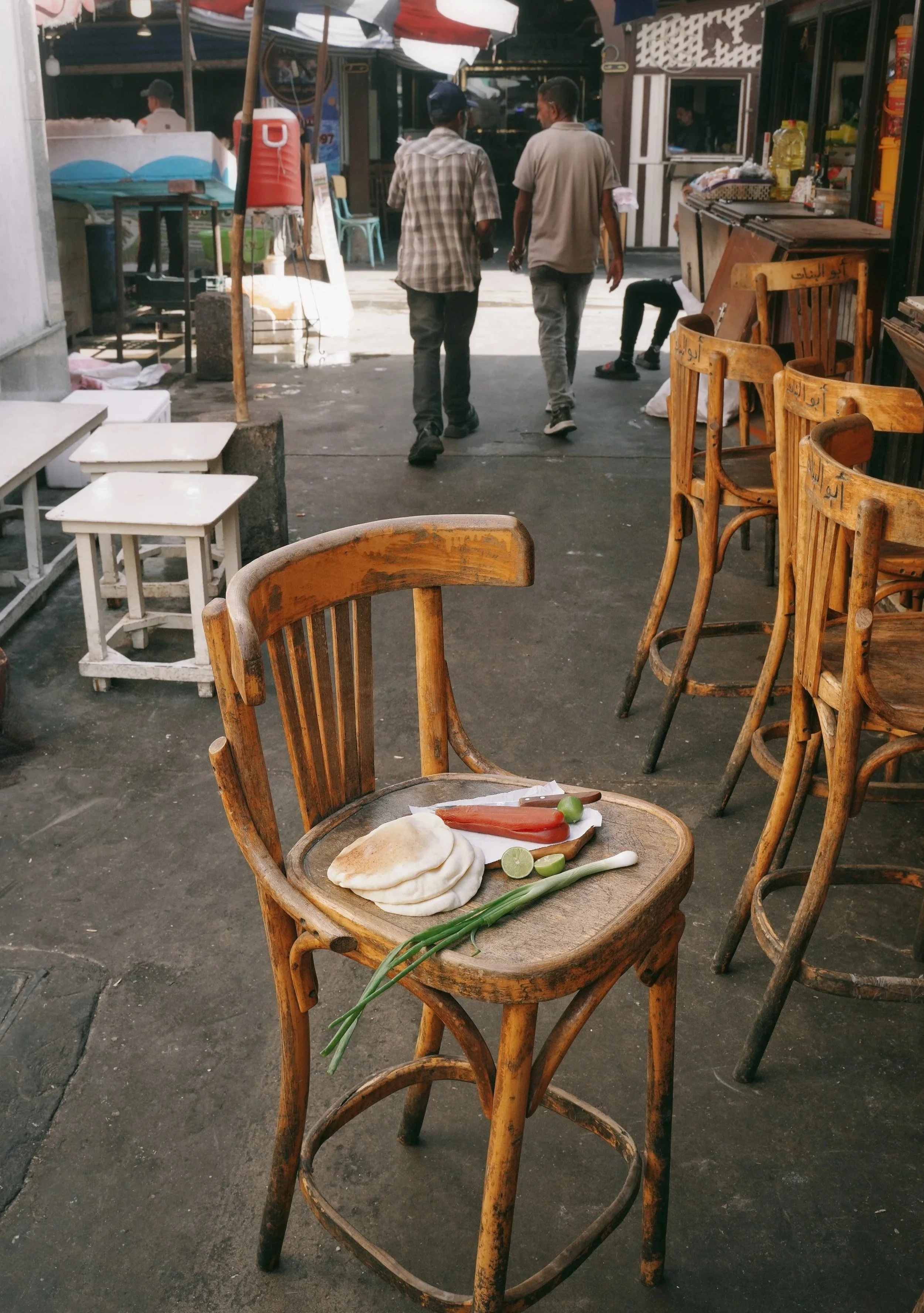
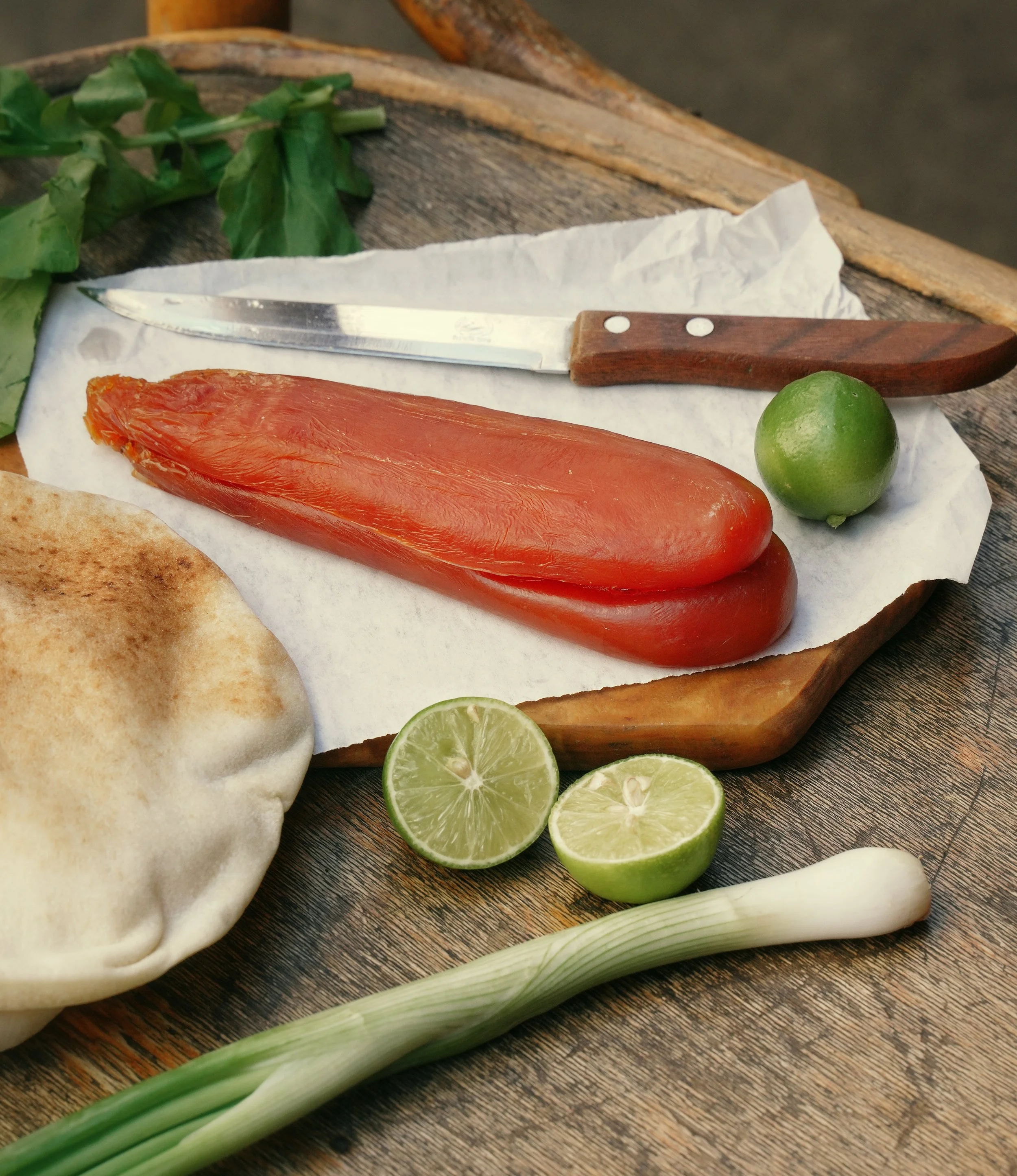
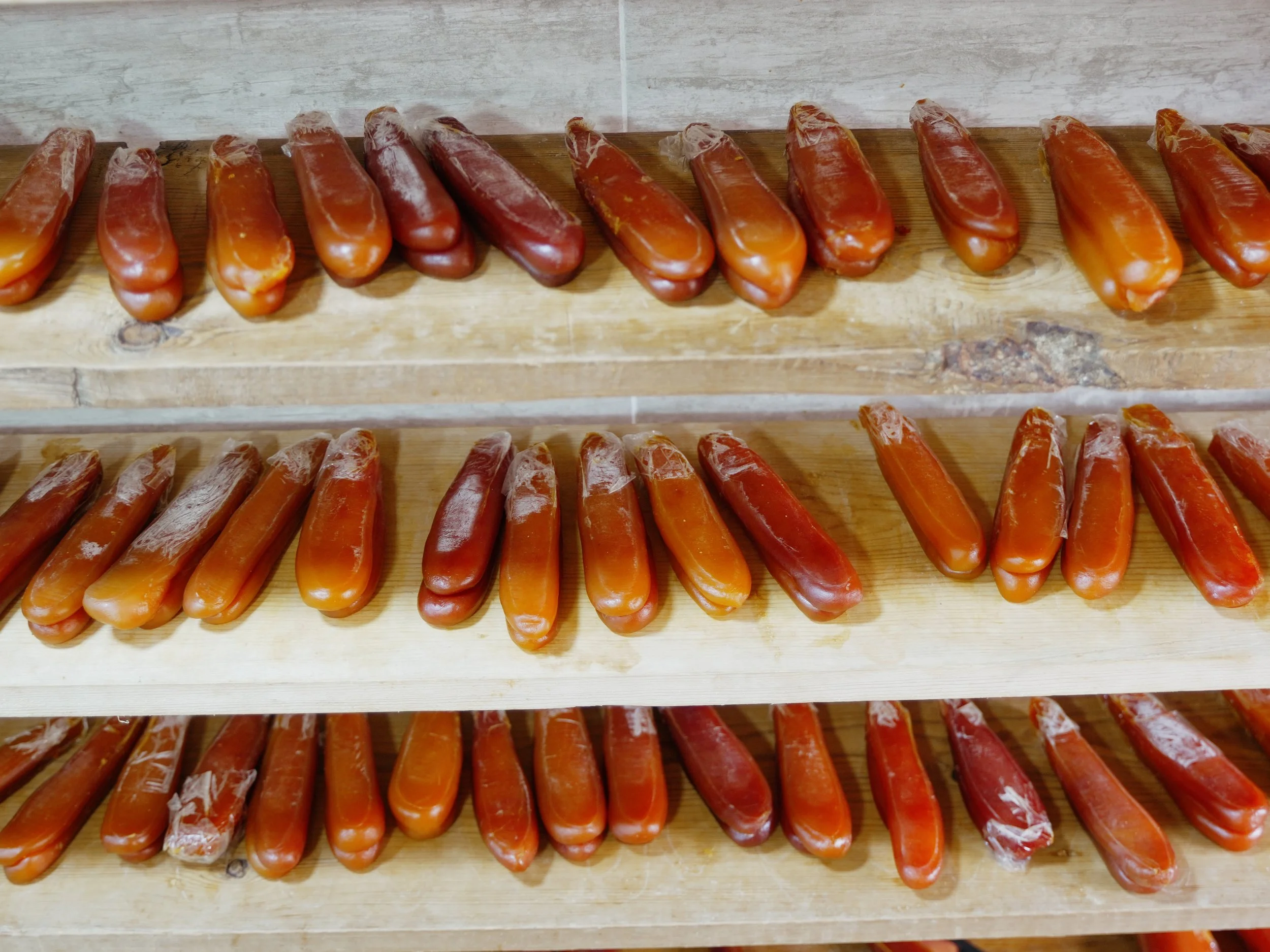
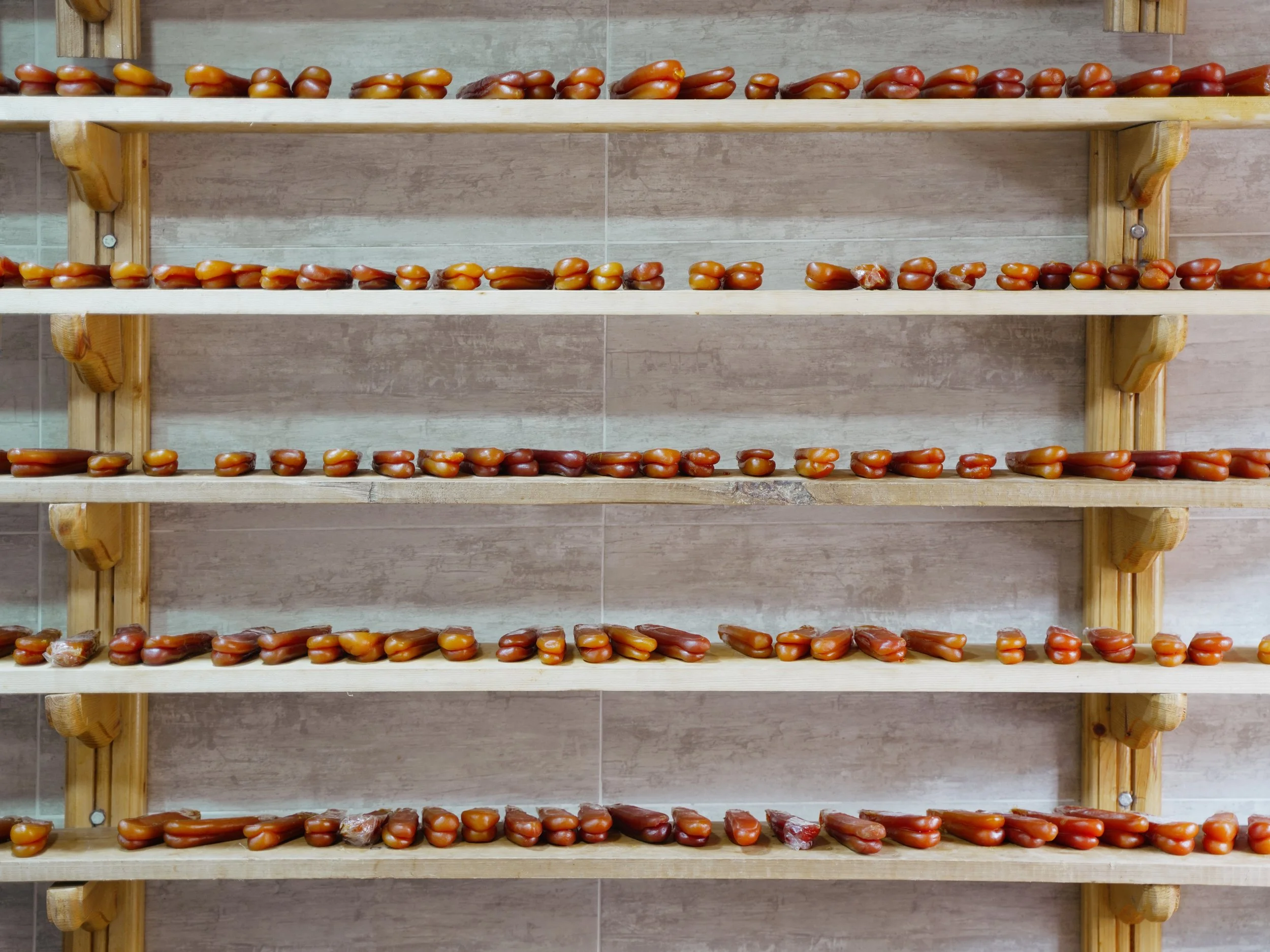
Then the curing process begins. The roe sacs are refrigerated to firm up, the veins are carefully removed, the roe is covered with salt for a few hours to remove the moisture, rinsed, then dried in open air for six days or so with daily turning until the lobes deepen to that characteristic amber colour. The result is soft yet sliceable, intensely savoury without being sharp. This is not the heavily dried bottarga that Italians grate over pasta for a punch of salty umami. Port Said’s battarekh is younger, softer and gentler - eaten in thin slices on baladi bread with a squeeze of lemon, and, for purists, nothing more. It is the main event, not a seasoning.
How to Read It Before You Eat It
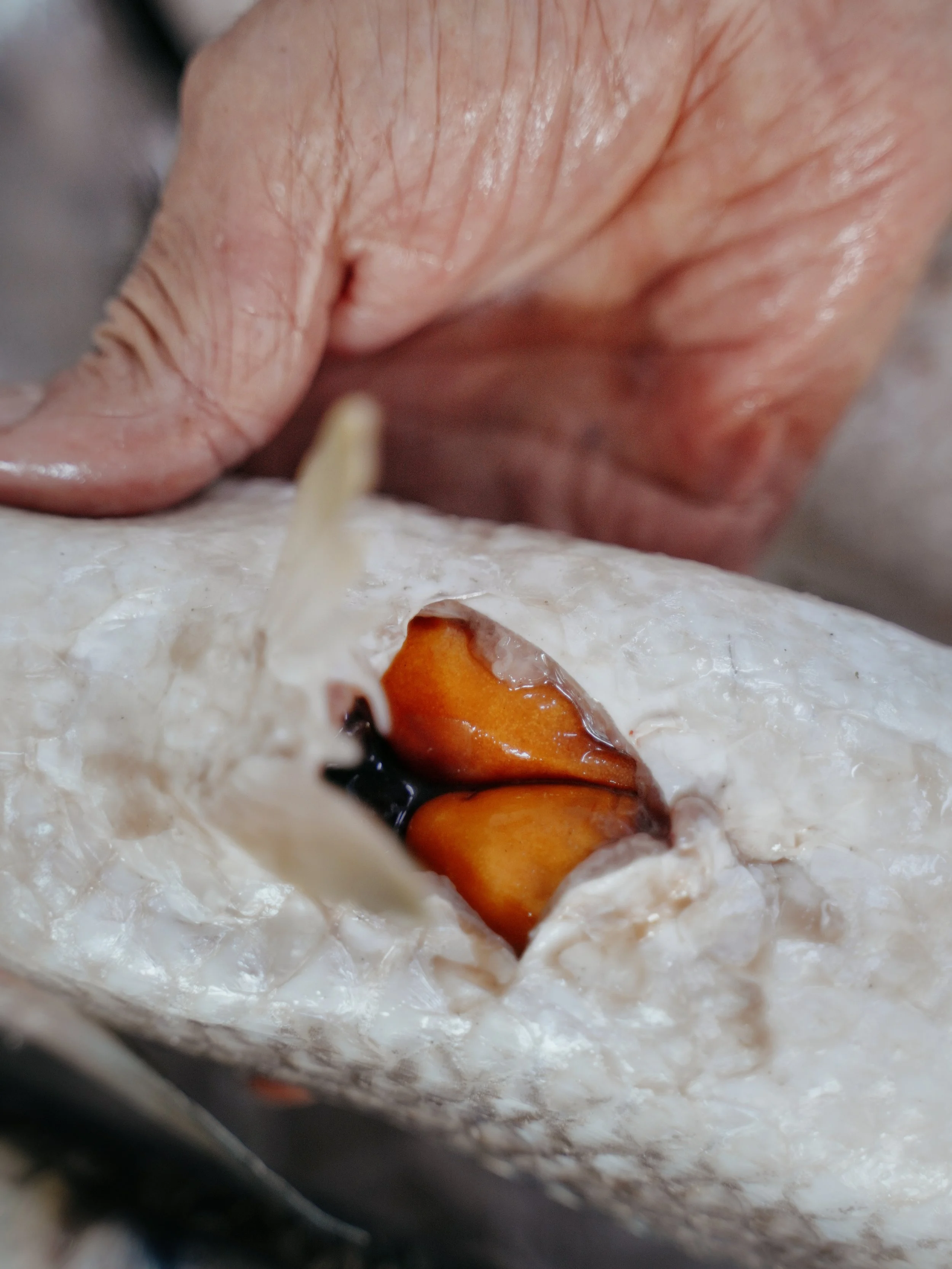
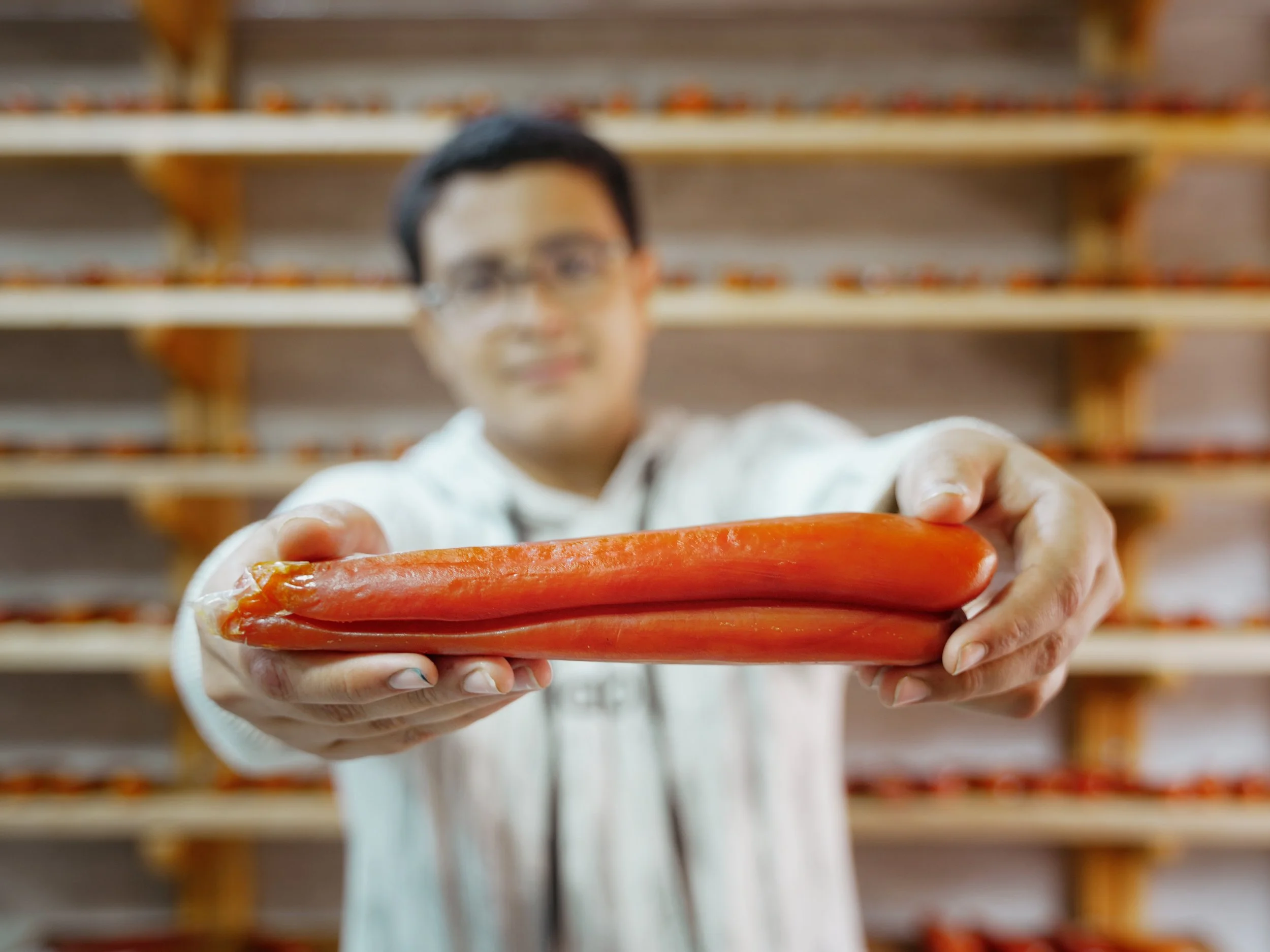
My father taught me to read battarekh. He taught me to press it to assess its age, hold it to the light, and smell it before tasting it. Bright amber, yields to pressure, smells like the sea, but not fishy, then the flavour - a gentle umami rather than a shock to the senses. The right size for everyday eating is medium to large - four to six lobes per kilogram. The rarer pieces, the single lobes reaching 500 to 750 grams, are kept for gifts of serious intent, the kind you bring when you want to make a grand gesture. He also taught me the mark of authenticity that only insiders know: el dafer - the fingernail - a thumbnail-sized piece of the fish’s own skin left deliberately attached to the end of the roe sac during extraction. It is proof that the roe was lifted whole from a locally caught wild mullet by someone who knew what they were doing. Imported or carelessly produced varieties do not carry it. That the mark is sometimes now faked - a scrap of scaled skin attached after the fact to command a higher price - gives subtle insights on the provenance of the roe.
Something Worth Stealing
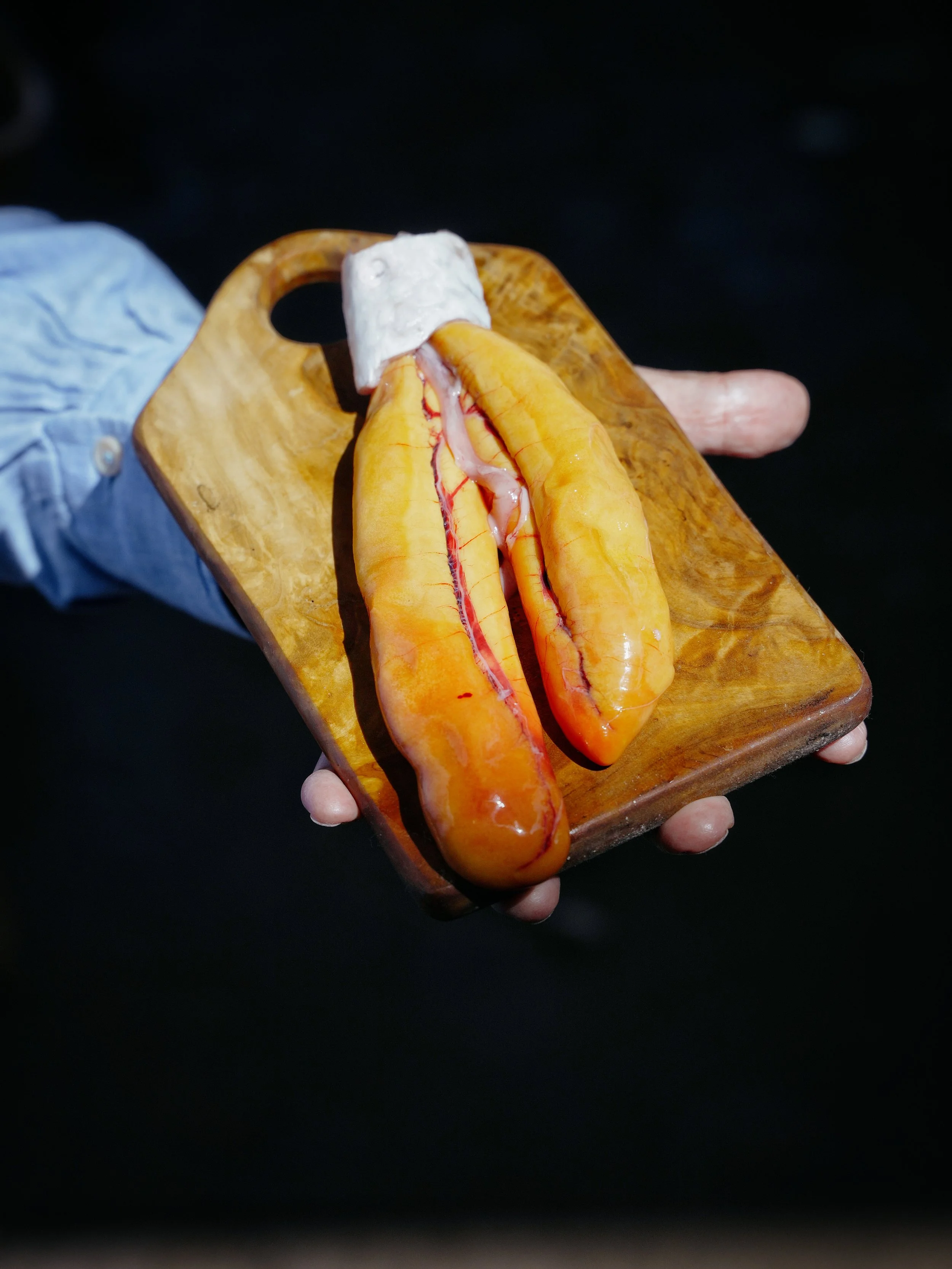
The name is a map of the journey. Bottarga - the Italian word now used across the world - comes from the Arabic battarekh, which traces back through Byzantine Greek ōotárikhon: literally “egg pickle.” The practice itself is older than any of these words. When Herodotus passed through Egypt in 440BCE, the salting and curing of grey mullet roe in the Nile Delta was already old enough to be recorded without explanation – as simply a part of what Egypt did. From Egypt, the Phoenicians carried the technique through the Mediterranean; the Arabs spread it further still – through Spain, Italy and southern France – until mullet roe had become a luxury of the entire sea.
By 1386, it had reached the status of something worth stealing. That year, somewhere off the coast of Sardinia, a Catalan-Aragonese pirate ship intercepted a vessel out of Oristano. The cargo was salted eel and bottarga. They took it. That a pirate would bother shows you that bottarga was now valuable, but ironically, the Nile Delta had been producing it for over a millennia. The process of curing mullet roe had travelled from the lagoons of Egypt through the Arab Mediterranean and into the merchant ports of the sea, and arrived at the status of luxury. Genoese-born authority on Italian gastronomy and owner of RAP, Paris’s most celebrated Italian épicerie, Alessandra Pierini acknowledges this Egyptian root, tracing the word bottarga directly back to battarekh and its journey westward through the Arab Mediterranean.
Sardinia now calls it the Gold of Sardinia. Sicily makes its version from bluefin tuna. Provence calls it poutargue. Japan produces karasumi. All of them trace back, in some form, to the grey mullet fishermen of Egypt’s north coast - to the shallow saline lakes, and the amber lobes of battarekh drying in the sea air.
Something Worth Preserving
Today, when a gathering of friends around a mezza table calls for battarekh in Cairo, my father’s old network shows its own value. A call goes to Port Said. A package is wrapped in parchment, addressed in thick black pen, handed to the Superjet bus driver at Port Said station, and collected three hours later at Ramses station in Cairo. Fresh battarekh, ready for the mezza table. Some supply chains are worth preserving.
About the Author
Suzanne Zeidy was born and raised in Cairo to an American mother and Egyptian father. After earning a graduate business degree and completing her culinary training in New York, she returned home to join her family's business producing Egyptian staples such as ful, halawa, molasses and tehina. She went on to co-found several beloved Cairo restaurants, including La Bodega and Cilantro. Her project Cairo Kitchen inspired the Cairo Kitchen cookbook (Hardie Grant, 2013). Her latest book, Egypt: Recipes and Stories from an Ancient Land (Nourish, 2026), co-authored with Rawah Badrawi and praised by Claudia Roden, travels the country's rivers, deserts, seas and mountains to document its regional food heritage. She brings an international perspective rooted in a deep passion for Egyptian culinary heritage.