The Cartographer of Arab Folktales: Remembering Hasan El-Shamy 1938–2026
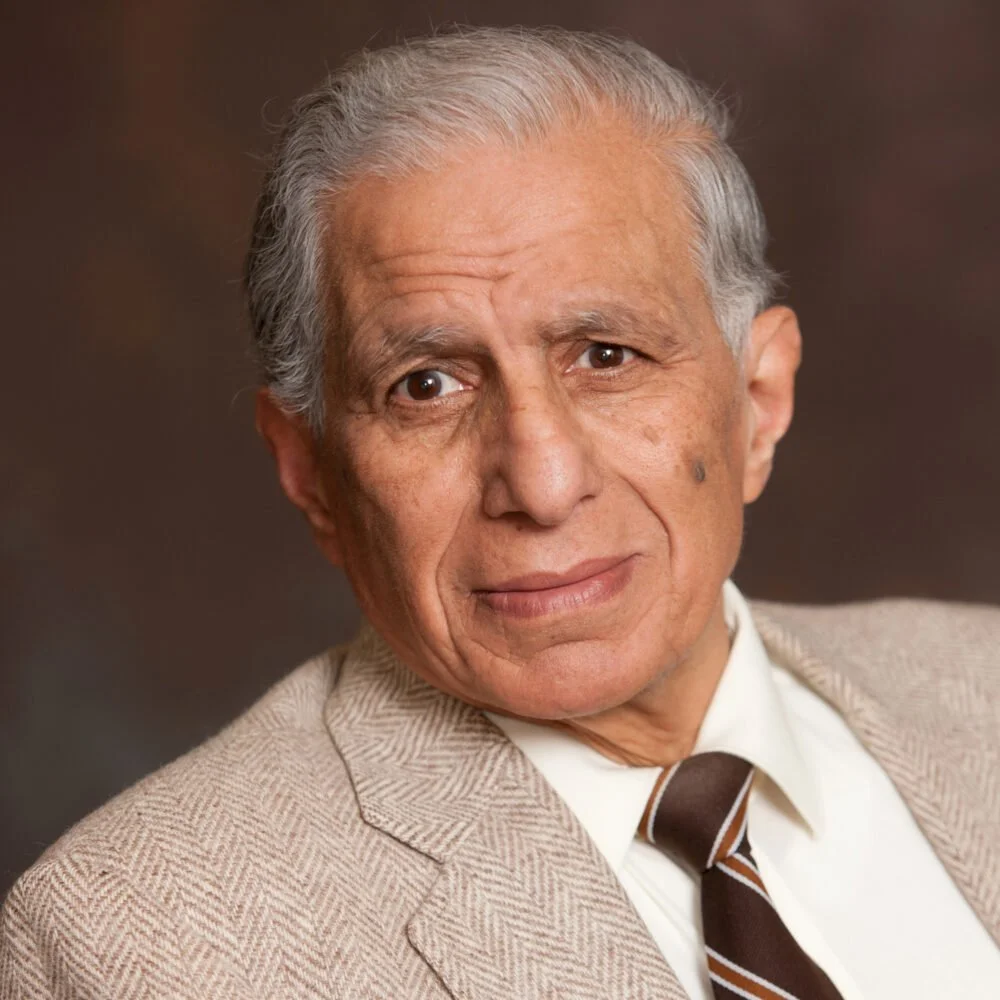
Hasan M. El-Shamy spent more than sixty years trying to answer a question that sounds simple until you actually attempt it: what does a folktale, told and retold across a region as vast and varied as the Arab world, actually have in common with every other version of itself? El-Shamy, who died on August 16 in Bloomington, Indiana, at eighty-eight, spent a career building the tools to answer that question properly — and in doing so, gave the field of Arab folklore studies something it had never quite had before: a shared, searchable map of its own material.
He was born in Cairo on June 21, 1938, and educated there, completing a B.A. with honors in Arabic and Islamic studies at Ain Shams University in 1959, followed by a year of intensive graduate work in psychology and education at the same institution — an early sign of the interdisciplinary instinct that would define his entire career. A Fulbright Fellowship brought him to Indiana University in 1960 to study folklore formally, where he completed an M.A. in 1964 and a Ph.D. in 1967. It was the beginning of a relationship with IU that would last, in one form or another, for the next sixty-six years.
His doctoral dissertation set the terms for everything that followed: it used social learning theory to rethink what folklore actually is, grounding the analysis in fieldwork with Egyptian immigrant communities in New York. Where many folklorists of his generation treated psychological readings of folklore as a matter of psychoanalysis — dreams, archetypes, the unconscious — El-Shamy pushed in a different direction, insisting that folklore be understood as learned behavior, shaped by the same social and cognitive processes that shape any other human practice. It was a quieter, more empirical kind of intervention than psychoanalytic folklore criticism, and arguably a more durable one.
After a year teaching sociology and anthropology at Morehead State University, El-Shamy returned to Cairo in 1967, where for the next five years he held two positions at once: director of the archives at the Ministry of Culture's Folklore Center, and assistant professor of sociology and anthropology at the American University in Cairo. In 1972 he came back to Bloomington for good, joining the IU faculty where he would remain until becoming Professor Emeritus of Folklore in 2013, after forty-one years of teaching, research, and service.
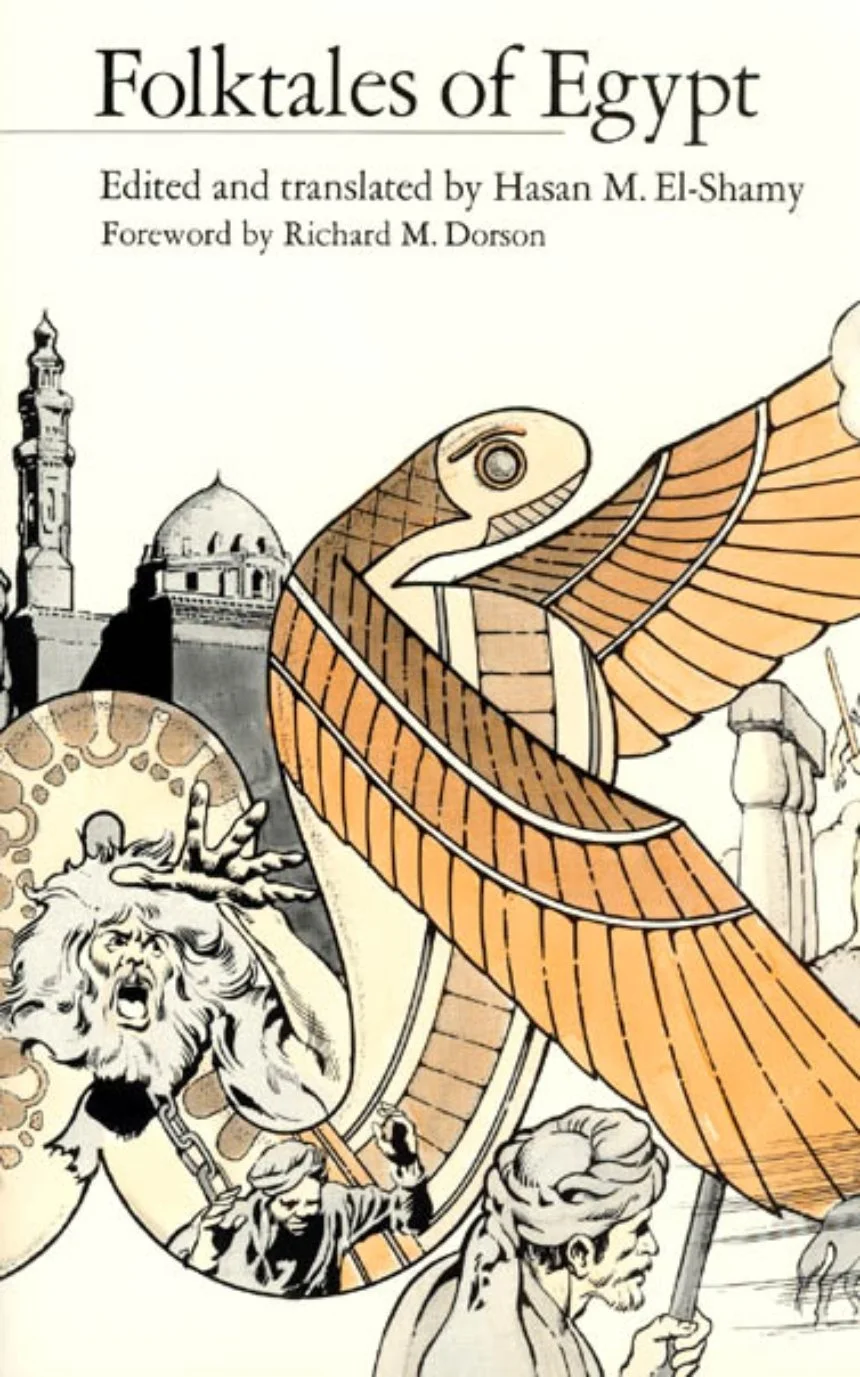
If El-Shamy has one signature contribution, it's the sheer scale of classification work he took on almost single-handedly. The Folktales of Egypt (1980), which won the Chicago Folklore Prize, drew on extensive fieldwork to place Egyptian oral narrative in African, Middle Eastern, and world context — not as a curiosity to be admired from outside, but as a body of material with its own internal logic worth taking seriously on comparative terms. On its release, the folklorist Daniel J. Crowley, writing in Research in African Literatures, called it a major contribution to the comparative study of folktale distribution, praising the collection as fully documented and, despite its scholarly rigor, genuinely readable — a judgment echoed by Kenneth J. Perkins in the International Journal of Oral History.
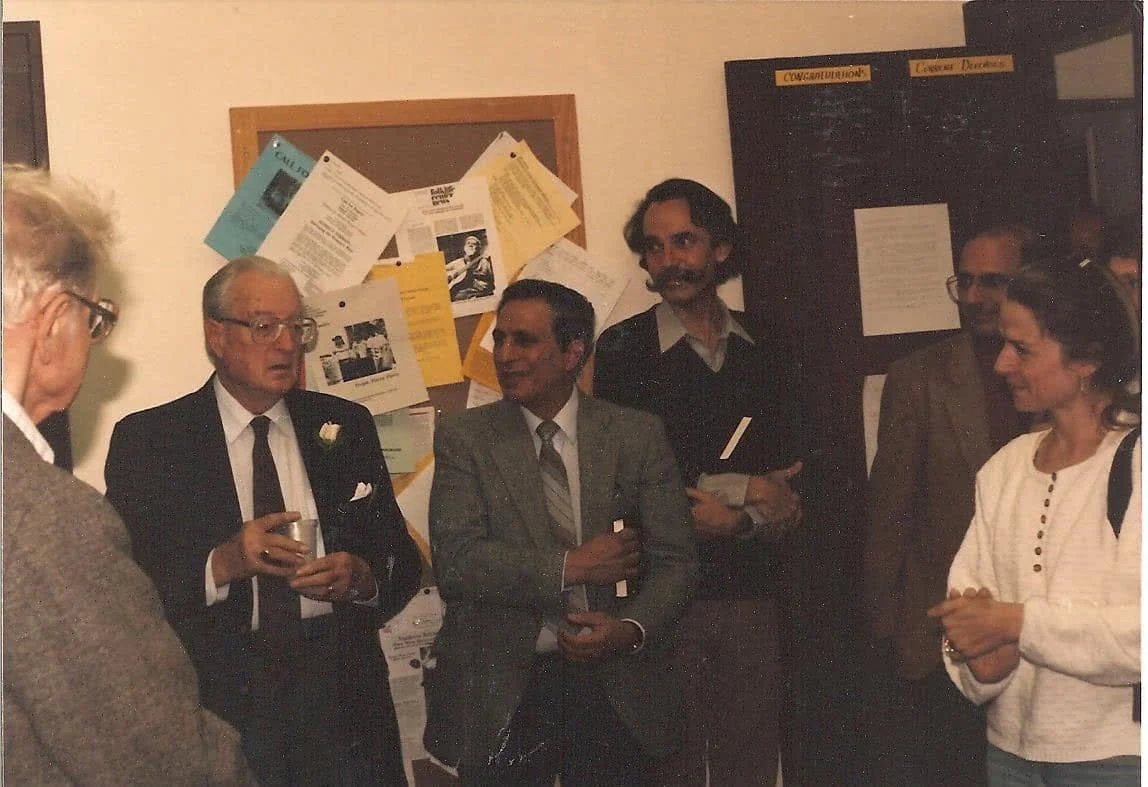
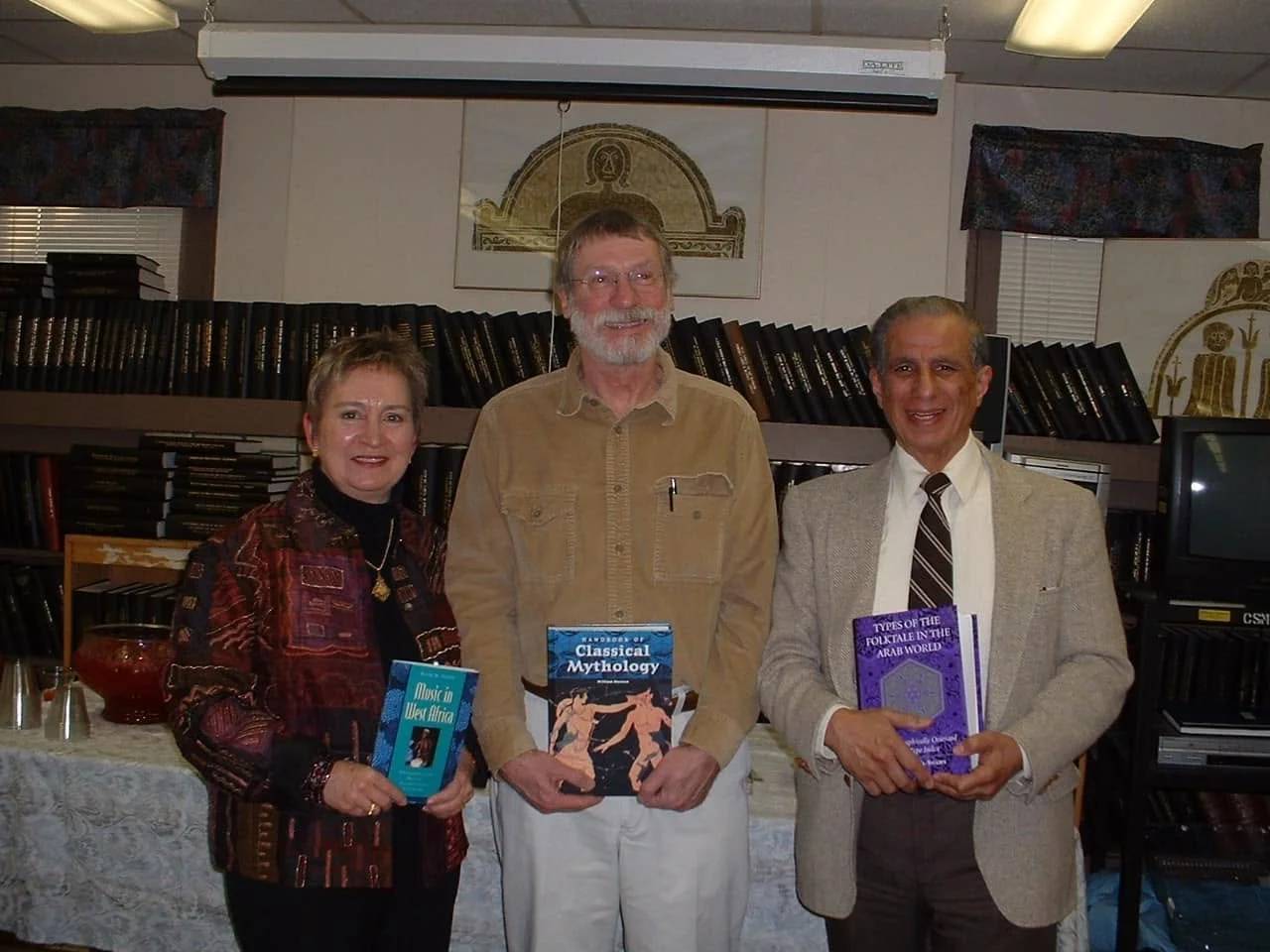
Professor Hasan El-Shamy with his colleagues at Indiana University
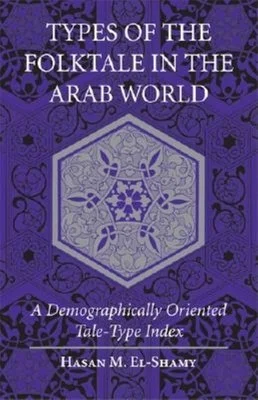
El-Shamy followed it with Folk Traditions of the Arab World: A Guide to Motif Classification (1995) and, a decade later, the genuinely monumental Types of the Folktale in the Arab World (2004) — a demographically oriented index attentive to who was actually telling these stories: a narrator's literacy, gender, and education, factors that earlier typological systems had tended to strip away in the name of clean comparison. It adopted the tale-type framework built by Antti Aovers for the two-volume set were designed by his daughter, Jenny.
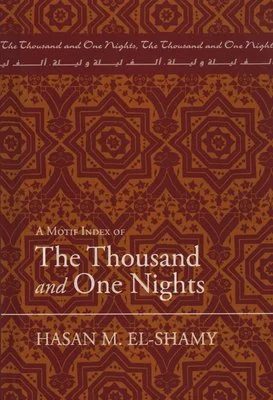
In 2006 came A Motif Index of The Thousand and One Nights, an index of one of world literature's most-mined and least-systematically-catalogued texts, and in 1999, Tales Arab Women Tell and the Behavioral Patterns They Portray — a study built specifically around a body of narrative that had often gone unrecorded simply because of who was doing the telling.
Running underneath all of it was a long-running research thread on kinship and sibling relationships in Middle Eastern folk culture — what El-Shamy called the "brother-sister syndrome" — work that used ethnographic and folkloristic material to challenge assumptions embedded in Western psychiatry, rather than the other way around. It's a small but telling reversal: instead of applying an outside psychological framework to Arab folk material, he used the material to interrogate the framework.
His last major book, Religion Among the Folk in Egypt (2008), examined the vernacular belief systems of everyday Egyptian life on the eve of the political upheavals that would reshape the country in the years that followed — a study that, as his colleague and biographer Jason Baird Jackson has noted, still has something to offer anyone trying to understand Egypt's social fabric from the ground up rather than from the vantage point of policy and headlines.
El-Shamy's later career kept pulling him back toward the region his scholarship never really left. He was a two-time Fulbright Fellow (1960–61 and 1987–88), was named Senior Scholar at the National Museum of Ethnology in Osaka, Japan, in 2002, and returned to Egyptian academia the following year as a visiting professor at Tanta University. He was elected a Fellow of the American Folklore Society in 2006. Colleagues at Indiana University, where the Department of Folklore and Ethnomusicology is marking its centennial this academic year, have noted with real sadness that he won't be present for it, even as they credit him as one of the people who built the department's international reputation in the first place.
He is remembered, too, in the smaller register that obituaries often reach for last but that matters just as much: as a husband to Susan, a father to Jenny and Lyla, and a grandfather to Nadia and Ben.
What El-Shamy leaves behind is, in a sense, a piece of infrastructure — indexes and classification systems that don't announce themselves as beautiful or urgent the way a single well-told story does, but that quietly make it possible for the next generation of scholars to find the story they're looking for, trace its variants across a continent, and take it seriously as evidence of how people actually think, live, and pass things down. For a field built on the study of what gets carried forward and what gets lost, it's a fitting kind of legacy: the tools themselves, built to outlast the man who built them.
Sources: American Folklore Society, "Hasan M. El-Shamy (1938–2026)"; Indiana University Department of Folklore and Ethnomusicology, memorial by Jason Baird Jackson and emeritus faculty profile; Wikipedia; University of Chicago Press and Indiana University Press catalog listings; contemporary reviews of The Folktales of Egypt and Types of the Folktale in the Arab World.