Gulf-style Malls & the Reinvention of Public Space in Baghdad
Words by Maya Alinaizi
Today’s social media feeds and curated news broadcasts frequently showcase a glossy vision of Iraq, filled with images of reconstruction, hundreds of new bridges, and drone footage of luxury apartments, all suggesting that Baghdad is emerging from decades of war and rebuilding into a newer, more beautiful capital.
One such feature of this so-called transformation is the “Gulf-style mall”: the mega multifunctional shopping centre filled with international and regional brands, entertainment facilities, and lavish architecture: glass facades, grand atriums, and dancing fountains. Today, Iraqi media celebrates the arrival of such malls and the accompanying international brands such as Zara, Mango and Nike. Meanwhile, Baghdad, once the bustling round city, the epicentre of the Islamic Golden Age, is becoming increasingly fragmented, squared off and boxed up, blocked by concrete T-walls and partitioned by checkpoints.
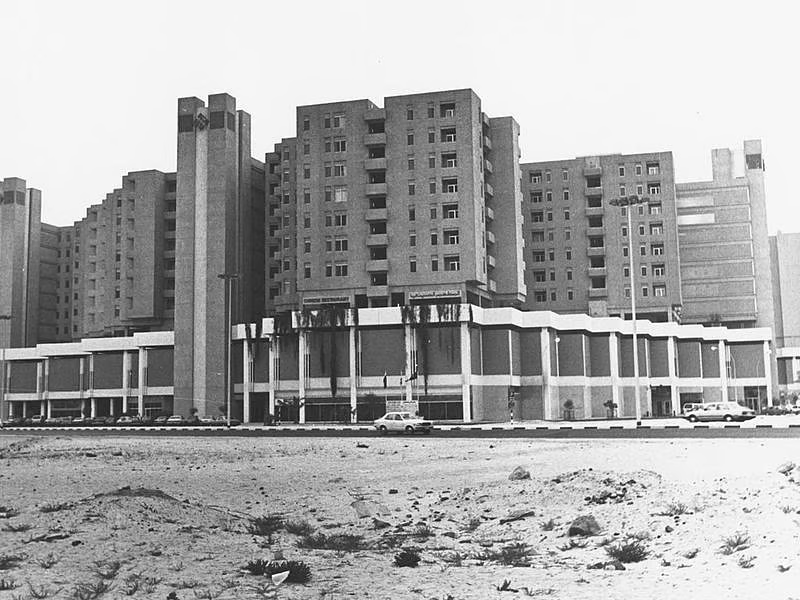
Al Ghurair Centre, Dubai, 1981
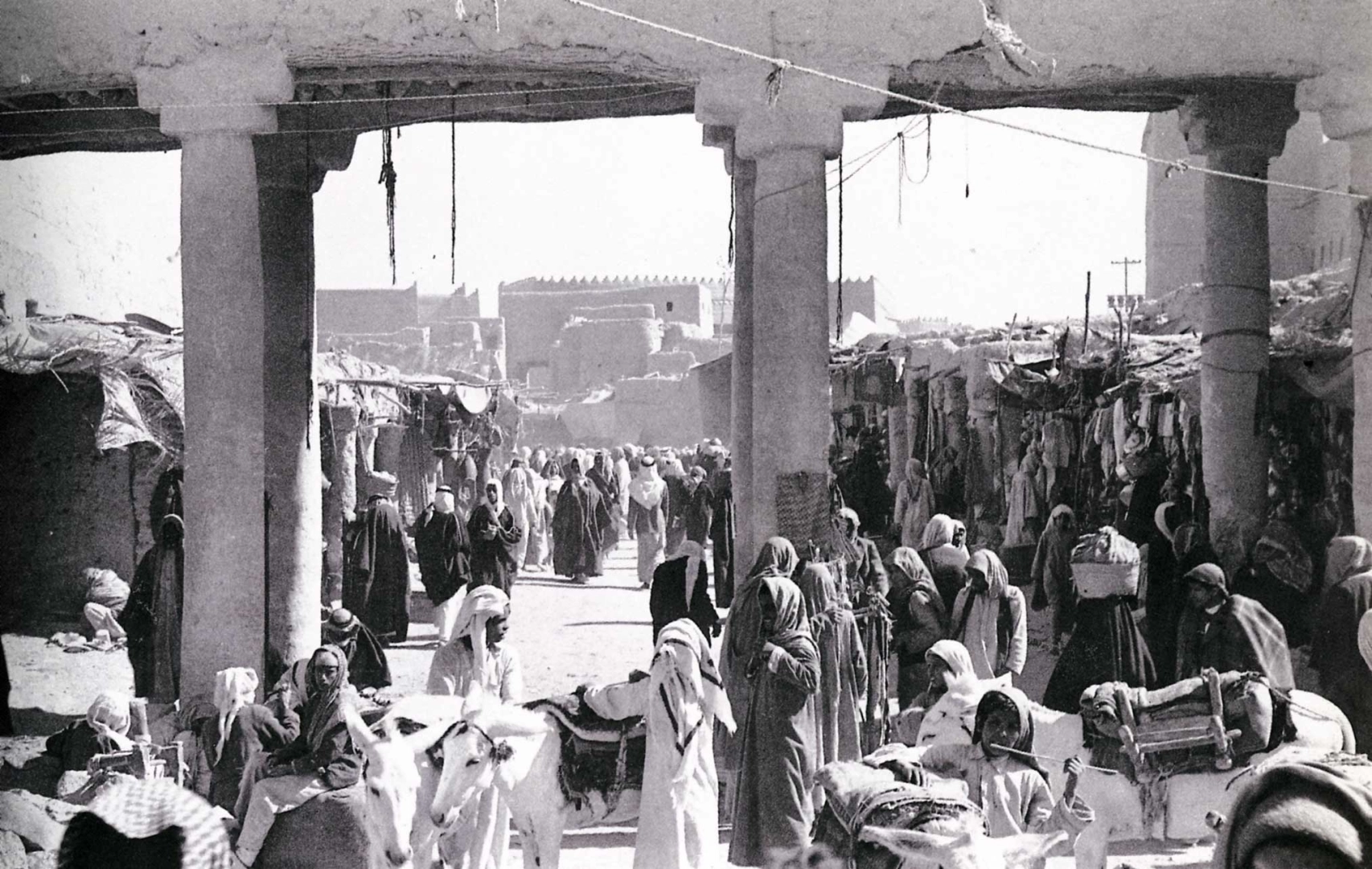
Animal Feed Market in Riyadh
Baghdad’s mall culture did not arrive all at once, nor did it come from the Gulf alone. Mansour Mall, which opened in 2013 and marketed itself as the first mall built in the capital since the 2003 invasion, was financed by Iraqi investors and was a rather modest development, with around 60 shops selling mid-sized brands like Koton and Waikiki alongside unlicensed knockoffs such as "Aldoo" and "Krunchy Fried Chicken K.F.C.," an indoor carousel rather than a purpose-built entertainment zone, and food-court prices residents still considered expensive.
This is a different order of retail entirely from the luxury flagship stores and branded entertainment now associated with the “Gulf-style” mall. Baghdad Mall, which opened in Harthiya in 2017 as part of a complex, was likewise financed by private Iraqi (The National, 2012; Sirri, 2020). Erbil developed its mall culture years earlier still: the Hewa Group built Majidi Mall in 2009, and the Darin Group opened Family Mall in 2010, both taking advantage of the Kurdistan Regional Government's 2006 investment law, which offered tax incentives and allowed foreign firms to own property outright. Much of Iraq's early mall culture, in both its Arab and Kurdish iterations, was therefore neither Gulf-financed nor especially luxurious.
What has changed since is the scale and pace. Researchers Mashayekhi and Beiruti count more than ten malls built in Baghdad over the past decade alone, with several more under construction, among them the roughly 550,000-square-metre Iraq Mall, which finally opened in February 2026 as the country's largest and reportedly the third-largest in the Arab world. Baghdad has seen a recent, accelerating boom of mega-malls that dwarfs the earlier, more modest generation.
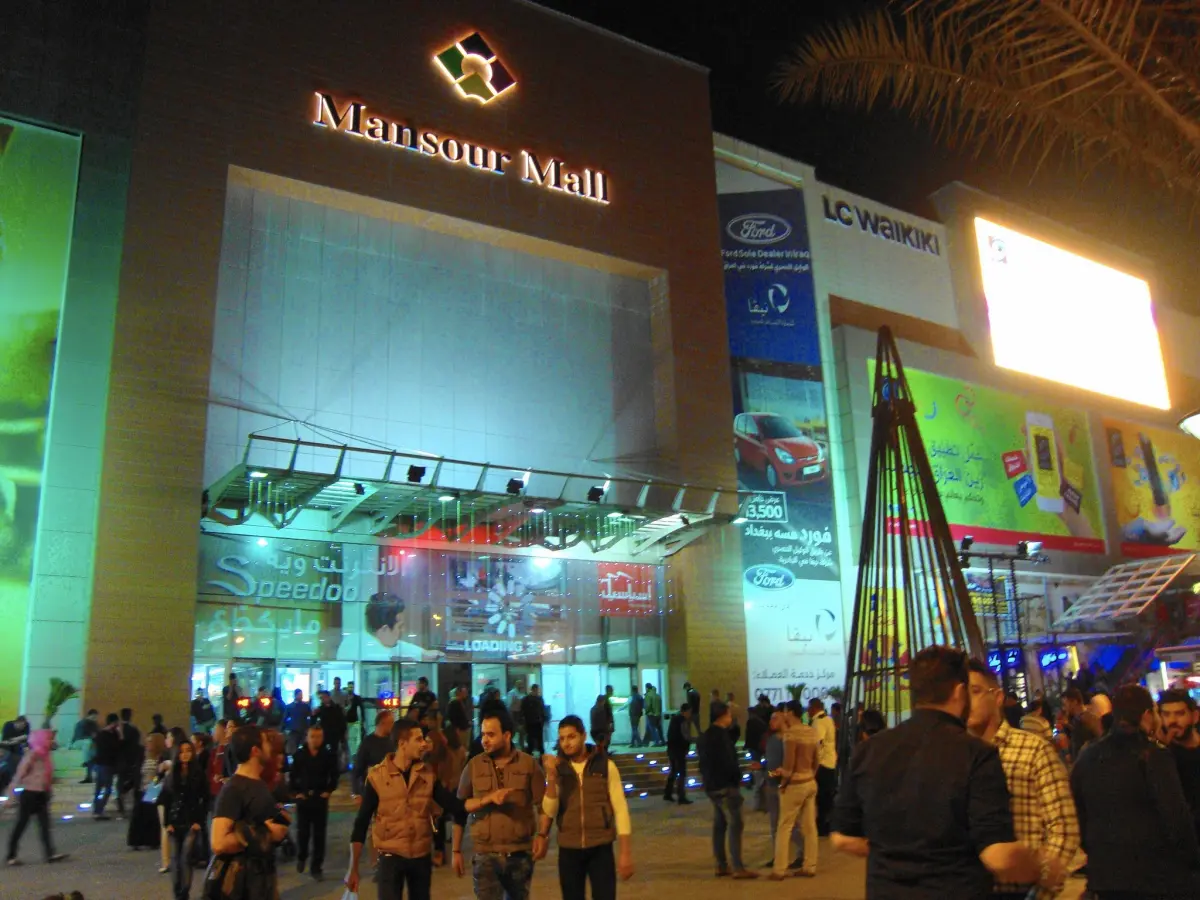
Mansour Mall
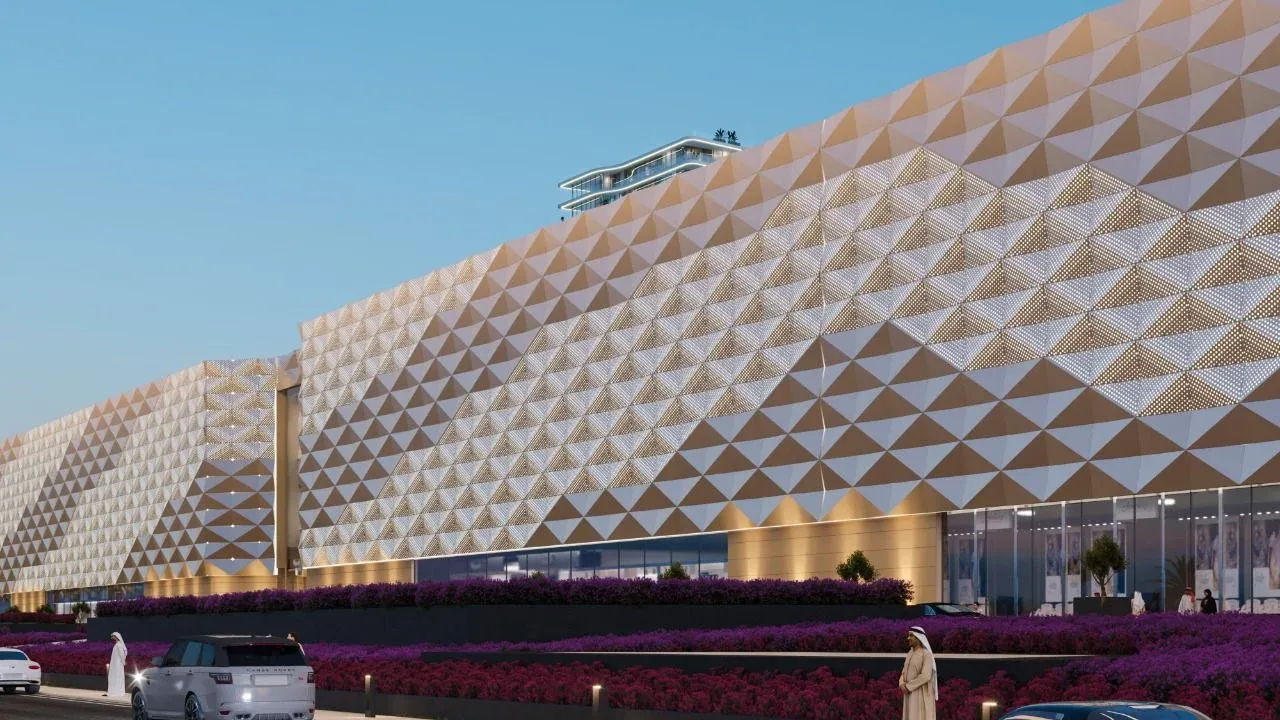
Baghdad Mall
Direct Gulf capital entered the picture later, with the UAE and Saudi Arabia investing billions of dollars into projects like Iraq Mall. Gulf soft power is only a single thread in this boom. It is visible mainly in the way Baghdad’s newest mega-malls consciously imitate Gulf retail architecture and, in a few cases, its financing. Yet security politics, changing consumer demand, and the priorities of post-2003 reconstruction have played an equally important role in driving the mall boom.
Baghdad has adopted a model of privatised urban space that developed under historical conditions different from those of the Gulf. It is precisely because of that difference that the model does not simply transplant cleanly onto Baghdad. Importing the finished architectural model without the social, economic, and urban conditions that produced it means that the mall inevitably functions differently in Baghdad.
Before the oil boom in the Gulf and the resulting urban sprawl connected people who once lived far from each other together and in seclusion, the concept of a “third space,” while not entirely absent (e.g., the maqha, the majlis, and diwaniya, although limited to families or men), was scarce for several reasons. Many Gulf families lived, and still live, in houses surrounded by high walls to protect their privacy. Residents, especially women, did not typically walk in the streets or interact with neighbours due to social norms, family reputation, and extreme heat. In many Gulf cities, everyday movement through the street, particularly for women, was shaped by norms of privacy and gender, and extreme heat. As cities like Jeddah and Dubai expanded rapidly, the shopping mall was introduced. An air-conditioned third space where people could finally experience a slice of urban life.
Before oil, Gulf port towns were genuinely cosmopolitan in a commercial sense, built on centuries of pearling and Indian Ocean trade that brought different communities into regular contact in the souq and the harbour (Fuccaro, 2009; Al-Nakib, 2016). However, this form of commercial cosmopolitanism was not the same as open, cross-cutting civic sociability.
Historian Miriam Cooke describes this as an "uneasy cosmopolitanism": diverse port-city trade sitting alongside a social order that remained organised, then as now, around tribal lineage and kin loyalty, and has since been formalised by Gulf states into legal and social distinctions between "original" tribal citizens and everyone else (Cooke, 2014).
In social science terms, what these societies generated in abundance was bonding capital: the dense, trusted ties within a family or tribe that provide security and mutual obligation. What they generated less of was bridging capital: the looser, cross-cutting ties among strangers, different families, and different classes that genuinely open, public third spaces can produce (Putnam, 2000).
A pearling-era souq could therefore be bustling with foreign traders, while everyday social life for most residents still ran largely through family and tribal channels rather than open, casual mixing with unrelated neighbours. Oil-era urbanisation built a physical environment around this kinship-oriented social structure, rather than creating insularity from nothing. As oil wealth funded rapid suburban expansion from the 1950s onward, planners prioritised private courtyard housing, gender-segregated domestic space, and car-dependent infrastructure (Al-Nakib, 2016).
The result, on this account, is that genuinely open, bridging-style third spaces remain comparatively scarce in Gulf cities even today, not simply as a hangover from a pre-oil past but as an ongoing feature of societies whose strongest social ties still run through family and tribe rather than the neighbourhood or the street. The mall in the Gulf became one of the few environments where people outside one's own family circle could be observed, encountered, and occasionally engaged with in public.
Iraq, however, possesses a fundamentally different social fabric than that of the Gulf, and was historically shaped by more organic, communal, and public forms of interaction. Iraq, and specifically Baghdad, was historically built around dense and ancient neighbourhoods, with an urban history stretching back thousands of years. Traditional spaces such as local markets (souqs), tea houses, riverside promenades, and public squares have long served as social gathering places. Families have deep, multi-generational roots in the same neighbourhoods, and social life naturally spilt onto the street, especially with people walking outside and gathering in public spaces.
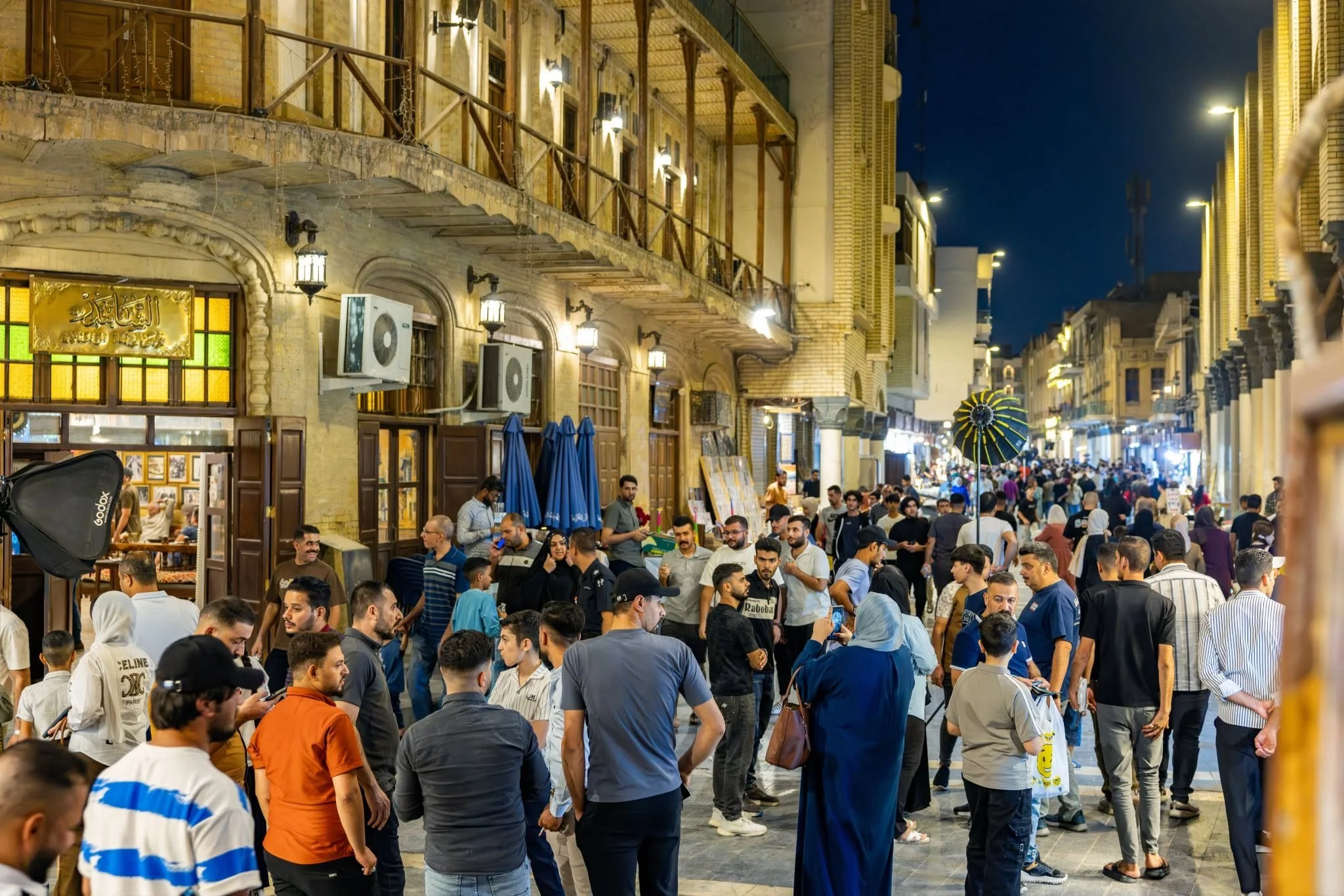
Al Shahbandar Cafe, Baghdad
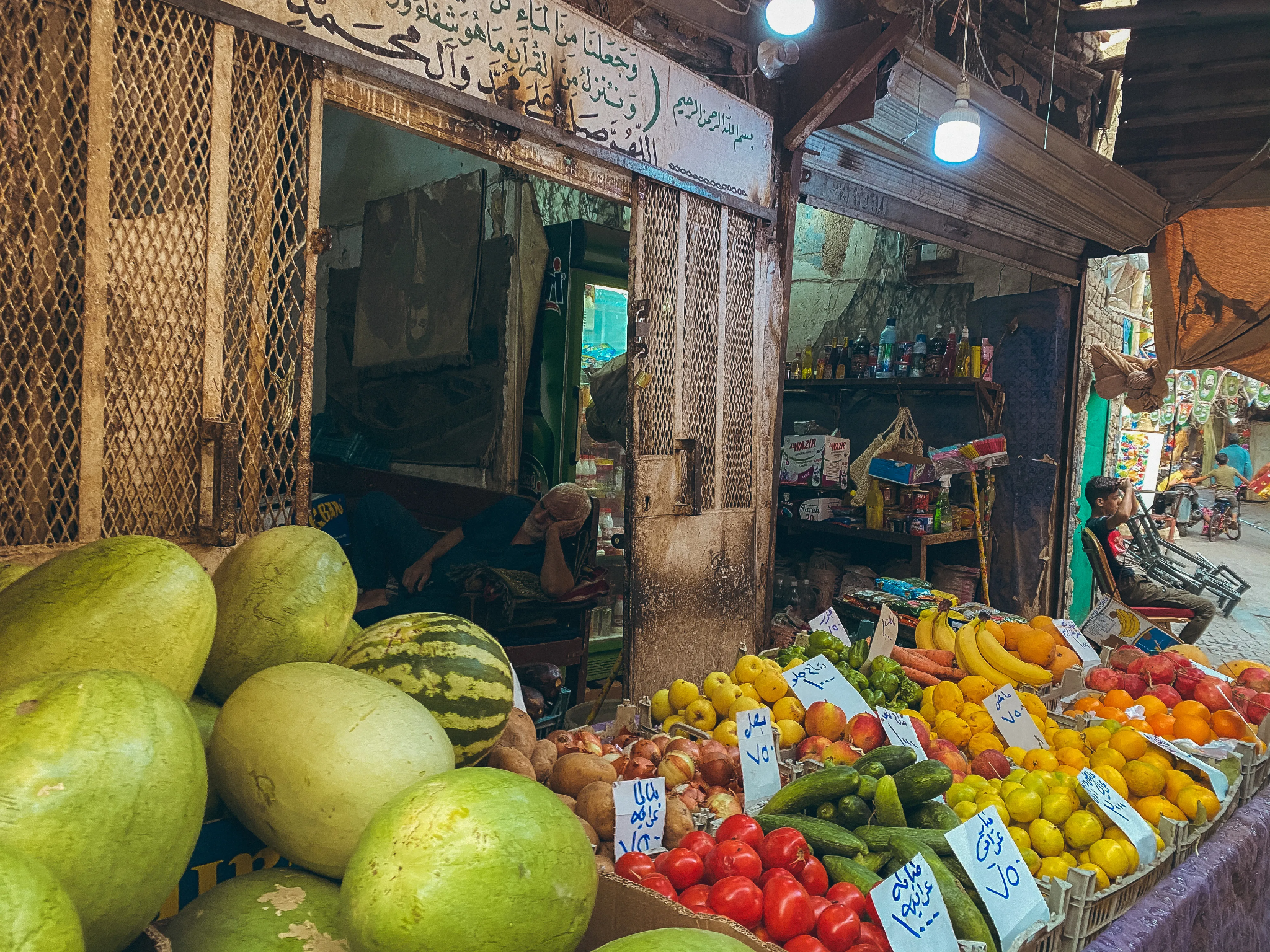
Sadriya Market, Baghdad
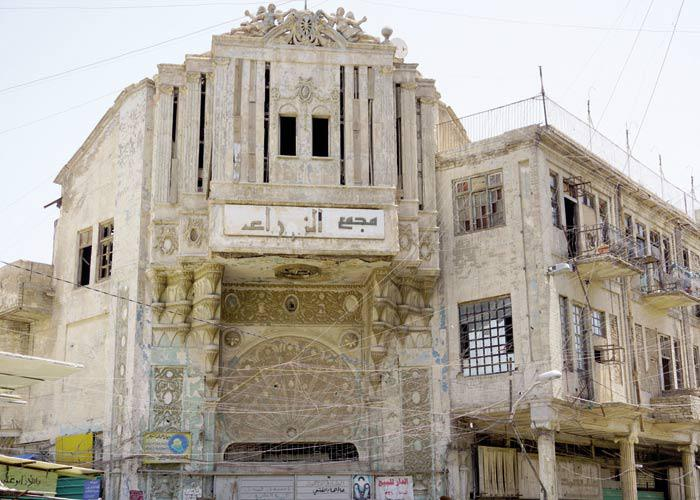
Zawraa Cinema, Baghdad. Image by Ahmed Twaij
Before decades of conflict and fragmentation, the average Iraqi would know everyone in their neighbourhood, spend evenings sitting on their neighbour’s lawn, sharing tea, a meal, a cigarette, watching children play together in the streets or at community recreational spaces like Nadi al-Said. Vibrant areas like Al-Rashid Street, once lined with cinemas, theatres, and cafés where young people socialised, have all now all largely been neglected.
The rise of the mall and its popularity in Baghdad signifies something different from the Gulf mall boom. The mall in the Gulf became among the principal places where strangers could encounter one another in public, but in Baghdad, it reflects the opposite: a society that has become increasingly partitioned and divided by conflict. Decades of conflict have eroded trust between people and within their shared public spaces. As streets, squares, and neighbourhood gathering places have declined, the mall has emerged as a controlled environment in which social interaction can occur. For many women, it offers a level of safety often absent from other public spaces. What was once an open, communal environment shaped by spontaneous encounters and neighbourhood relationships is increasingly being replaced by privatised and consumption-oriented spaces.
In the Gulf, during the early phases of the rapid post-oil boom period, planners faced a structural challenge: cities expanded horizontally at an accelerated pace, with low-density residential zones stretching far beyond traditional centres of activity. During this time, many women across the Gulf were responsible for a significant portion of household shopping, but their mobility was often either restricted or dependent on male relatives or hired drivers. The shopping mall here emerged as a sort of spatial solution to this logistical problem. By centralising consumption, entertainment, and social interaction within a single air-conditioned environment, the mall reduced the challenges posed by distance and climate.
In Baghdad, however, this problem did not exist in the same form. Not only did many neighbourhoods predate the families living in them, but commercial activity was also woven into the city. Everything from cafés to souqs was within walking distance, while the weather did not hinder people from being outside. Building malls in or near residential areas imports a solution to a problem that Iraq did not historically possess. Rather than revitalising and rebuilding existing social and commercial spaces, these malls replace historical sites, public gardens, and environments that once formed part of the city’s social fabric.
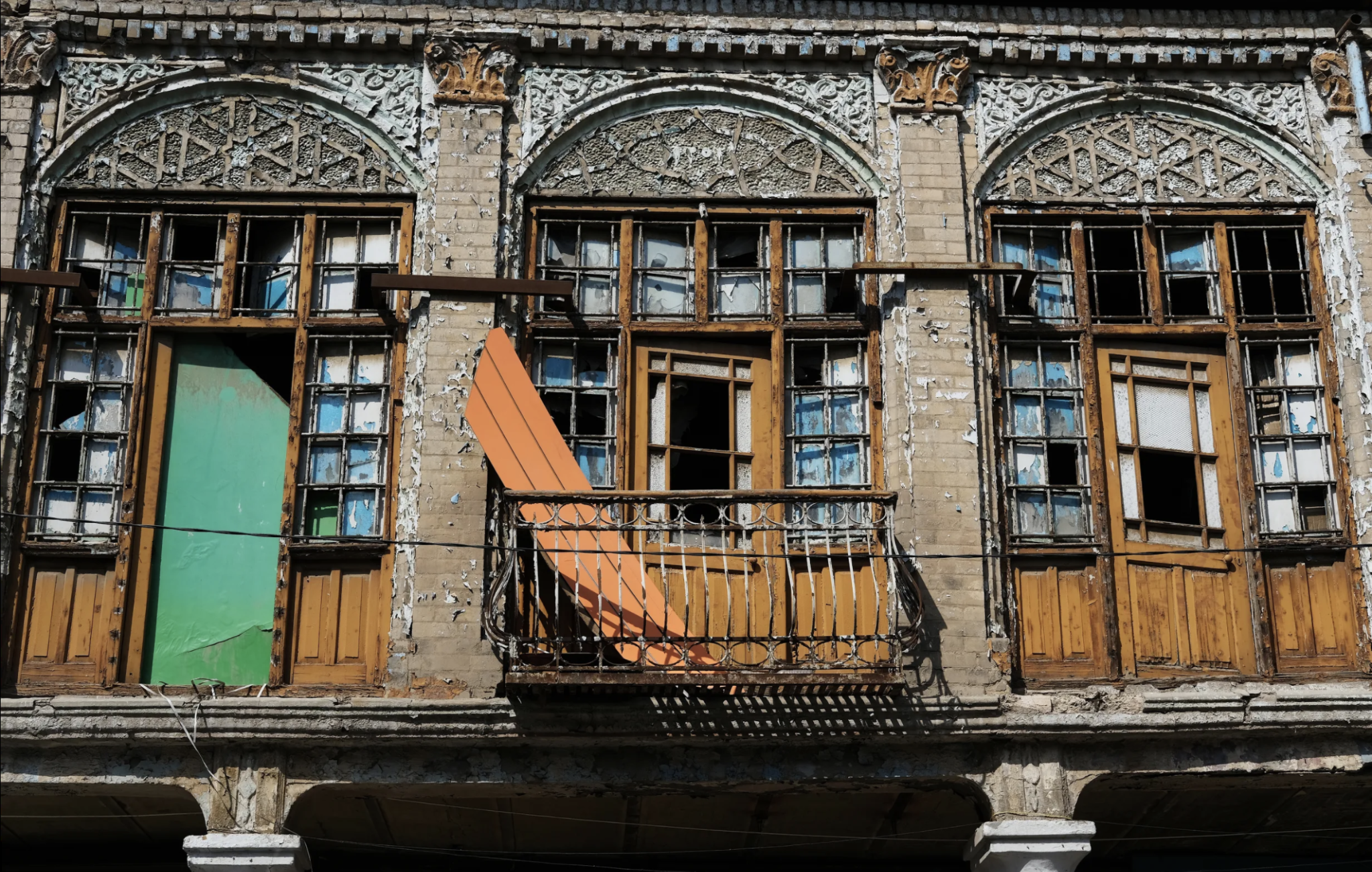
Baghdad, Image by Nabil Saleh
As a result, such malls and large-scale development projects function less as substantive growth and more as instruments of signalling. They project an image of modernity, stability, and global integration through the presence of Western brands and consumer culture, but these capitalist markers do not constitute meaningful development. Beneath the surface of aesthetic renewal, Iraq continues to face profound infrastructural decay, with no major new roads constructed in Baghdad for over four decades.
As such, the roads around these malls are not equipped to handle the volume of traffic that they generate, and there is little supporting infrastructure. Residents complain of the heavy traffic and insufficient parking, compounding the congestion already affecting Baghdadi streets. The Gulf-style mall in Iraq stands in stark contrast to its surroundings: a luxurious and glamorous piece of architecture built around abandoned homes and worn-down roads.
This fragility turned lethal in Kut in July 2025, when a fire tore through a mall, killing dozens of people, some of whom were trapped in the building's bathrooms and stairwells while trying to escape. A government investigation later found that the mall had been built without a permit and connected to the electricity grid without pr oper authorisation. In its 2026 World Report, Human Rights Watch cited the Kut fire as another instance of a familiar pattern in Iraq, in which failures of public-safety regulation and enforcement were compounded by official negligence and corruption.
In early 2026, Iraq Mall's management warned that delays in installing the electrical transformers needed to connect the complex to the national grid, which it attributed to bureaucratic bottlenecks at the Ministry of Electricity, had left the mall reliant on diesel power at a high cost. Baghdad's Gulf-style malls, in short, are not exempt from the negligence and weak enforcement that shape the rest of the city's infrastructure.
This is not to suggest that the shopping mall in Iraq is inherently detrimental. In the Gulf, the mall has often functioned as a window into society. In Saudi Arabia, for example, changing social norms are visible within mall spaces: the gradual shift from exclusively black abayas to a wider variety of colours and styles, the growing presence of young people, foreigners and mixed-gender social groups, and the increasing visibility of couples in public. The mall became one of the few spaces where broader social transformations could be observed as they unfolded, allowing people to interact with one another and observe how others dressed, spoke, and socialised.
As the historical and traditional spaces in Baghdad disappear, the mall increasingly serves as a substitute for public life rather than a complement to it. The greatest tragedy is that Baghdad already possessed what many modern cities now struggle to create: both vibrant walkable neighbourhoods and strong social bonds. To this day, Iraqis reminisce over the “golden days” of Baghdad. Even Gulf cities attempt to create this model of walkability in their own innovative ways, from Doha’s air-conditioned streets to Abu Dhabi’s indoor running spaces.
The challenge facing Iraq is not how to imitate the urban models of its neighbours, a model that is not built for Iraq, but how to restore and adapt the social and architectural traditions that once made its cities among the most dynamic in the region. If Iraqis can appropriate and reshape the malls, as they once did with historically exclusive or imported institutions such as the colonial-era clubs originally reserved for European colonisers and elite groups, then their meaning is not fixed. Until then, the glowing mall will remain less a symbol of renewal than a monument to what Baghdad has lost.
About the Author:
Maya Alinaizi is a Saudi Arabian-Iraqi writer, researcher, and student at New York University, where she studies Politics and Middle Eastern and Islamic Studies. Her work focuses on the intersections of art, politics, and society, with a particular interest in cultural and visual histories across the Arab world.