Marking Resistance on the Walls of the West Bank
Word by Falasteen Mansour
Walking through Ramallah, graffiti may not be the first thing you notice. After all, the shouts of vendors in the حسبه (marketplace), coupled with the smell of shawarma and the constant din of taxi drivers’ irritated honking, are an overwhelming sensory experience. While there are a multitude of things that draw attention, the array of cramped buildings and residences may cause you to miss the scattering of urban artworks that adorn Ramallah’s exteriors. This often demeaned and even criminalized genre of art is easy to find once you know where to look. As with many aspects of Palestinian existence, graffiti found in the West Bank is not something to be taken at face value; rather, these spray-painted designs often carry emotional and political weight that remains even after the image itself has faded.
Palestinian cities and villages are usually defined by violence, fear, and constant surveillance, leaving the intricate details that make up the backdrop of life to be cast aside. By examining what is “left behind” on surfaces across Palestine, specifically in the West Bank, the collective status of a population starts to become apparent. The frustration, melancholy, and steadfastness that is synonymous with the Palestinian lived experience make up the fabric of our streets, and one articulation of these feelings is often portrayed through graffiti.
Graffiti can be considered one of the most accessible means of artistic expression, mainly because you don’t need any sort of formal training to partake–an idea and a can of spray paint will suffice if you want to get your message across. While not all graffiti is politically charged, you will find that it usually emerges (and eventually multiplies) in places where there are shared feelings of suppression and unrest, both of which can be found in abundance throughout the West Bank.
Affirmation of Existence
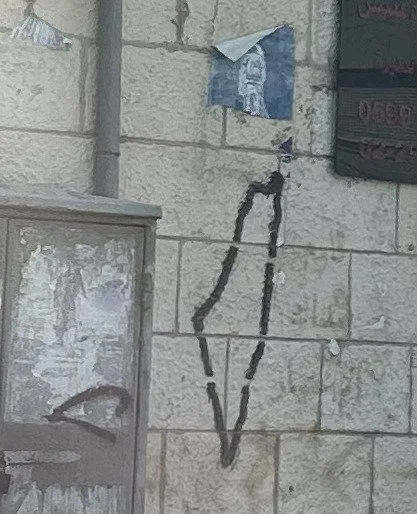
The primary goal of the occupation is to erase any semblance of Palestinian existence, whether materially or culturally, rendering even a simple outline of Palestine—the entirety of Palestine, not the manufactured colonial cartography that is so often circulated today–a form of resistance to this erasure. Until we are able to physically reclaim the entirety of our land, the depiction of Palestine from the river to the sea will be relegated to the superficial realm.
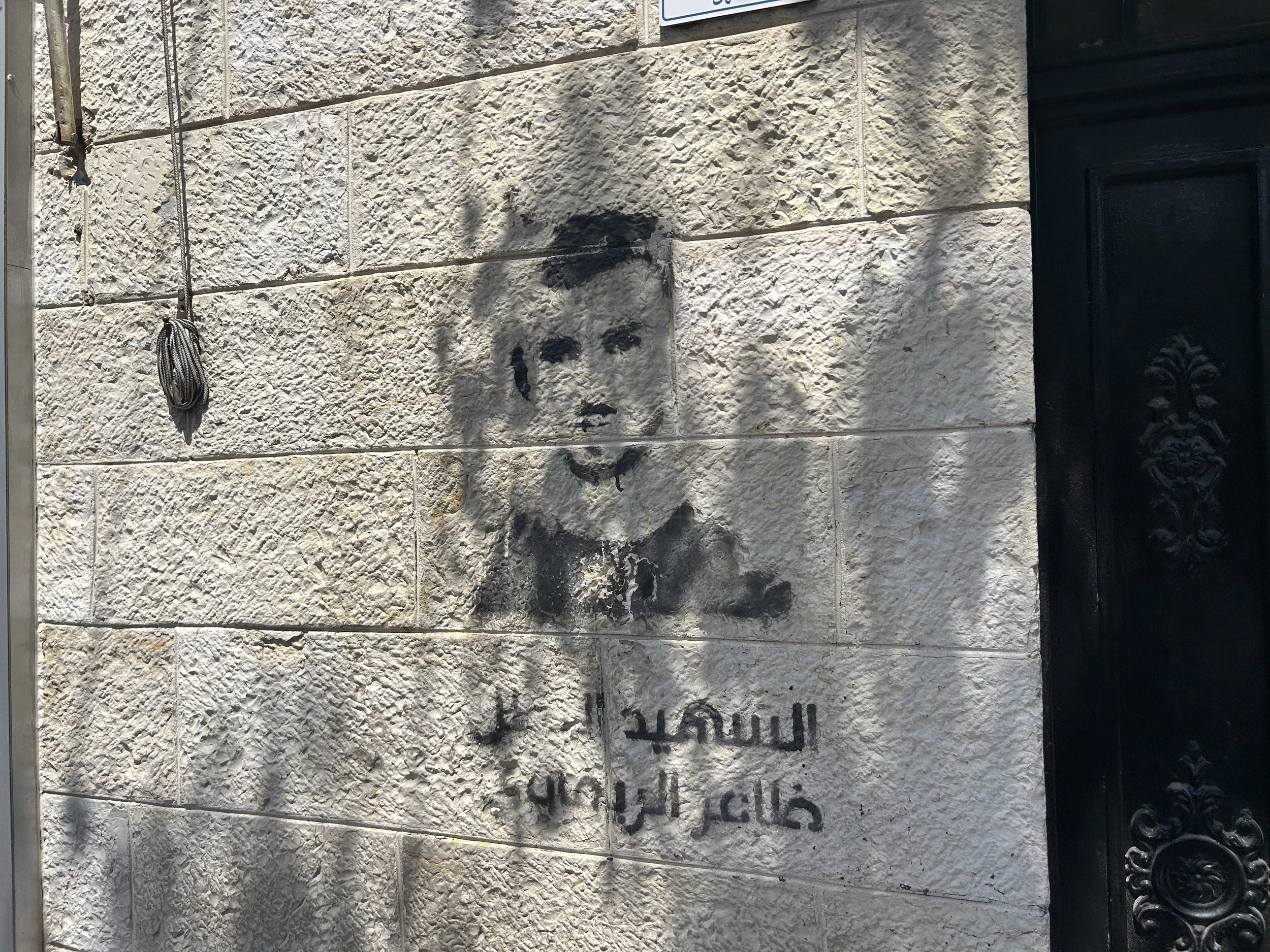
A common category of graffiti defiant to this erasure that can be found in practically every city or village in Palestine is martyr commemorations. These commemorations can be seen on storefronts, decades-old stone walls, and even in alleyways, ensuring that victims of Israeli crimes can never be ignored or forgotten. Morbid as it may seem to communities who have the privilege of seldom experiencing death, this graffiti is a small way to honor lives lost at the hands of a violent occupation, thereby turning nameless death counts into visual remembrance. The martyr’s portrait is usually accompanied by the Arabic word شهيد (shahid) along with their name. In an age of skewed news coverage and sometimes complete oversight of the worsening conditions in the West Bank, Palestinian communities highlight and memorialize those who don’t make the headlines.
Art under Apartheid
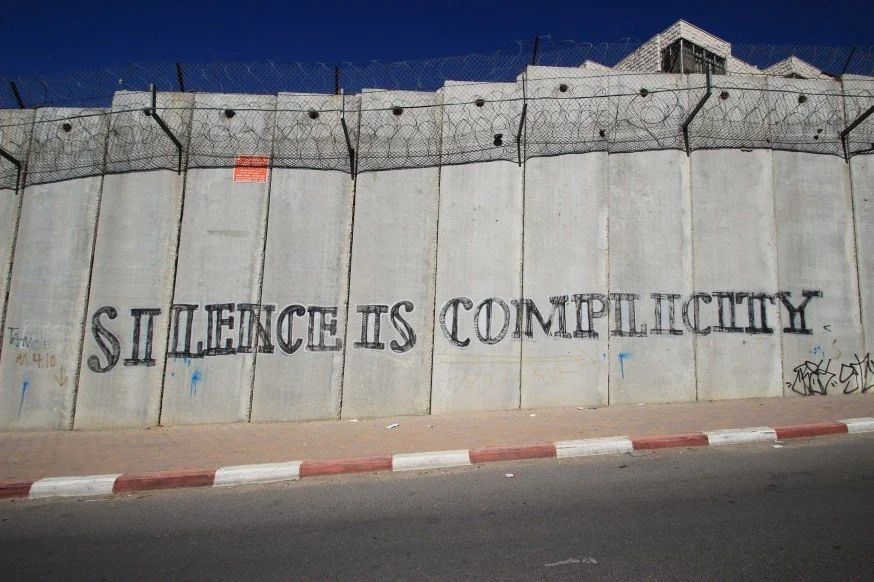
There is one piece of graffiti that remains lodged in my memory, and it is one of the first visual articulations of the Palestinian condition that I witnessed upon my move to the West Bank from the United States in 2021. On a visit with family a few months after settling into our home in Al-Bireh, we made a point to pass by the heavily decorated portion of the apartheid wall, which is covered in murals and graffiti. The wall itself spans hundreds of miles across the West Bank , and is an ongoing colonial endeavor and land theft tactic perpetrated by the occupation. Graffiti is not an unusual feature on this architectural aberration, and conveys the social and political frustrations of the artists behind the designs.
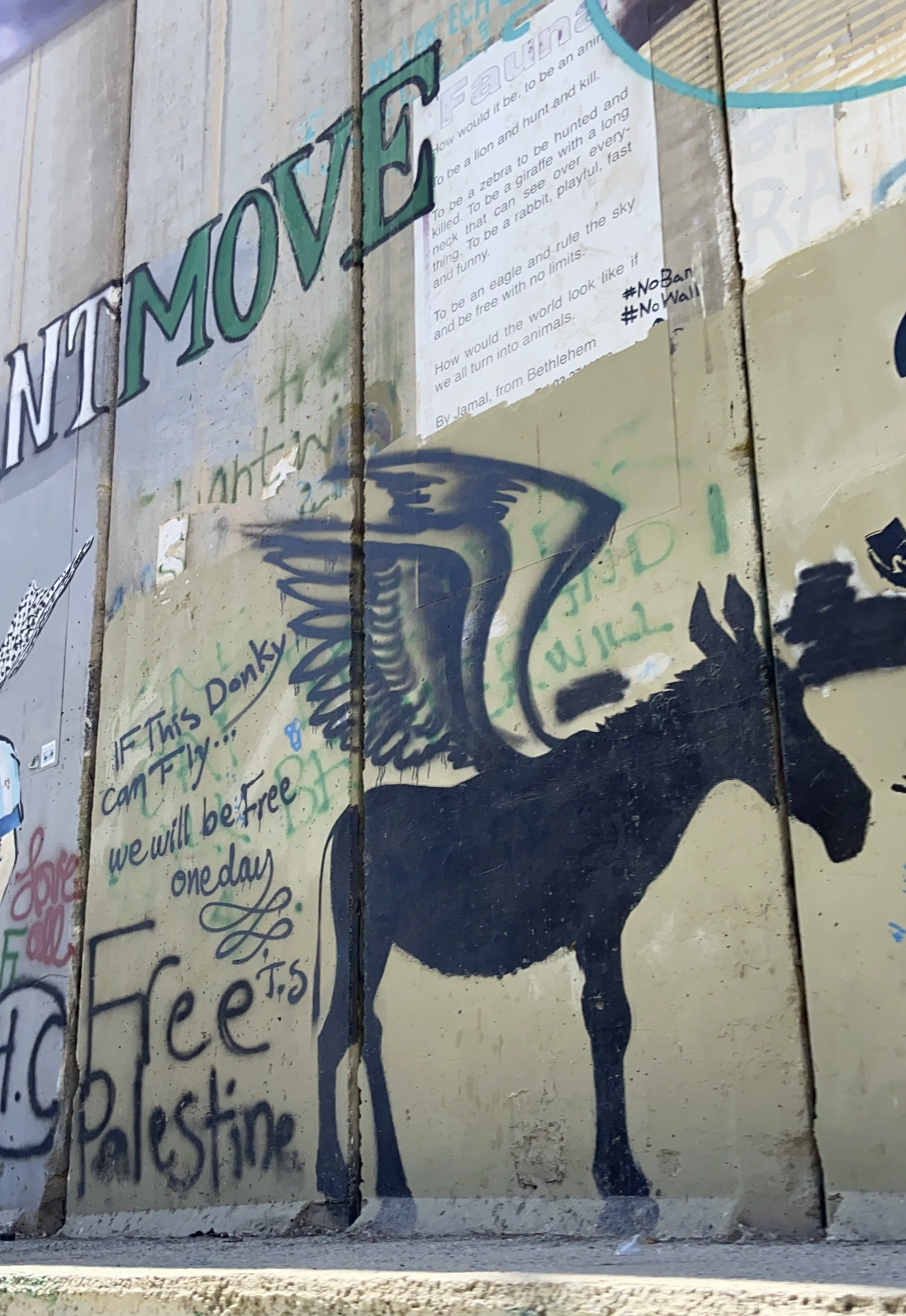
There was much to observe, but a particular image caught my eye. A donkey with wings, absurd on its own, coupled with the declaration: “If this donkey can fly…we will be free one day”. The well-known idiom of “when pigs fly” was given a Palestinian flair, and the presumed impossibility of this land-bound animal taking flight encapsulated the ridiculousness of an indigenous people having their ancestral land taken from them. While I am convinced that it will not take a barnyard miracle to achieve our liberation, the wry sentiment of hope in a hopeless situation deeply resonated with me.
What is Done will be Drawn
Maybe the reason Palestinians gravitate towards graffiti is that even utterances of memoriam for martyrs, or statements of resistance and liberation, are considered threats by the Zionist entity, forcing these emotions to morph into artistic expressions.
Graffiti is so impactful because it acts as a sort of shared code between the artist and the viewer. While the images or slogans might seem trivial at first glance, especially in the context of a wider struggle for liberation, these seemingly small acts of resistance continuously refuse to accept the status quo. Though many, particularly those in positions of power, view graffiti as a nuisance that needs removal or an eyesore defacing once-pristine exteriors, creators and consumers of art alike respect the sentiment behind the spray paint.
About the author
Falasteen Mansour is a journalism student at Northwestern University in Qatar, pursuing minors in Media and Politics and Middle East Studies.