Of Bracelets in Libyan Jewelry
Words & photos by Hala Ghellal
Libyan silversmiths and goldsmiths have always shown boundless creativity in the manufacture of bracelets, hence an impressive array of all sizes, designs, and motifs that can meet and satisfy the budget and tastes of potential customers.
“درتكم ياحدايد لوقت الشدايد”
— Libyan proverb
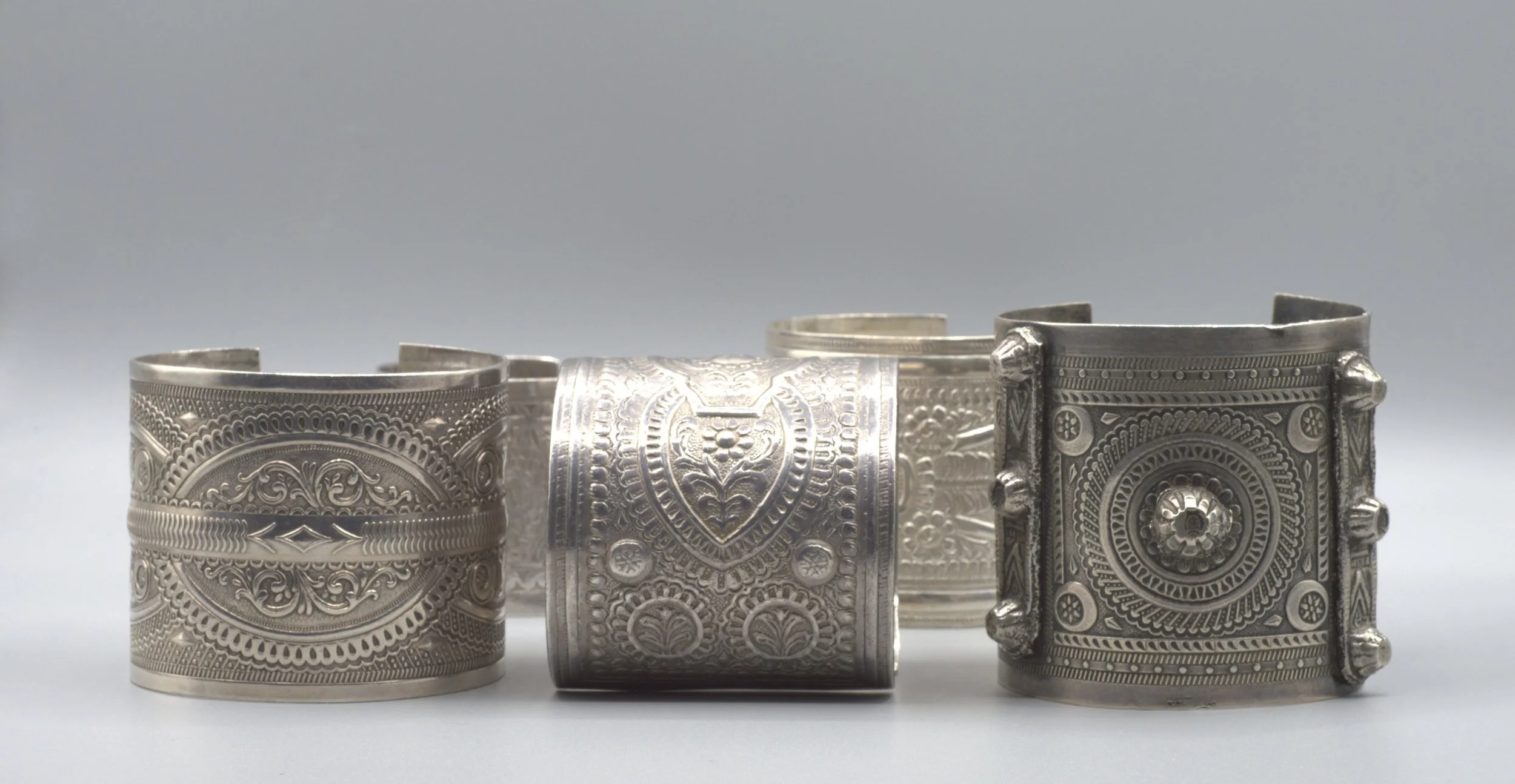
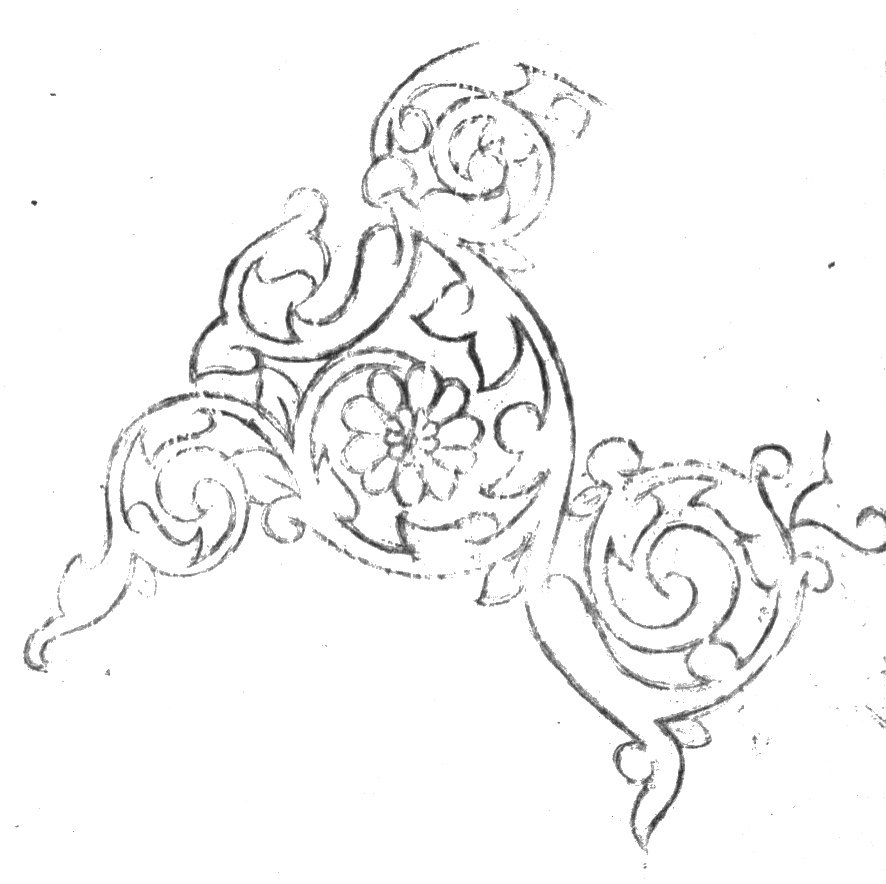
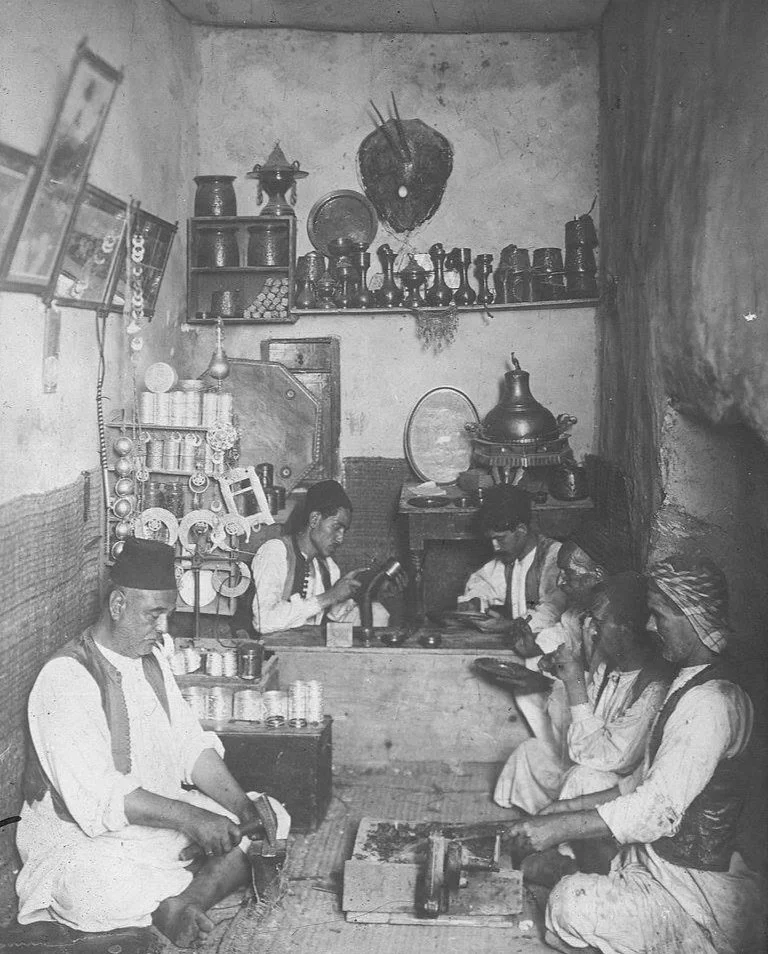
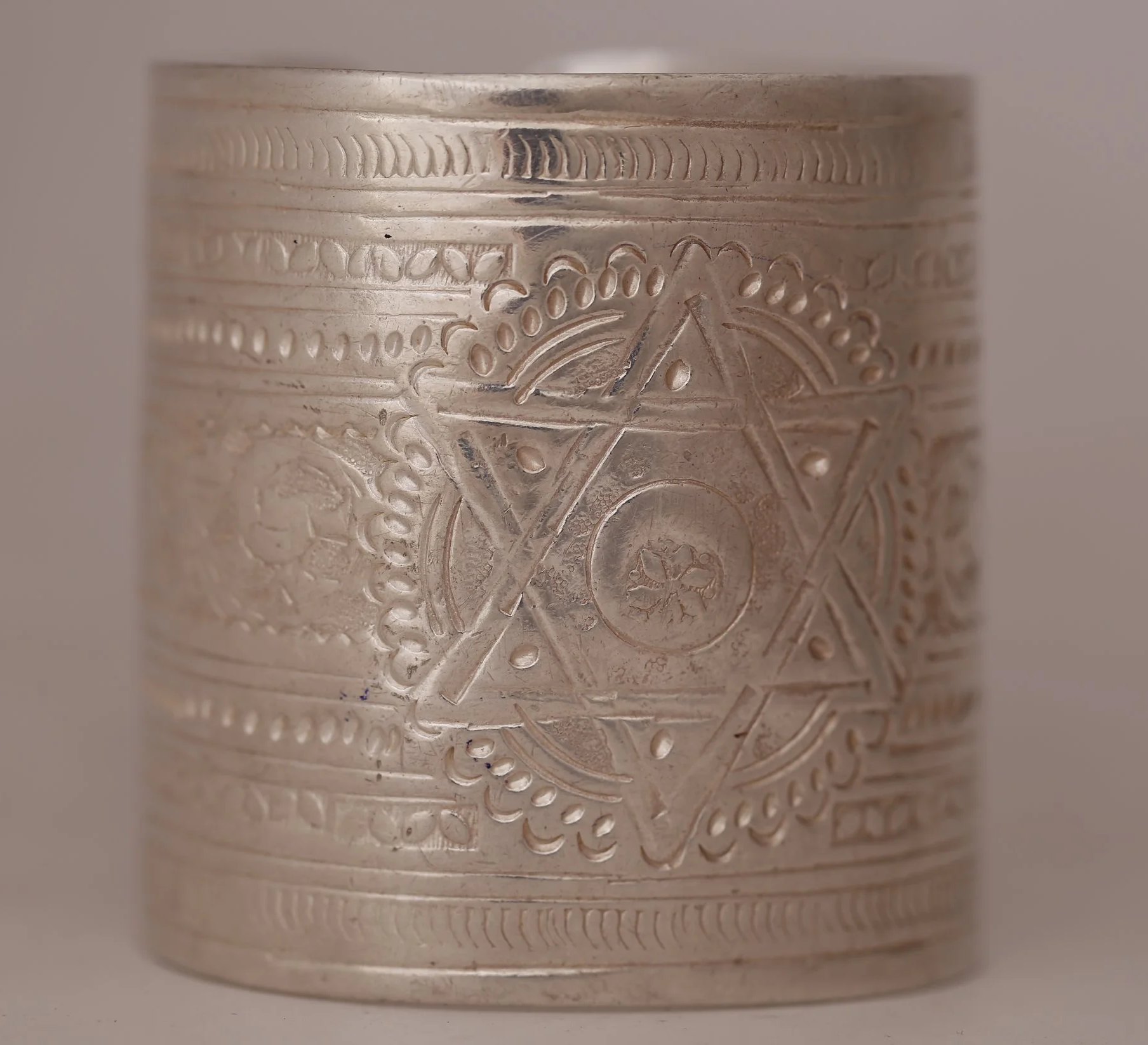
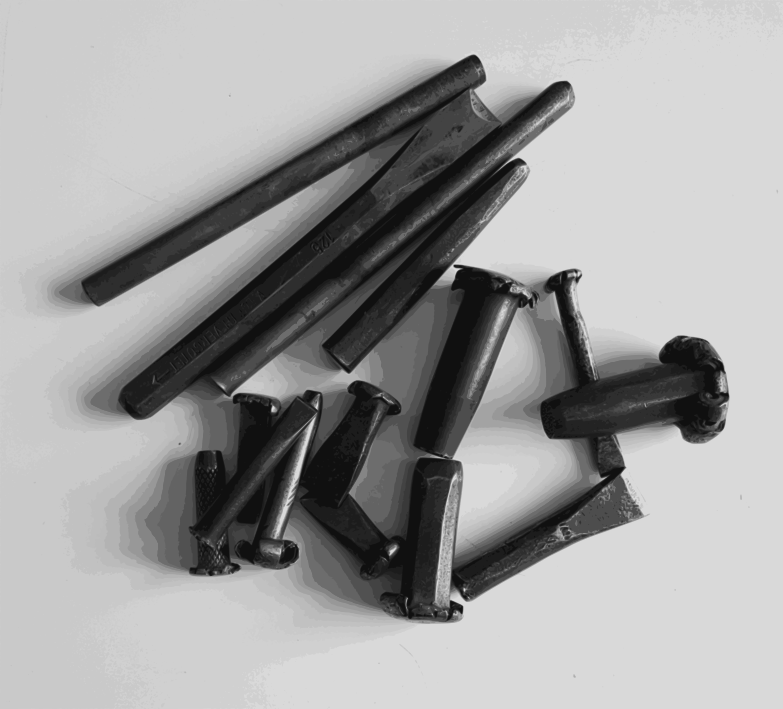
The techniques used in traditional Libyan jewelry manufacture are very similar to those widely known and used throughout the centuries as embossing, repoussé work, chasing and engraving, or stamping, as a profitable way to make jewelry. Thus, bracelet making follows the same techniques. Usually, each silversmith had his own collection of patterns (rashmat) to reproduce, especially on larger cuff bracelets. The rashma (pattern) was drawn on paper and was then transferred onto the sheet of silver using tracing paper or carbon transfer paper. The various techniques were still widely used until the 1960s and 1970s, when imports of foreign jewelry and machines allowing mass production replaced and disrupted the craft.
The word for bracelet in Libyan Arabic is hdida (plural hdayid), derived from hadid, “iron”, in Classical Arabic. The reference to iron suggests that bracelets could also simply be made of iron when precious metals were not affordable. Nonetheless, in more prosperous times, other words indicative of the bracelet’s quality and style were added to the word hdida, and thus terms came into existence like hdidet dhab (gold bracelet), or hdidet-l-rbei‘at (quarter lira bracelet)—a twisted bracelet with snake heads and a series of quarter liras attached in place of charms. Generally, hdida is used for bangles or bracelets whose width does not exceed three centimeters.
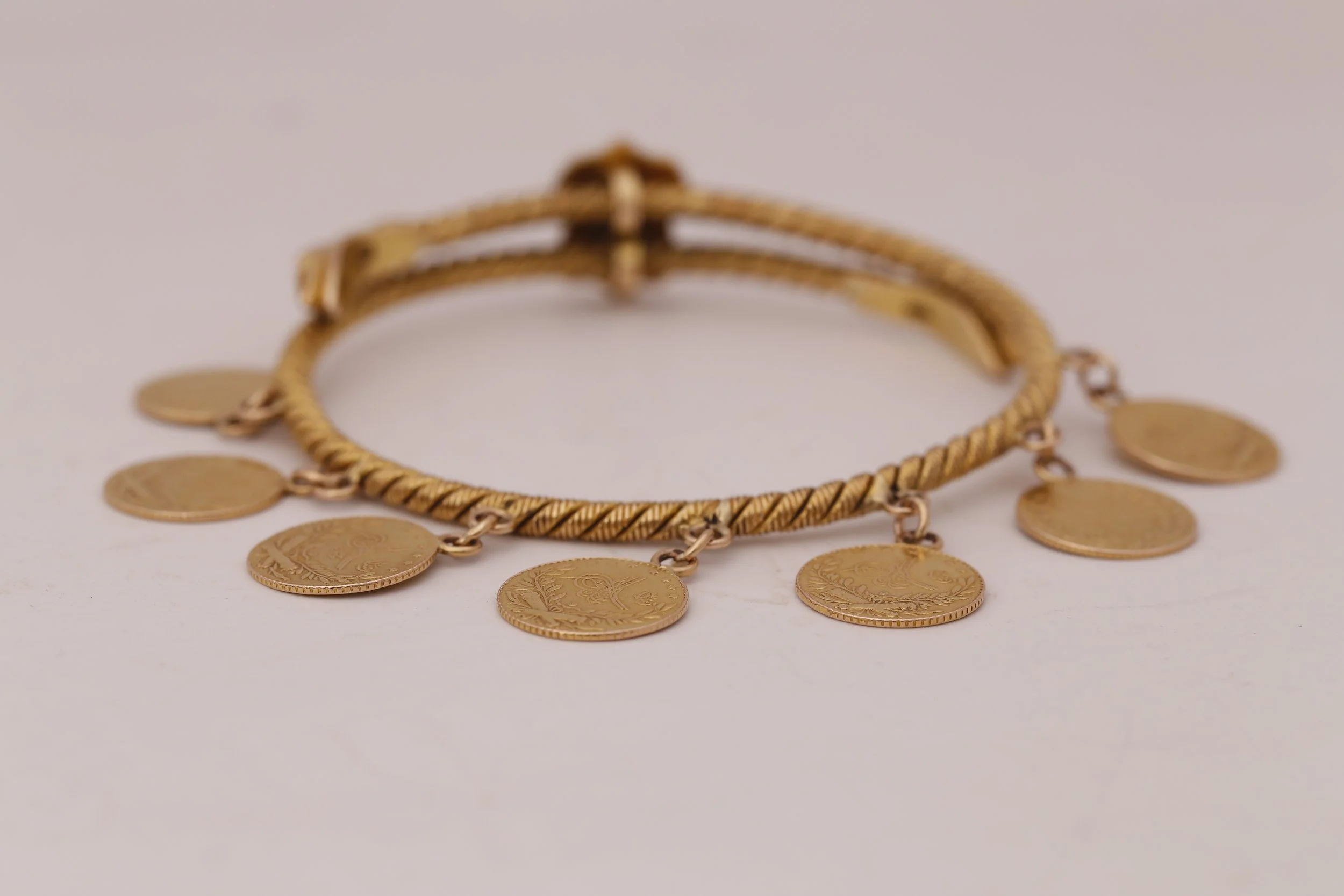
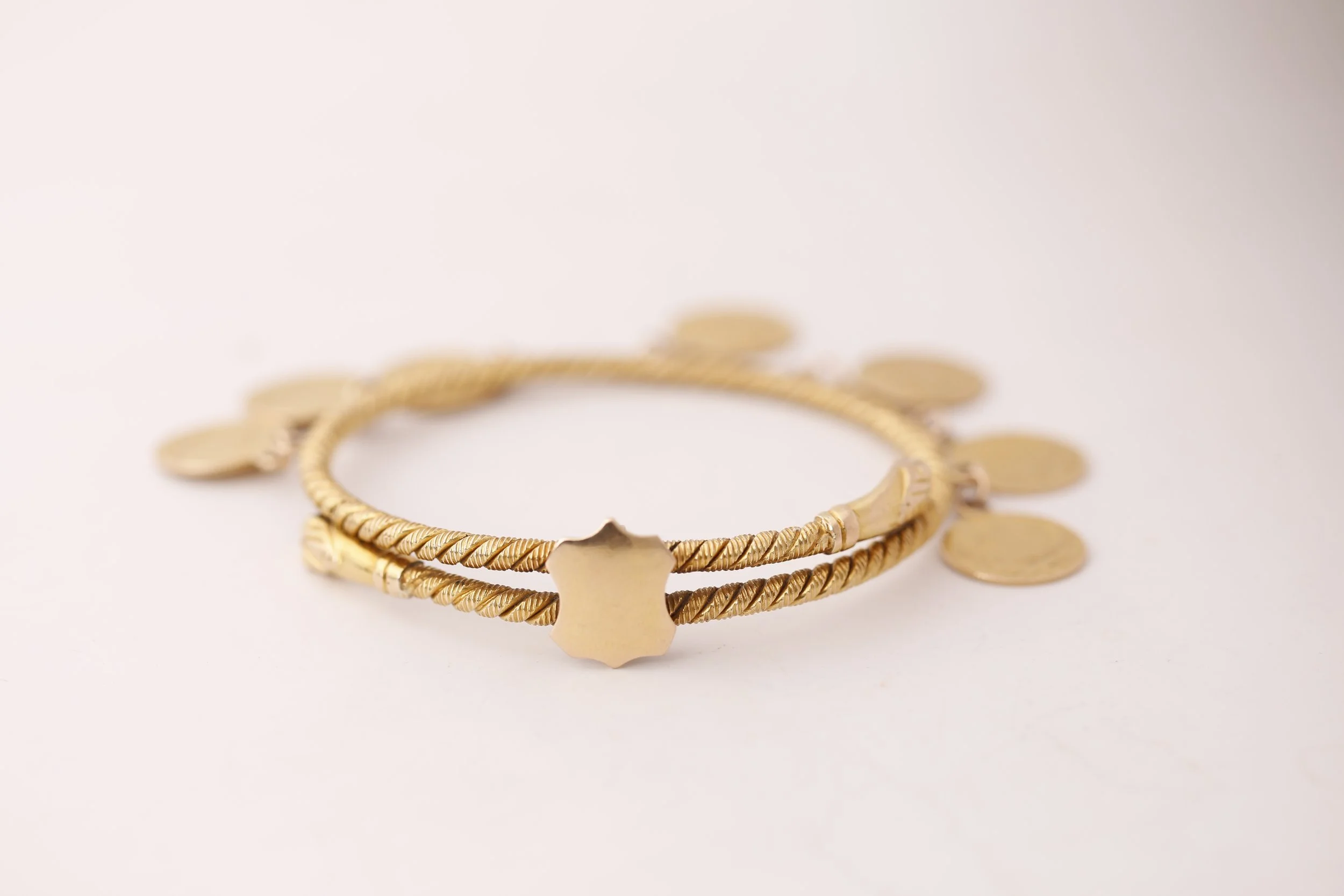
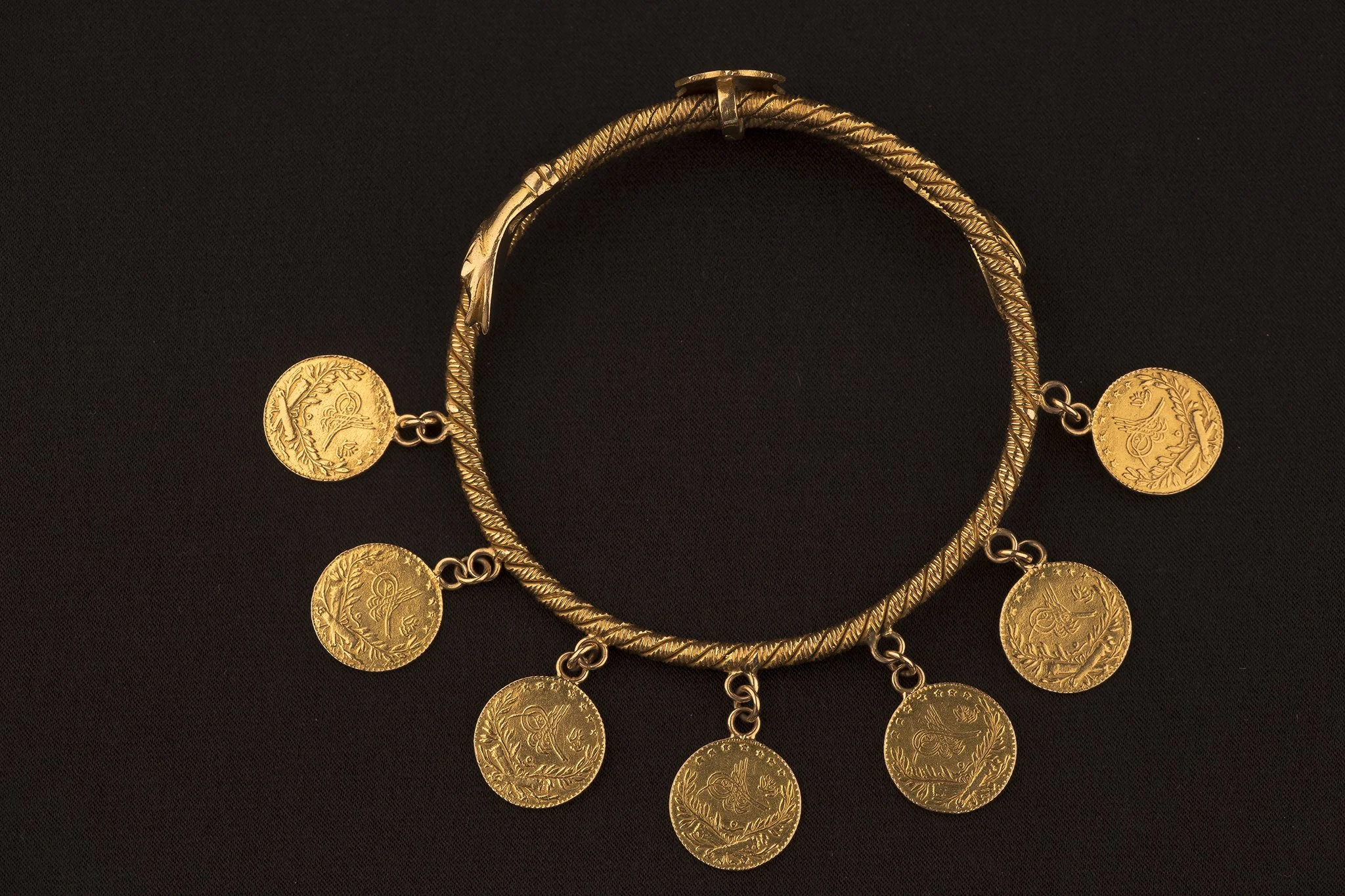
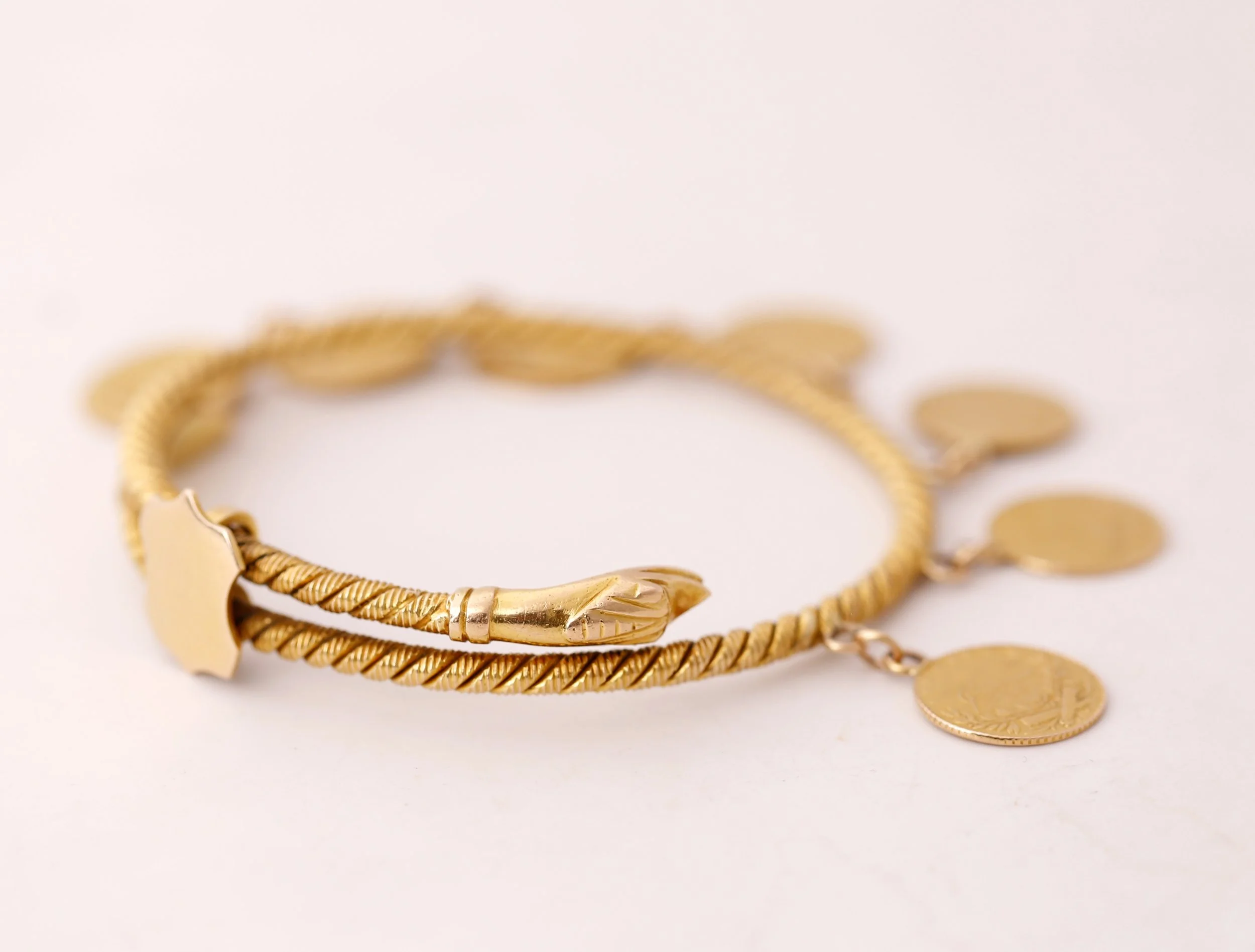
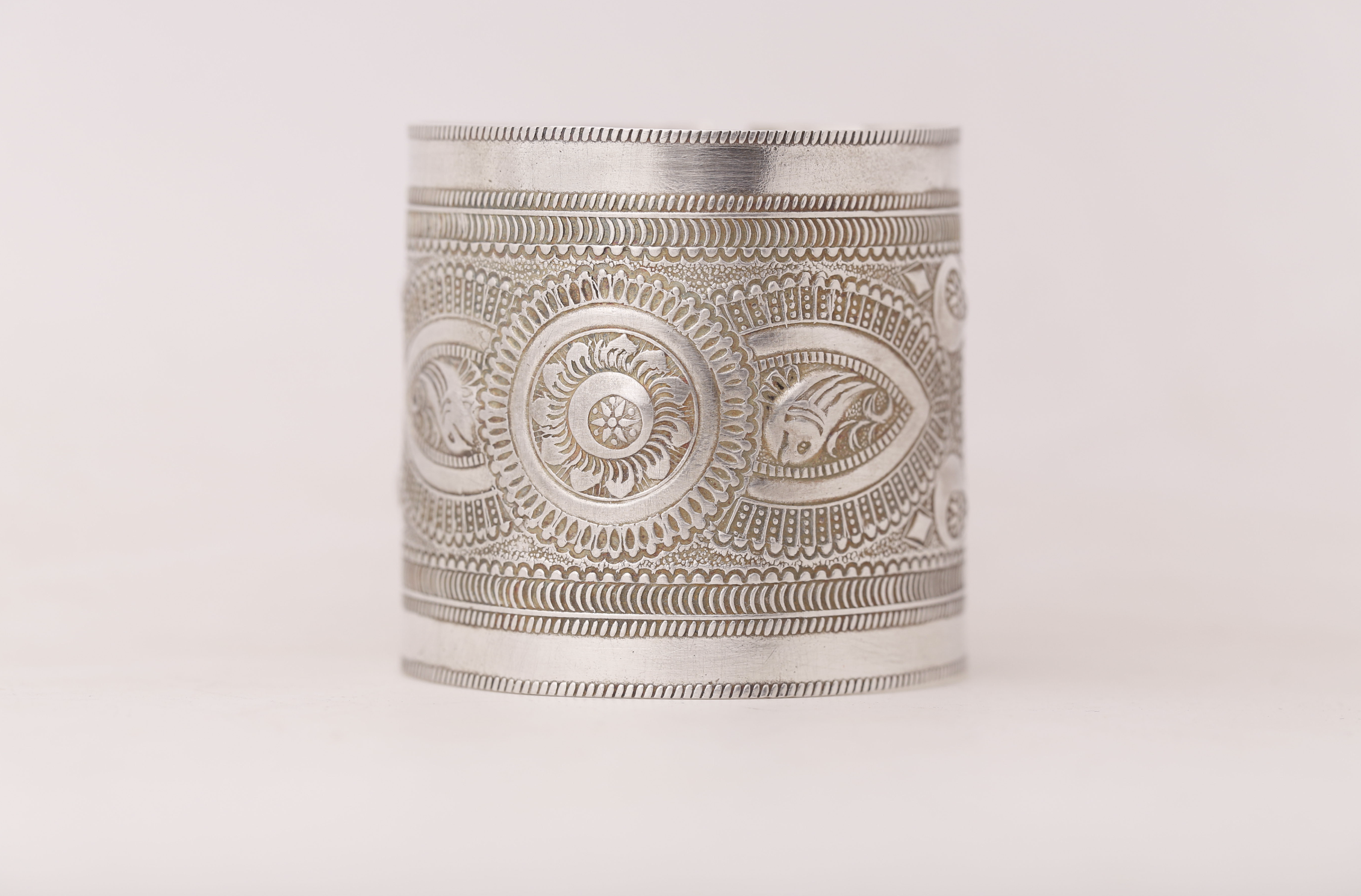
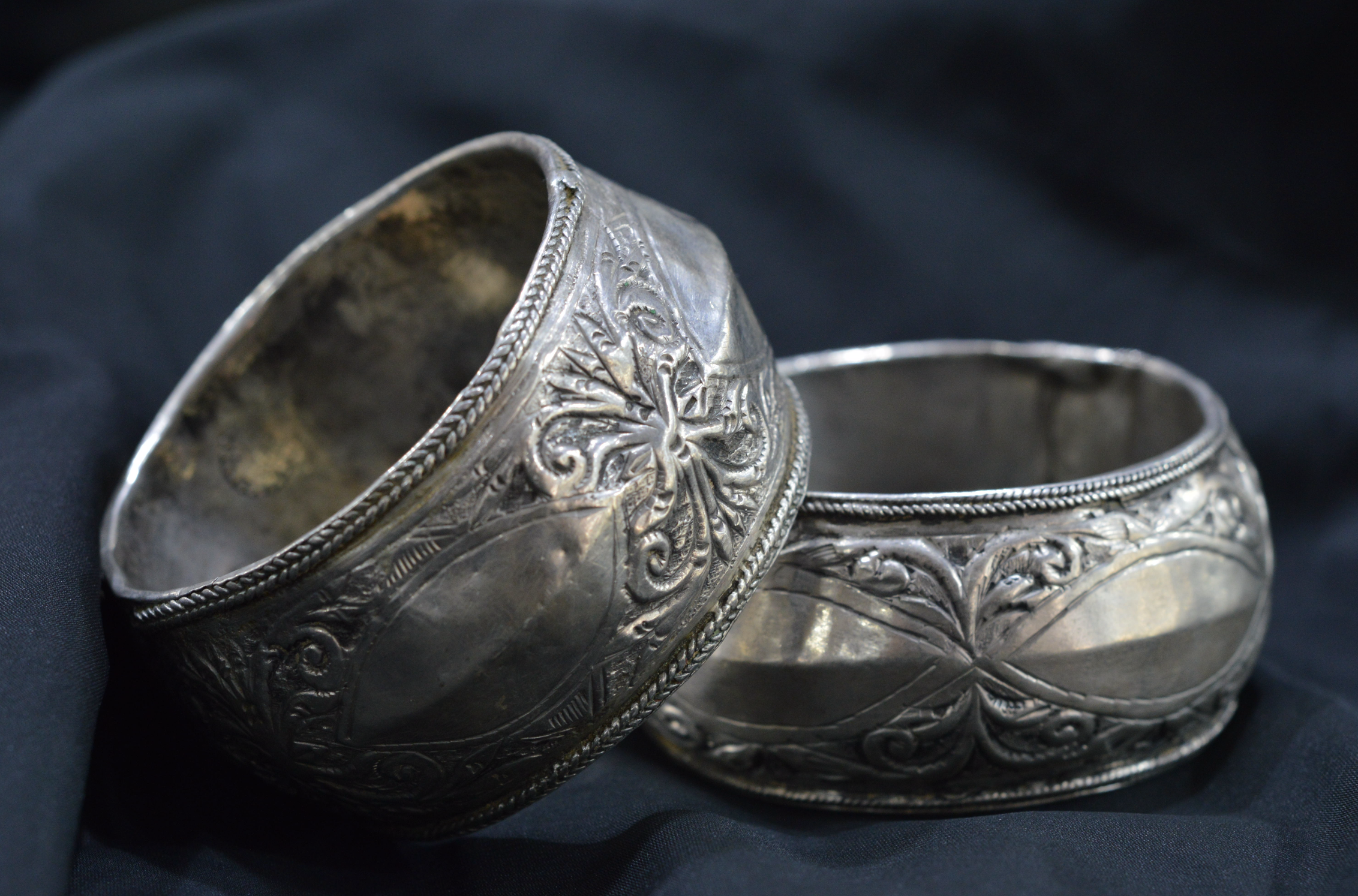
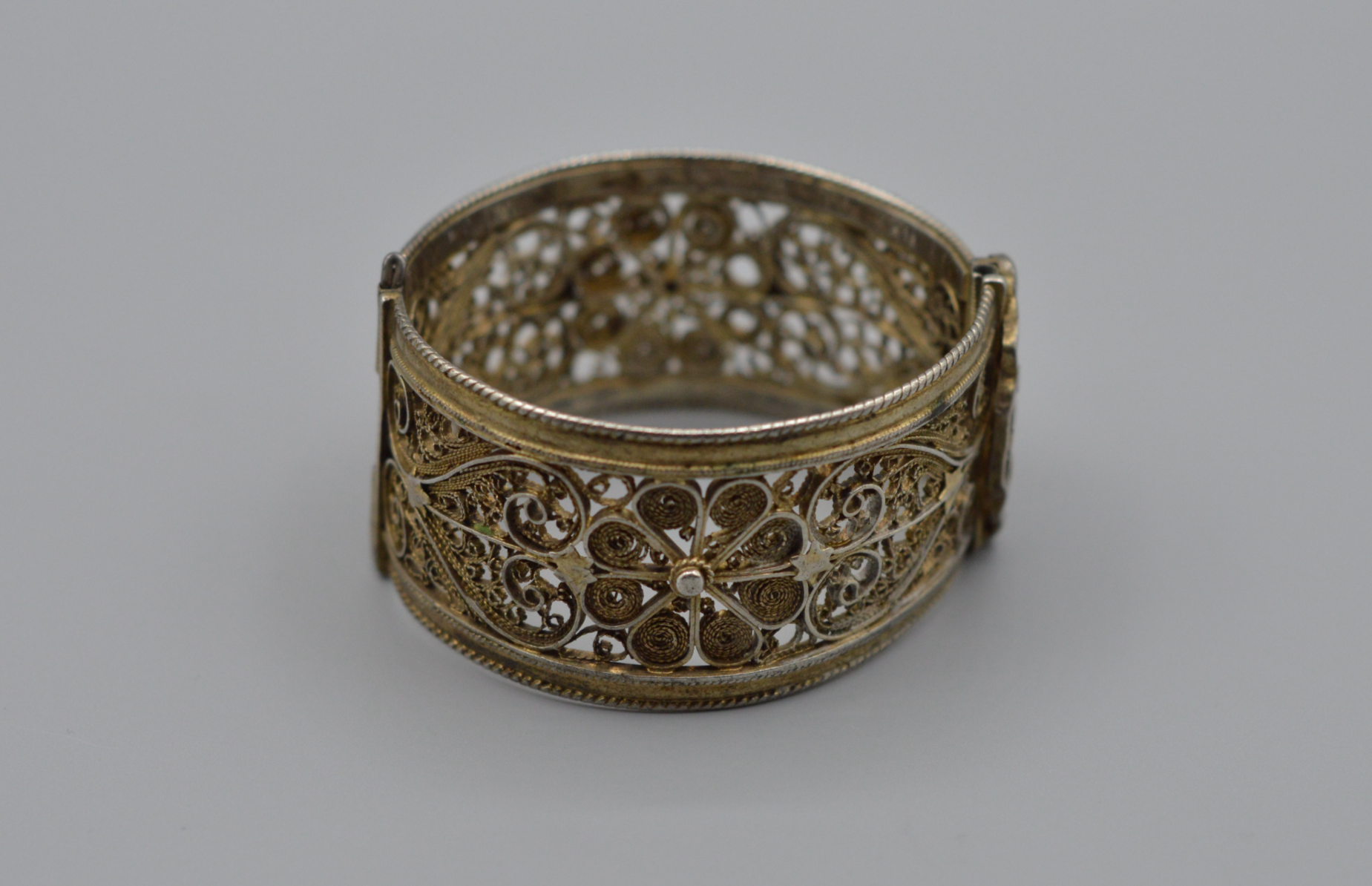
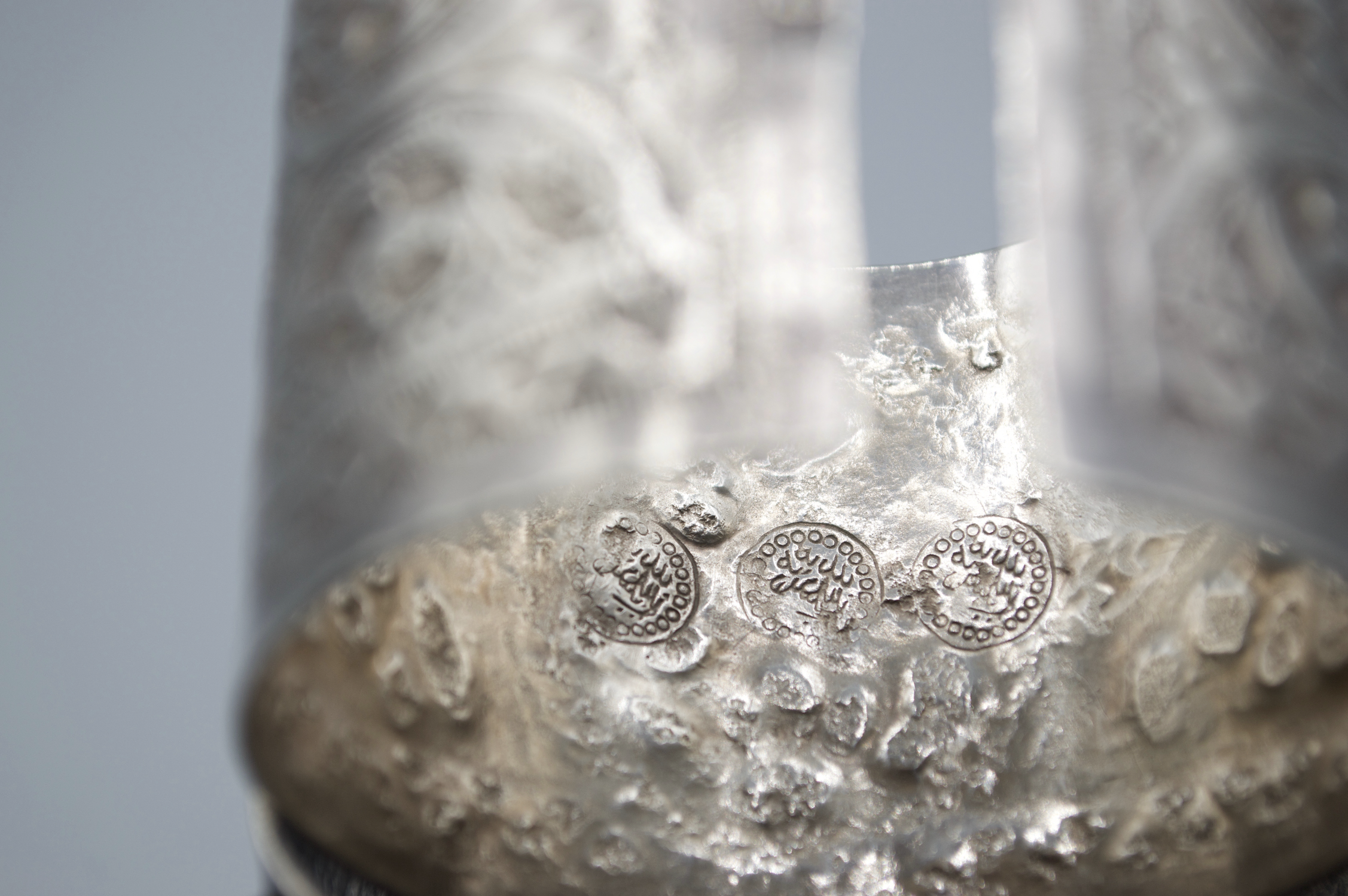
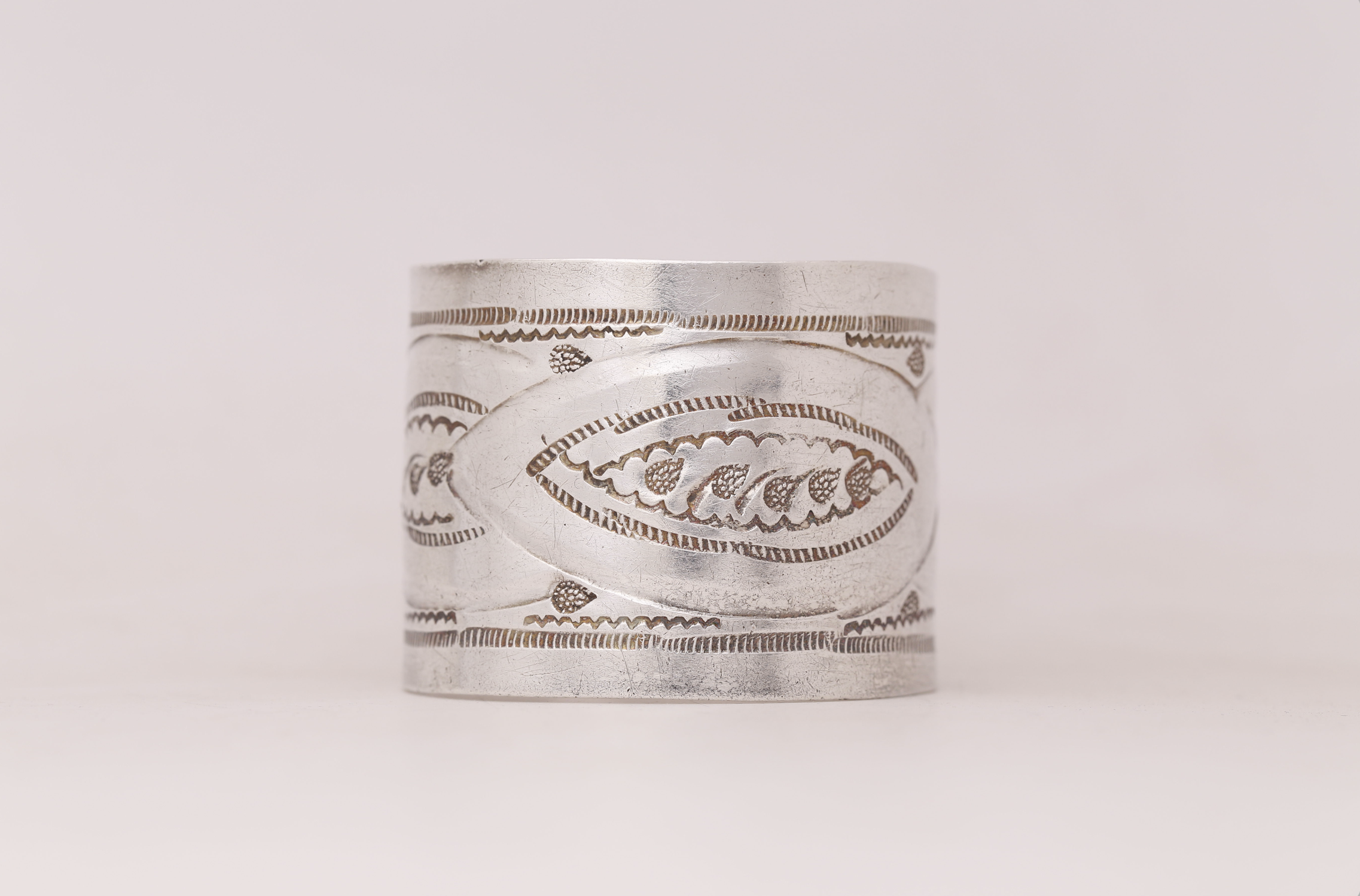
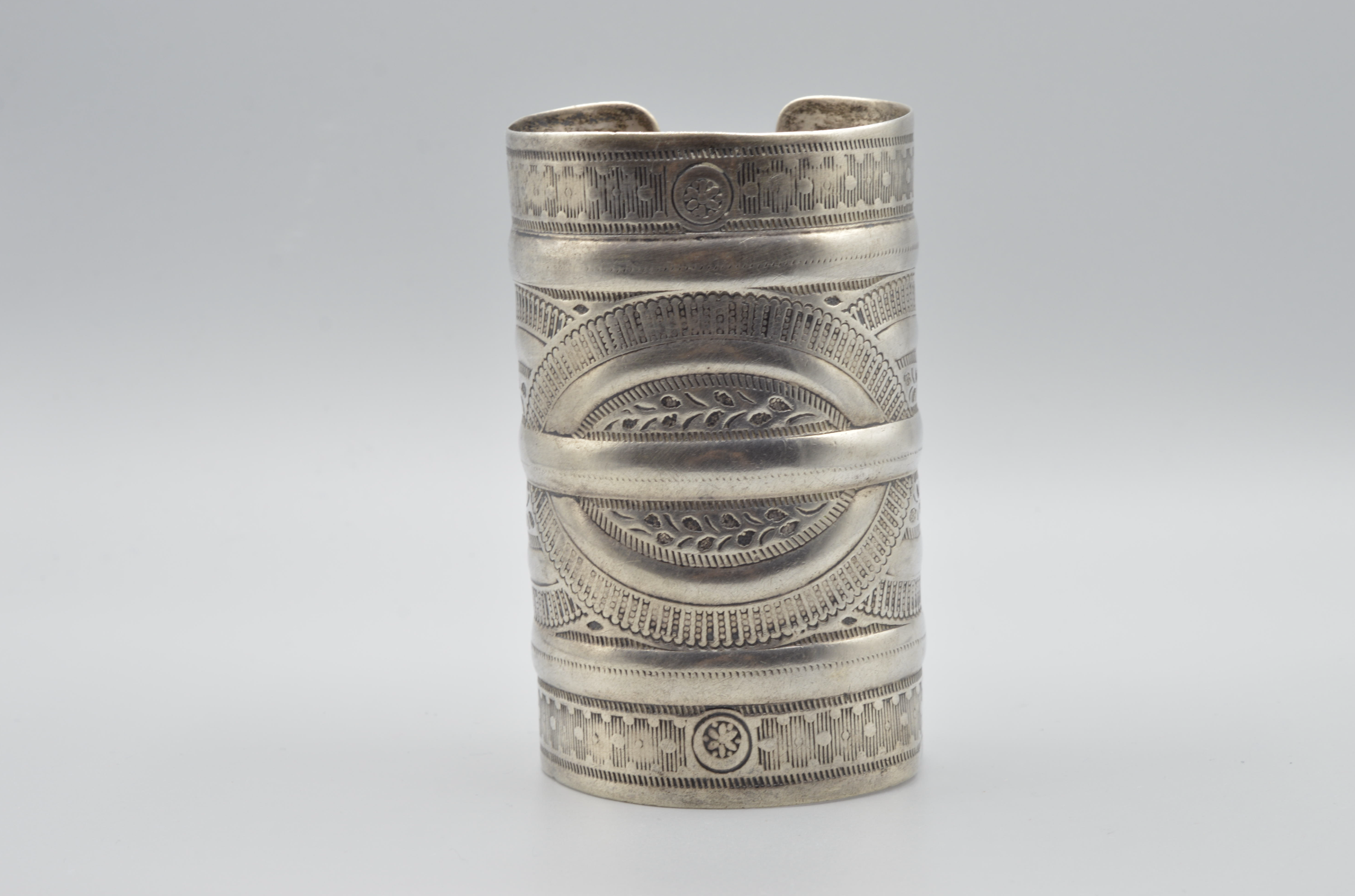
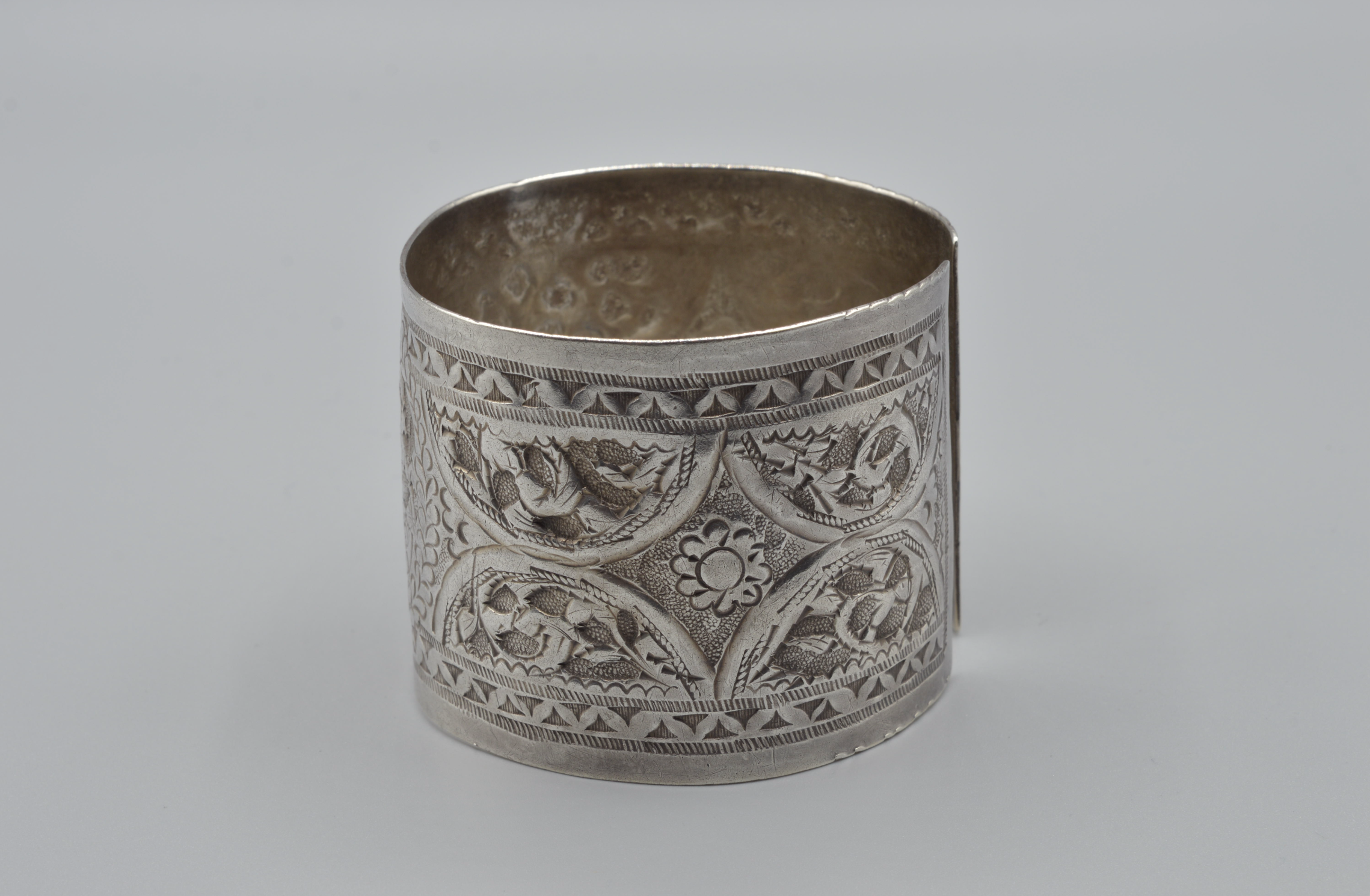
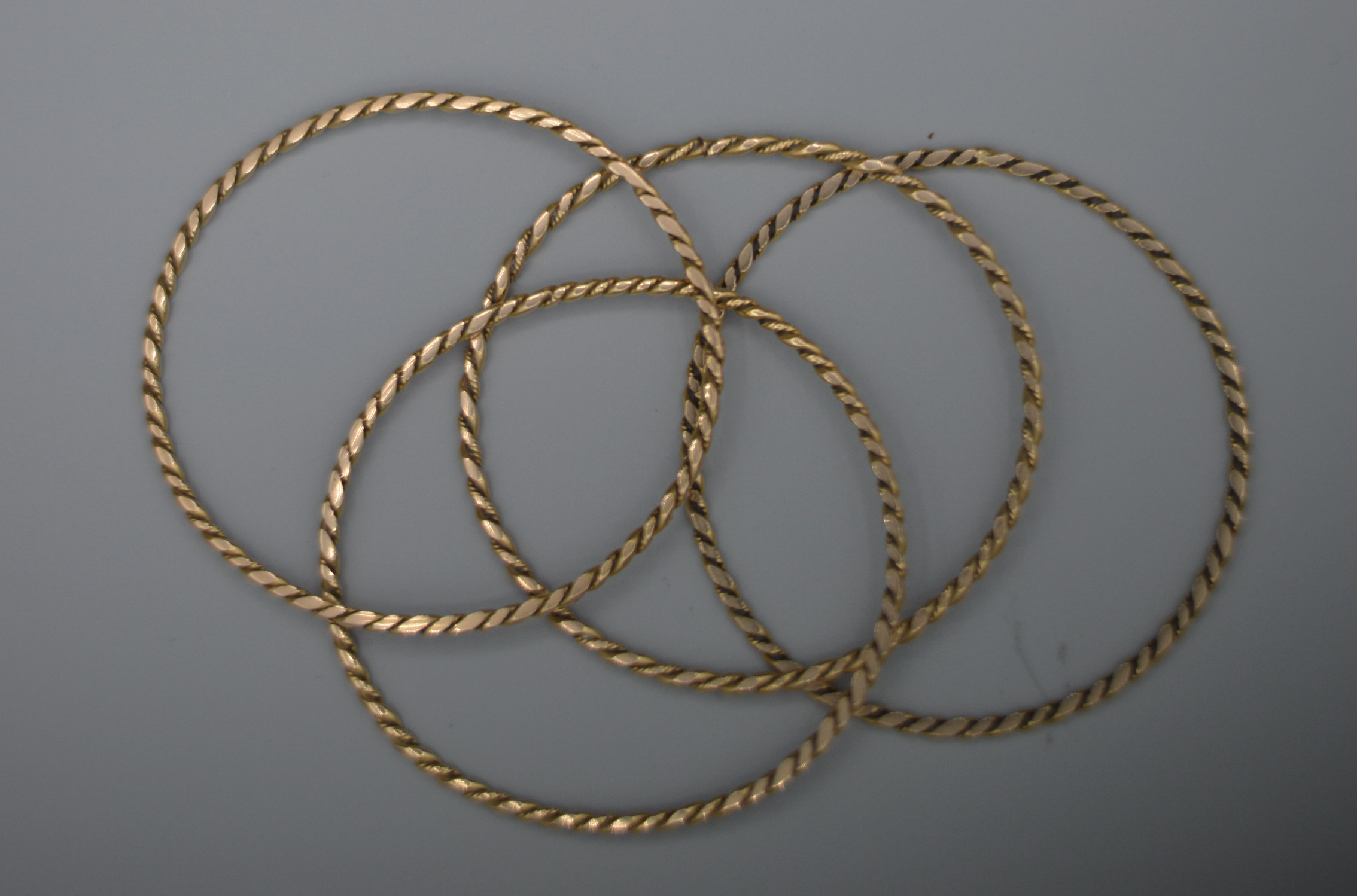
Hadayid rgag (thin bracelets) are bangles usually worn in odd numbers, five or seven, on both wrists. Some traditional-style bangles are known as gloub-l-batikh (watermelon seeds). Another style is the twisted hdida mabrouma (plural hdayid mabroumat), which has a torsade, or twisted rope design. Both styles were fashioned in gold. Silver bangles had a much simpler style: they were about one centimeter wide, with a simple pattern of vertical cuts. They were quite en vogue in the 1970s among the foreign community in Tripoli, and were made by machine in large numbers. Larger bracelets, which are two- to four-centimeters wide, are also known as hdayid; the custom was to own and wear an identical pair of these.
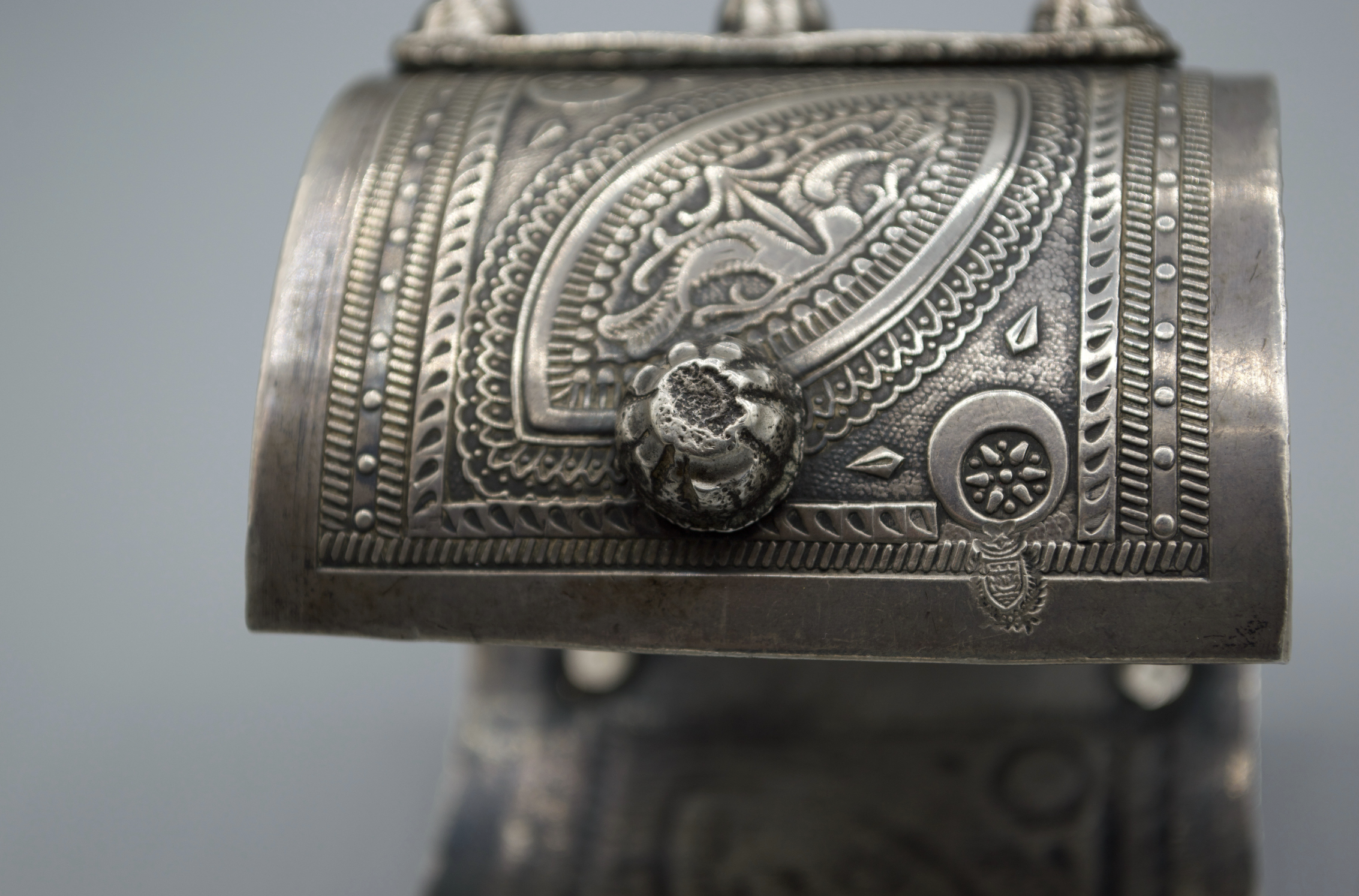
Large cuff bracelets are known as deblej (plural dbalej) and swar: these terms are in fact often used interchangeably for large bracelets in general. Made of silver or gold, they are symbolic of the socioeconomic obligation and commitment that binds a husband and wife to each other. Given by a husband as part of the dowry, or bought in prosperous times, they are meant to be easily converted into money in case of dire need. In the event of divorce or widowhood, they constitute a good source of capital for a woman to draw upon. Hence, bracelets play a financially sustaining role among the jewelry owned by a woman. Goldsmiths refer to cuff bracelets as a woman’s real treasure trove.
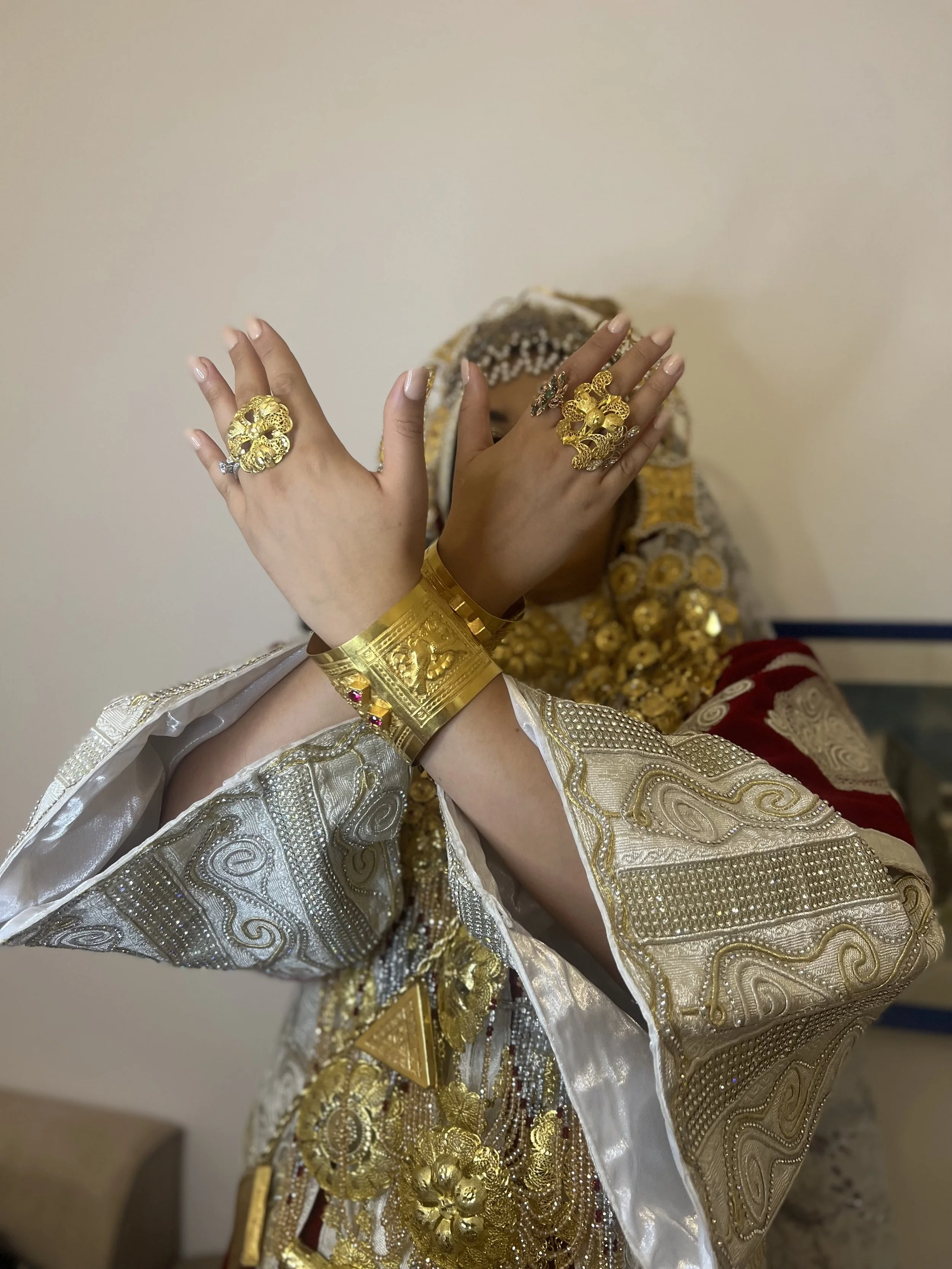
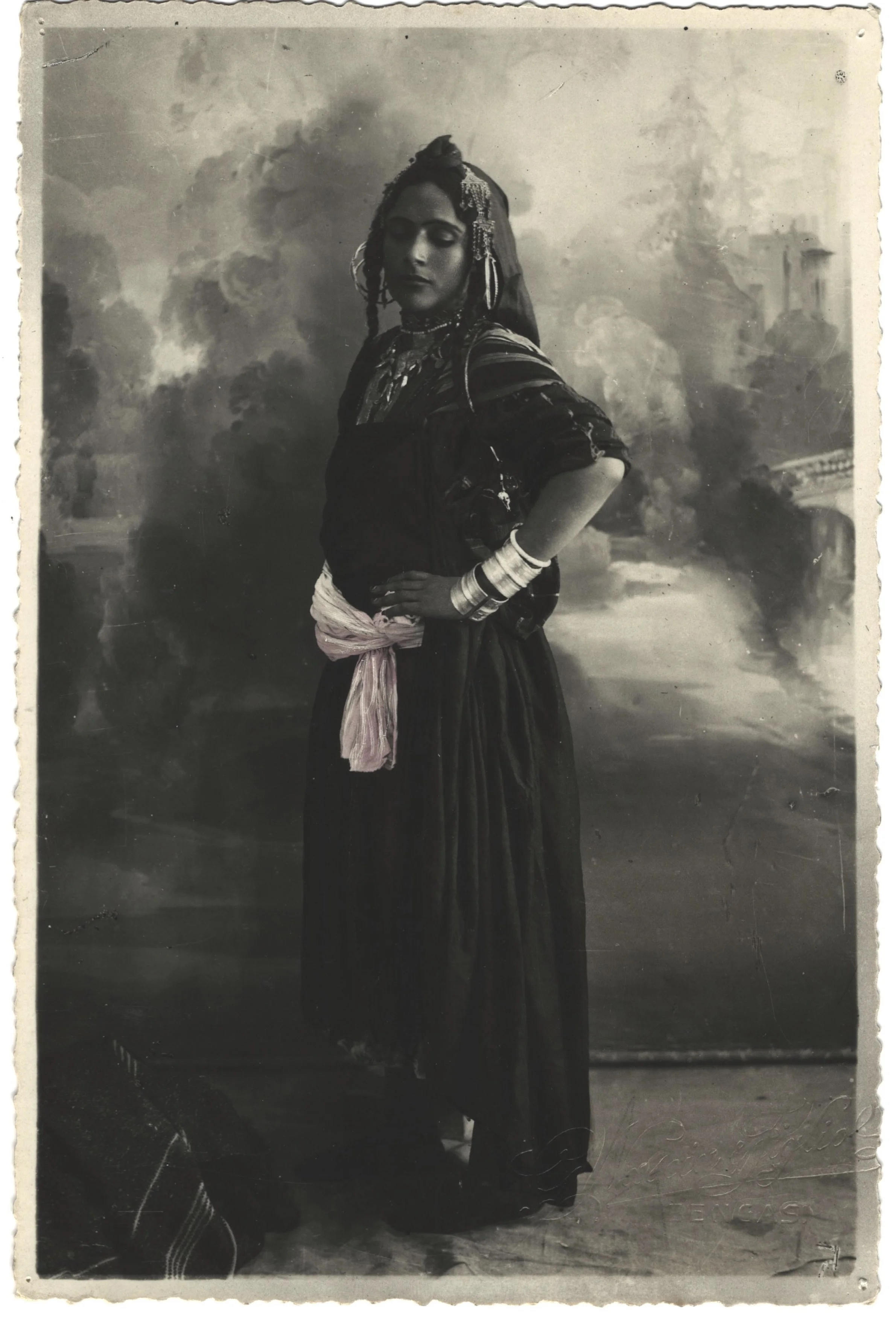
During wedding weeks in Tripoli, following the ritual visit to the hammam, the only piece of jewelry the bride wears before her wedding day is a pair of cuff bracelets that were part of the gifts sent by her future husband. Deblej or swar, always made, bought, and worn as a pair, are made of a silver or gold sheet, a farsha in local goldsmiths’ and silversmiths’ technical jargon. Both styles have an open side with chased metalwork. Some are machine-made, others are a mix of both hand- and machine-made techniques. Hinged bracelets are uncommon, with the exception of the cut-work bracelet from the oasis city of Sokna in Fezzan, which is fastened with a pin. The motifs that decorate both styles of the bracelet form a symmetrical pattern at the open side.
The value and socio-economic importance of deblej and swar cuff bracelets drove silversmiths and goldsmiths to pay particular attention to producing pieces abounding with motifs and symbols: love birds, doves, pomegranates, cups, stars, hexagrams, fish, eyes, flowers, foliage, and palms. Names indicative of the cuff bracelet’s quality and style were also devised. They were based on motifs and shapes, as for the deblej boudahr or boudahrein (“back bracelet” or “two-back bracelet”), thus called
due to the two or three chased convex bands embossed
into the piece, which are reminiscent of a saddle.
The deblej Istanbuli (Istanbul-style deblej) was in fashion until the late 20th century, custom-made in 22-karat gold for an affluent Tripolitan clientele, or sometimes gold-plated as a less expensive alternative. The deblej is adorned with the central motif of a vase overflowing with flowers and leaves. The Western-inspired Rococo-style motifs en vogue in the 19th century were used profusely in Turkish embroidery of the same period.
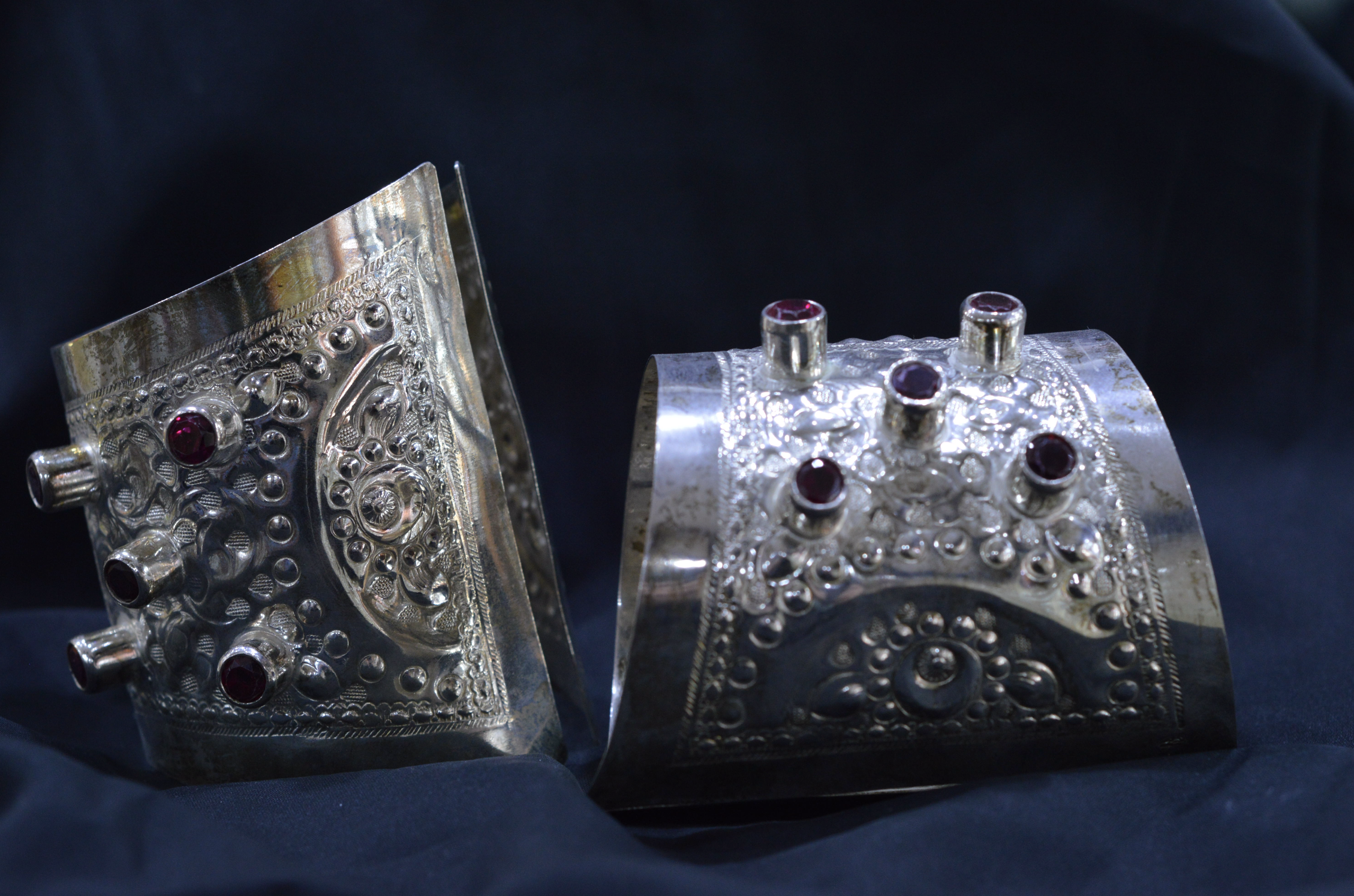
The deblej mfakren (derived from the Libyan word fakrouna, or tortoise) has protuberant studs running across it. This type of cuff bracelet seems to be much favored in Eastern Libya. The swar buthuma or “garlic swar” is a type of cuff bracelet with distinctive studs in the shape of flattened garlic heads (thuma is “garlic” in Libyan Arabic). There are nine of these on this swar, set vertically on three metal bands, each supporting three studs. In the mid-1960s, Tripolitan goldsmiths started the trend of the beveled 22 karat-gold swar, swar mahroudat, which became quite desirable. The studs were set with red precious stones such as pink sapphires, garnets, pink rubies, and rubies.
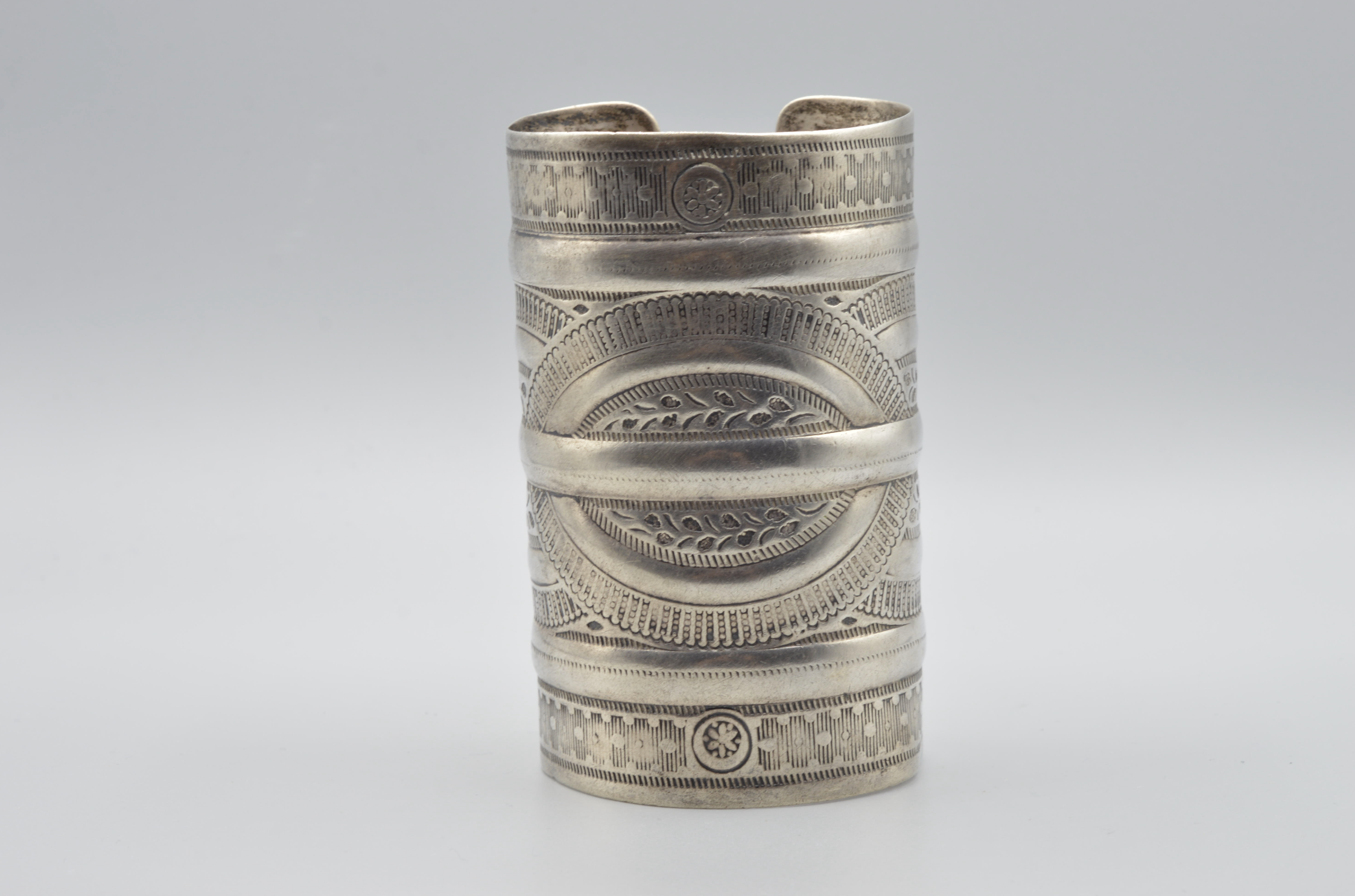
Last but not least, these oversized bracelets are intended to be put on in a precise way: they have to be widened by pulling on both sides of the cut edges, then the wrist is inserted sideways into the bracelet from the widened opening. The deblej is then tightened and secured around the wrist by gently squeezing the bracelet. Sliding the hand through it is frowned upon. The metal must be of a high grade, 0.900 fine for silver and 22 karats for gold, to give some pliability to the piece so it can be widened and tightened again.
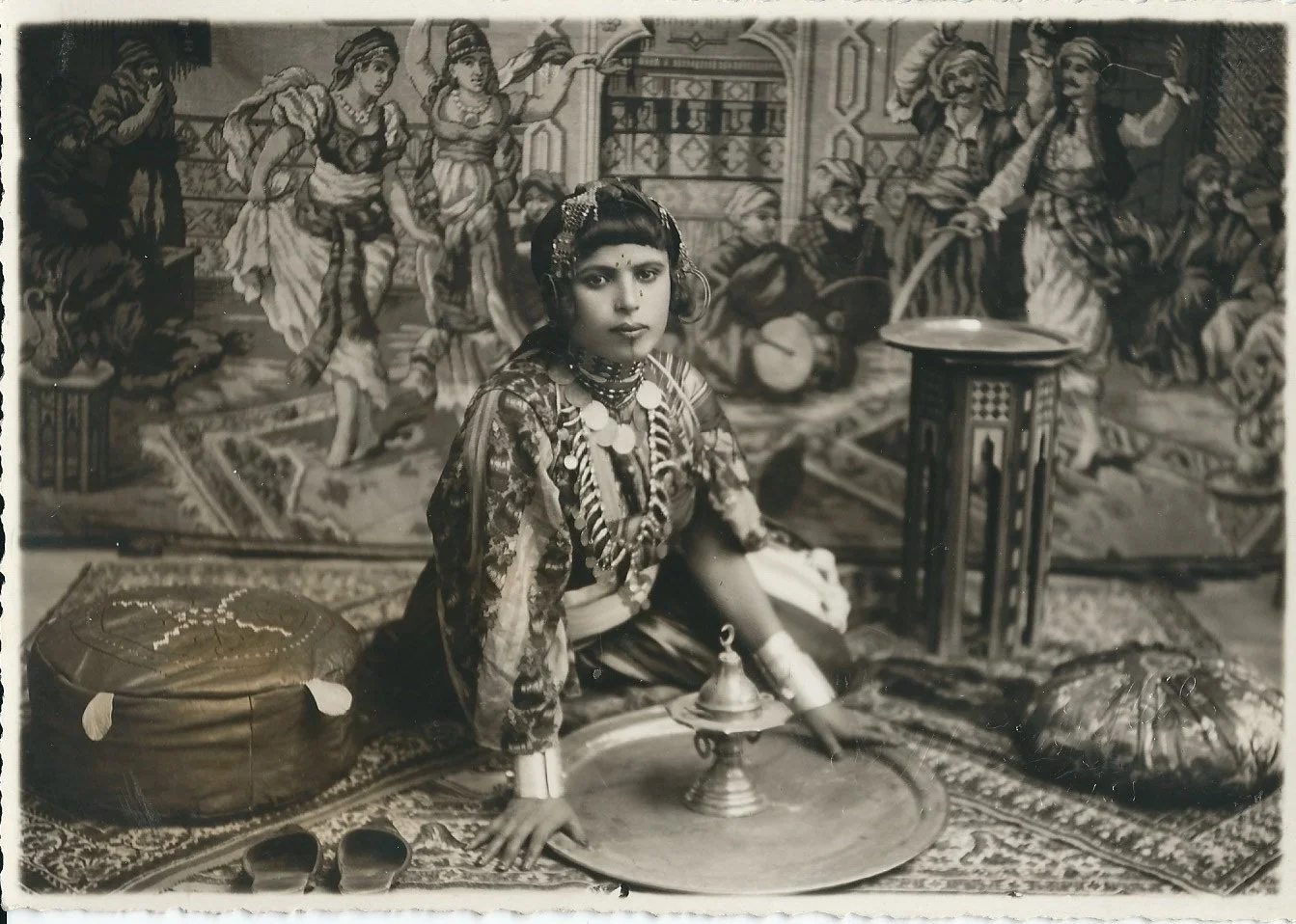
Regrettably, this profusion of various styles of bracelets with pieces dating back to the very beginning of the 20th century is slowly disappearing. Changing tastes, the price of precious metals, and the economy have seen them replaced by lighter and more affordable pieces made in filigree, mostly in gold-plated silver. Older pieces are also often melted down to make new jewelry. Yet many pieces are in private collections and remain sought after by collectors.
This article draws on and reworks writing on Libyan bracelets published in the following book: Ghellali, Hala. “Jewelry and adornments of Libya.” BLIKVELD Uitgevers Publishers.