Words by Henrietta Szovati
It is sunset, and the golden wheel is slowly sliding into the Guadalquivir River. The mezquita of Cordoba is exuding its deep orange light into the courtyard of gently scented bushes of jasmine and honeysuckle blossoms. This time of the day is when all senses come to life; the heat has withdrawn, giving space for undisturbed reflection.
As you cast your eyes, you see the bustling city in a timeless frame, and your mind travels to another era. There stands a man, reciting his verses about unrequited love for a woman he had seen passing on the street. A few meters away, from a small house, we hear a woman’s voice throwing words back in perfect rhymes, rebuking his thoughts. He gets red-angry and throws an insult; she smiles and sings a witty line to prove how childish his anger is. This scene was nothing out of the ordinary in the 10th century when the many streets of Al-Andalus were filled with women poets in constant engagement with prose and the higher arts.
As the evening draws in, another small house at the edge of the city lights up. A sweet murmur lingers in the air, floating from the house, followed by a few notes of lute music. Then it all quiets into an anticipation. A voice starts reading, and gentle claps nudge her along as her voice becomes braver and more passionate. Wallada is not shy; she is reading her poems with pride and confidence.
Wallada bint al Mustakfi established her own life, artfully crafting a life of authority and self-referencing. She defied all stereotypes of women in Andalus and, perhaps, today’s world, too. The most curious fact, however, is that her artistic flair easily fit into a society where authorship and learning were encouraged on every level, regardless of race or gender. Wallada was a beautiful princess with light skin and blue eyes that made her special in every aspect amongst the darker-skinned Andalusians.
To truly understand Wallada, we must understand what the literary scene looked like in the 800 years of Al-Andalus on the Iberian Peninsula- it was a time and space of vibrant intellectual pursuits, innovation, creativity, and a literary paradise. Christians, Muslims, and Jews sat together in public spaces discussing philosophy, medicine,e or astronomy. Illiteracy was almost nonexistent,t and you could easily find yourself in a private home that held a collection of over 40 thousand manuscripts. Books were brought from Fez, Baghdad, Tunis, or Qayrawan and copied on the streets of Andalus. These books were the currency of the time, and women were the caretakers of wisdom on the pages. Some estimate around 60,000 female poets who were successfully running or participating in the regular activities of literary salons; but most of their work has perished, except a few that survived in al-Maqqarī’s famous book, Nafḥ al-ṭīb.
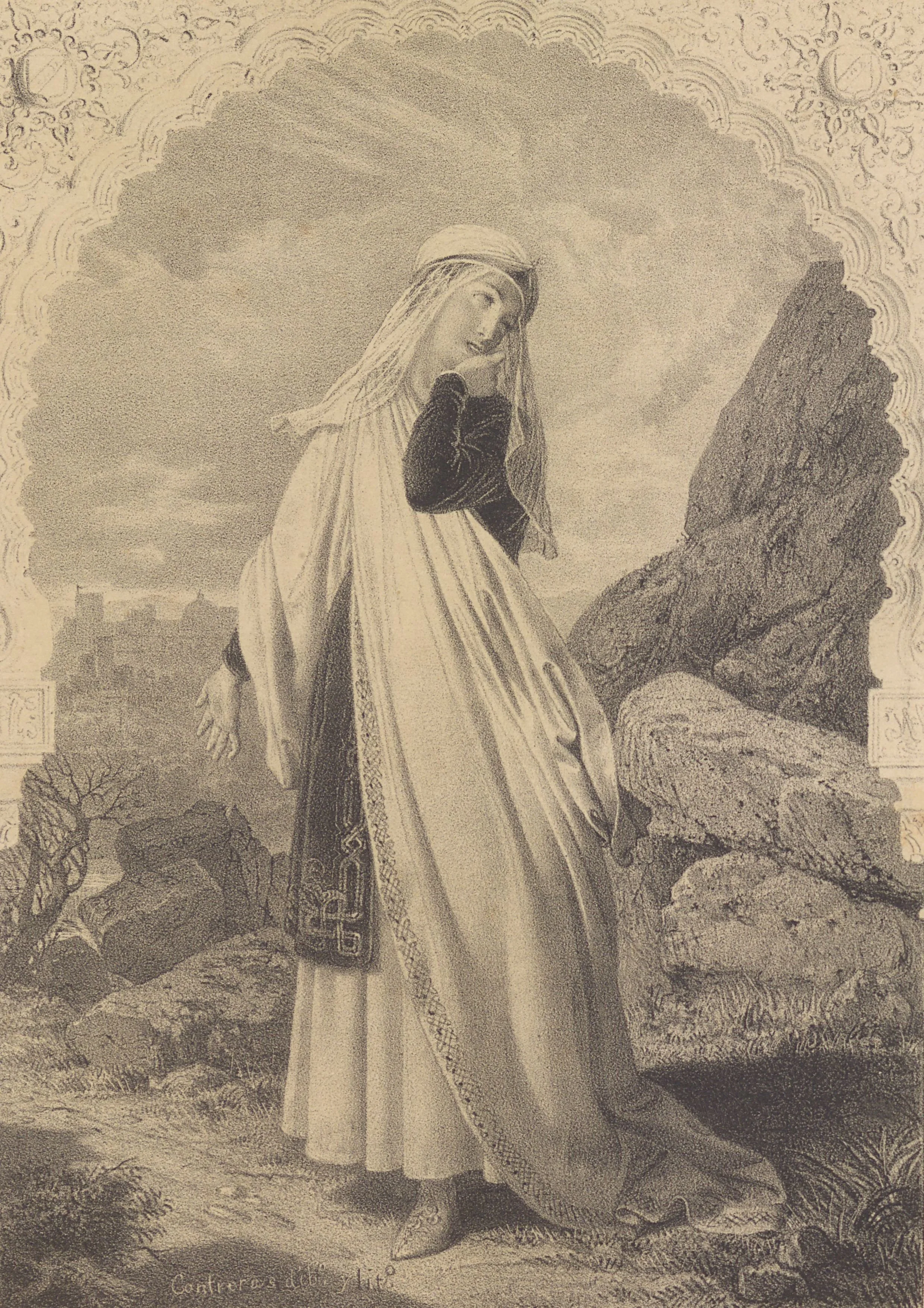
Women were not behind the intellectual giants of Ibn Rushd or Ibn Arabi, but leading from the front, albeit their work is rarely documented. Amongst them we find noble women, religious or secular ones, elite scholars of spirituality or librarians and caretakers of private collections. We find these women in privileged positions of being polymaths. Like their male companions, they were trained in multiple sciences, be it sciences or humanities, perhaps both. One of the leading figures was Lubna of Cordoba, who was renowned for her intelligence, literary skill, and expertise in mathematics and grammar. She served within the court of caliph al-Hakam II and was associated with the famous royal library of Córdoba, one of the greatest collections of books in the medieval world. Historical accounts describe her as a skilled copyist and scholar who helped acquire, catalogue, and preserve manuscripts. Her work demonstrates that women could occupy significant intellectual roles within the cultural institutions of al-Andalus.
Another notable figure was Āʾisha bint Aḥmad al-Qurṭubiyya; as her name suggests, also from Cordoba, but very little else is known about her life. She was a princess, allegedly a virgin all her life, and the author of poems known for their surprising vitality, freshness, and aggressive boldness, one of which goes like this:
“I am a lioness
and will never allow my body
to be anyone's resting place. But if I did,
I wouldn't yield to a dog ─
and O! the lions I've turned away!”
'Ibn Ḥayyān (d. 1076), quoted in Ibn Bashkuwāl's (d. 578) Ṣila, praises, among other qualities, ʿĀʾisha's intelligence, her knowledge of literature and poetry, and her eloquence. Her handwriting was beautiful, and she made a practice of copying in her own hand the Qurʾān as well as secular books. She showed a great interest in science (ʿilm), which led her to collect books in what became a large and beautiful library.
HassƗna al-Naymīriyya, who reportedly played a vital role in the emergence of the female literary tradition in Andalusia. It was reported that she composed several panegyrics for the Caliph al-Hakam ibn Hisham (ruled 796-822) and his son, the Caliph Abd al-Rahman II (822-852). Yet, her poems are not included in any known anthologies or books of Andalusian literary history.
Hafsa bint Hamdūn al-HijƗriyya (from Guadalajara) and Al GhassƗniyya al-BajjƗniyya (from BajjƗna in Almeria) all of whom lived in the early centuries of Muslim al-Andalus. These women, among others, were highly cultured and accomplished poets, but hardly anything is reported about them, except a few biographical notes.
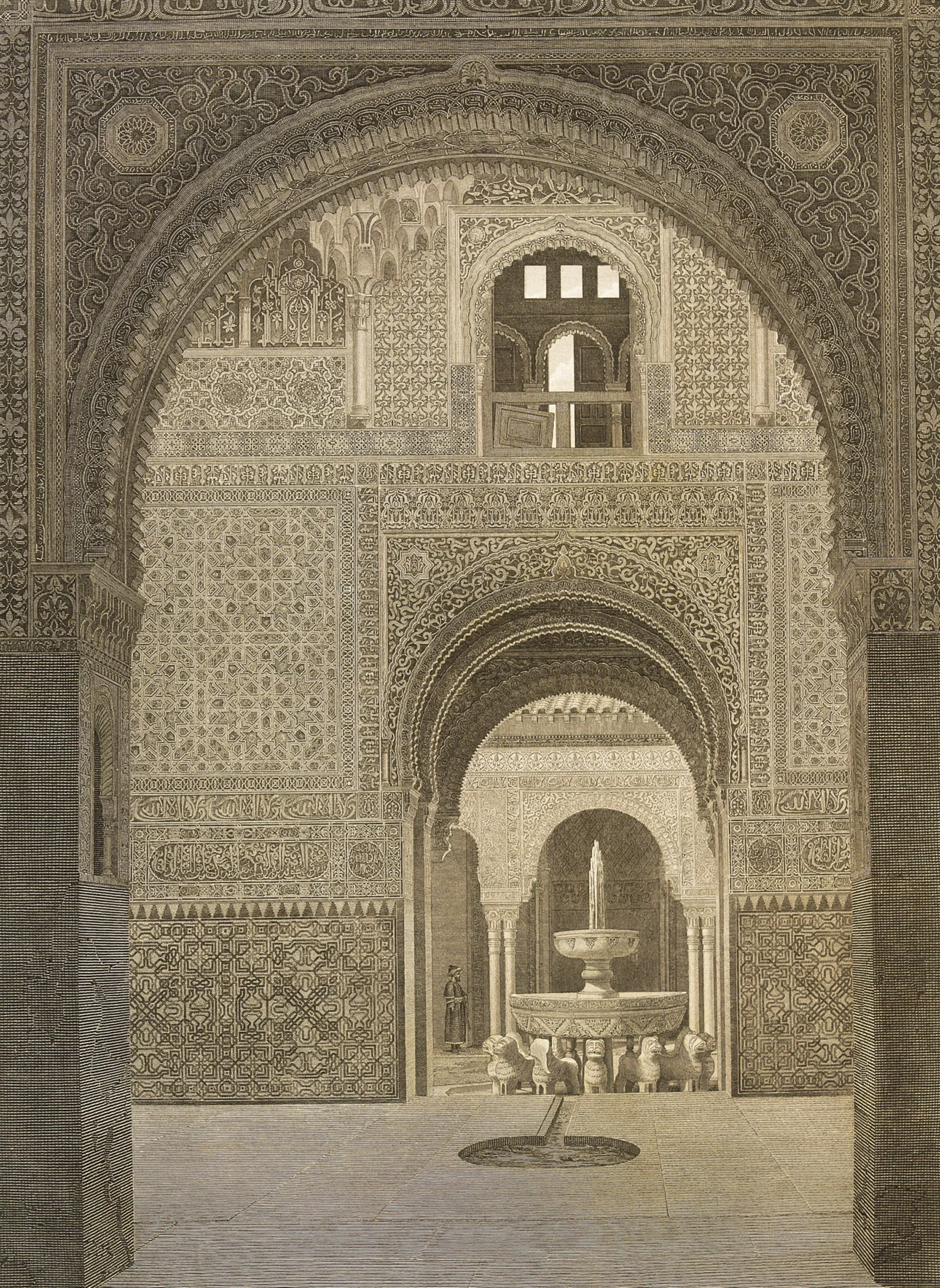
Women wrote poetry, participated in storytelling on the streets as tale tellers, and some even opened their own literary salons, where patrons could sponsor those whose works they enjoyed. One cannot talk about the literary world of Al-Andalus without mentioning the qayna system. A highly sophisticated network of females was established originally at the Abbasid court, and later found its way to the Umayyad courts in Cordoba. As the Abbasids expanded their territories, they brought many slaves from all the land they set foot on. The slave trade became more established, and a large amount of wealth enabled bureaucrats to become patrons (Kaatibs) who owned not only properties but women of their choice. The word qiyan refers to performing slave girls who were trained for poetry and even shadow puppetry, as well as being highly skilled in calligraphy and dancing. The word qayna used to refer to anyone doing manual labour, as essentially, they were slaves, so the term was used intermittently. Women were trained in Basra or Baghdad, at times sent over to Madina to learn adab (etiquette) and poetry.
He qayna women were discovered or celebrated at literally salons that were used at the time of the Abbasids. Women ran those salons, and they had some characteristics that made them stand out from the norms of society. A qayna was educated as fine as an aristocratic female, but she did not cover herself in public. She appeared to be the leader of fashion and flattering clothing, always ready to sit and converse with influential men. She was articulate, independent in the way she thought, and was free to exercise her mind. They were regarded as knowledgeable, humorous, and insightful.
She was noted for her impulsiveness or, at times,s lack of deep contemplation, a virtue that was taught in more traditional, conservative establishments. A qayna was able to impress her audience and evoke admiration. Al Jahiz describes her in the following way: “ By nature she sets her nets and traps to those who come near her; she would reciprocate with a glance, flirt or smile and woo him with a vanity of songs, flattering his opinions. She would always be quick to join him for a drink and make him believe that she is more in love with him than he is in love with her; while away she would write to him about her pangs of loving him”.
The qiyan women were introduced to Andalus after being trained in Baghdad, and by the laws of Islam their status was defined. In the harem, if they gave birth to the emir, they became umm walad and her child was free, gaining all the rights of a free man. Their training was done methodically by sending them off to faraway lands or later being trained in Cordoba. An ancient account described their training this way: “The best way would be to send them to Madina for three years at the age of 9, then to Makkah. By the age of 15 she would arrive in Iraq where she would acquire the sophistication of Iraqi women after having been gifted with the good looks of Madinan women and tenderness of the Makkans”.
Writing was one of the most prolific creative art forms in al-Andalus and for good reason. Citizens were driven by curiosity to explore the world around them, and with the introduction of paper at the first paper mill in Jateva (current-day Valencia), distributing knowledge became easier. The surge of poetry and prose was an inevitable next phase, which allowed women to flourish in their own ways.
Some of the qiyan women were genuinely talented and, without the support of their patron, would not have had the chance to flourish in their artistic talents. Others were forced into it to make ends meet,t and we can only assume they had no other power. Yet, some others chose to influence society this way, often being powerful over their ruler and influencing decisions in the political arena. The reality was that these were women of Arab, Berber, or Iberian origin, and any of them could have been Muslim, too.
About the Author:
Henrietta Szovati is the founder of the House of Andalus, a cultural and heritage project in Andalucia. She is a writer and historian specializing in Andalusi culture. As a leadership expert, she bridges historical lessons from Al-Andalus with today's challenges for an innovative, connected, and vibrant life. She works across cultures and brings fresh perspectives to spiritual and personal development by engaging with the past meaningfully as a way to learn. She blogs at www.henriettaszovati.com and www.houseofandalus.com. Her project and journey can be found on Substack at https://thehouseofandalus.substack.com/