Der Zor, the Place Armenians Remember Without Having Seen
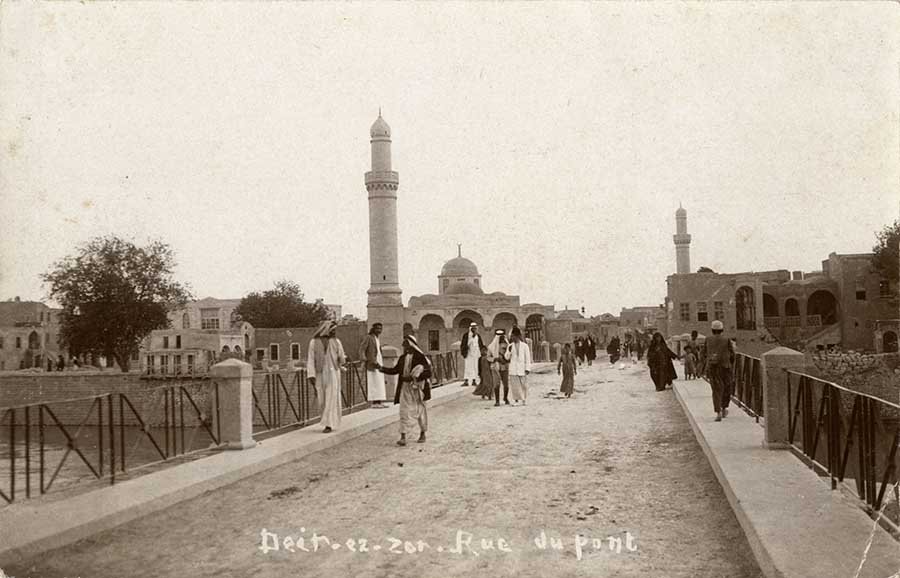
A bridge connecting the east bank of the Euphrates River with the town of Deir ez Zor. Circa 1920s. Phot. Norbert Schiller Collection
Words By Lilit Hovsepyan
In Armenian family stories, Der Zor often appears before people know where to place it on a map. It may be mentioned as a road, a desert, a place where relatives disappeared, or the destination toward which survivors were forced to walk. For some descendants, it is connected to a specific family story: a grandfather who survived, a sibling who died on the road, a grandmother who treated bread with unusual care long after the hunger had passed.
Deir ez-Zor is a city in eastern Syria, on the Euphrates River. Its name is transliterated in several ways, including Deir ez-Zor, Deir al-Zor, Deir el-Zor, and Dayr al-Zawr. In Armenian commemorative language, it is called Der Zor. The distinction matters. Deir ez-Zor is a Syrian city with its own residents, histories, and present-day life. Der Zor, in Armenian memory, refers not only to that city but to a broader geography of deportation: the routes from Anatolia into Ottoman Syria, the camps along the Euphrates River, the desert, the survivors who rebuilt their lives elsewhere, and the descendants who inherited the name through family testimonies.
It was not the only place where Armenians suffered during the Armenian Genocide. Many other names are part of that history: Mush, Van, Kharpert, Palu, Zeytun, Aleppo, Meskeneh, Ras al-Ayn, Raqqa, Sebka, and others. But Der Zor became one of the names through which Armenians remembered the final stage of deportation. It came to stand for the end of the road
From Deportation Route to Place of Memory
Before the genocide, Armenians lived across the Ottoman Empire, including in towns and villages throughout eastern Anatolia and Cilicia. These places were not simply points of origin. They were homes, with churches, schools, cemeteries, local dialects, trades, and family histories.
In 1915, Ottoman authorities began mass deportations of Armenians. Families were removed from their homes and sent southward under conditions that made survival increasingly difficult. Deportees faced hunger, thirst, disease, exposure, violence, exhaustion, and repeated separation from relatives.
Many routes passed through Aleppo, a major city in northern Syria. From there, Armenians could be pushed in different directions: toward camps near Aleppo, toward Ras al-Ayn along the railway route, or toward the Euphrates River and the Syrian desert.
This is where Der Zor becomes central. It was part of a larger network of deportation routes and camps in Ottoman Syria. Historians of the genocide describe camps near Aleppo, along the Berlin-Baghdad railway, and along the Euphrates River, including Meskeneh, Dipsi, Abuharar, Hamam, Raqqa, Sebka, and Der Zor.
These were not safe resettlement sites. They were places of forced confinement, deprivation, disease, and repeated movement. Deportees could be held temporarily, moved again, or sent farther into the desert. Survival depended on many factors: health, money, aid networks, local help, bribes, or chance.
Meskeneh, east of Aleppo along the Euphrates, became one of the major camps on the route toward Der Zor. Historian Khatchig Mouradian cites figures attributed to camp director Hussein Avni showing that more than 110,000 deportees passed through Meskeneh between May 1915 and April 1916. Tens of thousands died there. Others were sent farther downstream.
This matters because not everyone who remembered Der Zor physically reached Deir ez-Zor itself. Some died in Meskeneh. Some died near Ras al-Ayn. Some died near Raqqa, along the river, or somewhere on the road. Yet in Armenian memory, Der Zor became the name attached to the wider route because it marked the final direction of deportation: farther from home, farther from protection, and closer to the desert.
Why Der Zor Became the Name
Der Zor became a central Armenian place-name for several reasons.
It initially stood near the far end of many deportation routes into Ottoman Syria. For deportees forced south from Anatolia, the journey to Der Zor often marked the final stage of displacement.
Secondly, Der Zor was not only a city but also an Ottoman district and a destination within the deportation system. The name appeared in administrative and survivor accounts not only as a place of arrival, but as part of the machinery that moved deportees through increasingly deadly conditions.
Besides that, the region became associated with the desert. In Armenian memory, the desert around Der Zor came to represent hunger, thirst, abandonment, and the absence of marked graves. To be sent toward Der Zor often meant being sent to a place where survival was unlikely.
And because family memory tends to condense complex geography into one name. A survivor or descendant might not preserve every distinction between road, camp, district, city, and desert. In many families, “Der Zor” came to hold all of it.
A Family Story from Mush
In Shushan Ghandilyan’s family, Der Zor is remembered through three generations: Khachik Manukyan, the survivor; Ofik Manukyan, his daughter; and Ghandilyan herself, his great-granddaughter.
The family story begins in Mush, a historically Armenian city in eastern Anatolia, in present-day eastern Turkey. According to family testimony, Khachik Manukyan was fifteen years old during the genocide. He was the only one of eight siblings to survive. His parents, grandparents, brothers, and sisters were burned alive inside their family home.
Before the violence reached the family, his mother reportedly gave the family’s jewelry and gold to a soldier, hoping it would save her sons. Khachik escaped with his younger brother.
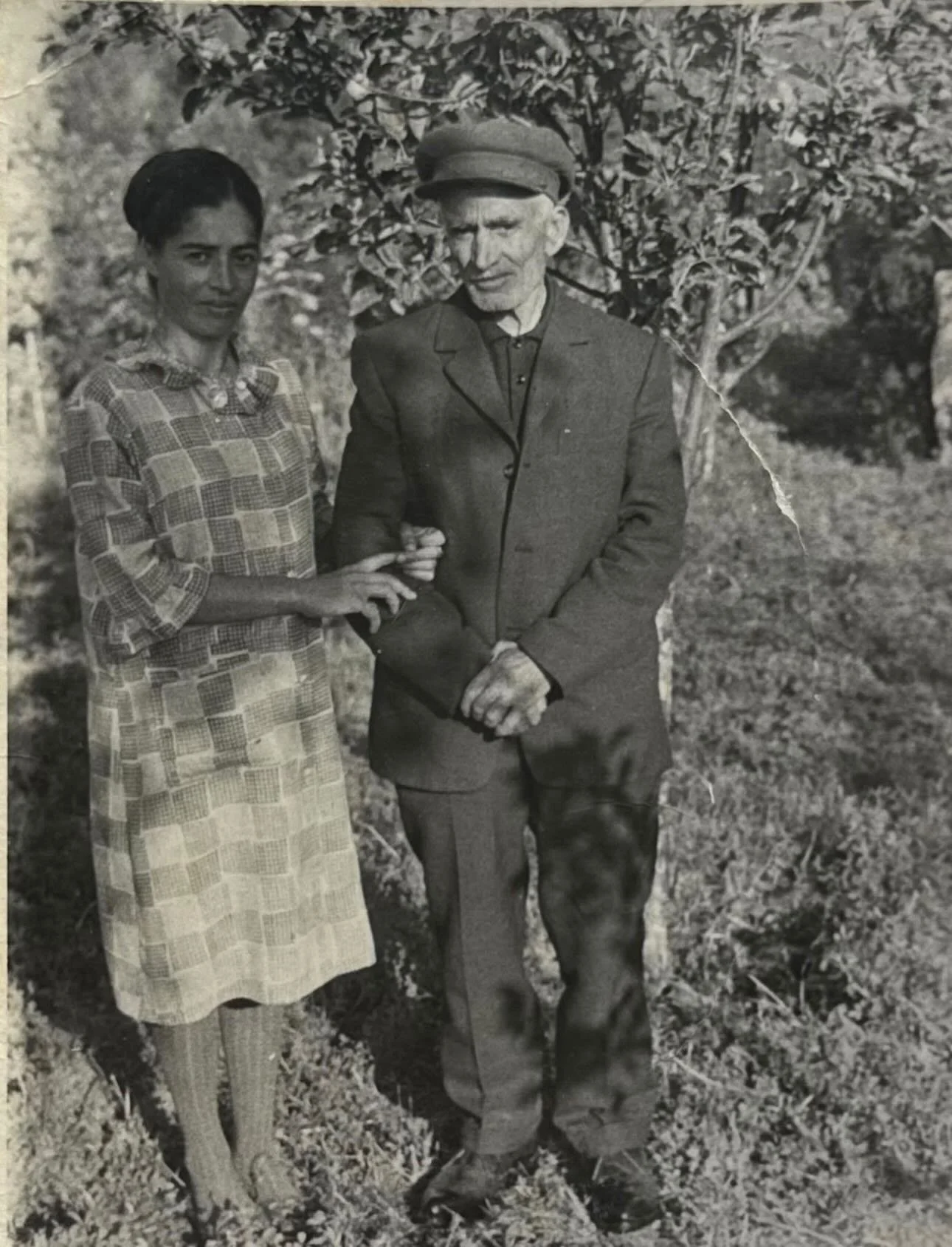
Ghandilyan’s great-grandfather with her grandmother
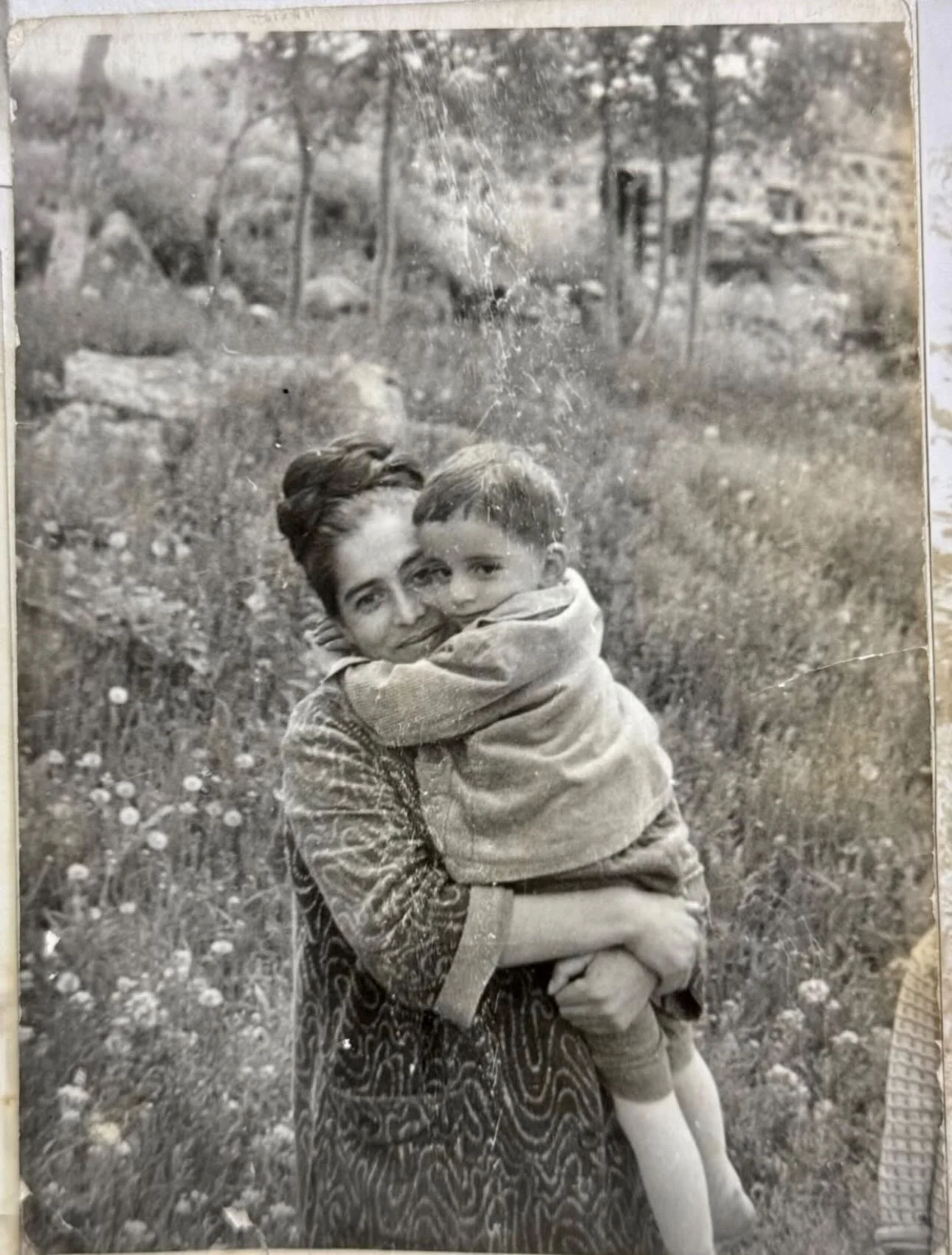
Ghandilyan’s grandmother with her youngest son, Ghandilyan’ uncle
A Kurdish woman and her daughter-in-law hid the boys at great personal risk. They moved by night and hid during the day. Khachik survived. His younger brother did not. He died on the road to Der Zor from exhaustion and hunger.
Khachik eventually crossed the Araks River and reached Alexandrapol, the city now known as Gyumri, in northwestern Armenia. There, he rebuilt his life, married, and had eight children. One of them was Ofik Manukyan.
When Ofik Manukyan hears Der Zor, she does not describe the present-day Syrian city. She remembers people.
“My mind doesn’t see a location on a map,” she says. “It immediately forces me to remember. I remember my father. I remember the story about his little brother who took his very last breaths on that dusty road, completely exhausted and starving.”
For her, the name is not abstract history. It is connected to her father’s survival and to a younger brother who did not survive the road.
“To me, that soil is frozen in time,” she says. “It will always be felt, and it will always be thought of as an open-air graveyard for my family I never met, and for every innocent Armenian who never got a proper burial.”
Ghandilyan describes this as the difference between history as a public subject and history as family inheritance.
“When people talk about history,” she says, “we often forget that for many of us, it’s not just history. It’s family.”
Bread as Evidence of Memory
Ani Derderian’s family history shows another way Der Zor is remembered: through hunger.
Derderian was born in Aleppo, Syria, a city that became one of the major centers of Armenian survival and diaspora life after the genocide. Her father’s family came from Palu, in the Kharpert region of eastern Anatolia, near present-day Elazığ in Turkey. Her father was only forty days old when the deportations began. Her mother’s family came from Zeytun, in the Marash region near present-day Kahramanmaraş, and also survived the marches through the Syrian desert.
“My grandmother and my uncle Garabet were walking through Deir ez-Zor,” Derderian recalls. “They were hungry, they were in fear, and they were very frightened about their lives.”
The detail she remembers most clearly is bread.
Derderian says her grandmother was too shy to ask strangers for food, so she sent her young son, Garabet, to beg. Years later, after the family had rebuilt its life in the Middle East, hunger remained visible in a small repeated action.
“Whenever my grandmother received bread from the bakery,” Derderian says, “she would smell it and appreciate it.”
The gesture is simple, but it makes the memory concrete. Hunger did not remain only as a story about the past. It shaped how bread was treated in daily life. A bakery in a later home still carried the trace of the deportation road.
Derderian herself has never visited Deir ez-Zor, even though she was born in Syria. When asked what she imagines when she hears the city’s name, she does not describe buildings, streets, or neighborhoods.
“I imagine it’s a desert,” she says. “All I know is that many, many footsteps were there. Armenian footsteps. And many, many really bad experiences on that desert.”
Her answer shows how Der Zor exists for many descendants: less as a city they know directly than as a place reconstructed through family stories, bodily memory, and inherited images of the road.
The Memorial and Its Destruction
For decades, many Armenians knew Der Zor through survivor testimony, family stories, church commemorations, and books. In the early 1990s, that memory took physical form in the city itself.
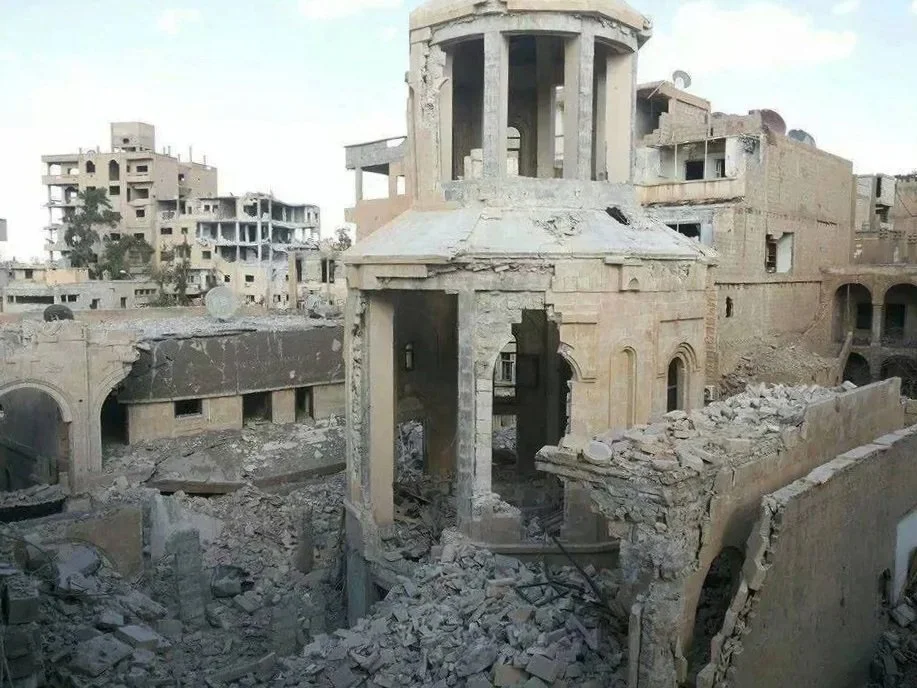
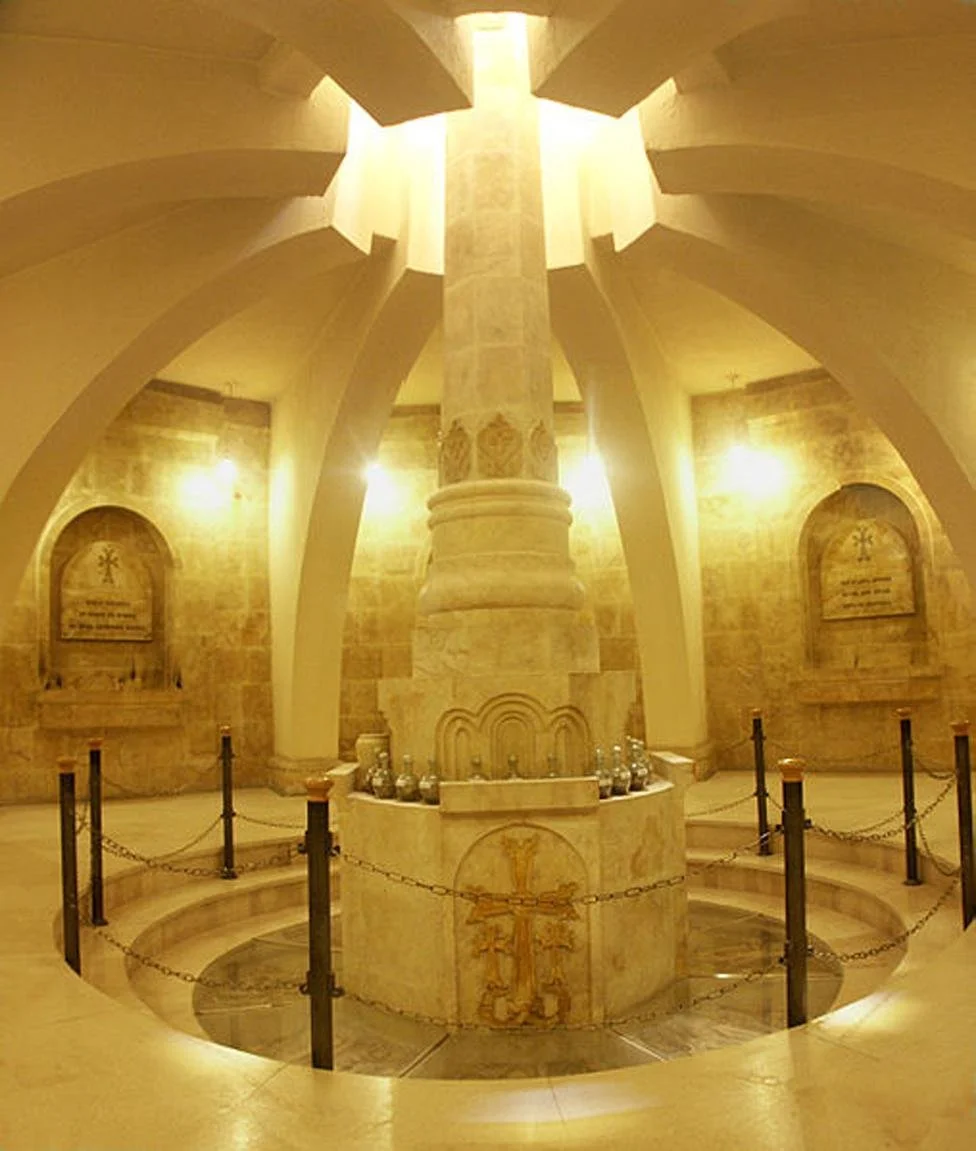
The Armenian Genocide Martyrs’ Memorial Church complex in Deir ez-Zor included a church, a memorial, and a museum. Armenians from Syria, Lebanon, Armenia, Europe, North America, and elsewhere visited it as a pilgrimage site. The memorial mattered because it gave descendants a place to stand. For families who had inherited Der Zor only as a name, the complex connected testimony to geography. People could travel to the city, pray, mourn, view exhibits, and place family memory within a physical landscape.
During the Syrian war, the memorial complex was destroyed in 2014. Its destruction removed one of the most important Armenian sites of memory in Syria. But it did not remove Der Zor from Armenian memory. By then, the name had already traveled through families, communities, commemorations, and scholarship.
A City and a Memory
Present-day Deir ez-Zor should not be reduced only to an Armenian memorial landscape. It is a Syrian city with its own residents, neighborhoods, histories, losses, and attempts at rebuilding after years of war. To speak of the city only through Armenian suffering would erase its contemporary life and the people who continue to belong to it.
At the same time, Der Zor remains one of the central places in Armenian historical memory. The city and the inherited meaning are connected, but they are not the same. Deir ez-Zor is a geographic place. Der Zor is the name many Armenians use for the memory attached to that geography: the deportation routes, the camps, the desert, the survivor testimony, and the family stories passed down after the genocide.
Der Zor endures because it condensed a much larger geography into one name. It was not the only place where Armenians suffered, but it became one of the names through
which descendants understood the final stage of deportation. More than a century later, many Armenians know Der Zor through the memories carried by those who survived the road there.
About the author:
Lilit Hovsepyan is an Armenian student majoring in Journalism and Strategic Communication at Northwestern University in Qatar, with a minor in Media and Politics. Her reporting focuses on the intersection of politics, culture, identity, and diaspora, with particular attention to Armenian communities, cultural memory, and questions of church, state, and belonging across generations and borders.