The Space Between Making & Meaning: A Journey in Craft From Palestine to Fez
Words & photos by Nina MohaMmad
I was three and a half when my parents left Palestine for the United States. I grew up in a country that was supposed to be “home”, but I always seemed slightly out of tune with the place. I made friends, lived for years in California—first San Francisco, then Los Angeles. And yet a quiet sentence kept looping in the back of my mind: this isn’t where I’m meant to be.
By the time I was a mother with two young daughters in Los Angeles, that sentence had become a physical ache. I knew two things with absolute clarity: I wanted to leave America, and I wanted to live a life rooted in craft and one closer to the one I had left behind in Palestine. I wanted craft and culture, yes, but also a different lifestyle, a better quality of life with my daughters. Not as a hobby or a side interest, but as a way of being in the world: closer to land, closer to makers, closer to what made me feel alive. I’ve always understood myself as a creative, a dreamer, not a maker—but I wanted my dreaming to be grounded in real hands and real places.
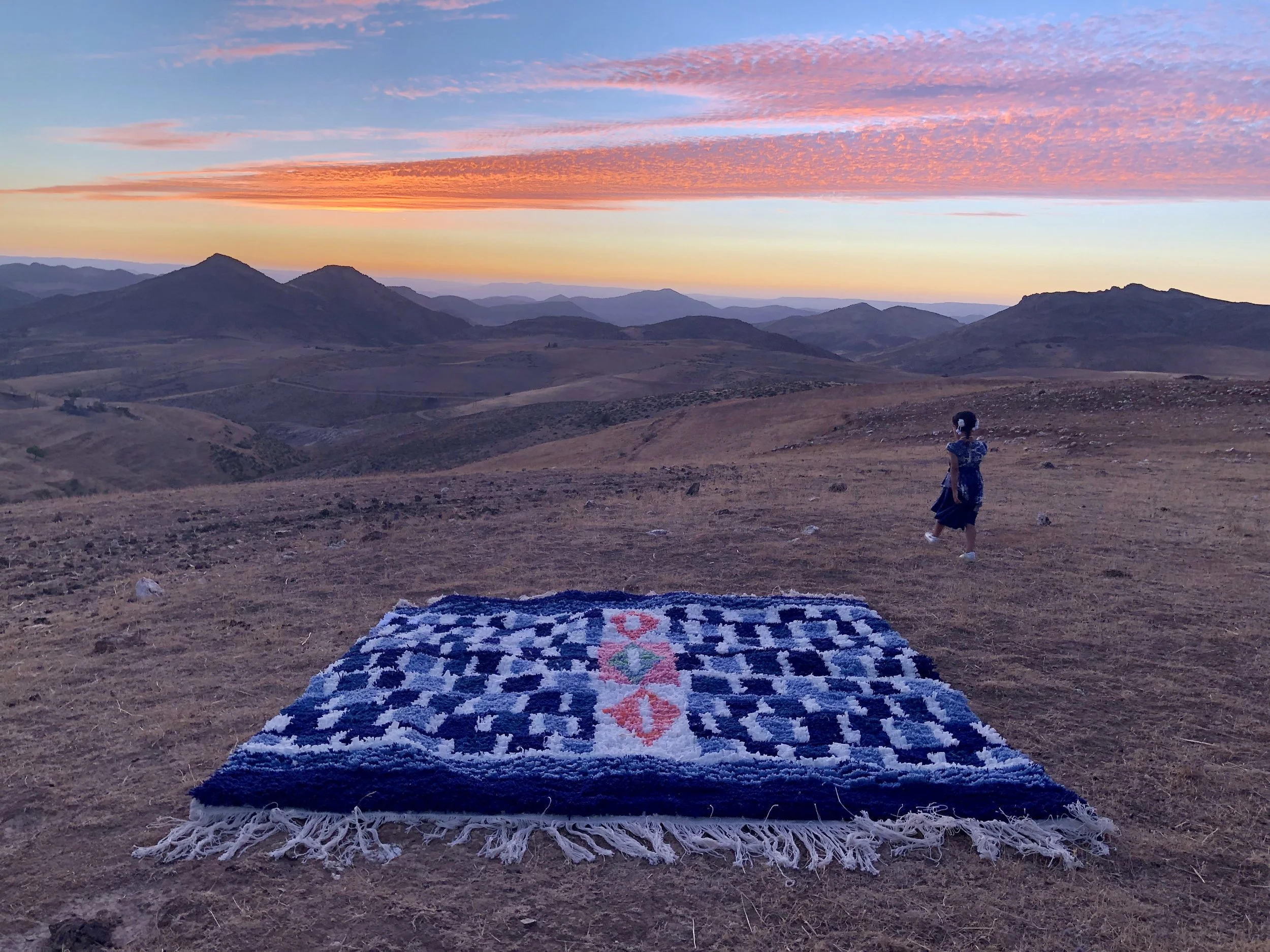
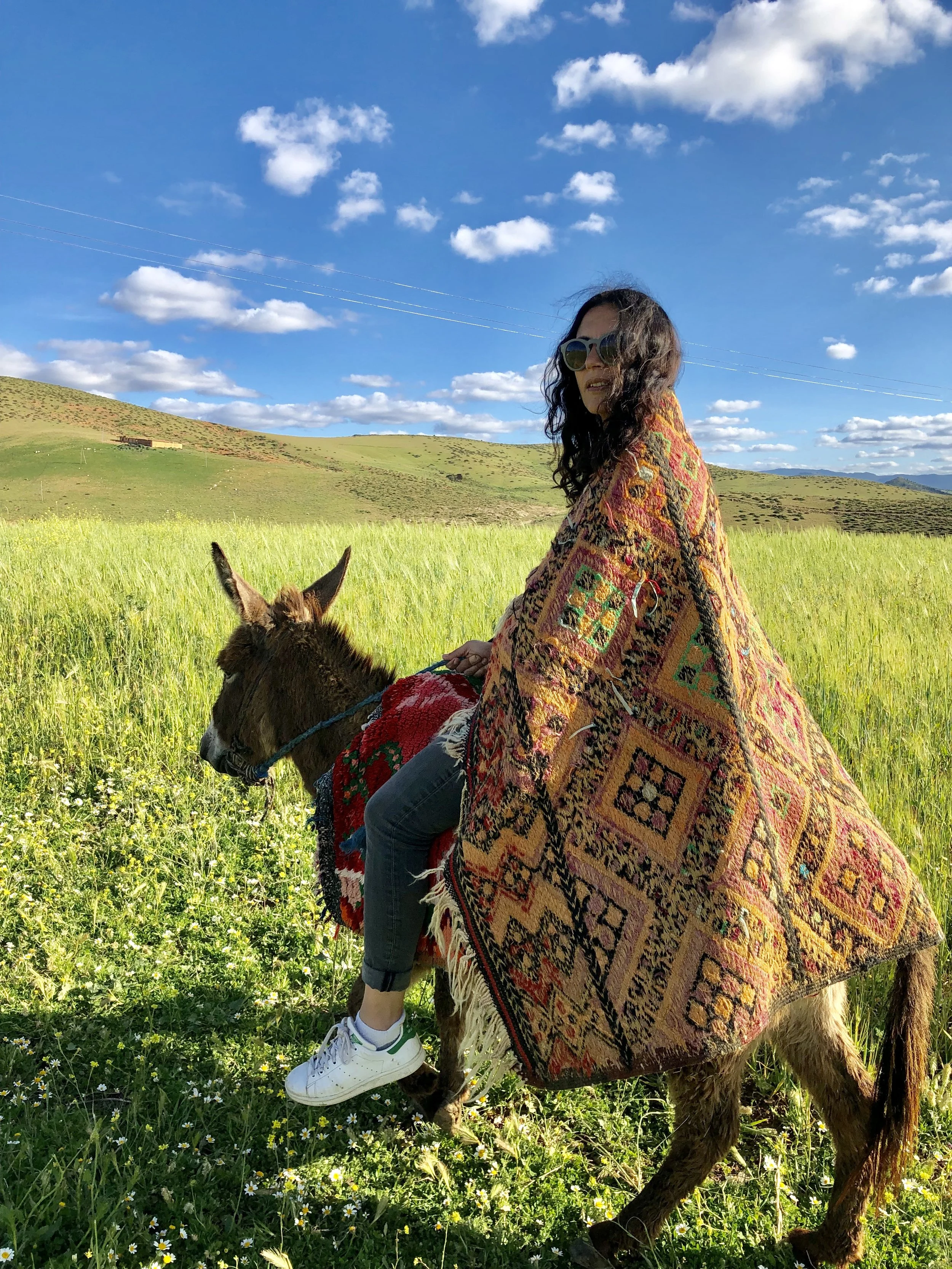
Morocco was the place my imagination kept returning to. I moved to Fez over 14 years ago as a single mother, leaving behind a broken marriage and a city that felt superficial. Fez felt like the opposite of Los Angeles: a medieval city with narrow streets humming with workshops—metalworkers in one doorway, shoemakers in the next, and behind a wooden curtain the steady rhythm of a loom. I remember walking through the old medina thinking: Here, there are endless possibilities.
I didn’t arrive as a master craftsperson or even as someone who had ever designed textiles. In fact, I’ve always joked that I’m terrible with my hands. As a child, when my mother tried to teach me to sew, I’d end up stapling my Barbies’ clothes together instead of stitching them. Still, I grew up surrounded by women who made things: my mother sewing and knitting, my grandmother and aunts embroidering their thobs with birds, flowers, olive trees, and talismanic motifs—I didn’t inherit their skill, but I inherited their reverence and their courage.
A few years into my life in Fez, a road trip with a friend and my daughters took me out of the city and into the mountains. In a small village, almost by accident, we stepped into a women’s weaving cooperative—Ain Leuh, founded in 1977, one of the first women’s textile unions formally recognized by the Moroccan state. Inside, women sat at vertical looms, talking and laughing while children played around them. It felt like walking into my grandmother’s living room in Palestine, translated into another dialect.
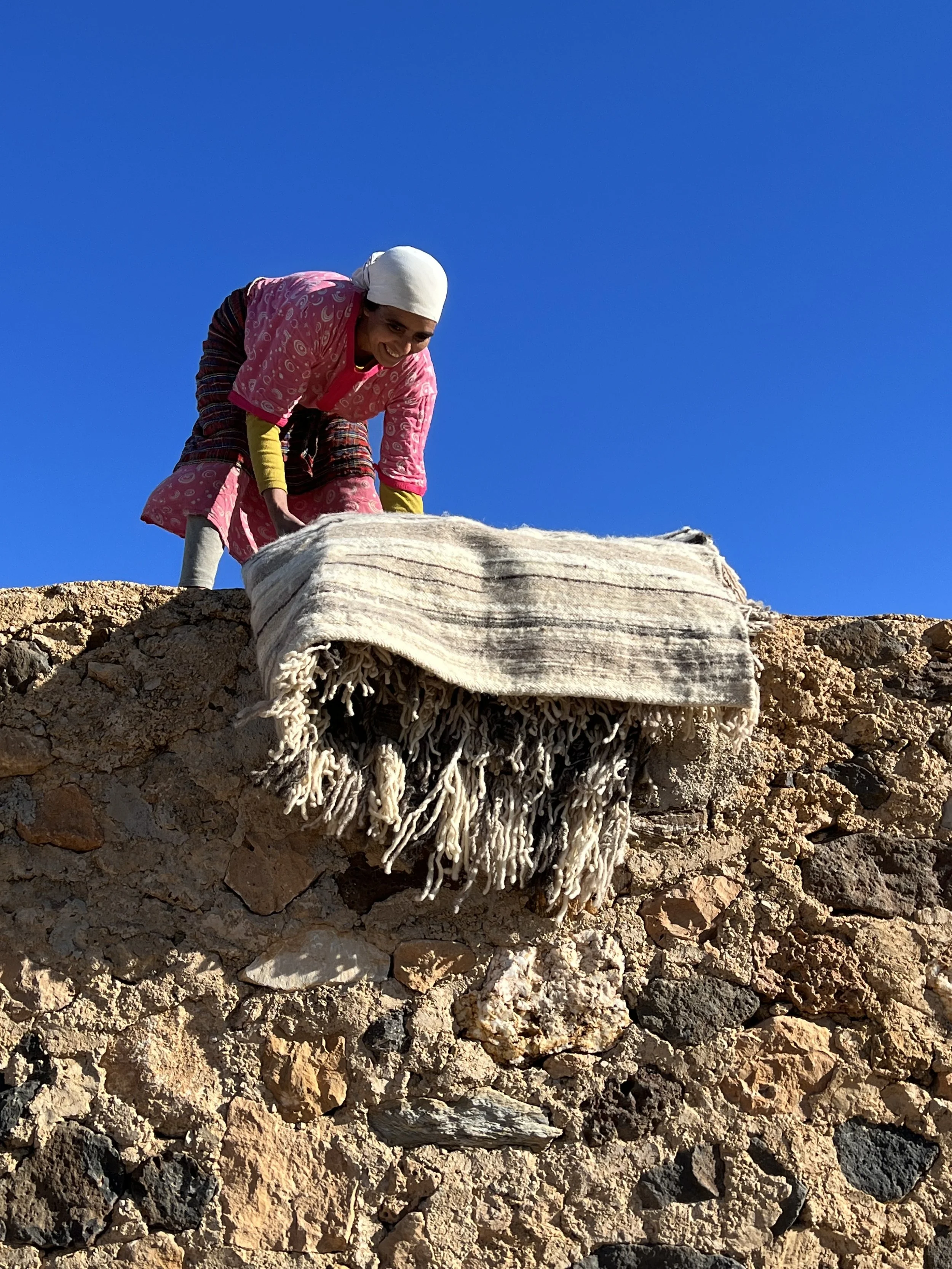
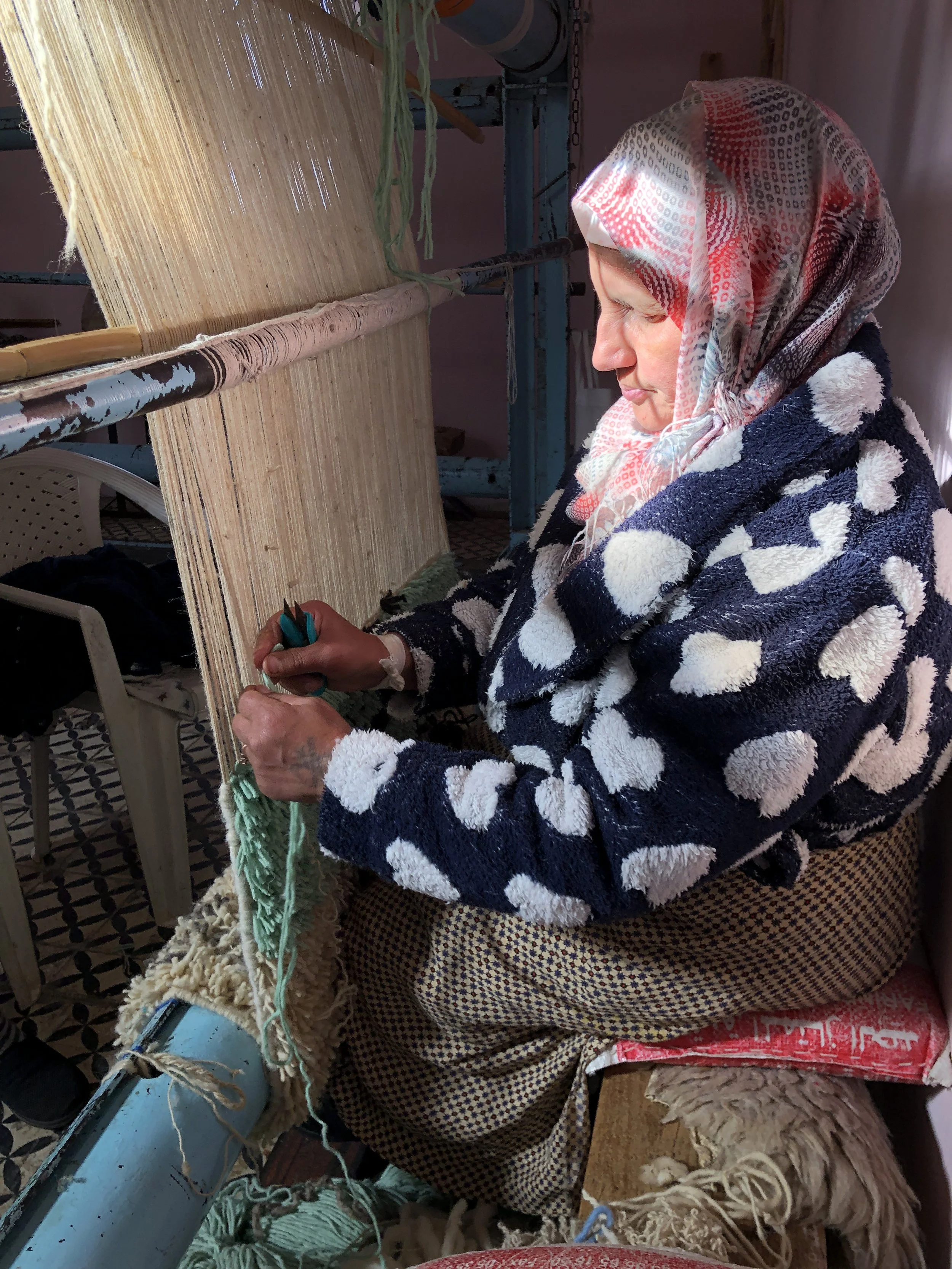
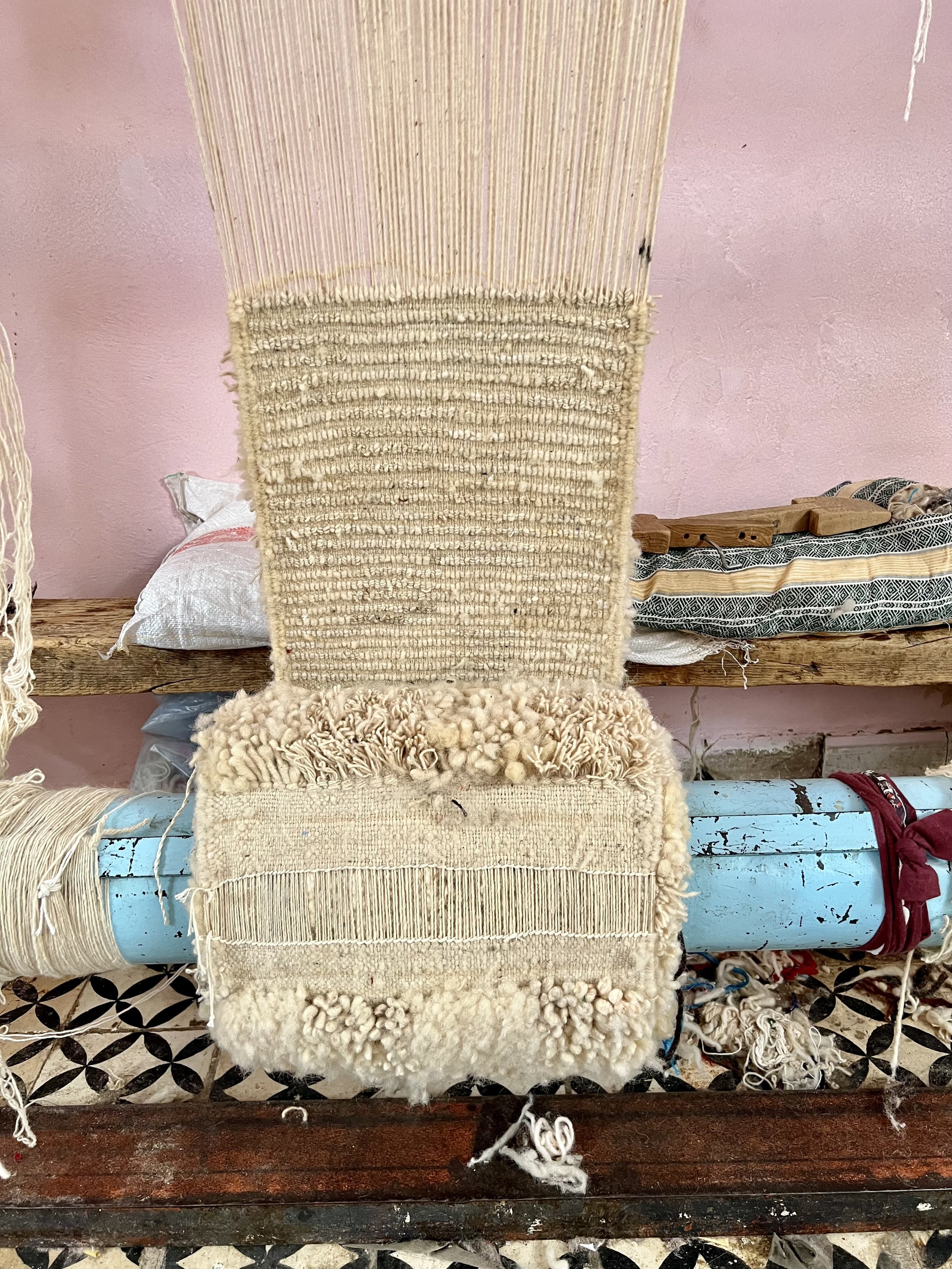
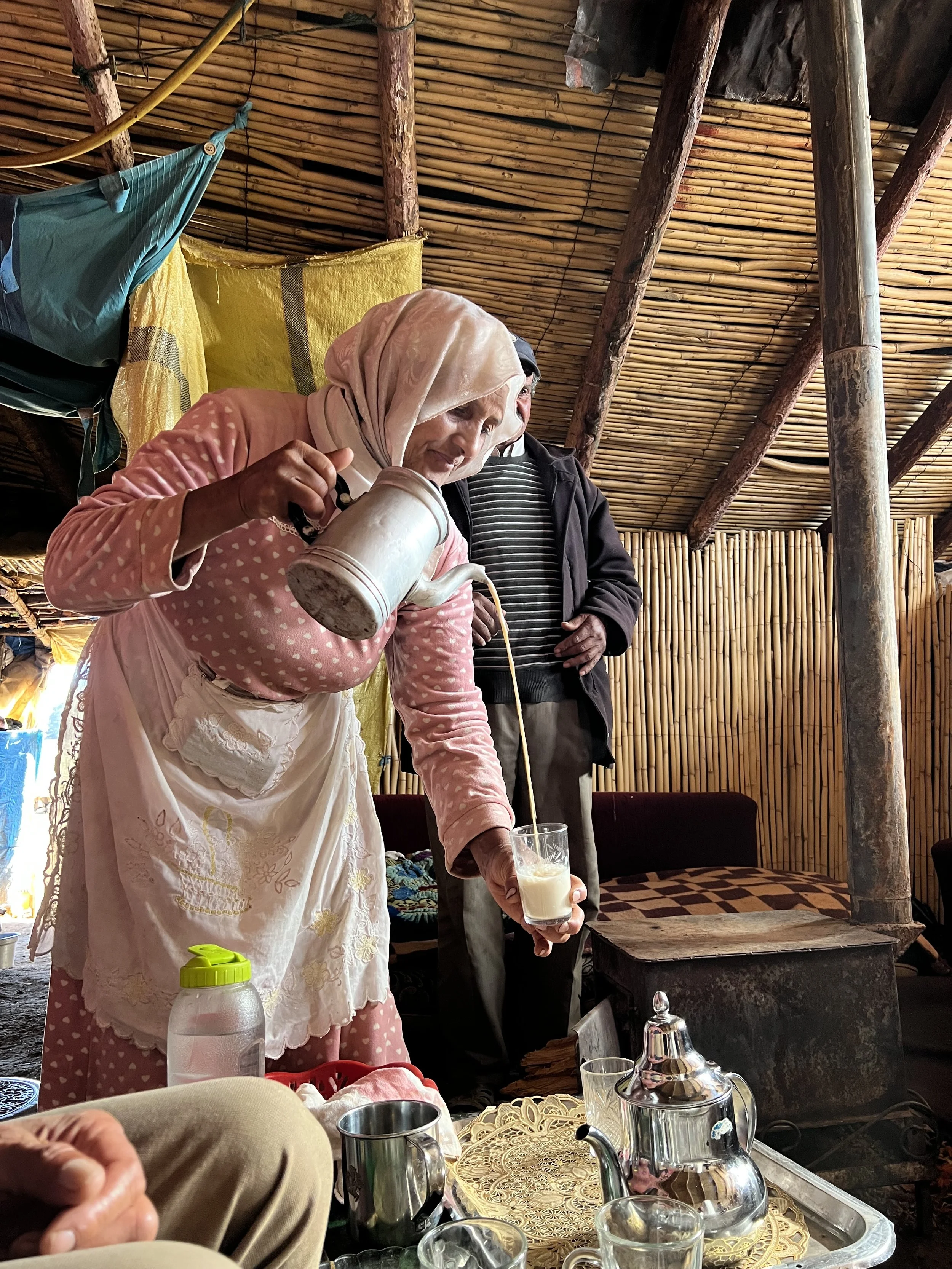
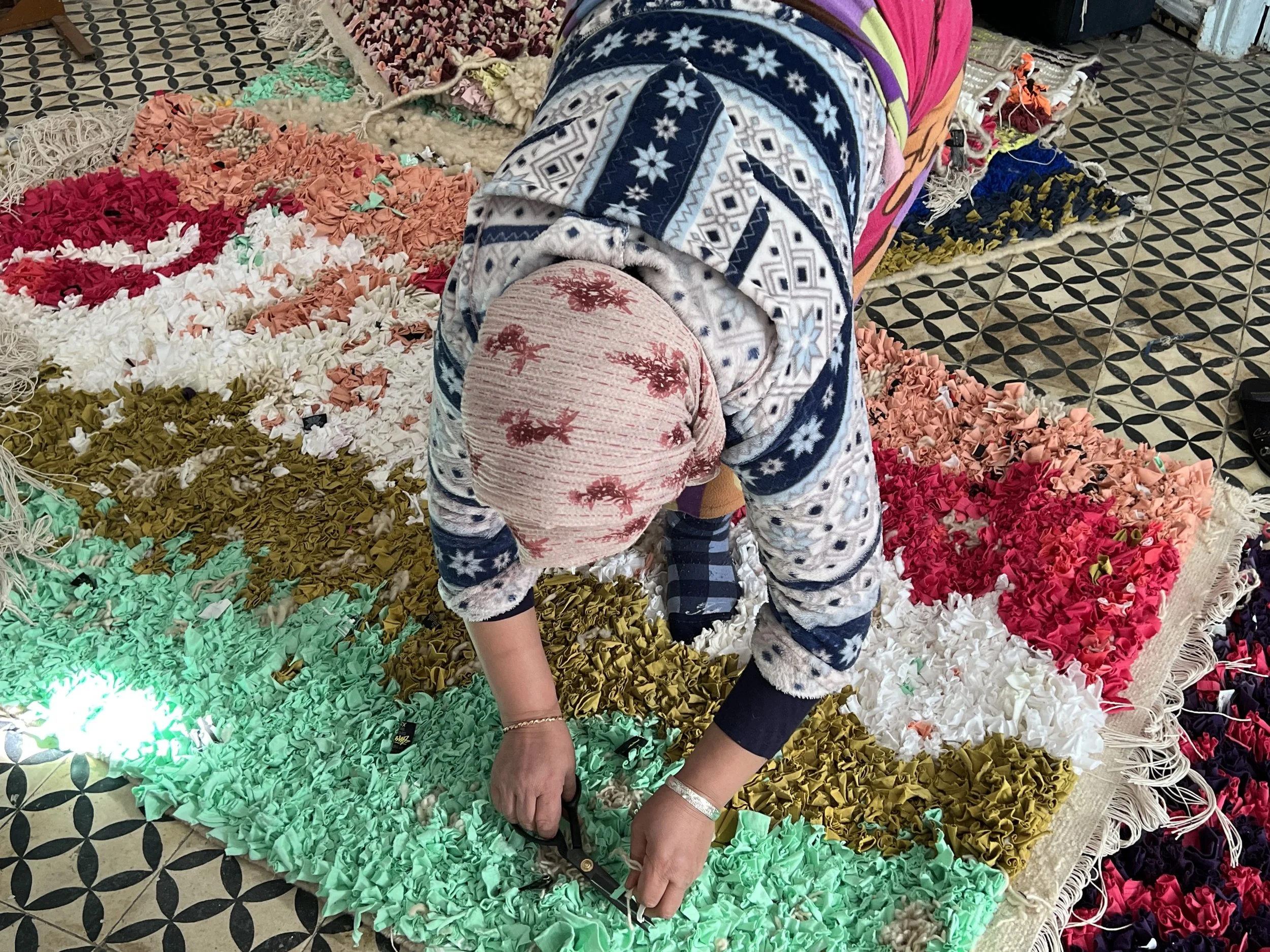
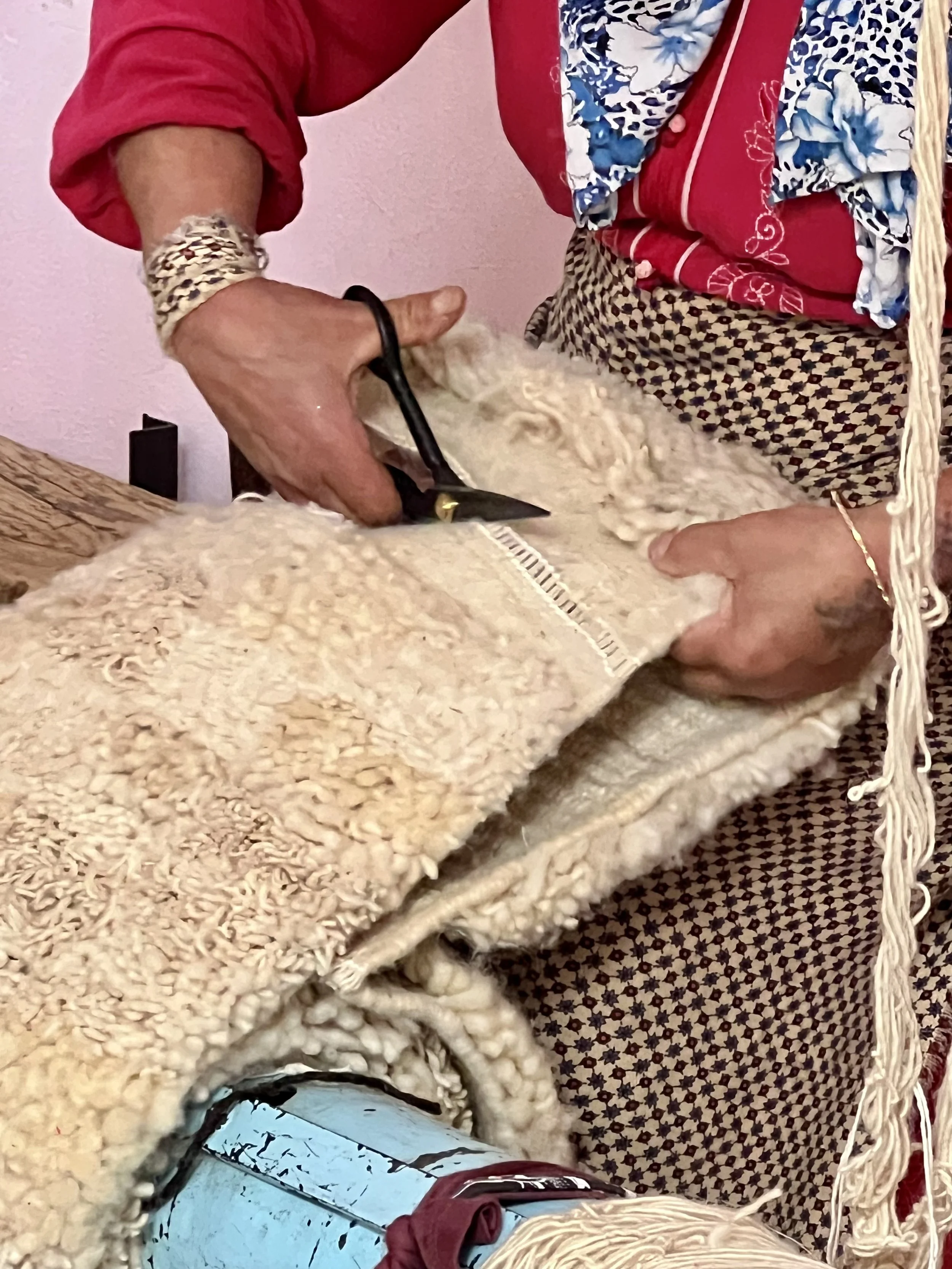
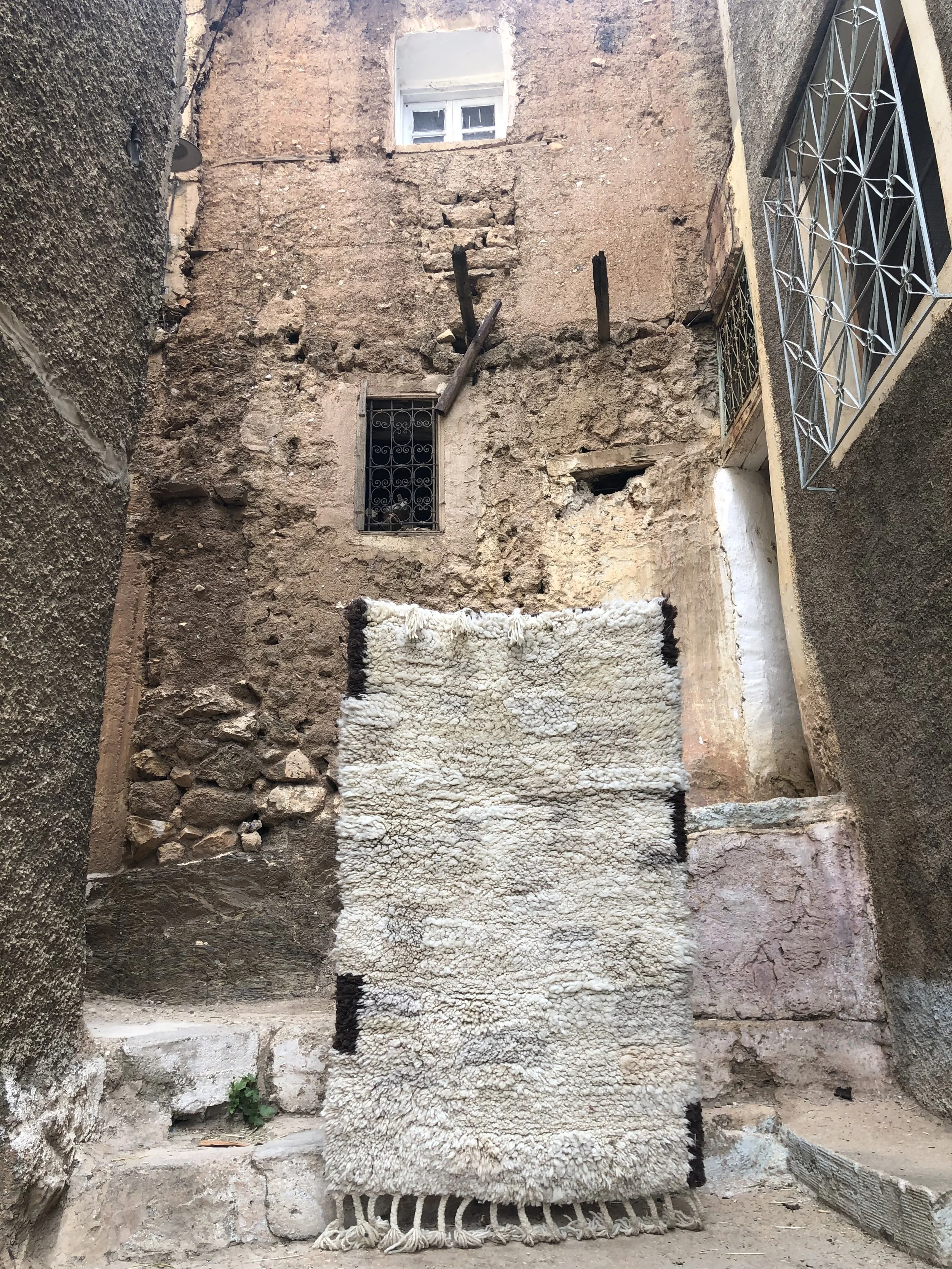
Most of the women were Amazigh—indigenous to Morocco, with their own languages and histories, often flattened under the word “Berber”, which I don’t use because of its colonial, derogatory roots. In the Middle Atlas, where I work, cultures overlap: Amazigh women and Arabic-speaking women share space, stories, and looms. Some of the weavers at Ain Leuh have been working there since they were twelve; they are now in their forties, fifties, and sixties. They are the living archive of this landscape and of the Beni M’guild carpet tradition.
But like many traditional craftspeople, their work was undervalued. Weaving is hard on the body, and the financial rewards were painfully low. When I began Artisan Project, my commitment was simple: if we are going to ask women to pour their bodies, time, and ancestral knowledge into this work, we must meet them with dignity. On our projects, we pay three times the common market rate. It doesn’t solve structural inequality, but it changes, in a very real way, how a woman can feel about her craft. “This loom is our source of life,” one of them told me. That sentence guides everything I do.
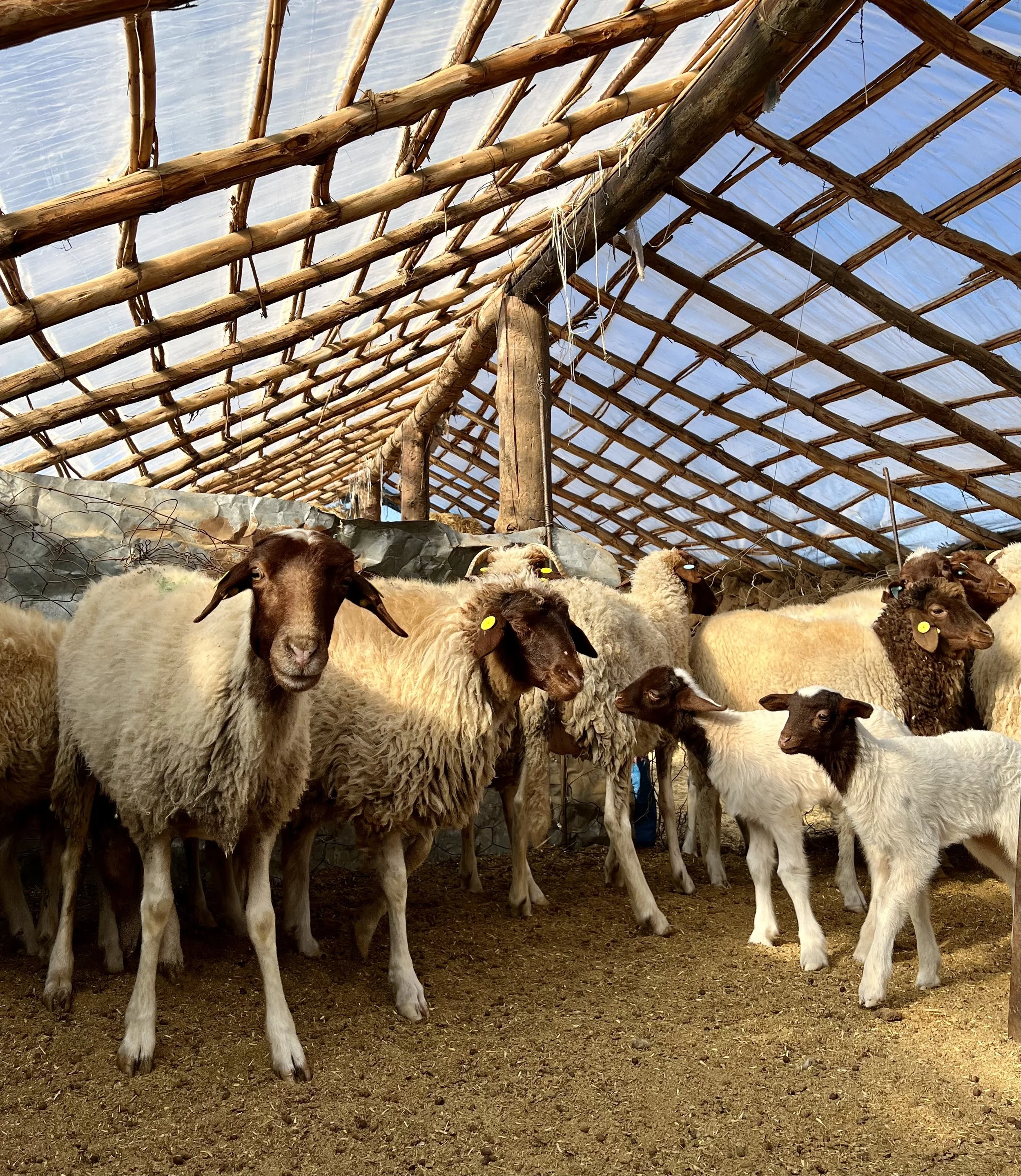
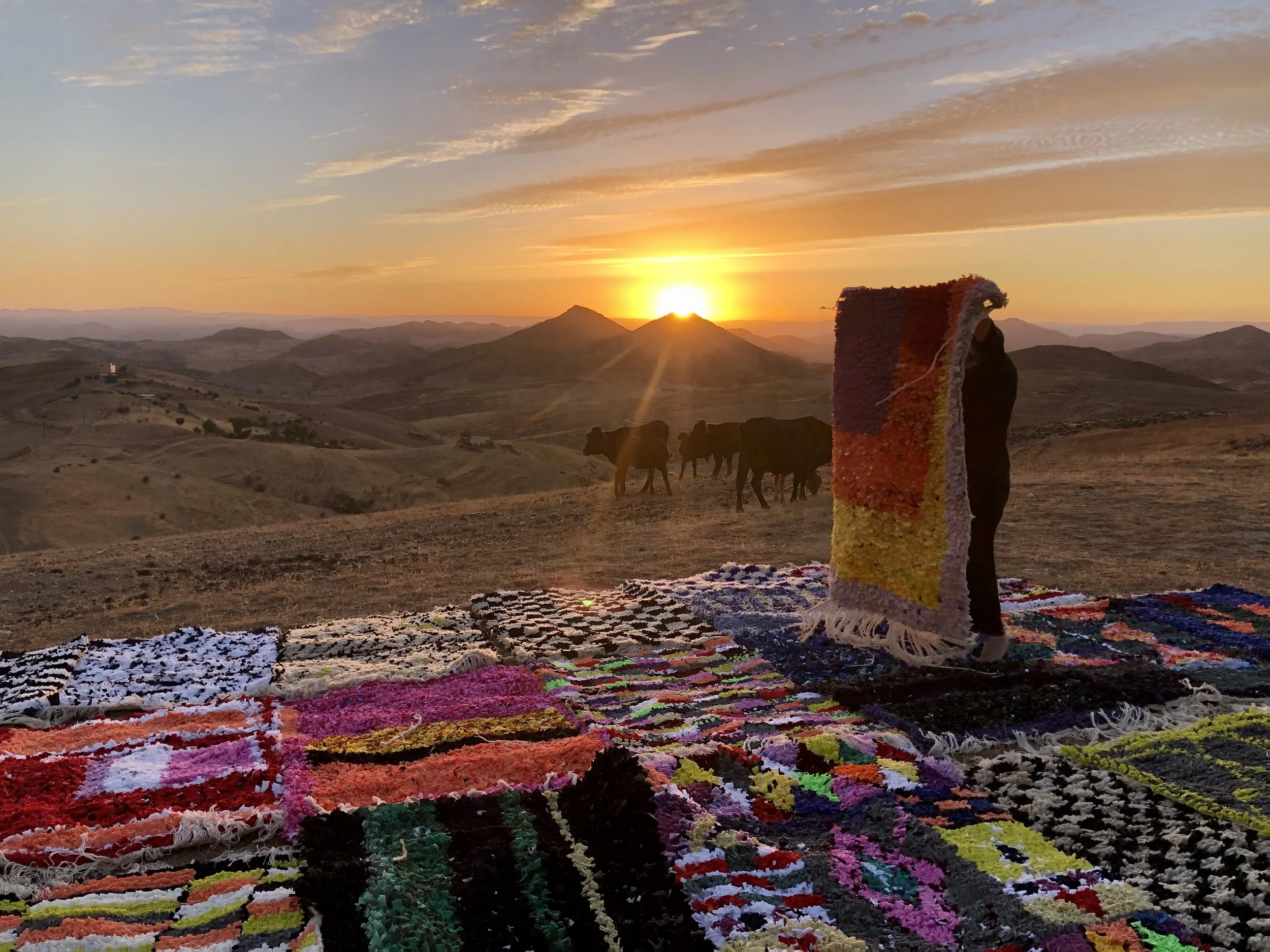
For the weavers I work with, wool is not a neutral material. It is baraka—a blessing that passes through many hands before it reaches the loom: shepherds guiding their flocks, women washing, carding, spinning, and sometimes dyeing it with plants gathered from the same hillsides where the sheep graze. By the time it reaches the loom, it carries the memory of the land and its people.
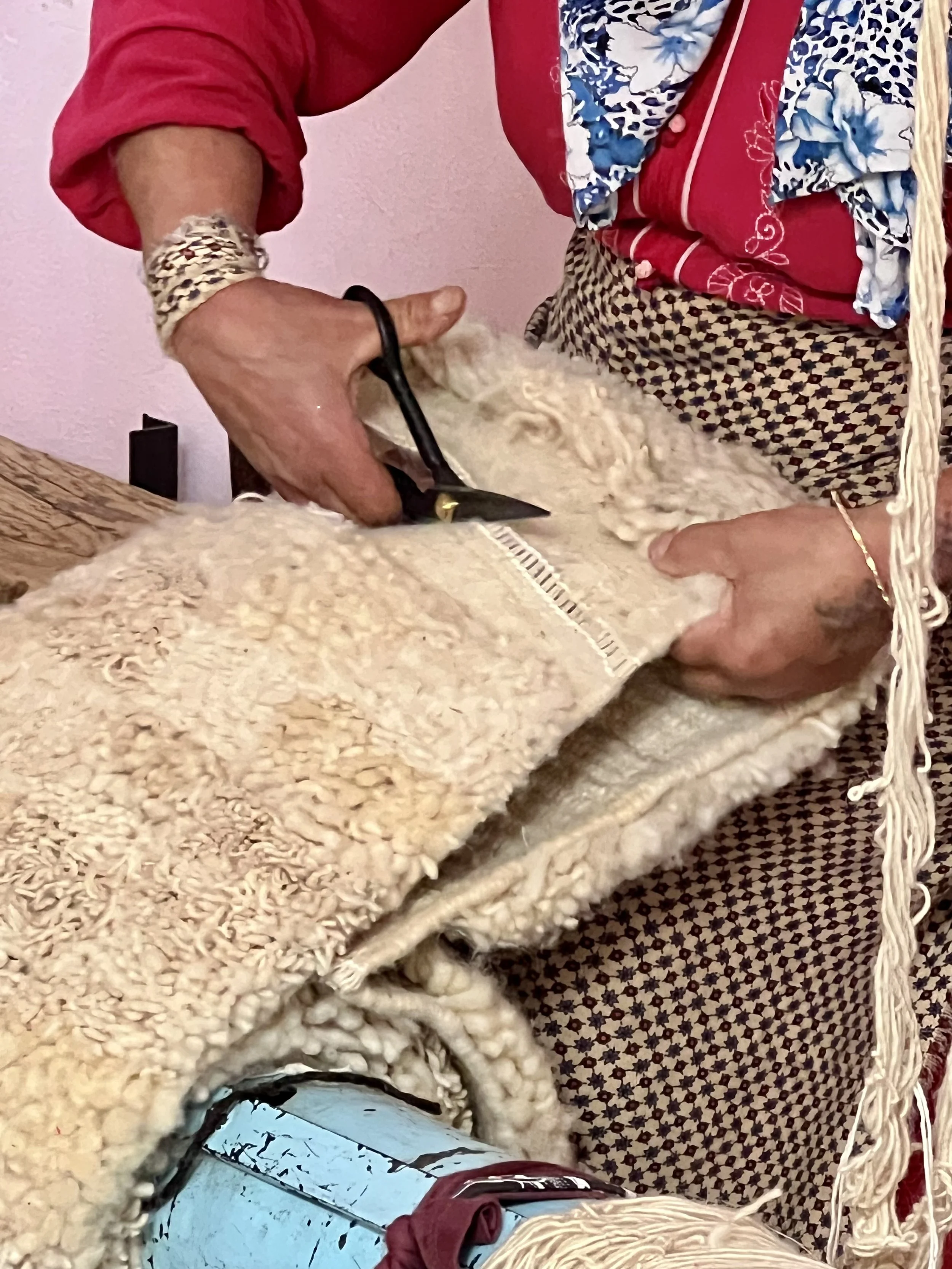
The loom, too, is considered animate. In village tradition, you remove your shoes before entering the space where a weaver works, as if entering a mosque. There are blessing rituals before the first knot is tied and again when the carpet is finally cut off. I will never forget the first time I watched that moment: the weaver bringing a pail of water and pouring it over the beater, a kind of baptism before the textile is released. The separation from the loom was both a death—the loom, the wool, and the weaver were now physically disconnected—and a rebirth of the carpet into the world.
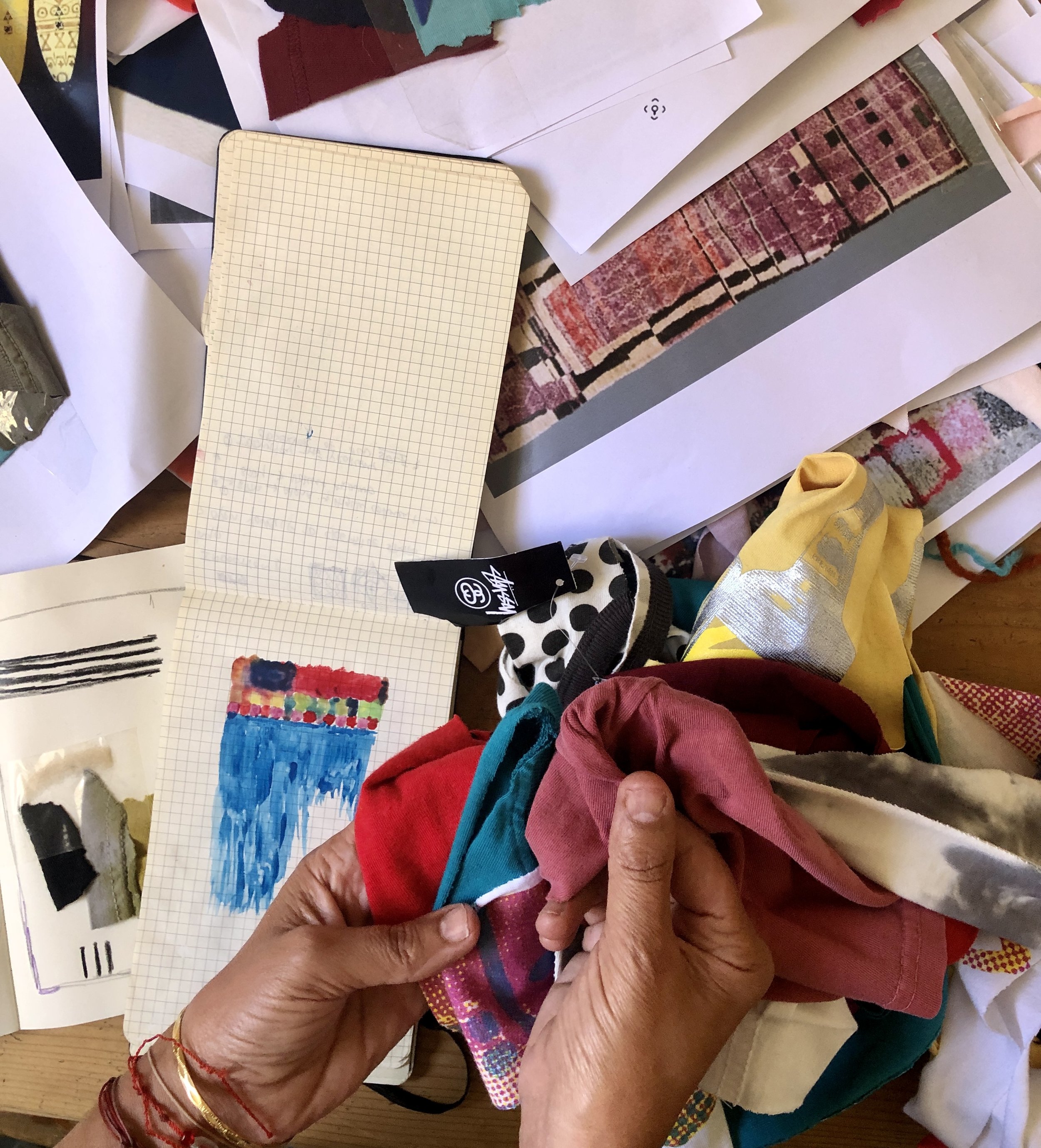
My role sits somewhere between designer, witness, and storyteller. I draw on nature constantly: the landscape around the Middle Atlas and the raw materials inform me, as does the sea near where I live. I think about my grandmother’s olive trees in Palestine and the motifs in tatreez embroidery; I look at the ways Moroccan women weave mountains, rivers, and plants into their textiles. Nature is my shared language with them, and even if our Arabic or Tamazight stumbles, we find our way back to what is shared through our reverence for land and craft.
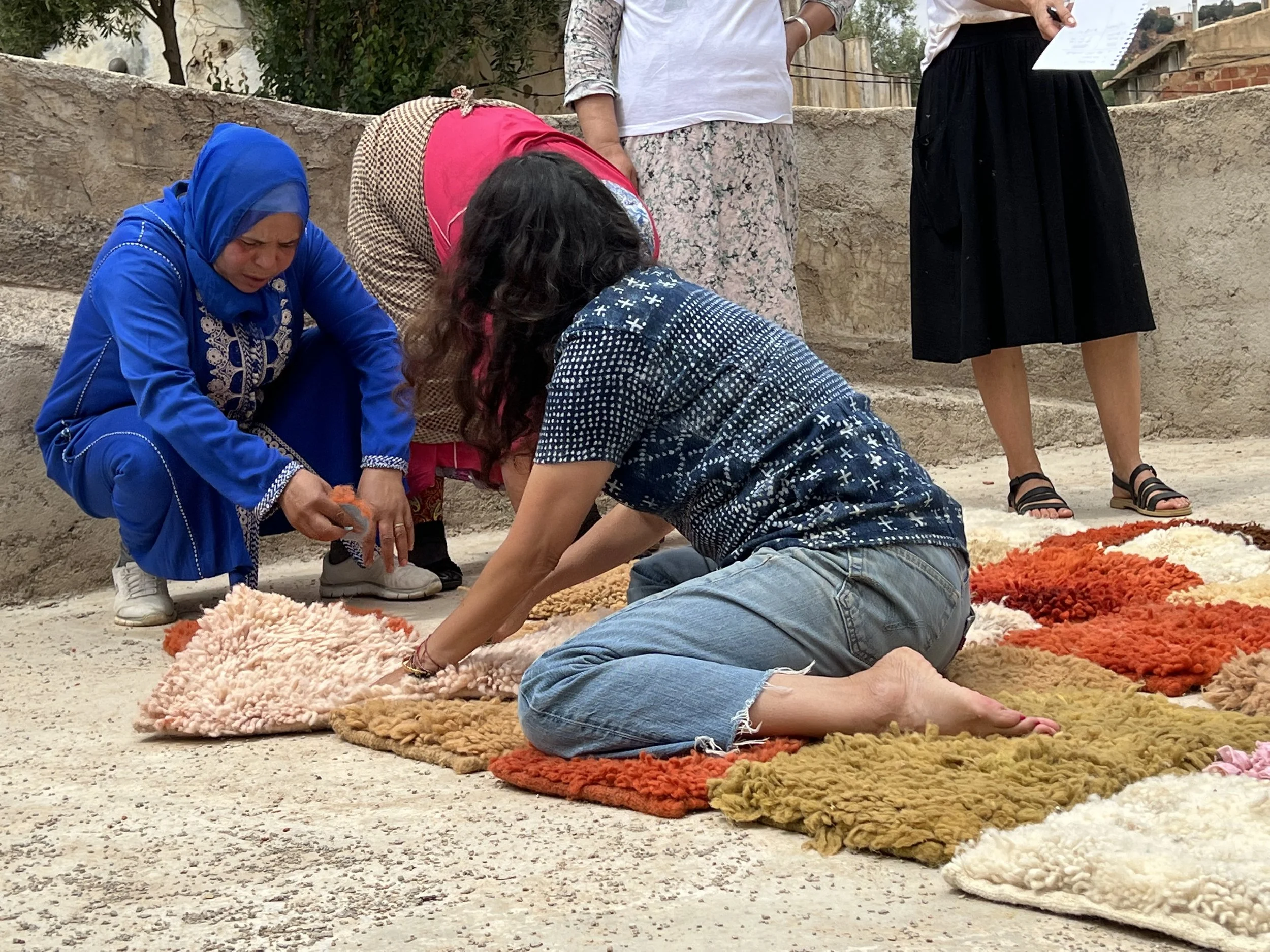
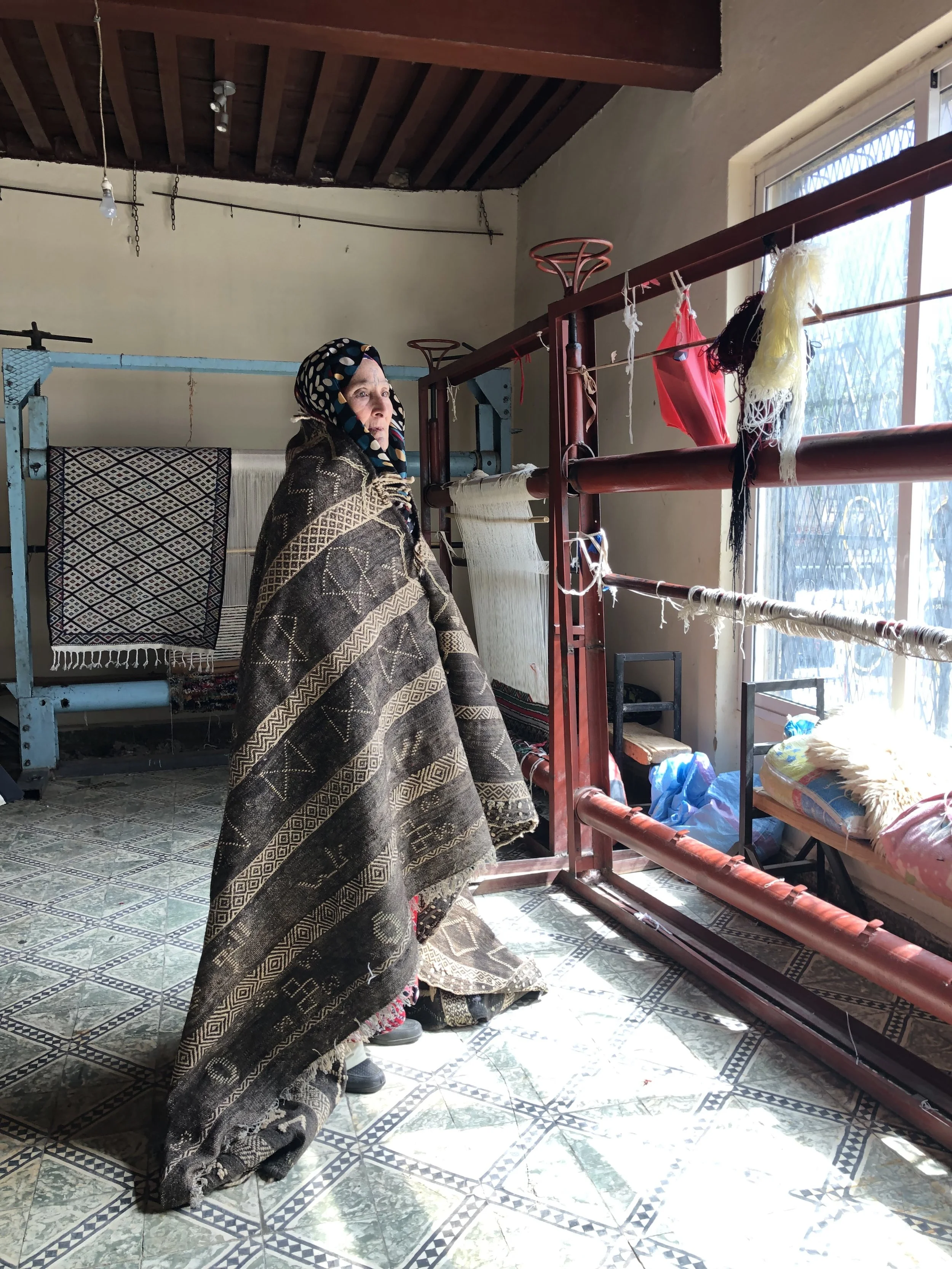
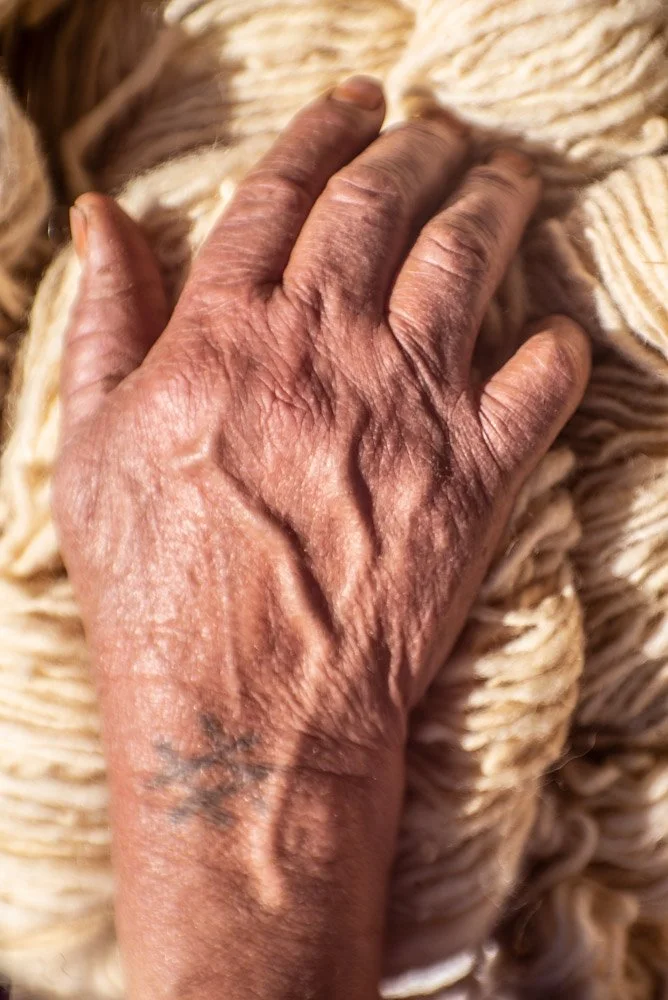
Over the years, my work has become as much about the absent subject as the textiles themselves. Moroccan carpets circulate globally as design objects, yet the women who make them remain largely invisible—faceless “craftswomen” at the bottom of a long supply chain. In a series I called The Song of Yan, exhibited at the Architectural Biennale in 2021 and created with master weaver Khadijah Oushkek, we stripped away the familiar symbolic language and presented almost bare woollen surfaces, with unexpected openings and hidden layers of cloth. These textiles were movements—like movements in music—asking viewers to sit with the realities of weaving and to feel the presence of the maker in the structure of the textile itself.
As a Palestinian, that question of presence and erasure is not abstract. Our history since the Nakba of 1948 is one of dispossession and attempted disappearance, and the events after October 7, 2023—and the ongoing displacement and genocide of my people—shattered something in me. For months, I couldn’t work. Making beautiful objects felt obscene in the face of such horror. I used my platform only to share news and appeals.
But eventually, I realised that silence can also be a kind of defeat. My practice is one of storytelling through craft; I had to find a way to speak as a Palestinian, not just about Palestine. That’s where pieces like The Last Passage and the Roots and Wings project were born.
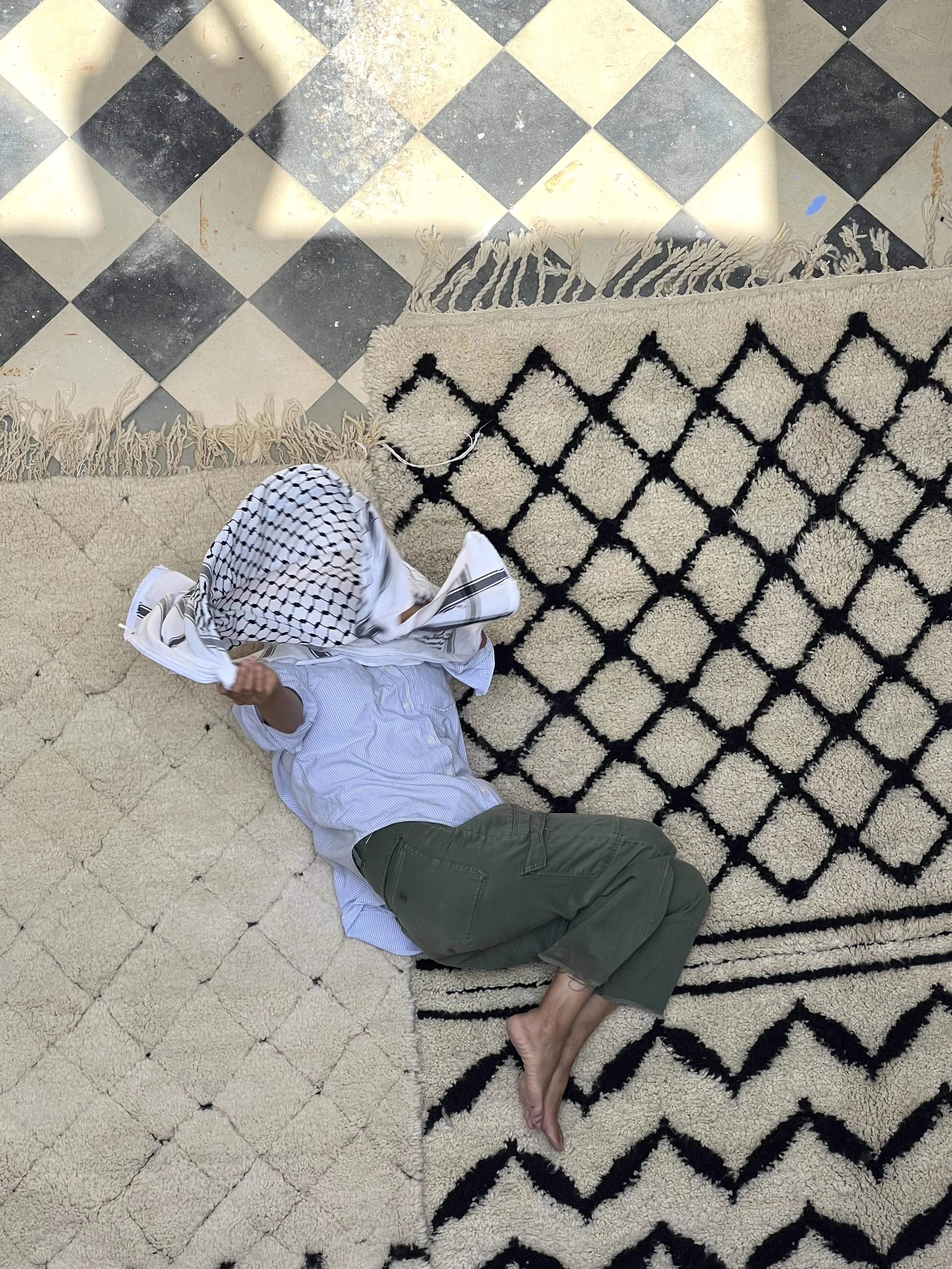
The Last Passage is a white field cut by a red, river-like form—blood, a fault line, a chasm between grief and hope—created in conversation with Mahmoud Darwish’s poem “The Earth Is Closing On Us”. Roots and Wings takes the kufiyeh, a symbol of resistance and pride, and translates its fishnet and olive-leaf motifs into Moroccan-woven carpets. Reinterpreted by me and woven by Moroccan women, the series channels a portion of its profits into relief efforts on the ground. It’s a small gesture, but for me it’s a way of keeping culture, language, and solidarity alive in material form.
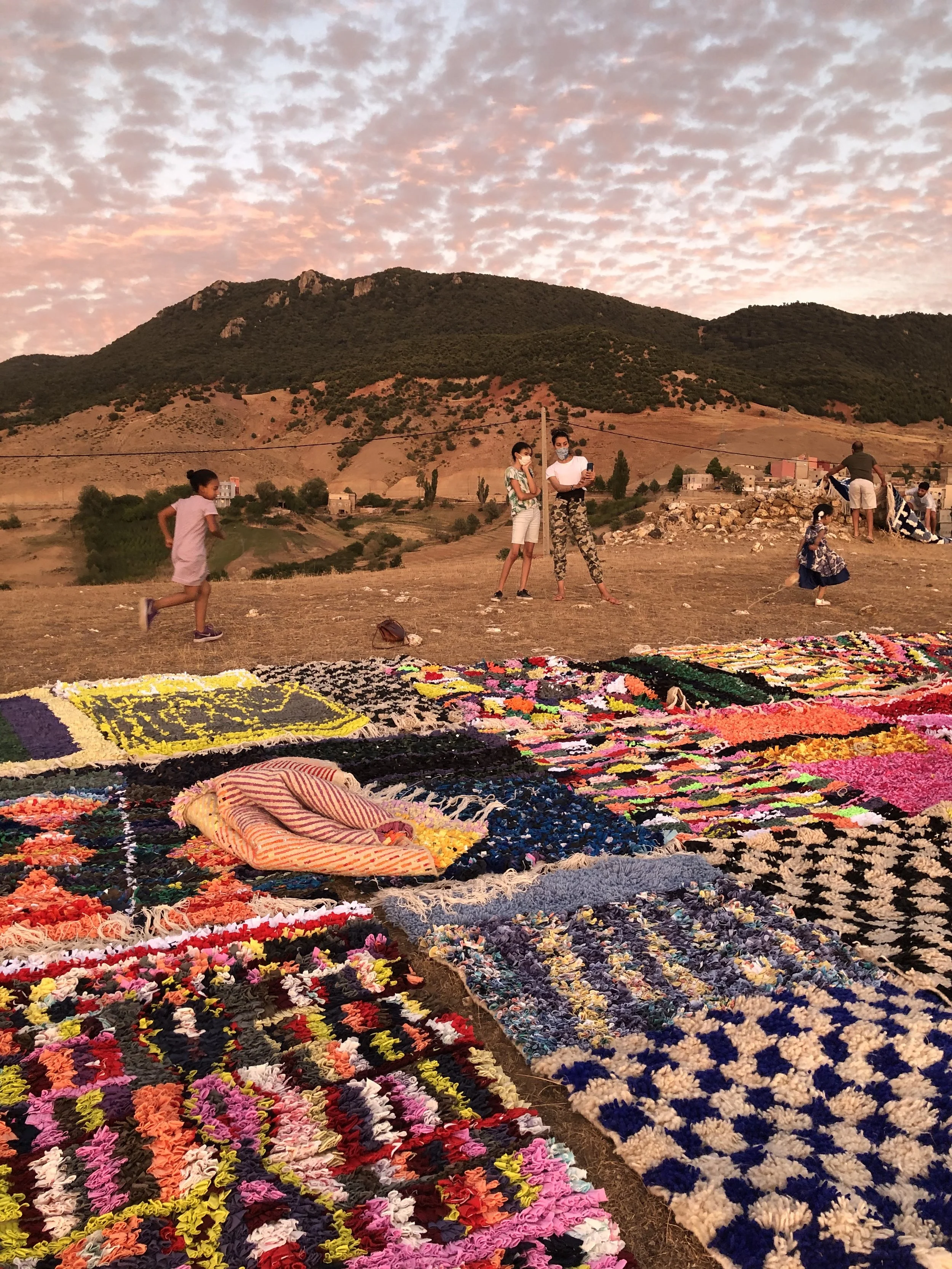
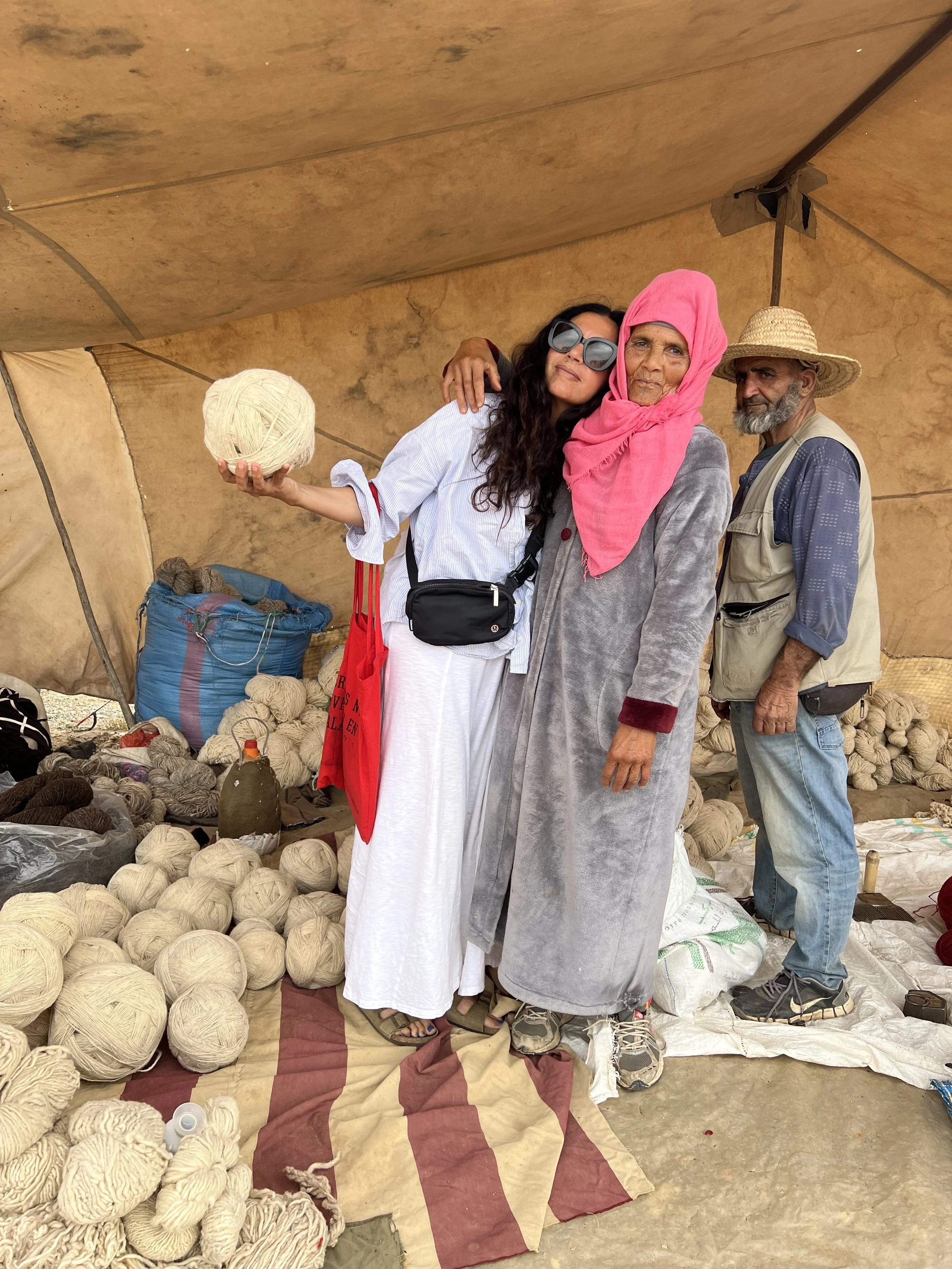
My work often brings unexpected worlds together. Kimono cloth and Moroccan boucherouite weaving meet in a Kyoto exhibition about regeneration; recycled textiles marry native wool in pieces honouring shepherds and the textured nature of wool itself. What looks, from the outside, like a design collaboration is, on the inside, a conversation between my lived experience, my DNA, and many histories: Palestinian farmers and Japanese dyers, Amazigh weavers and California dreamers, shepherds in the Middle Atlas and families sitting barefoot on a rug in a London apartment.
If there is a single thread that holds all of this together, it is my belief that textiles—and craft in general—can restore a kind of heart-connection that the world is in danger of losing. When I sit on the floor next to the dye pots, my hands and clothes stained with colour, the weavers laugh at me. We eat together, we cry over the news from Gaza, we tease each other about our children. In those moments, I feel myself returning to that childhood circle of Palestinian women embroidering their dresses and sipping bitter Arabic coffee.
Above all, I am a storyteller. Craft is just one of the languages I speak. Through Artisan Project, through collaborations with Amazigh women, through carpets that carry the memory of sheep, soil, and songs, I try to bring the stories of makers—and of my own people—into view. In a world that rushes to consume the object and forgets the hands that made it, my work is an invitation to slow down, to listen, and to remember that every textile is, in some way, a living archive: of land, of labour, of love, and of resistance.