Tsawwar x Iraq Photo Archive
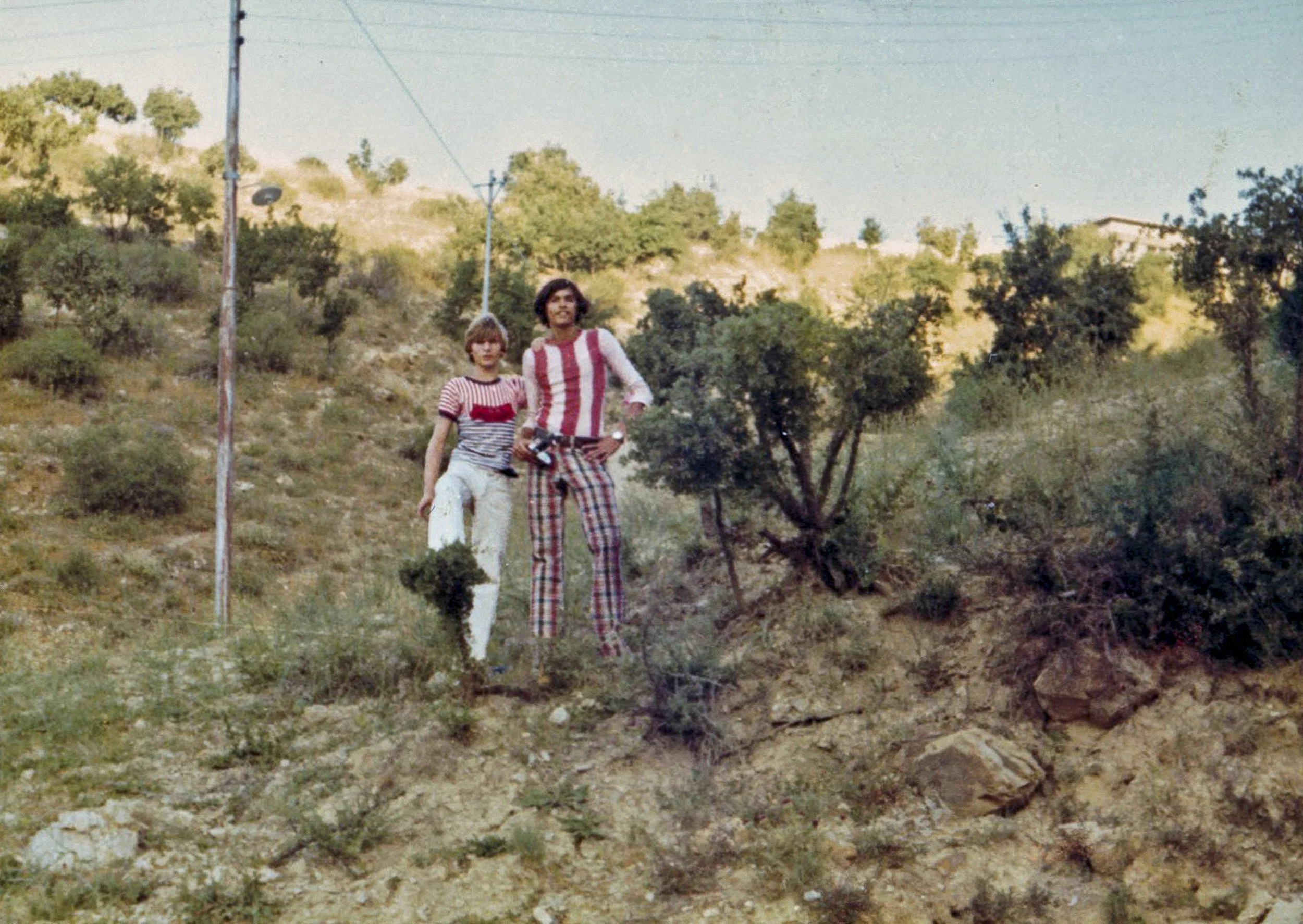
Süleymaniye City, Northern Iraq, Summer 1976
“The photo shows me, Idris Jassim Al-Oboudi (right), with my beloved brother and lifelong friend, Ali Abass Al-Baghdadi. A selected number of first-generation students at The Music and Ballet School in Baghdad (which was established in 1968) were invited by the school administration to visit and tour northern Iraq for a multiple-day field trip for team building, bonding, etc. The first full-length Iraqi ballet, The Magical Wings, was performed by the school in 1974. The first full-length Iraqi political ballet was performed in 1977 and was titled ‘The Rebirth and Marchا.’ Ali and I had major roles in these two ballets. Ali Abbas Al-Baghdadi left Iraq to Switzerland in 1977. We have a very strong friendship, remain in touch, and have visited each other throughout the years. In my understanding, Ali could be the only Iraqi that completed a long professional ballet dancer career. He has retired recently and we are planning some great travel adventures together.”
— Courtesy of Idris Jassim Al-Oboudi (إدريس جاسم العبودي)
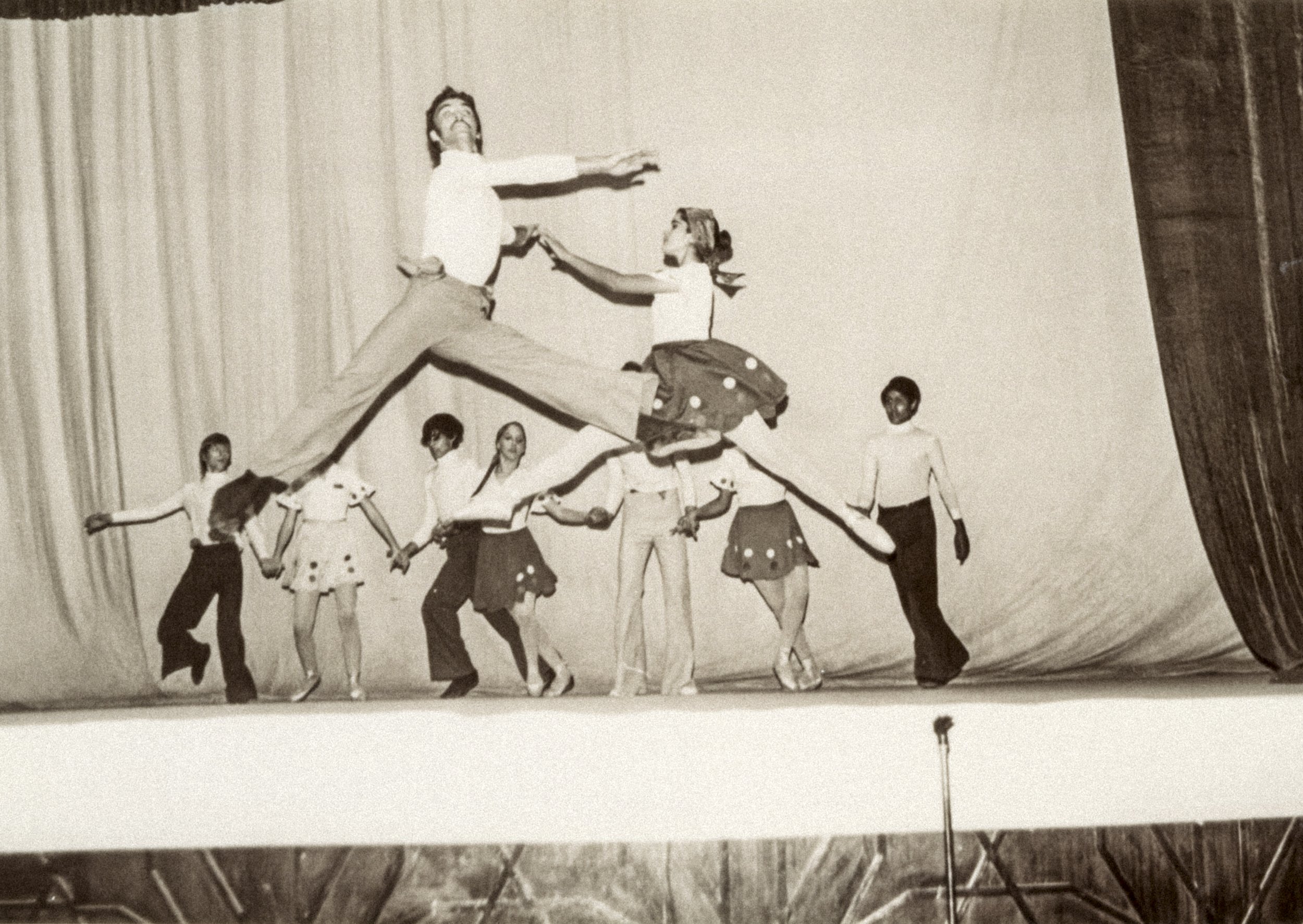
Al-Khuld Hall, Baghdad, 1976
“The person up in the air is my beloved brother and friend Nasser Ahmad Asamarai. A little bit older than us, he came earlier than all of us to the ballet school and was the only remaining male ballet student from the first group — that's why he's bigger than all of us. A talented guy, crushed by his family’s lack of support to continue his education and career in ballet, he graduated from the school and earned a scholarship to study ballet in Russia/the Soviet Union, but after some challenges and family pressure he returned to Iraq. The devastation of eight years of the Iraq-Iran War, the 1991 war, and the sanctions thereafter impacted Nasser heavily in all aspects of his life. He became very depressed and neglected his health. We lost him at the young age of 50 in 2010, and losing him at such a young age was devastating to all who knew him. Nasser was a kind, gentle, loving, caring, fun-loving, gracious and generous human being, and a talented top dancer, with a lovely spirit. I mourn my brother’s loss and miss him so very very much.
Up in the air next to Nasser is my wonderful friend Thikra Munim, who is still alive and well in Baghdad. She completed her scholarship to the Soviet Union, returned to Baghdad and taught ballet at the school for some years after her return. The heavy weight of bureaucracy at the school, coupled with the departure of the expert Soviet teachers caused the school to drift away from its core values, vision and mission. It became very difficult for her and many other teachers to maintain the high standards at The Music and Ballet School due to a lack of true support. The school is yet to recover from decades of devastating wars, sanctions, upheaval, lack of government support, and changes in society.”
— Courtesy of Idris Jassim Al-Oboudi (إدريس جاسم العبودي)
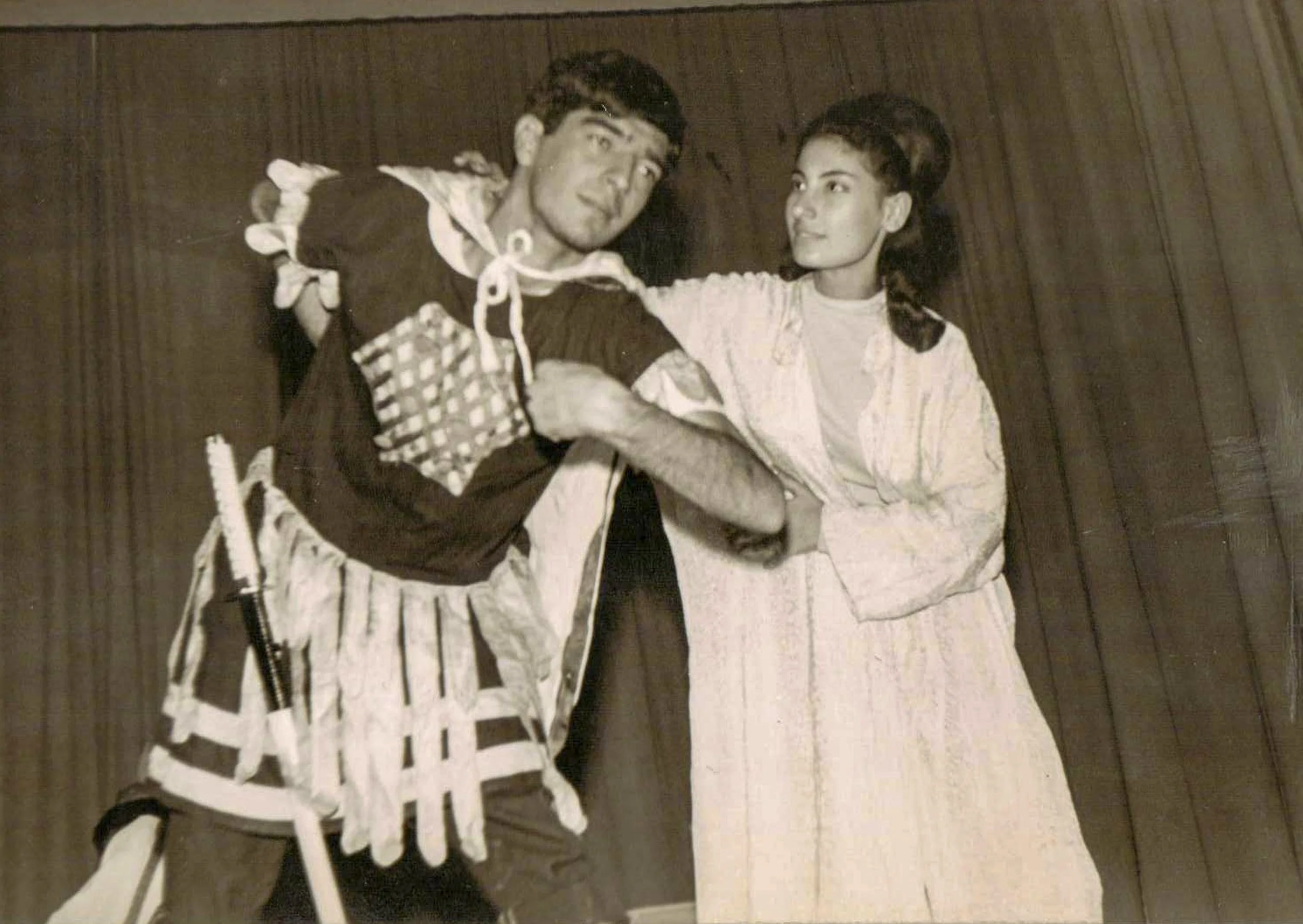
Baghdad University, 1964
“This scene is from a play called ‘Nebuchadnezzar’, which I wrote in 1964, I think. It's a funny thing: I play the chief of the army — the general. When I came to Iraq in 2003, some people told me it is still performed.”
— Courtesy of Muafaq Wafi
This special Tsawwar feature is a collaboration with the Iraq Photo Archive, a crowd-sourced collection of images of Iraq submitted by Iraqis around the world. The collection is currently interested in images from across the 20th Century, and aims to create a space of representation where authentic images of Iraqi life and culture can be shared and celebrated. It welcomes submissions of any size and is open to research, collaboration, and exhibition opportunities. All images remain the property of the contributors.
The archive was created in 2019 by Basil Al-Rawi during the first phase of his practice-based PhD research at the School of Simulation and Visualisation at the Glasgow School of Art. It formed part of a participatory project which invited contributors to take part in a filmed conversation about their memory of a photographic moment, giving voice to intangible and visually unrepresented elements. These recorded conversations, together with the original photograph, were remediated into a digitally constructed virtual memoryscape called House of Memory.
The ongoing project is concerned with building collective community histories and counter narratives, forming wider understanding of Iraqi stories beyond one-dimensional media representations, and challenging the dominant representation of Iraqi environments and culture within computer generated media such as video games.