The Invisible Iraqi Music Legend
Written by AL SHAIBANI & Mohammed Masoud
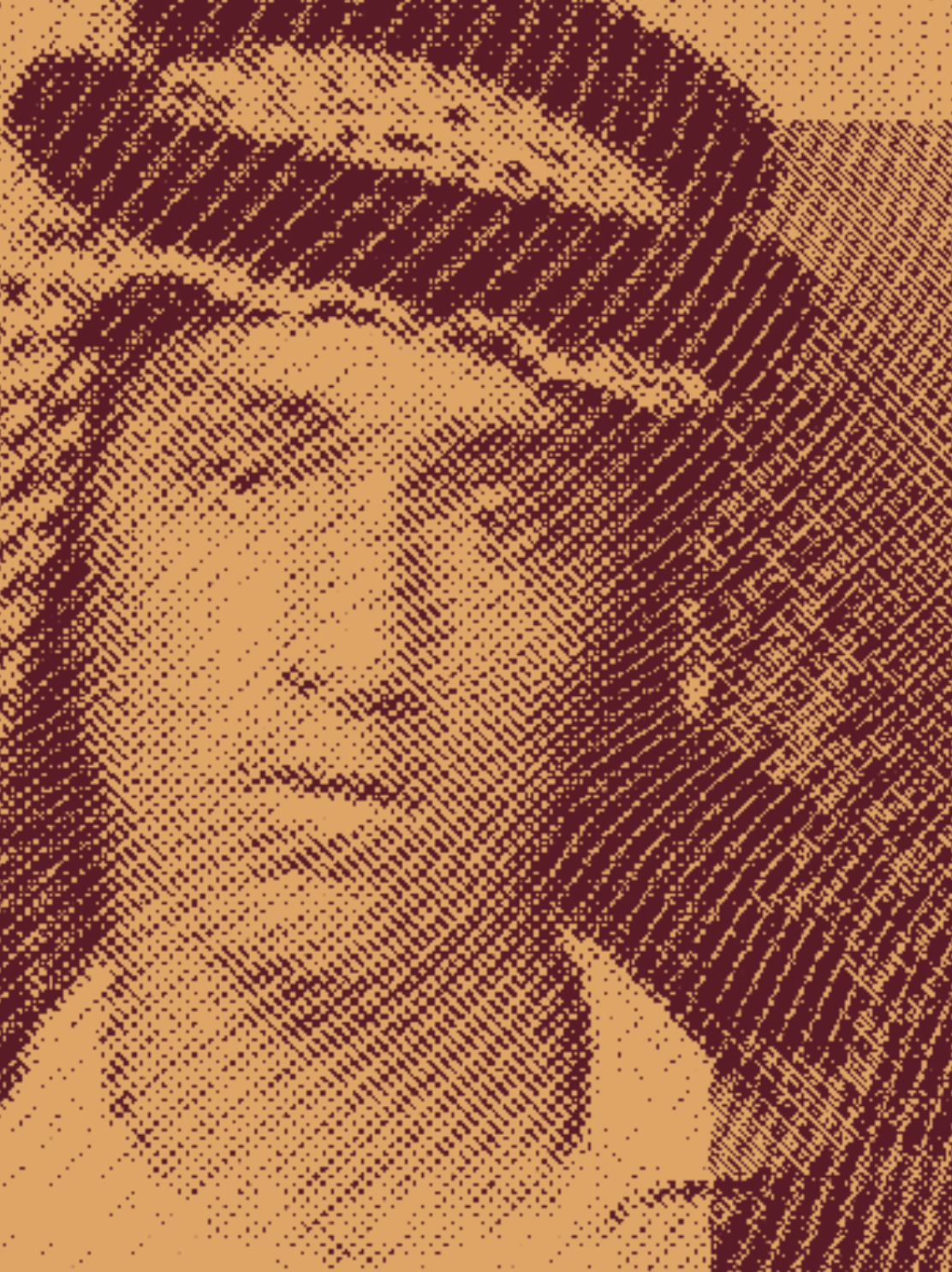
There’s a foundational figure in Iraqi music: a singer who composed original melodies, whose voice shaped generations of musicians, whose songs are still sung today, and yet, whose image and identity is surrounded by question marks. There are no photographs of this icon, only a composite sketch from a few written descriptions. And even then, it’s mostly guesswork.
This erasure doesn’t match the fame: a singer this influential, this legendary would be and should be more documented.
In 1889 (or in 1901 depending on other sources) Masouda was born in Al-Kahla, a village in the southern Iraqi province of Maysan, surrounded by sprawling farms stitched along agrarian canals. She came from the lowest class: an enslaved Black family in service to a local sheikh. He very much liked Masouda and trusted her to tend his flocks. The stories from the village describe her as rather tomboyish: carrying herself with strength and bravery. Someone with strong features, dark skin and masculine traits that were praised in that time and in that place.
Then came the story that made her famous.
Masouda was 18 years old, with the flock out in the countryside, when two men began to follow her, and then harass her. But Masouda fought back. She beat the two men, tied them up and dragged them, humiliated, back to her master’s house. It was there that the two men confessed in shame about what they did and said they were lured by her beautiful voice. In defending her honor, her bravery but also her singing voice made her famous.
From that day, Masouda’s singing accompanied every festivity, every gathering. Despite her being illiterate, Masouda composed original melodies and songs in a number of genres. And this was part of a bigger movement: most of Iraqi music genres (like rifi, abudiyyah, pestah) originated in the countryside from shepherd and shepherdess singers.
Her sister then recommended for Masouda to move to the bigger city of Al Amarah, which was more than just a bigger stage, but an opportunity for reinvention and a new identity. Because she was enslaved, she actually didn’t have a surname, so she adopted “Amaratly”. And in Al Amarah, Masouda discarded feminine clothing, started wearing men’s traditional attire (a headscarf and yashmagh), and chose a new name: Masoud El Amaratly (مسعود العمارتلي).
Whether this was his true identity or for survival, the move erased both the past and constraints of the village. There are rumors of why he had left his home (love, jealousy, marriage proposals) but what is certain is Masoud’s talents flourished in Al Amarah, performing at the houses of sheikhs and salons of the city’s soirées.
Masoud mastered two principal genres of Iraqi music: the first was abudhiyah, which is a tradition of lament and sorrow, the very name deriving from the word "ابو أذية” or “pained". These songs stretch longer than 15 minutes, sometimes 20. And each song would start purely instrumental, creating a mood and painting the emotional landscape with sound. Then the singing would start, mournful and filling the hall with melancholy.
The second genre Masoud mastered was the basta: shorter, faster, and rhythmic. These were palette cleansers, used between the longer songs to shift the mood or to close an evening with joy and movement. Songs you could dance to that lifted the spirits. And Masoud became well known for both, in his southern Iraqi countryside dialect.
This was the era of Shellac vinyl, when radio waves were coming onto the shores of the Iraqi social scene. So someone at Masoud’s performances suggested he goes to Baghdad to record his music. And Baghdad broadcast Masoud’s fame. Vinyl recordings had their limits so his short, rhythmic basta songs were perfect for it.
And from there, Masoud’s voice spread throughout the country and even beyond (he was invited to Aleppo to perform and record there too). And in Baghdad, his house became the place for musicians, artists, creatives, and singers. A salon where parties and celebrations and people gathered.
Throughout all this period, Masoud would wrap his chest, speak in a lower register and lived as a man in 1920s and 1930s Baghdad. Success brought him fame and comfort, but also an invisibility where no one questioned the enslaved shepherdess who has become the peak of society.
In the early 1940s, Masoud returned to Al Amarah. There, he married two women, Shnoona and Chamla. To the world, these were ordinary marriages, but perhaps (if his wives even knew his past) they were something else. And in 1944, Masoud died. Some say it was tuberculosis, others whisper it was poison. Either from a betrayed wife or his master’s wife, still jealous decades later.
While not all of Masoud’s music survives (some is lost or forgotten), many songs still persist today: Suda Shalhani (سودا شلهاني), Thabi al-Abaya (ضبي العبايه), Khadri al-Jai Khadri (خدري الجاي خدري), Buwaiya Muhammad (بويا محمد), Kissa al-Mawada (قصة المودة).
About the Authors
Al Shaibani is an Iraqi producer, storyteller and co-founder of Hekayyatna, a London-based production house dedicated to SWANA and Global Majority narratives. Working across video, audio, and cultural programming, he brings stories to life in both Arabic and English. Al is drawn to the spaces where culture, memory, and community intersect.
Mohammad Masoud (Masoud) is an audio archivist and cataloguer at the British Library, specialising in Arabic sound and music. A Palestinian Jordanian who grew up in the Middle East and is now based in London, he is also the co-founder of Maqam Books, a nomadic Arabic bookshop operating across the UK and Europe. His work centers on the intersection of archival preservation and Arabic literary culture.