The Many Faces of Salah Jaheen: Poetry, Cartoons, and Cultural Legacy
Words by Donya Zikry
Poet, cartoonist, screenwriter—Salah Jaheen was more than an artist; he was a voice that shaped Egyptian culture and society, leaving an imprint that still resonates today. We go back in time to uncover his legacy and the brilliance that made him the icon he is.
Jaheen: The Poet, Journalist and Songwriter
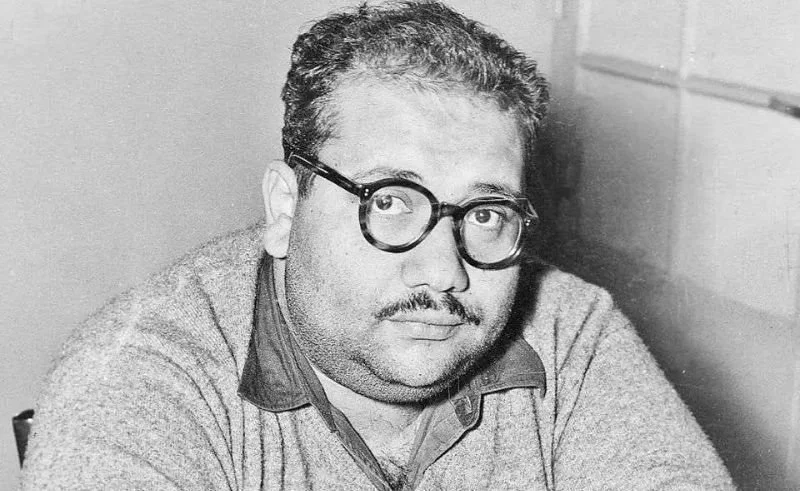
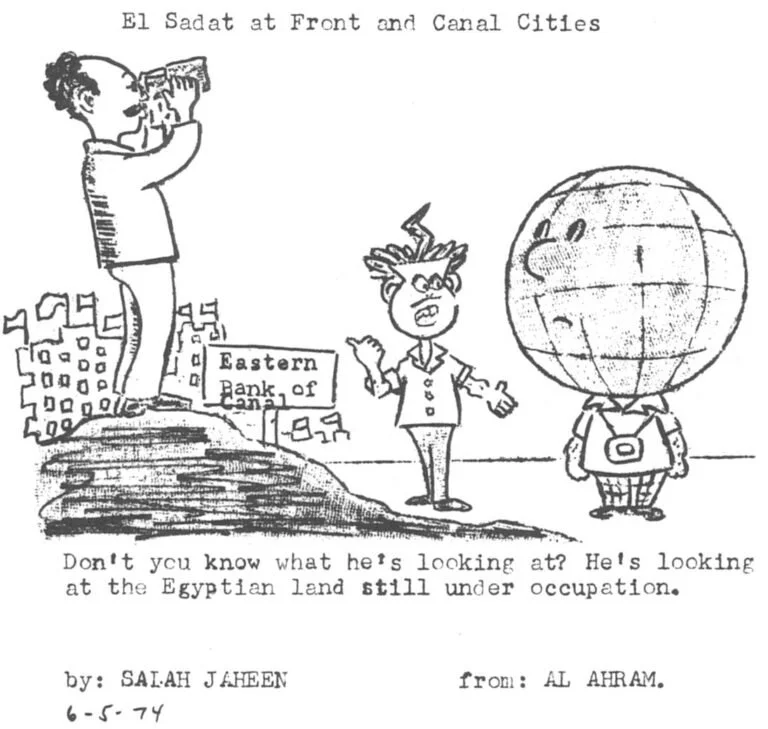
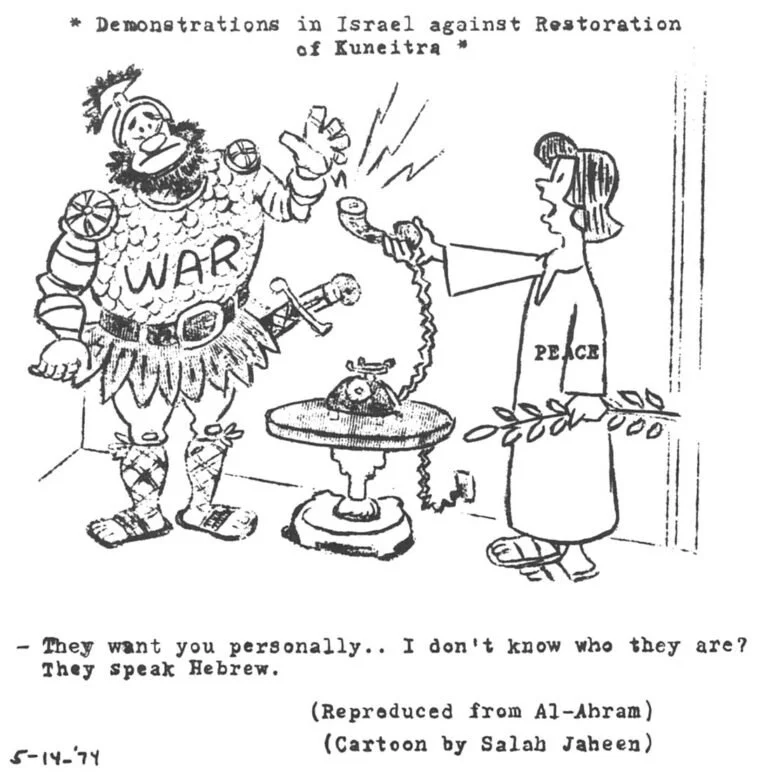
Born in 1930 into an academic family, Salah Jaheen grew up in constant motion. His father was a judge and moved several times with his family to different regions in Egypt. These early years exposed him not only to diverse areas in Egypt but also to the country’s rich traditions and cultures. He rapidly developed artistic talent that caught the attention of his teachers in school as well as his fathers, who encouraged him to pursue his passion. Although Jaheen followed his father’s path and graduated from Law School at Cairo University, he swiftly moved into the worlds of journalism and the arts. His journalistic career started in the mid-1950s when he started working for the weekly Egyptian magazine Rose al-Yusuf as a journalist and cartoonist. He further professionalized his career at the magazine Sabah el Khair, where he became the editor-in-chief. The 1950s and 1960s were decades of political upheaval in Egypt, defined, inter alia, by the revolution in 1952 and the rise of Nasser’s socialist government. It was in this climate that Salah Jaheen earned the title of “the poet of the revolution”. His works revealed his deep-rooted love for Egypt and his critical engagement with the social and political reality he found himself in. In 1957, for example, he traveled to the Soviet Union and captured his experiences of the journey in the book A Flower in Moscow. His intellectual contestants in the “Nasserist area” were figures like Taha Hussein and Yusuf Idris, to name only a few, who equally engaged with politics and the socialist regime at that time. By 1964, Jaheen’s cartoons and resonant poems were appearing regularly in the newspaper Al-Ahram.
The Societal Dimension of His Poetry
Jaheen’s poetry explored themes of solidarity, social justice, and Egyptian patriotism. The spirit of the 1952 Revolution is also reflected in the songs he wrote, such as Ehna el Shaab (We Are the People), which highlights Nasser’s role, or Bel Ahdan (In the Embrace).
Jaheen also collaborated with the composer Kamal Al Taweel and singer Abdel Halim Hafez: one famous song to emerge from this partnership is called Soura (Photograph). A verse of the song translates to: “A photograph, we all want to be in a photo, a photo of the happy nation, beneath the victorious flag.” This expression of patriotism and pride, tied to the 1952 Revolution, resonated far beyond its time and could even be heard echoing through Tahrir Square in 2011.
Famous Poems, Cartoons, and Jaheen's Impact on Film
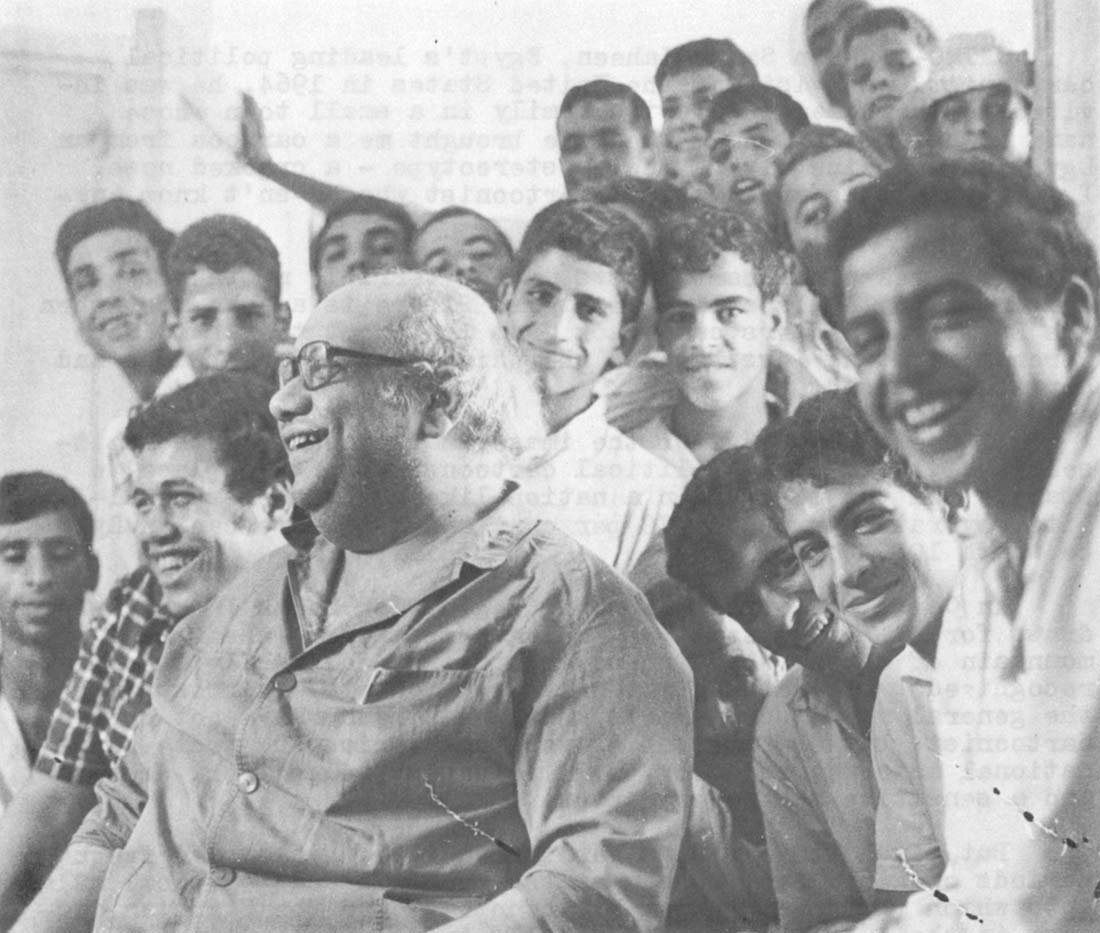
Along with his legacy of more than 161 poems, Jaheen was probably most famously known for his Roba'yat (quatrains). These four-line poems, all written in Egyptian colloquial dialect, became recognizable for their ironic endings with the word “strange” or “how strange”. His poem Ala Esm Masr (In the Name of Egypt), published in 1971, is a compelling piece illustrating Egypt’s history. In it, Jaheen brings to the fore patriotism and his love for Egypt. Years later, his son and grandson narrated the poem. In 1984—only two years before his death—came Angham Septembariya (September Songs), reflecting poignantly on the Nasser era.
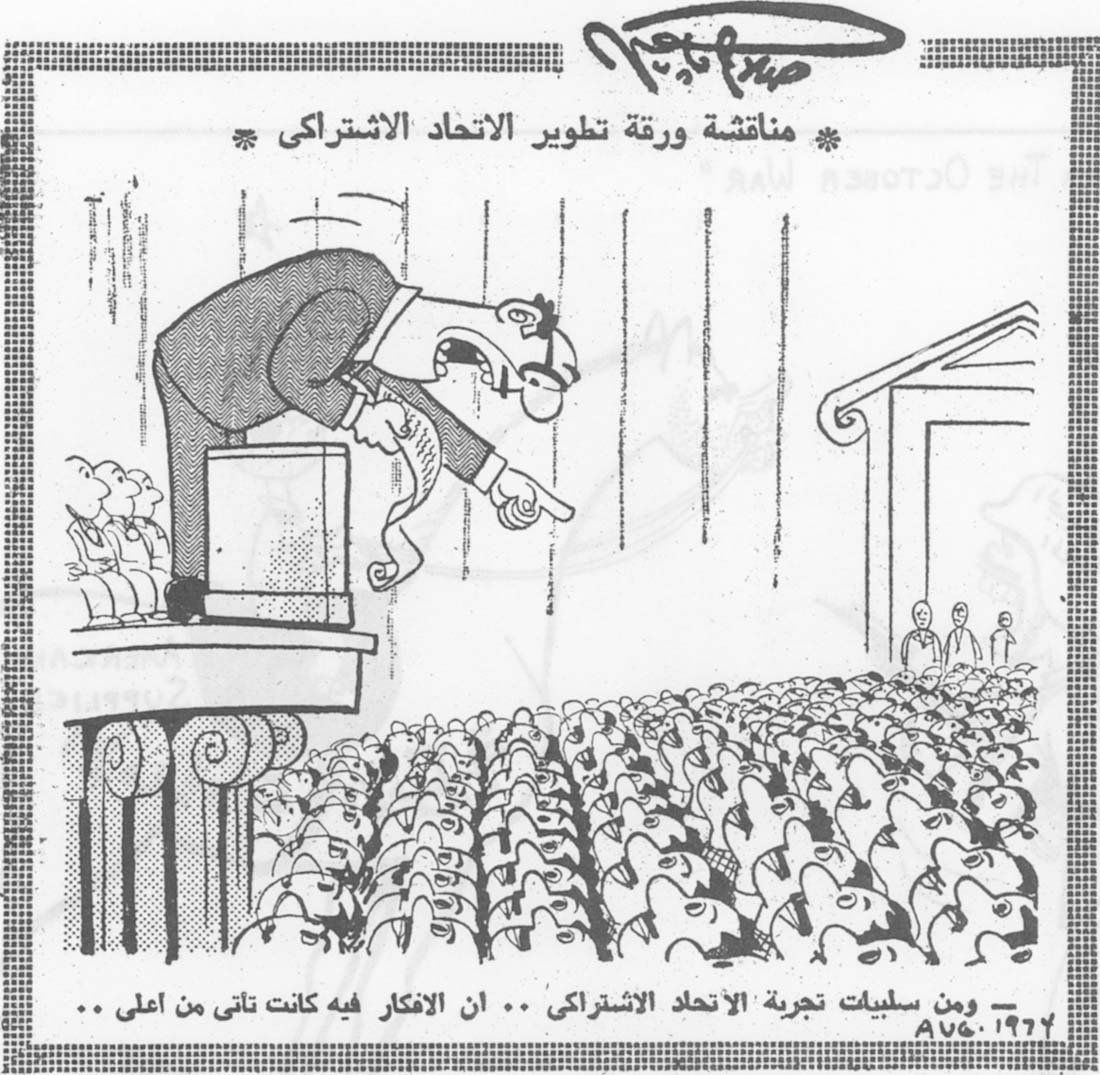
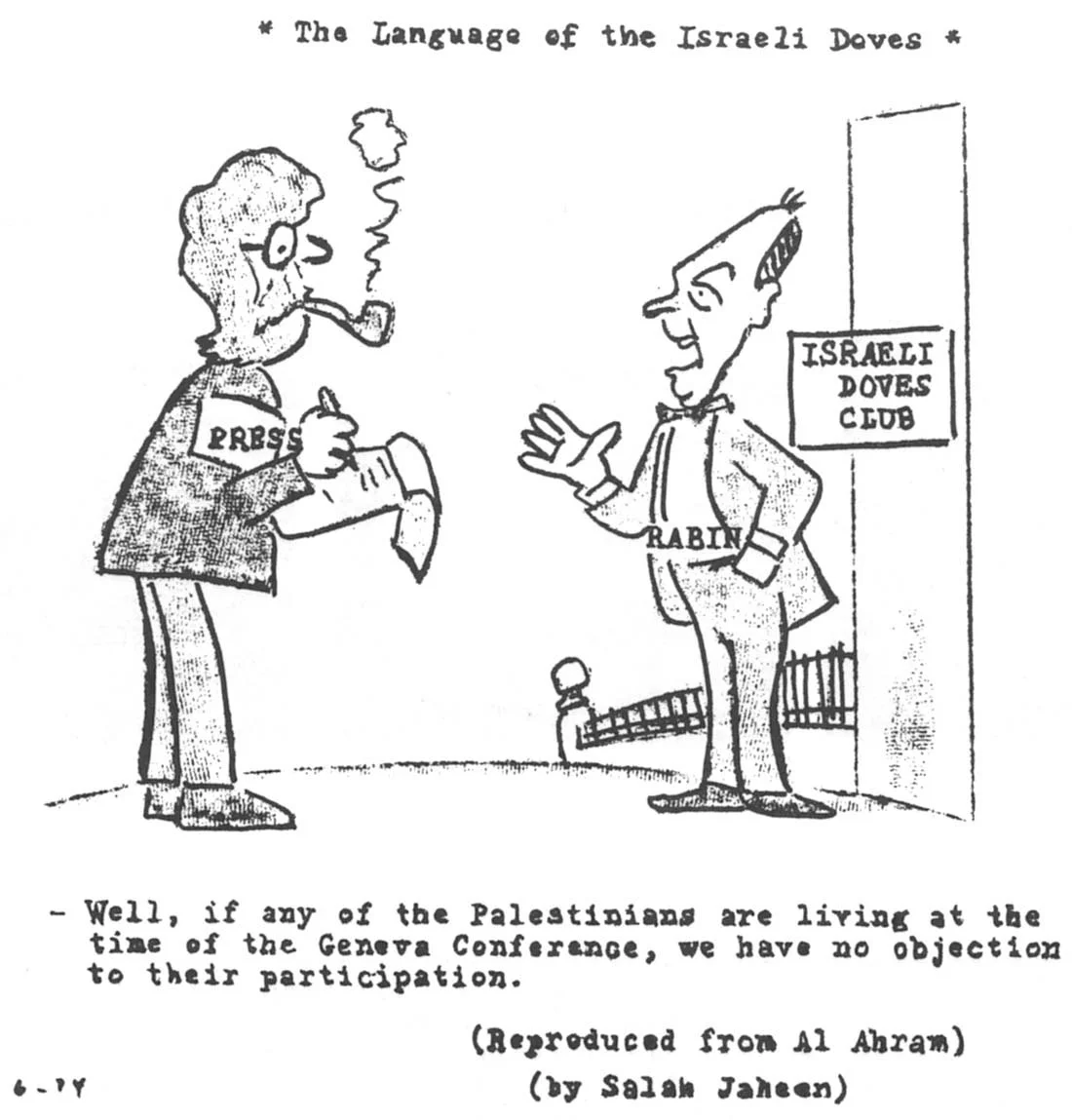
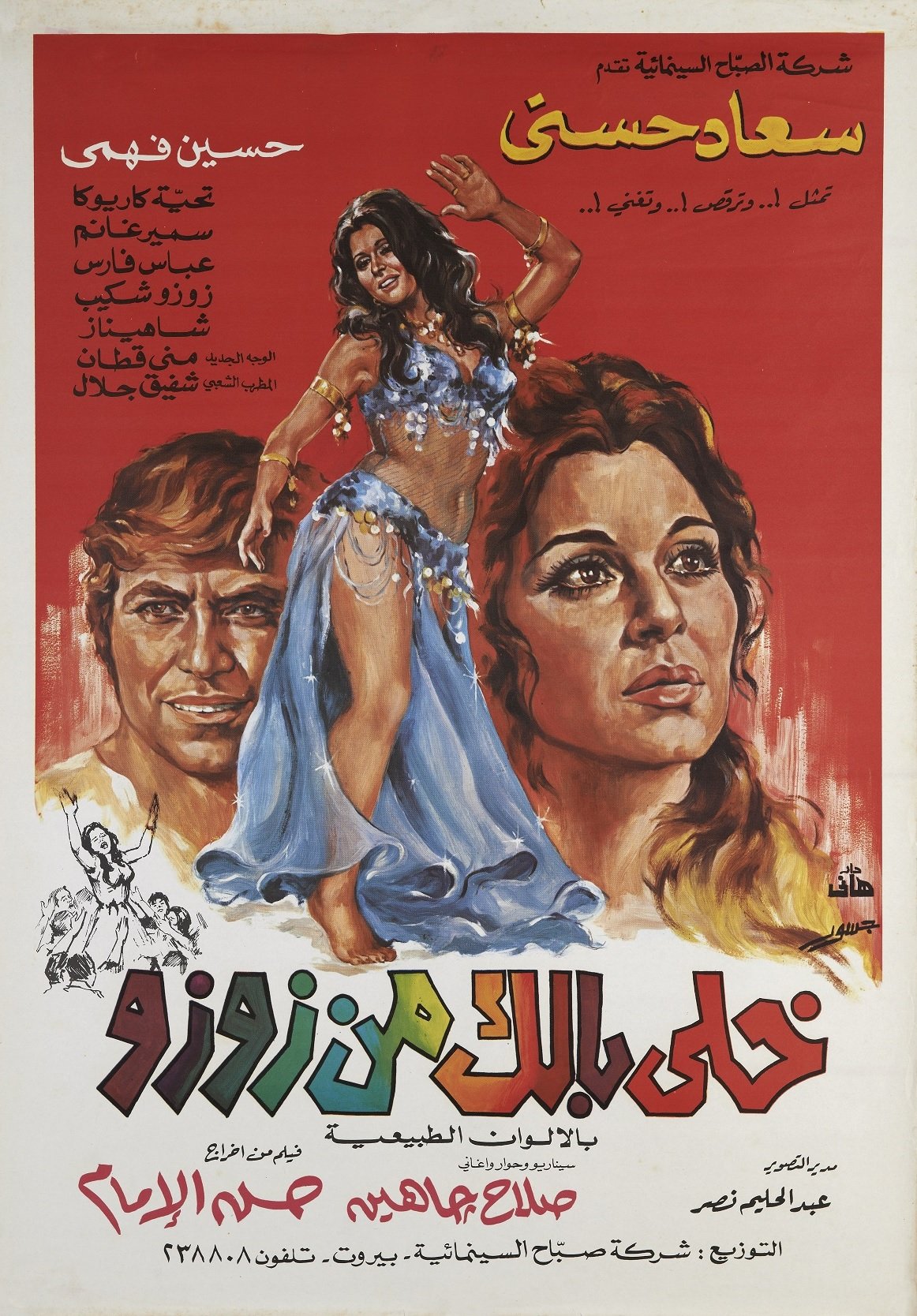
Jaheen is also known as one of the founding fathers of modern cartooning in Egypt. His cartoons were published regularly in the newspaper Al-Ahram from the 1960s until he died in 1986. They offer a reflection and commentary on the political and societal issues that were contentious in Egypt at that time, many of which still resonate today. Beyond this, Jaheen's impact extended into Egyptian cinema. He produced famous movies, including Khali Balak men ZouZou (Take Care of Zouzou) in 1972, starring the iconic Souad Hosny. In the 1978 movie Shafiqa w Metwalli, Jaheen integrated his poetry into the cinema as a screenwriter.
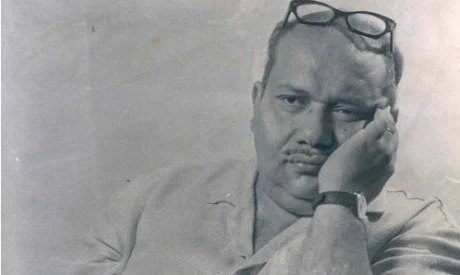
One can say that Jaheen was an artist, revolutionary, and patriot whose works have expressed some of the most sensitive and pressing political and societal issues of his time. Eventually, the political and societal developments deeply affected his mental and emotional state, lasting until he died in 1986. Yet, Jaheen endures as a profoundly influential figure—his legacy is felt until the present day and will certainly resonate for generations to come.