Cleared for Takeoff: A History of Aviation in the Gulf
WORDS BY ROSHNI NAYAR
Fourteen thousand kilometers east, a biological innovation offering luxury for less. Eleven thousand kilometers west, a market crash felt around the globe. Seven thousand kilometers north, a fading empire grasping at its former glory. And the Arabian coast at the center of it all.
Desperate times called for the British to request Sharjah's Sheikh Sultan for permission to build a permanent air station on his territory, complete with a landing ground, fortified rest house, hangars, and wireless facilities. Desperate measures called for Sheikh Sultan to consider the foreigners' request.
The sheikh agreed to come onboard the HMS Bideford to finalise the agreement after months of negotiation, but when the day arrived, he was nowhere to be found. Suspecting evasion, British officials Denison and Dickson arranged a tea party, tempting the ruler with a "grand display of foodstuffs, chocolates, biscuits, cakes, etc."
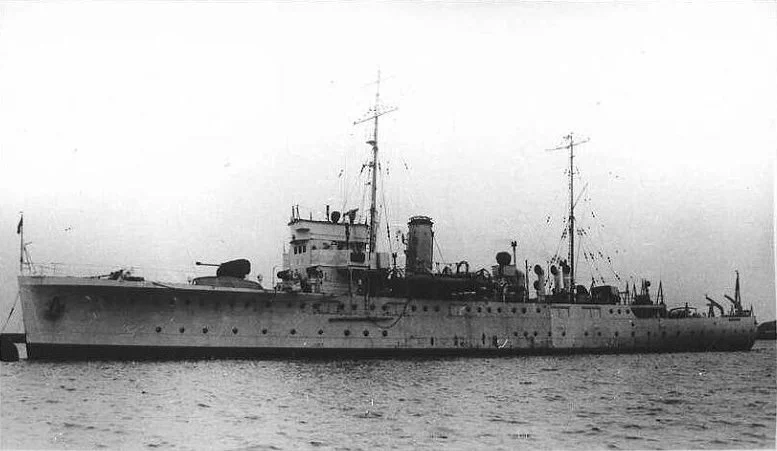
The HMS Bideford.1
Once onboard, the sheikh scanned the Captain's cabin, and requested the signed photograph of King George V, a silver cigarette-box, and a silver-framed photograph of Denison's wife.
Denison declined; the sheikh instead pocketed two silver lighters, a photograph of the Bideford, another silver cigarette-box, six teaspoons, a tin of biscuits, and a cake. Loaded with spoils, Sheikh Sultan then postponed the signing until after his evening prayers.
He lingered on deck with coffees until sunset, and after his prayers, made another demand: a one gun salute, a military mark of honour never before granted to coastal sheikhs, to be fired by every British warship he boarded.
Denison and Dickson acquiesced, and at 7:30 p.m. on June 22, 1932, Sheikh Sultan signed the agreement for the establishment of an air station at Sharjah, thereby initiating the Arabian coast as a gateway for global aviation.2
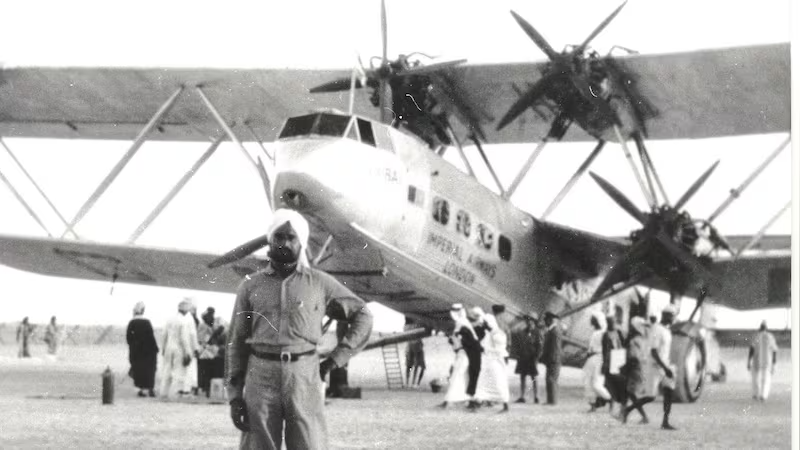
The Hanno, the first plane to land in Sharjah, on October 5, 1932.3
Though long accustomed to British presence at sea, for over a century, this relationship stopped at the shore. Since the 1820 General Maritime Treaty, struck after brutal British campaigns against maritime tribes, Britain had controlled the sea in exchange for staying out of inland affairs. But this 1932 proposal promised a new paradigm: the British wanted the sea, the land, and also the air.
Early aviation activities on this shoreline were met with suspicion and organized resistance, led by Sheikh Sultan himself. "Do not be deceived by worldly gains," he pleaded in a 1927 letter to coastal rulers, urging them not to cooperate with the British, "[for] fire is better than disgrace."4
Ultimately, material necessity smothered his adamancy. The 1929 Wall Street crash and the spread of Japanese cultured pearls gutted demand for natural Gulf pearls, and by 1930 Sharjah's fleet had collapsed from 2,000 boats to just 45.5 Thus, when British officials offered rent in return for access to his flat terrains, these dire straits forced Sheikh Sultan to the table.
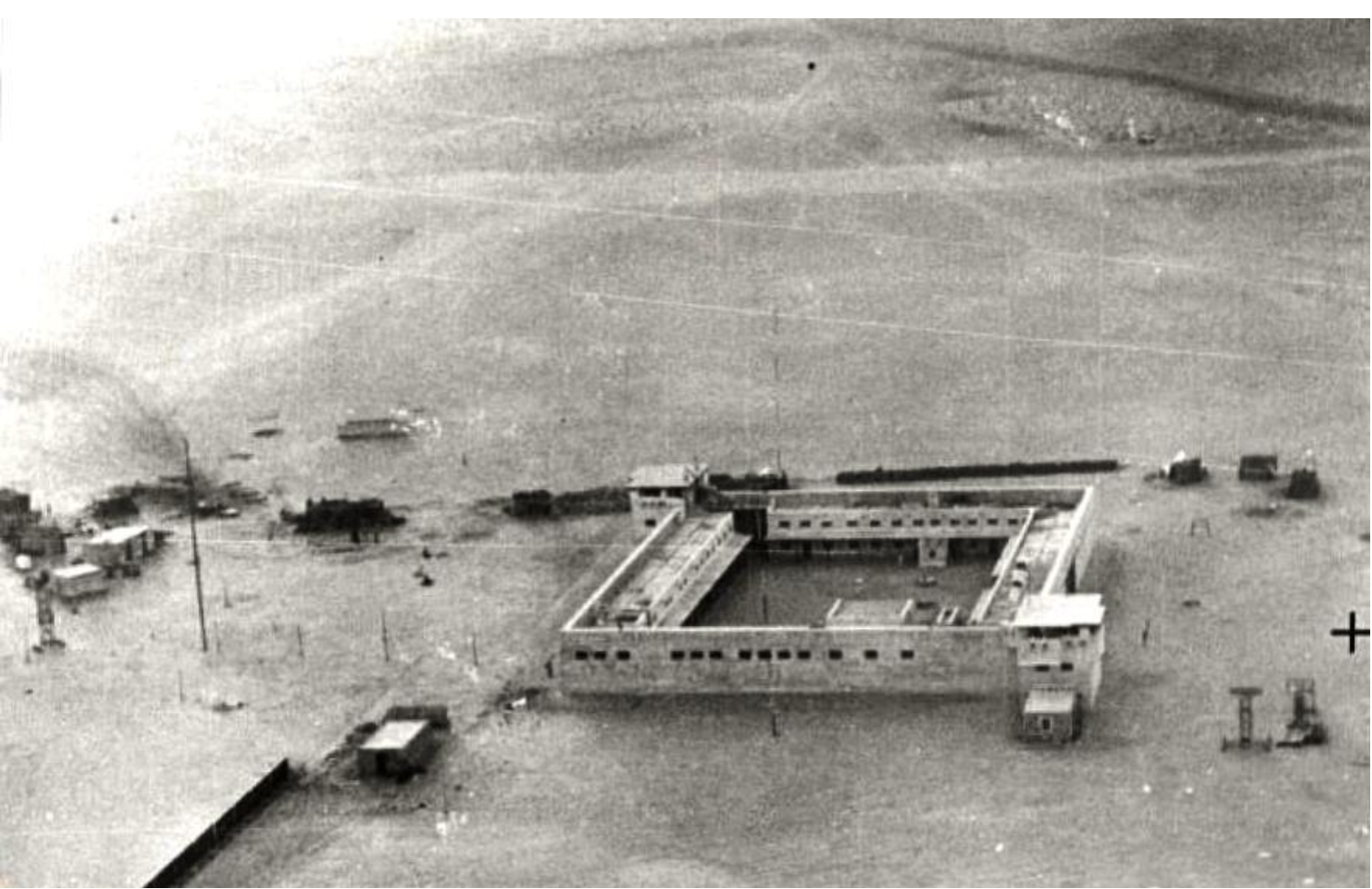
The Sharjah rest house and landing ground.6
But desperation was a two-way street.
In the interwar years, aviation was Britain's lifeline to tether together its scattered empire. 1930s aircrafts, with their limited flight distance and frequent refuelling needs, meant air travel was less of a single leap than a series of hops between isolated outposts. Of two initial routes proposed from Britain to India, one through Iran and the other across Arabia, ultimately neither proved viable. When Reza Shah ousted the British from the Iranian coast in 1932, they were unwilling to risk a similar confrontation with Ibn Saud's Arabia.7
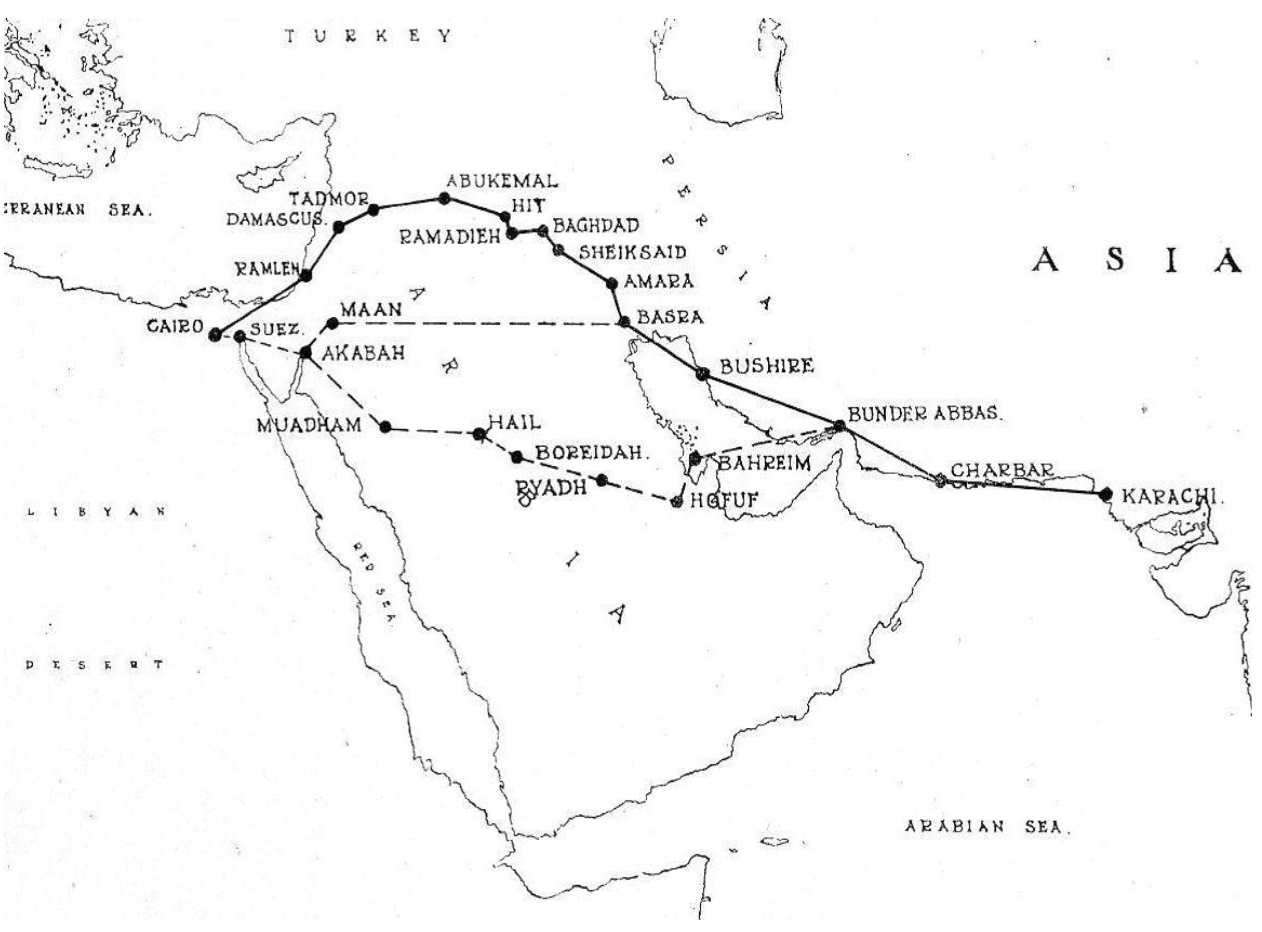
Air routes between London and Karachi in consideration by the British government in 1919.8
Pinned between the Persian coast and Arabian interior, the British were forced towards the Arabian edge of the Gulf, perceiving it as having suitable topography and a malleable sense of sovereignty to host British facilities.
In reality, coastal sheikhs had only a few negotiating levers, often resorting to tactics of delay, prevarication, and haggling. But by "exasperating" officials, they revealed British desperation.9
Sensing these sentiments, coastal elites bargained for favourable terms despite their limited resources. Sheikh Sultan would only host a British air station if he received a monthly rent, landing fees, a personal subsidy, and local control over the security at the rest house, along with the demands he'd made onboard the Bideford.
Although monumental, the Sharjah Agreement was only the beginning. With oil discovered in Bahrain just days earlier, Britain scrambled to build a network of fuel stores, emergency landing grounds, and wireless facilities along the coast. Yet, they encountered the same tactical resistance at every turn.
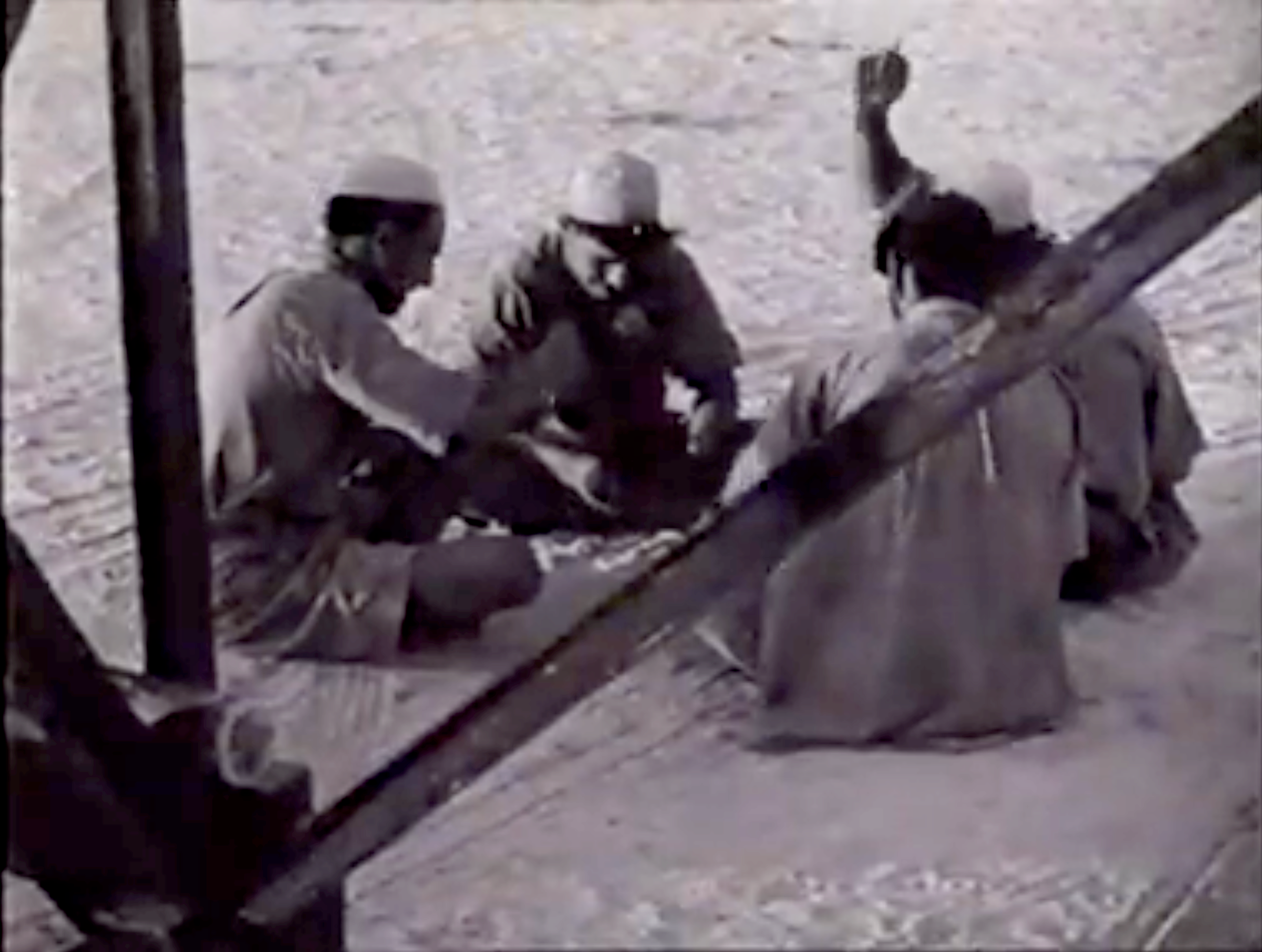
Still from Air Outpost depicting crew playing cards at the Sharjah air station before a landing.10
Sheikh Saeed of Dubai, for instance, vehemently refused to store fuel in his port, later writing that "all my people decline to agree to it" and expressing fears that his "people would attack him if he allowed a store to be built." He would concede, however, if offered double Sharjah's rent.11
Abu Dhabi's Sheikh Shakhbut also refused an emergency landing ground. "It will be an emergency landing ground now, which later on will be used regularly," he warned, embittered by unauthorized aviation facilities already built off his coast on Sirr Bani Yas island. He dared the British to "proceed without my consent [...] in the manner they did at Sirr."12 By pulling this gambit, he also dodged accountability when problems arose at aviation facilities, such as locals tampering with fuel stores and guards abandoning their posts in pearling season, by reminding the British that he never consented in the first place.13
Despite these initial hostilities, coastal communities soon embraced the skies. Elites travelled to Europe and India for healthcare, education, and pleasure; entrepreneurs and pearl merchants deepened commercial ties with their neighbors; Sharjah gained global prestige through exposure and promotional material such as Air Outpost, a 1937 documentary centered on its station.14 That same year, the air station moved to Dubai as sea-planes were better suited to its creek, and Dubai also benefitted from this fame.
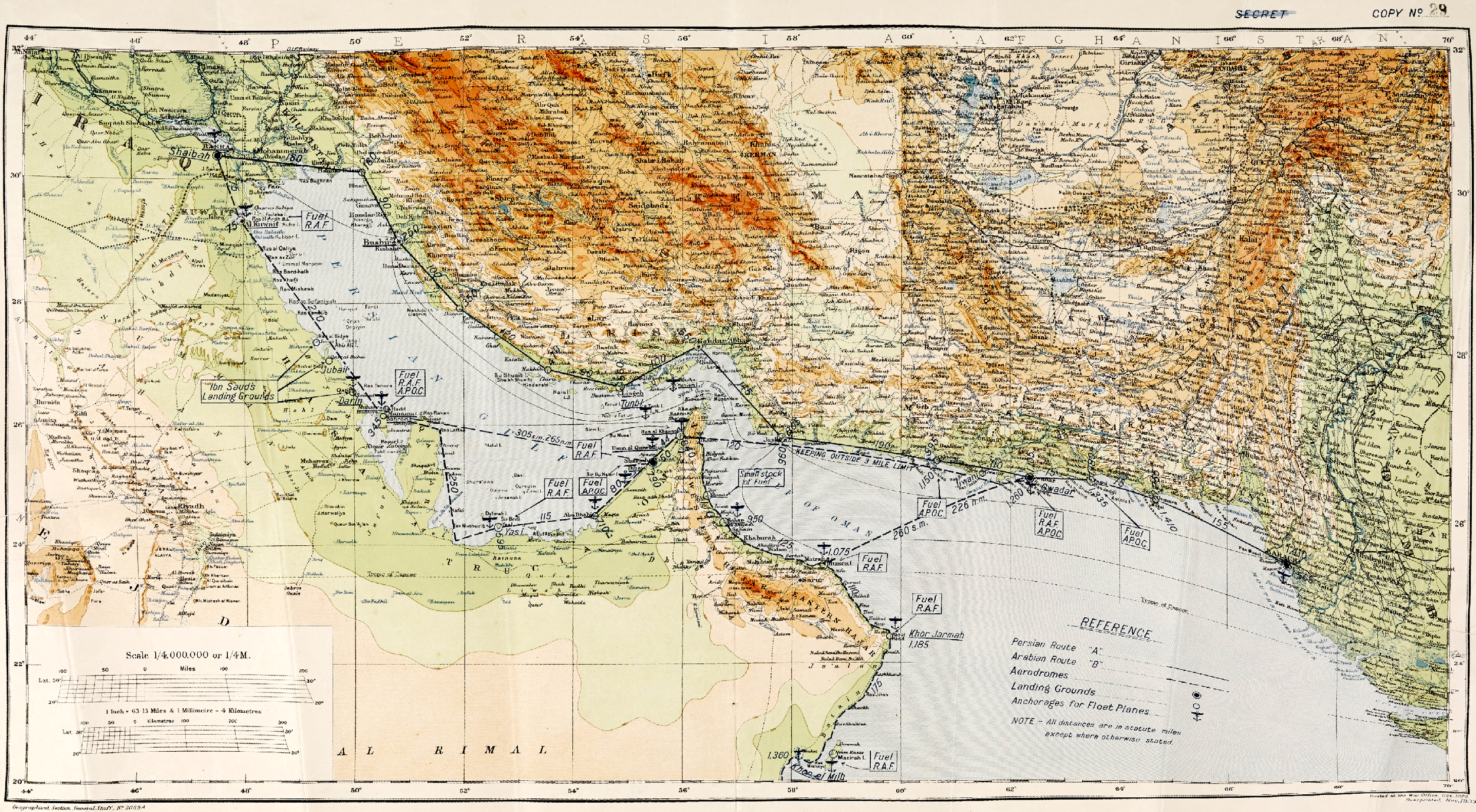
Map of the Persian Gulf showing aviation facilities on Arab and Persian coasts; reprojected to Web Mercator.15
This trajectory peaked during the Second World War, with 70 landings daily in Sharjah. But eventually, the war came to an end. New aircraft with greater range made Gulf stopovers for civil air travel obsolete, and Sharjah's landings dwindled to four military planes daily. In 1947, Britain discontinued commercial service to the Arabian coast, and regional panic ensued as Sharjah was demoted to a mere wireless station.16
Having benefited from aviation for fifteen years, local demand for resumed flights was palpable. When three years later, British pilot Freddie Bosworth launched the airline Gulf Aviation to connect Gulf cities along the previous route, he quickly secured ample local investment.17
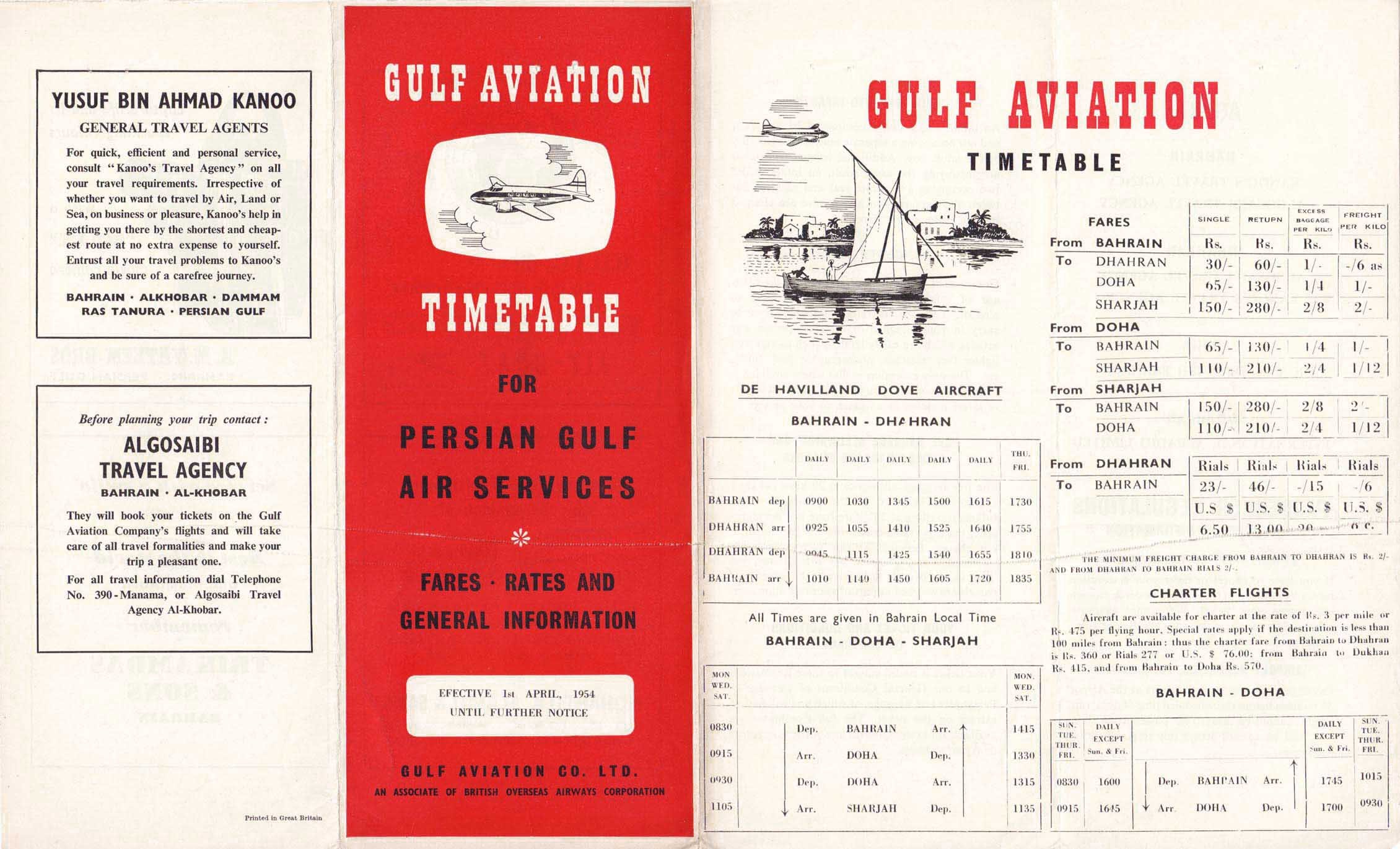
1954 Gulf Aviation timetable.18
The tides of the Gulf continued to turn and the 1820 Treaty, which long governed the coast as a British protectorate, no longer aligned with British nor local needs. Thus, Britain exited the region in 1971, and Bahrain, Qatar, and the UAE emerged as newly independent nations.
Fueled by independence, petrochemical capital, and desire for aerial sovereignty, in 1973, Bahrain, Qatar, the UAE, and Oman jointly purchased Gulf Aviation, renamed it Gulf Air, and each considered it their national airline.
Thus, when Emirates Airline, Qatar Airways, and Etihad were launched in 1985, 1993, and 1995 respectively, it was this coalescence of geographical destiny, imperial legacy, and a half-century of strategic haggling that finally bore fruit.
By reclaiming the land, the air, and the infrastructure once used to bypass them, coastal sheikhdoms transformed a colonial hallway into a vital global crossroads. Today, the Gulf is no longer merely the intersection, but the destination itself.
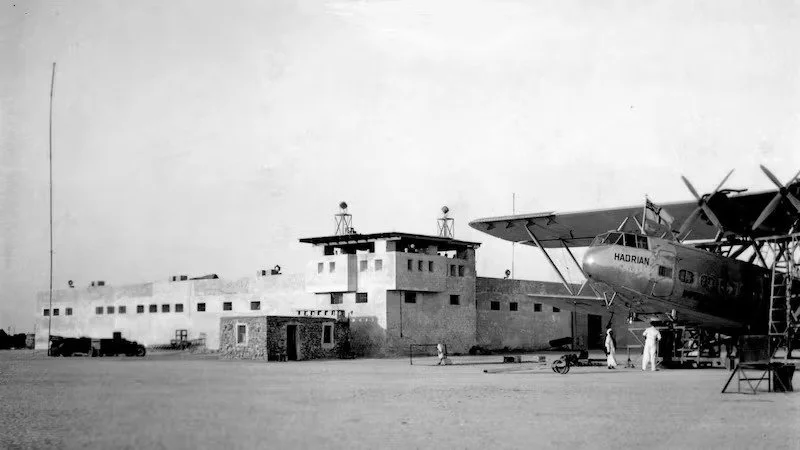
The Handley–Page 42E Hadrian at Sharjah airfield (undated, but c. 1933–34).19
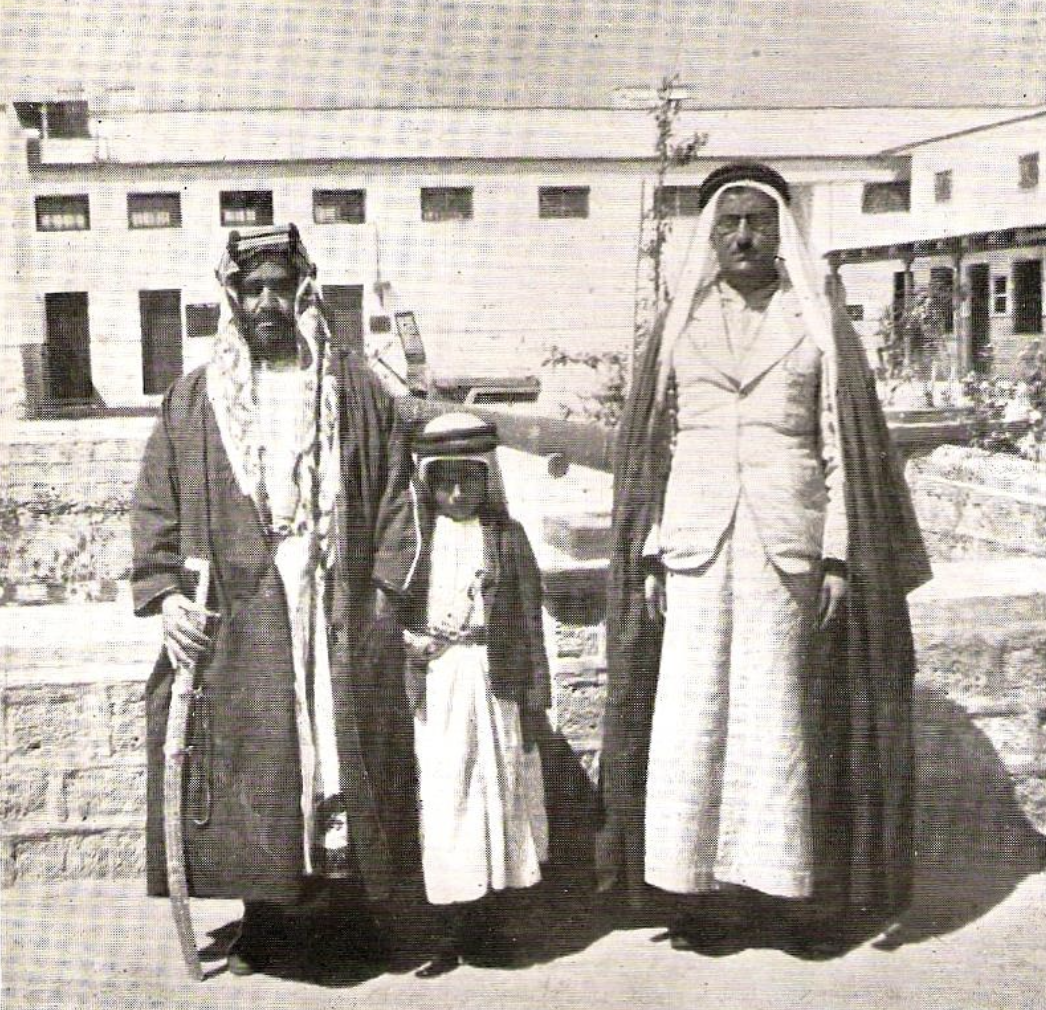
Sheikh Sultan (left) at the Sharjah rest house in the 1940s with the British-appointed Political resident (right).20

Preparing for a Gulf Aviation Heron flight arrival from Bahrain at Abu Dhabi Airport, 1963.21
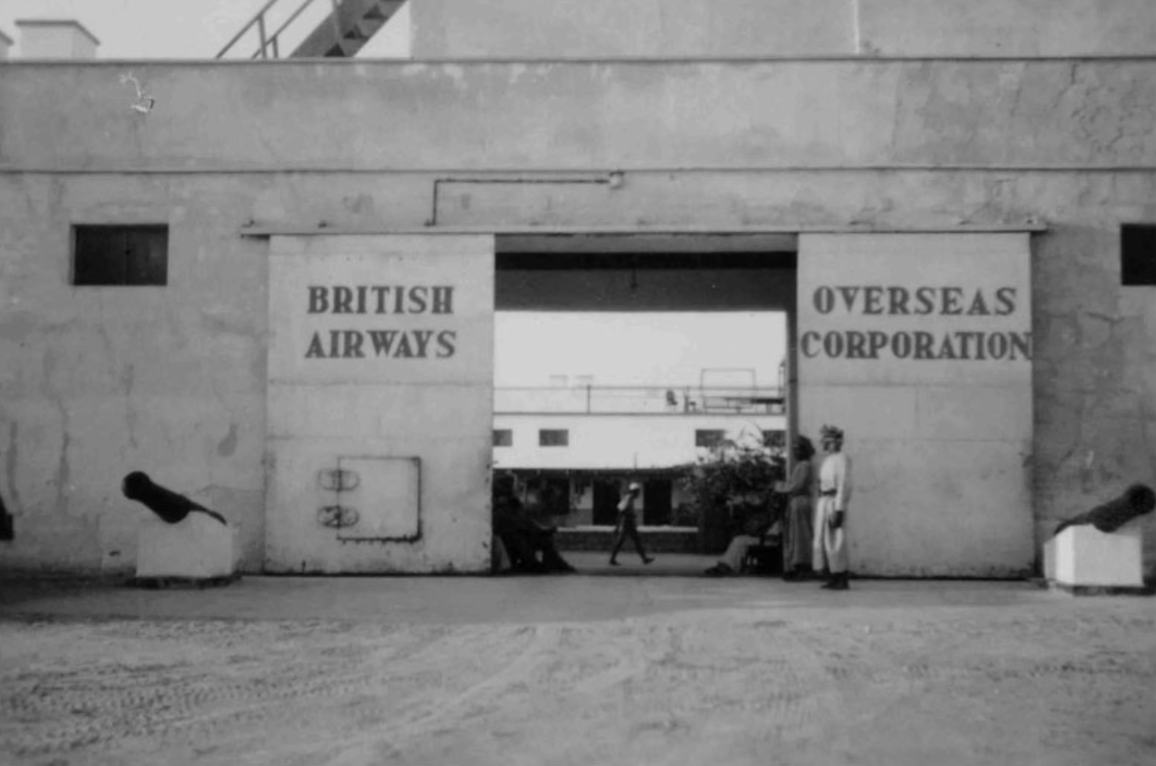
Sharjah rest house entrance, 1948.22
About the Author
Born in India and raised across cities in the Gulf, Roshni Nayar’s interests lie in the histories of mobility, materiality, and exchange in the Indian Ocean world. Pursuing her Master of Science in Global Digital Humanities at the University of St. Andrews, she is interested in how digital technologies can open up new ways of engaging with culture, heritage, memory, and identity.
Al Thani, Hamad. "A Century of the Global Airline Industry and the Emergence of the Gulf's Super Connectors." Journal of Air Transport Studies 13, no. 1 (January 1, 2022): 21–35. https://doi.org/10.38008/jats.v13i1.183.
Crompton, Teresa. "British Imperial Policy and the Indian Air Route, 1918-1932," 2014.
File 7/2 I Landing grounds and seaplane anchorages', British Library: India Office Records and Private Papers, IOR/R/15/2/263, in Qatar Digital Library https://www.qdl.qa/node/412 [accessed 16 February 2026].
'File 7/2 II Landing grounds and seaplane anchorages', British Library: India Office Records and Private Papers, IOR/R/15/2/264, in Qatar Digital Library https://www.qdl.qa/node/412 [accessed 16 February 2026].
"HMS Bideford, Sloop." NAVAL-HISTORY.NET. Accessed February 16, 2026. https://www.naval-history.net/xGM-Chrono-18SL-HMS_Bideford.htm.
Rotha, Paul. Imperial Outpost. United Kingdom: Strand Films, 1937. https://archive.org/details/AirOutpost.
Skirka, Hayley. "When Sharjah's first flight touched down - 90 years ago." The National, April 1, 2022. https://www.thenationalnews.com/weekend/2022/04/01/sharjahs-first-flight-touched-down-90-years-ago/.
Stanley-Price, Nicholas. "Flying to the Emirates: The End of British Overseas Airways Corporation's Service to Dubai and Sharjah in 1947." The Journal of Transport History 39, no. 3 (June 19, 2018): 333–54. https://doi.org/10.1177/0022526618783952.
Vomhof, Klaus. "Gulf Aviation April 1, 1954." Airline Timetable Images. Accessed February 16, 2026. https://www.timetableimages.com/ttimages/gf.htm.
1. "HMS Bideford, Sloop," NAVAL-HISTORY.NET, accessed February 16, 2026, https://www.naval-history.net/xGM-Chrono-18SL-HMS_Bideford.htm.
2. Teresa Crompton, "British Imperial Policy and the Indian Air Route, 1918-1932" (thesis, 2014), 244.
3. Hayley Skirka, "When Sharjah's First Flight Touched down - 90 Years Ago," The National, April 1, 2022.
4. Crompton, 221.
5. Crompton, 225.
6. Crompton, 246.
7. Crompton, 224.
8. Crompton, 23.
9. Crompton, 243.
10. Paul Rotha, Imperial Outpost (United Kingdom: Strand Films, 1937), https://archive.org/details/AirOutpost.
11. File 7/2 I Landing grounds and seaplane anchorages', British Library: India Office Records and Private Papers, IOR/R/15/2/263, in Qatar Digital Library https://www.qdl.qa/node/412 [accessed 16 February 2026].
12. File 7/2 I Landing grounds and seaplane anchorages'.
13. 'File 7/2 II Landing grounds and seaplane anchorages', British Library: India Office Records and Private Papers, IOR/R/15/2/264, in Qatar Digital Library https://www.qdl.qa/node/412 [accessed 16 February 2026].
14. Nicholas Stanley-Price, "Flying to the Emirates: The End of British Overseas Airways Corporation's Service to Dubai and Sharjah in 1947," The Journal of Transport History 39, no. 3 (June 19, 2018): 333–54, https://doi.org/10.1177/0022526618783952, 335.
15. Map of the Persian Gulf showing aerodromes and refuelling facilities on Arab and Persian coasts [194r] (1/2), British Library: India Office Records and Private Papers, IOR/R/15/2/263, f 194, in Qatar Digital Library https://www.qdl.qa/archive/81055/vdc_100023518692.0x000002 [accessed 16 February 2026].
16. Nicholas Stanley-Price, "Flying to the Emirates: The End of British Overseas Airways Corporation's Service to Dubai and Sharjah in 1947," The Journal of Transport History 39, no. 3 (June 19, 2018): 333–54, https://doi.org/10.1177/0022526618783952, 338.
17. Hamad Al Thani, "A Century of the Global Airline Industry and the Emergence of the Gulf's Super Connectors," Journal of Air Transport Studies 13, no. 1 (January 1, 2022): 21–35, https://doi.org/10.38008/jats.v13i1.183, 24.
18. Klaus Vomhof, "Gulf Aviation April 1, 1954," Airline Timetable Images, accessed February 16, 2026, https://www.timetableimages.com/ttimages/gf.htm.
19. Skirka, "When Sharjah's First Flight Touched down - 90 Years Ago."
20. Crompton, 220.
21. 'Preparing for a Gulf Aviation Heron flight arrival from Bahrain at Abu Dhabi Airport,' UAE National Library and Archives.
22. Stanley-Price, "Flying to the Emirates: The End of British Overseas Airways Corporation's Service to Dubai and Sharjah in 1947," 349.