Badr Shākir Al-Sayyāb’s Poetry: a Fusion of Mesopotamian Heritage & Contemporary Exile
Words by Hamzah talEb
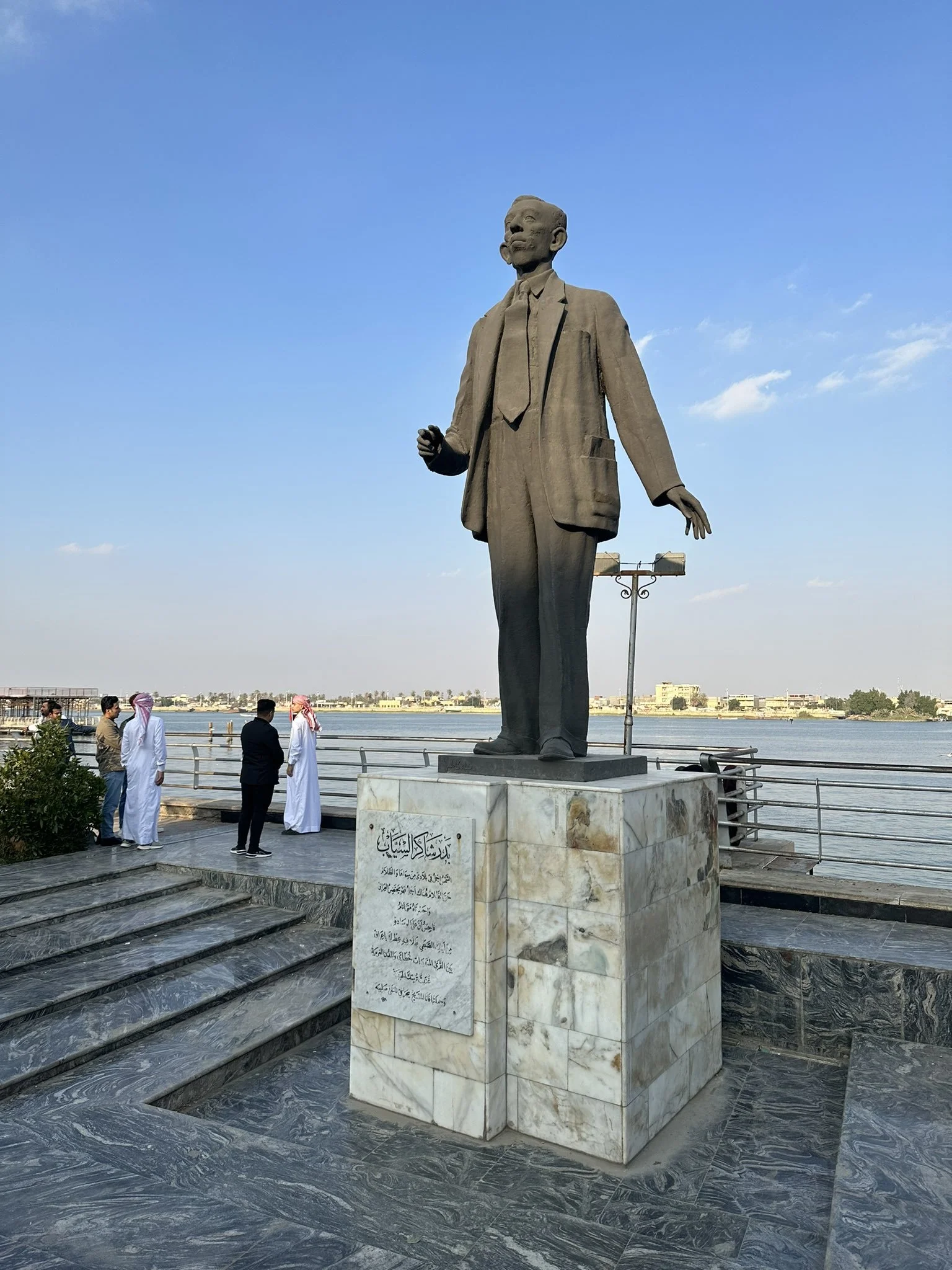
Born in Jaykur, near Basra Iraq in 1926 Badr Shākir Al-Sayyāb grew to be one of the most influential voices in modern Iraqi literature. His life and work preserve the political, cultural, and emotional archives of mid-20th century Iraq, making him indispensable for a daftar edition devoted to the culture. Al-Sayyāb is widely recognized as one of the pioneers of Arabic free verse (shiʿr ḥurr), alongside Nazik al-Mala’ika. His experimentation with rhythm and form broke the rigidity of classical prosody and allowed poetry to speak directly to modern crises.
As Boullata notes, Al-Sayyāb’s technique blends mythic imagery with linguistic innovation, enabling poetry to reflect both tradition and modernity (Boullata 1971, Journal of Arabic Literature).His verse is inseparable from Iraq’s turbulent history; colonial legacies, nationalist movements, and the repression of dissent. Al-Sayyāb himself was imprisoned and exiled for his political affiliations, and his poetry carried this experience. Scholars highlight how his work reflects nationalism and revolutionary consciousness, preserving the texture of Iraq’s political upheavals (Hassanin 2020, European Scientific Journal).
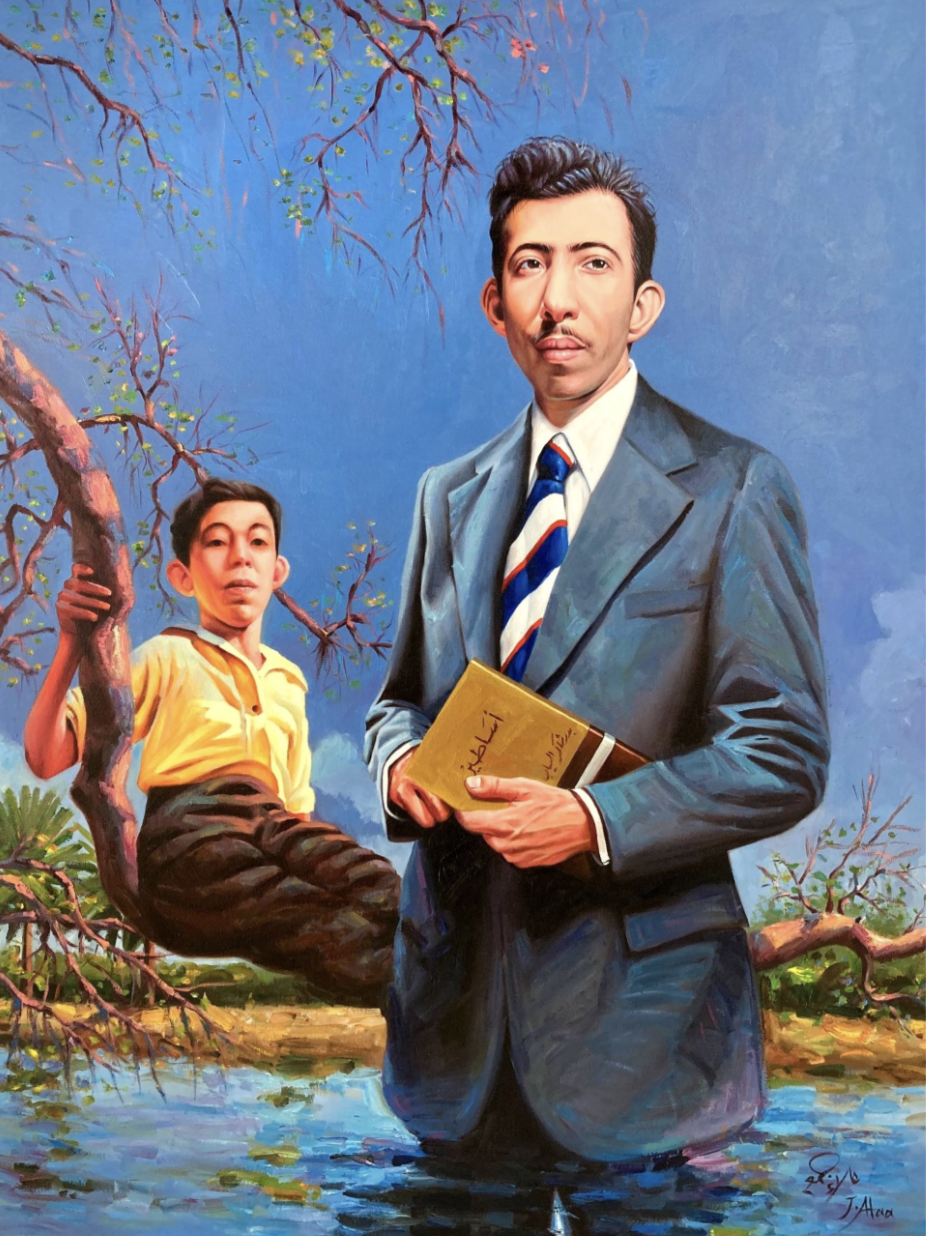
Painting by Jimaa Alaa, Saatchi Art
In his most famous poem, Rain Song (Unshūdat al-Maṭar, 1960), rain recalls both the ancient fertility god Tammuz and the suffering of displaced Iraqis. This fusion of Mesopotamian heritage and contemporary exile exemplifies how al-Sayyāb’s poetry acts as a researched poetics: myth is not ornament but a method of archiving collective trauma and continuity (Alous 2023, Tasnim International Journal). In poems like The Blind Prostitute, al-Sayyāb exposes the social and economic fractures of postcolonial Iraq, unsettling hegemonic narratives of power (Baaqeel 2022, Arab World English Journal for Translation & Literary Studies). His imagery of illness, exile, and dispossession situates poetry as testimony — a way to record the lived struggles of ordinary Iraqis. Al-Sayyāb’s poetry influenced an entire generation of Arab poets, including Palestinians such as Mahmoud Darwish. His combination of myth, modernist form, and political urgency shaped the trajectory of modern Arabic literature, securing his place as Iraq’s most important 20th-century poet (Cambridge University Press, 2022).
Poems, Excerpts and Analysis
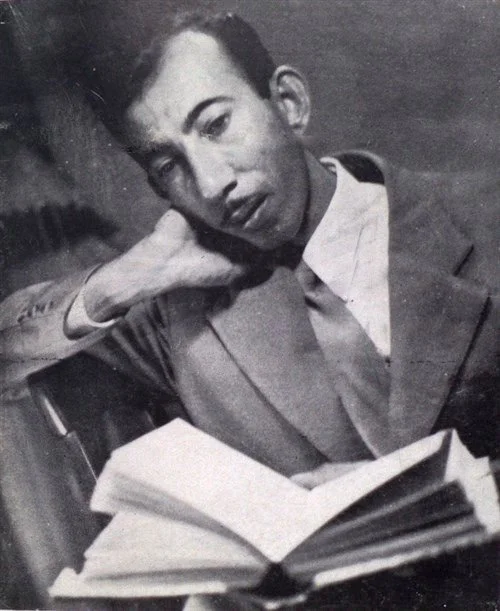
Rain Song (Unshūdat al-Maṭar, 1960)
“Your eyes are forests of date trees at daybreak …
When they smile, vines sprout leaves …
rain… rain… rain…”
This is al-Sayyāb’s most famous poem and the cornerstone of his legacy.Weaving the familiar images like dates and sprout leaves to create a mystically sorrowful portrait of nature. The repetition of “rain… rain… rain…” is incantatory, carrying the weight of a people’s displacement. Its relevance lies in how it archives memory, myth, and modern dispossession in one lyrical current.
A Stranger by the Gulf (1953)
“The wind gasps with the midday heat,
like a nightmare in the late afternoon …
And on the sand, by the gulf
A stranger sat—a baffled vision wanders the gulf …
A voice thunders in the abyss of my bereaved soul: Iraq.”
Here, exile becomes both landscape and identity. The “stranger” is al-Sayyāb himself, but also every displaced Iraqi. The Gulf acts as both geography and symbol of estrangement. This poem is crucial because it preserves the emotional texture of alienation, reminding us that the Iraqi experience of exile is not just political but deeply personal.
The Blind Prostitute (Al-Mūmis al-ʿAmiyāʾ)
This long narrative poem tells the story of a woman named Salima, blinded and forced into prostitution, later renamed Sabah. The allegory is devastating: Salima’s personal humiliation mirrors Iraq’s political subjugation and economic injustice. Critics note how the poem dramatizes a kind of double consciousness ; the experience of seeing oneself through the oppressor’s gaze as well as one’s own. Its relevance lies in how it speaks to both gendered marginalization and national dispossession, offering a poetic record of social injustice often absent from official histories.
Weapons and Children (1954)
“Birds? Or children laughing …
Their bare feet are lights shimmering in the darkness …
We rip apart the tyrant’s bunker with them …”
In this poem, innocence collides with violence. The imagery of children laughing, their bare feet glowing like light, sits alongside the destruction of tyranny. It is a poetic record of the costs of resistance, how childhood itself becomes implicated in political struggle. This poem is relevant because it demonstrates how poetry can preserve the experience of ordinary people in times of upheaval, showing that resistance is both heroic and tragic.
The River and Death
This poem uses the flowing river as a meditation on mortality. The imagery of water reflects both time’s passage and the inevitability of death, while also carrying echoes of Iraq’s geography — rivers as lifelines of civilization. The poem is relevant because it archives mortality and fragility not just at the personal level but also at the level of a nation, using nature as a mirror of social loss.
Sources
Boullata, Issa J. “The Poetic Technique of Badr Shākir al-Sayyāb (1926-1964).” Journal of Arabic Literature, Vol. 2 (1971), pp. 104-115. JSTOR
A close technical analysis of his style, imagery, form, and innovations in free verse. Useful for discussing how he reshaped poetic technique.
“Badr Shākir al-Sayyāb between Communism and World Literature.” Chapter 4 in Reorienting Modernism in Arabic and Persian Poetry (Cambridge University Press, 2022). Cambridge University Press & Assessment
Examines his political positions (especially early communist involvement) and how his poetry shifted in relation to global modernist trends. Great for connecting politics to poetics.
Hassanin, Shaimaa. “Nationalism in Badr Shaker al-Sayyāb’s Revolutionary Poetry and its Influence on Arabic Poetry.” European Scientific Journal (ESJ), Vol. 16, No. 14 (May 2020). ResearchGate+1
Looks at how Sayyāb uses myth and symbolism in his revolutionary poetry and traces its influence. Good for analyzing his mythic references and his role in modern Arabic literature.
Baaqeel, G. A. “Unveiling Double Consciousness and Unsettling Hegemonic Economies in the Iraqi Free Verse Poetry of Badr Shaker al-Sayyāb’s The Blind Prostitute.” Arab World English Journal for Translation & Literary Studies, Vol. 6, No. 3 (2022), pp. 168-176. awej-tls.org
Focuses on a specific poem (“The Blind Prostitute”) for its response to colonial / neocolonial economics and identity. Good example of how a single poem can carry researched poetics.
Alous, Manaf Haider. “The Impact of Heritage on the Poetry of Badr Shaker Al-Sayyāb.” Tasnim International Journal for Human, Social and Legal Sciences, Vol. 2, No. 1 (2023), pp. 357-381. tasnim-lb.org
Investigates how elements of heritage (folklore, Qurʾanic style, ancient myth) appear in his poetry and how he reworks them in relation to modern experience.
Obaid, Linda Abd Al-Rahman Rade. “The Salvation and Aesthetic Structure in ‘Sifr Ayoub’ for Badr Shakir Al-Sayyab.” Advances in Literary Study, Vol. 8, No. 3 (July 2020), pp. 107-118. SCIRP
Analyzes his poem Sifr Ayoub (The Book of Job) especially around themes of salvation, life and death, and his aesthetic structuring. Very useful for readings of his late work.