Every neighborhood has someone everyone knows by name. In old Ramallah, that person was known for small daily habits everyone noticed: he'd greet the street cleaner every morning with "bless your hands, Ahmad" — a warm, common way of thanking someone for their labor — and he bought his sesame from the same vendor for years. Walk past him on the street, and children would start shouting a name that wasn't even his own: "Abu Al-Ajab is here!"
His real name was Adel Tartir. For more than fifty years, he was one of the people who built Palestinian theatre from nothing — co-founding the country's first modern theatre troupe, writing and performing its first one-man play, and spending his final three decades carrying an elaborate handmade wooden storytelling box, the Sandouq El-Ajab, or "Wonderbox," from village to village, telling children stories about who they were and where they came from. He became so identified with the character he performed inside that box — Abu Al-Ajab, "Father of Wonder" — that most people simply forgot his given name and called him that instead.
He died on July 10, 2025, one day before an exhibition celebrating his life's work was set to open in Ramallah. His family opened it anyway. This is the story of who he was, and why so many people still stop by his old theatre expecting to find him there.
Born Into a Story Already in Progress
Tartir used to explain the Wonderbox by telling you where it came from, and once you hear it, you understand him differently.
His grandfather, he said, had been a hakawati, a professional storyteller, in the last years of Ottoman rule, using a similar wooden box to entertain crowds. When the Ottomans tried to conscript him, he refused, was hunted for it, and died in prison. His son — Tartir's father — inherited the box under the British Mandate that followed, and kept telling stories with it, believing at first the new rulers would simply leave him be. They didn't. He had to work in disguise. Then in 1948, during the Nakba, the family was driven from their home in Lydda — father, family, and box, uprooted together.
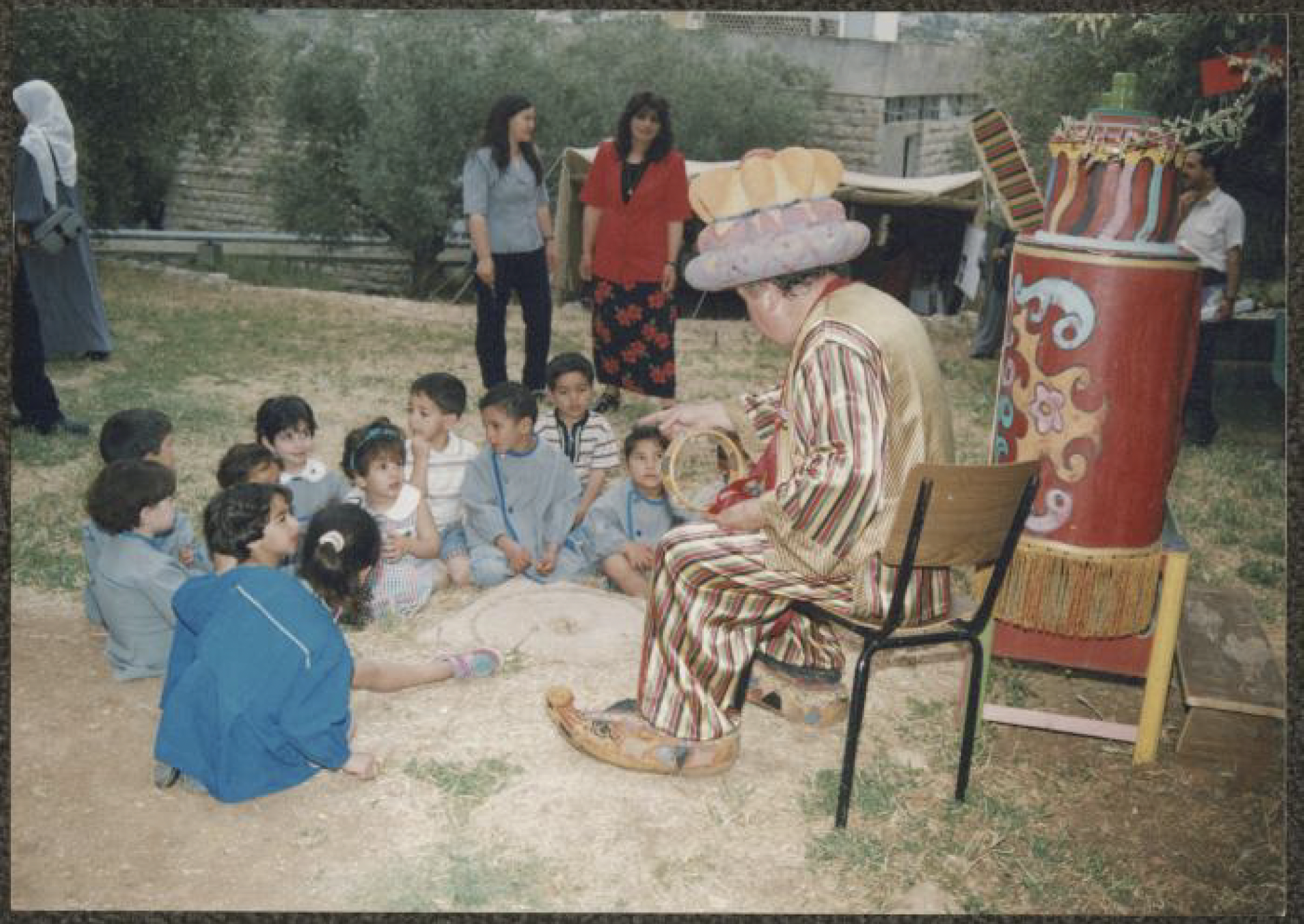
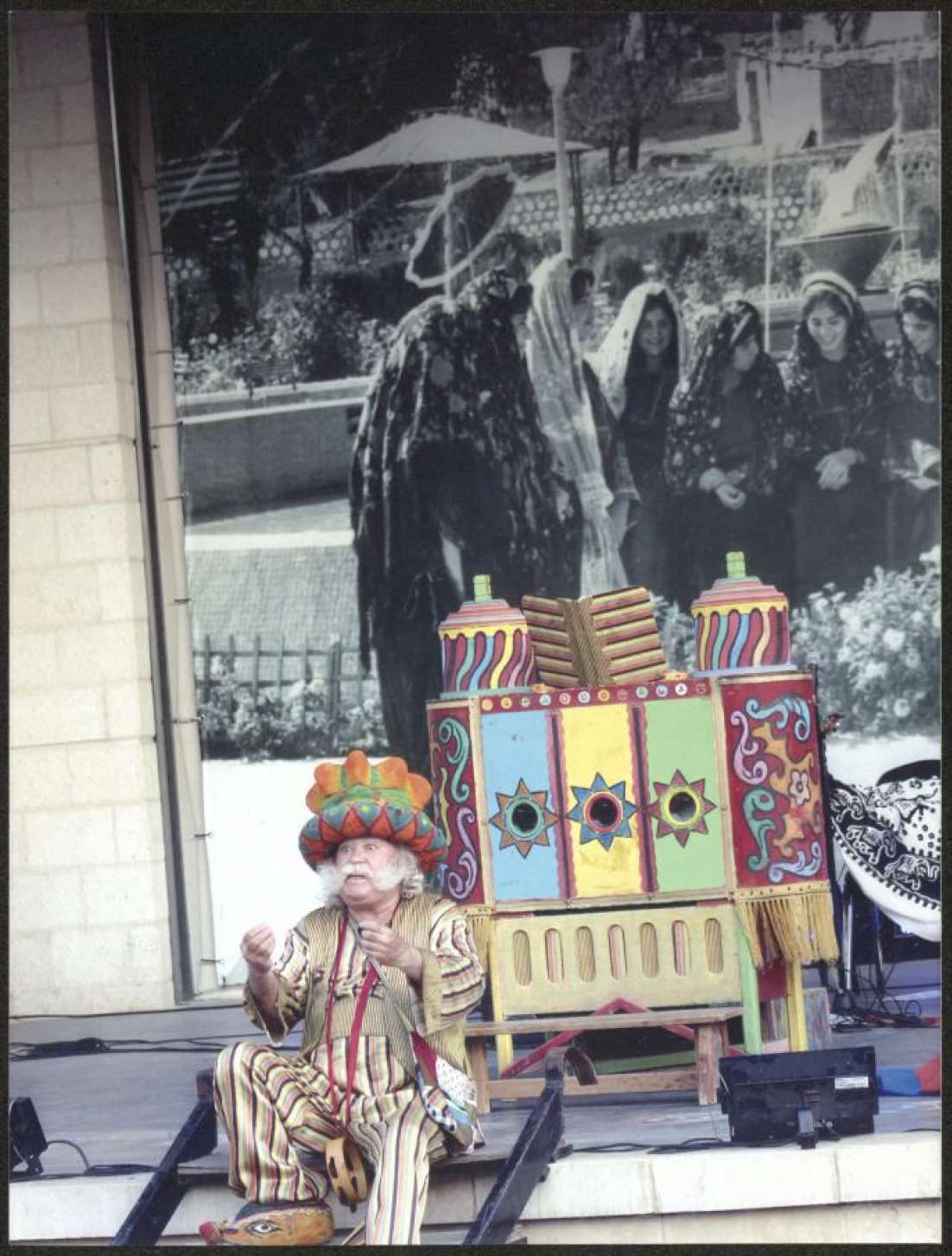
Abu al-Ajab with Kindergarten Children at (RWTC), 1995
The Adel Tartir Collection | Palestinian Museum Digital Archive
Tartir was born into that displacement, in August 1951, in the village of Rafat between Jerusalem and Ramallah. (A few Arabic-language obituaries give Ramallah itself as his birthplace instead — a small discrepancy worth confirming with the family, but not one that changes the story.) The family sheltered first under a tree outside the city; once its leaves fell that autumn, they moved into a zinc-roofed shack, and that's where Tartir grew up — hanging around his father's workshop, listening to the farmers who came to get their tools repaired.
He never finished formal school. He simply read everything he could get his hands on, Kafka, the Syrian playwright Saadallah Wannous, the Palestinian folklorist Sharif Kanaana, until, as his son Alaa put it, he became "a school in himself." When Tartir eventually built his own Sandouq El-Ajab decades later, he wasn't inventing something new. He was picking back up an object his own family had already been persecuted for carrying, twice, and refusing to let it go a third time.
Building Something From Nothing
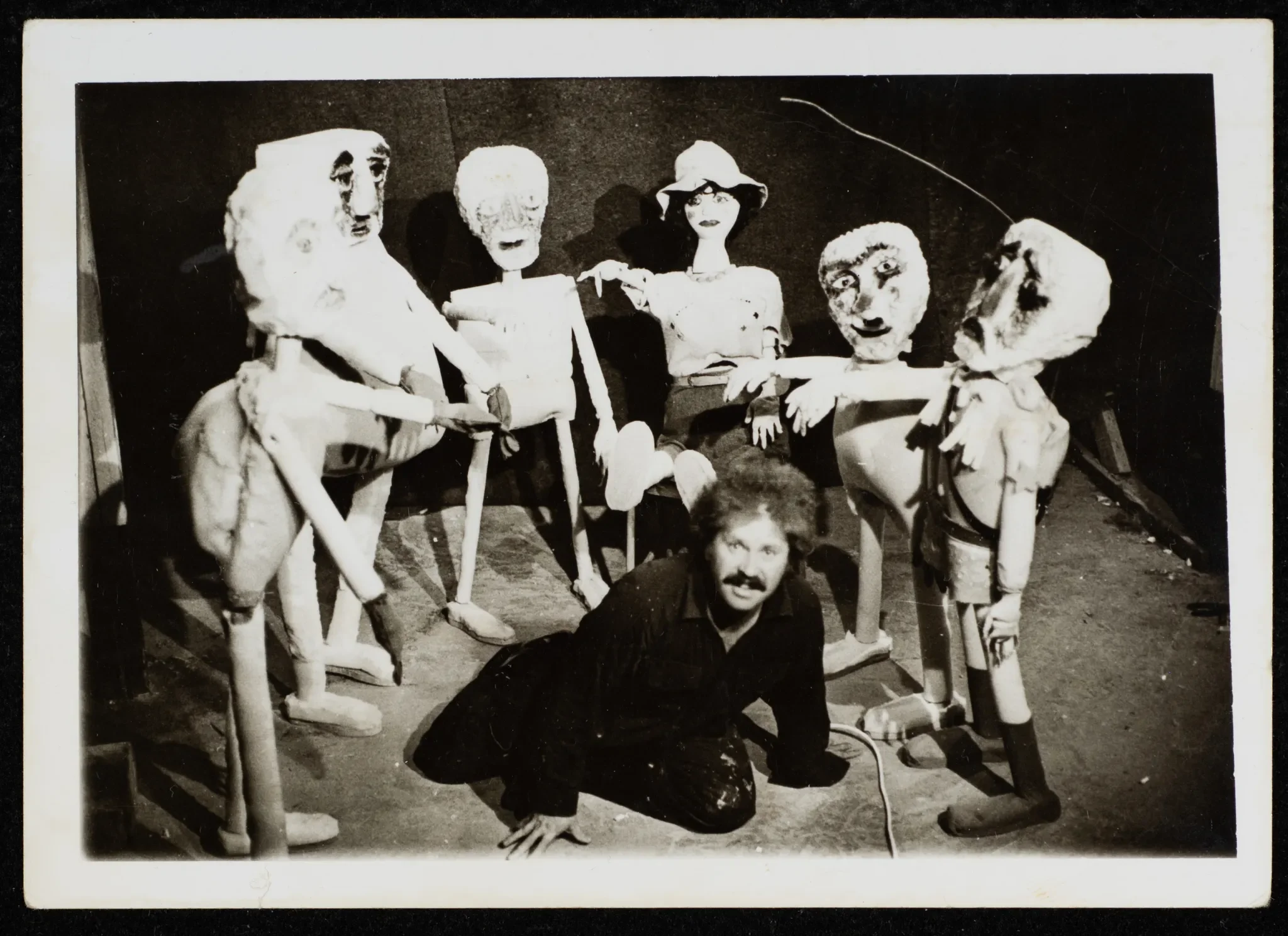
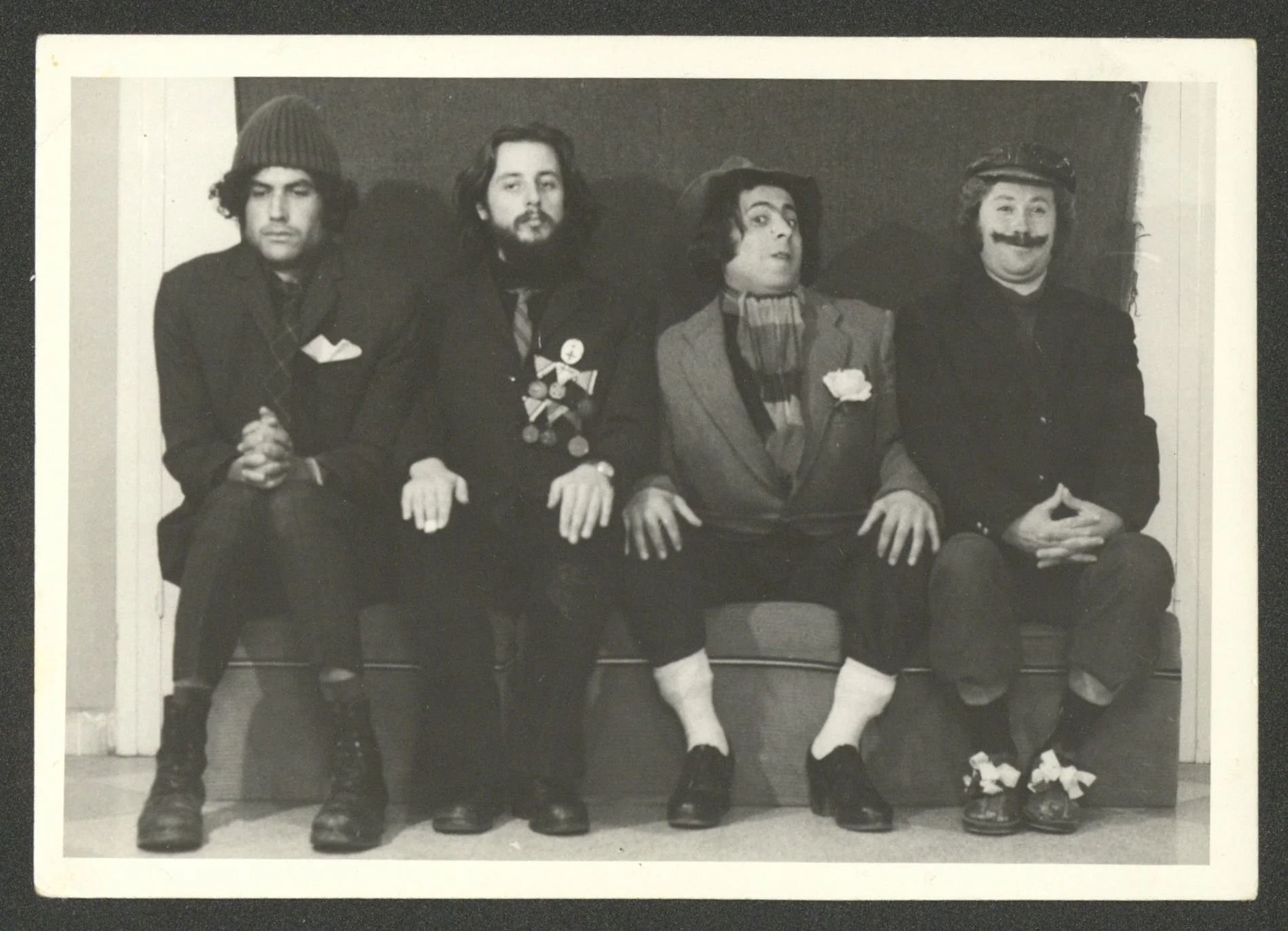
In 1970, in the years right after the 1967 war — a moment when a whole generation of Arab artists began experimenting with new forms in response to that shock — Tartir helped found Al-Balalin ("The Balloons"), the first modern Palestinian theatre troupe. In five years they staged close to ten original plays and became, briefly, the beating heart of a Palestinian theatre scene that was still inventing its own rules.
In 1975 he started something of his own: Sandouq El-Ajab Theatre, named for the box his family had carried for three generations. Israeli military authorities required advance approval for any performance. Tartir's troupe refused to ask for it, and paid for that refusal — several early shows were banned outright. For years, he and his collaborators simply found other ways to keep performing anyway.
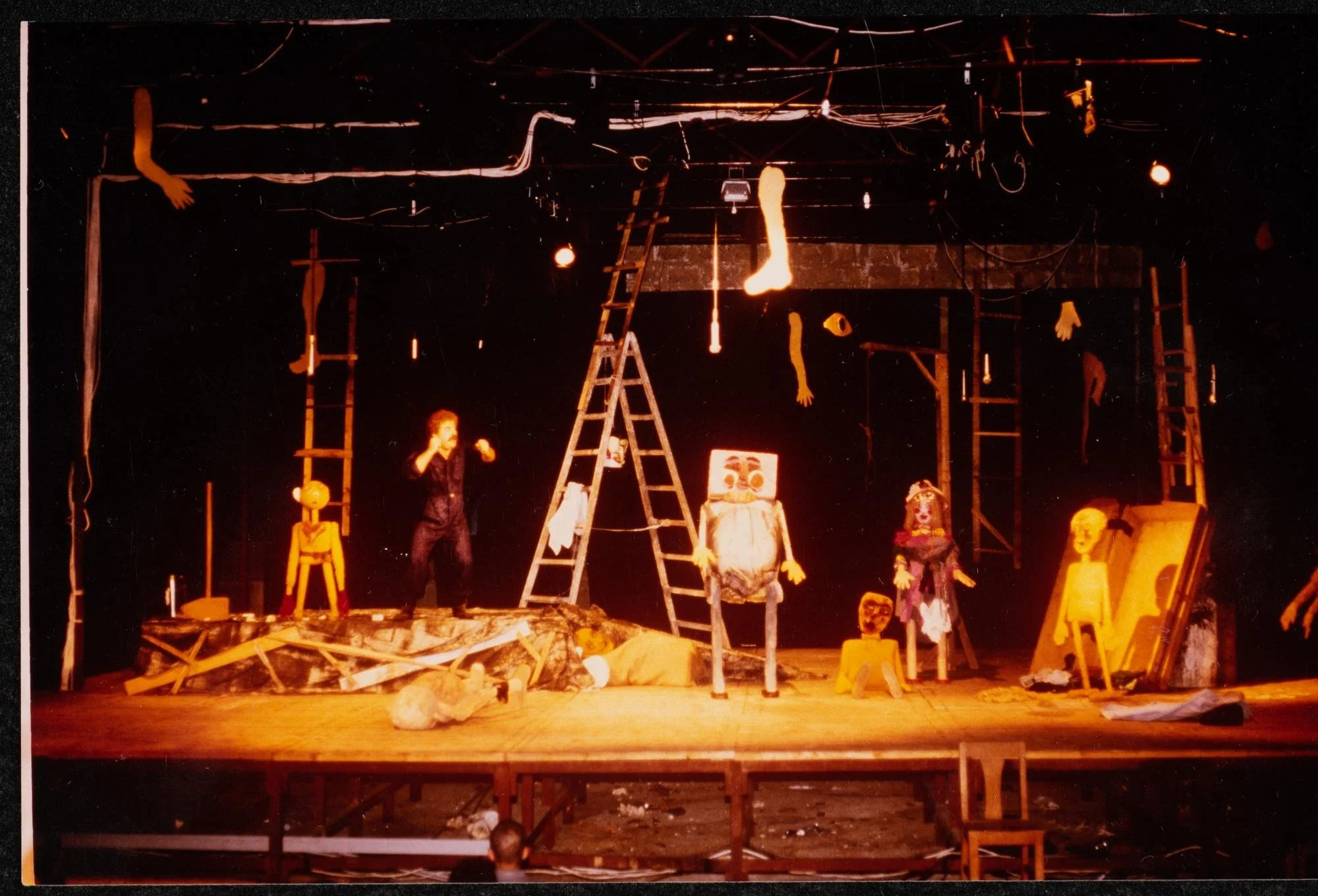
In 1980 he wrote, directed, and starred in Ras Ros ("Head Heads"), considered the first fully Palestinian one-person play. He played a garbage collector who slips between characters to embody an entire cross-section of society, while quietly raising a child of his own and pouring into him every quality he hoped could someday bring justice and equality. It became one of the classics of Palestinian theatre — proof, if anyone needed it, that a single actor with almost nothing could still build a whole world on stage.
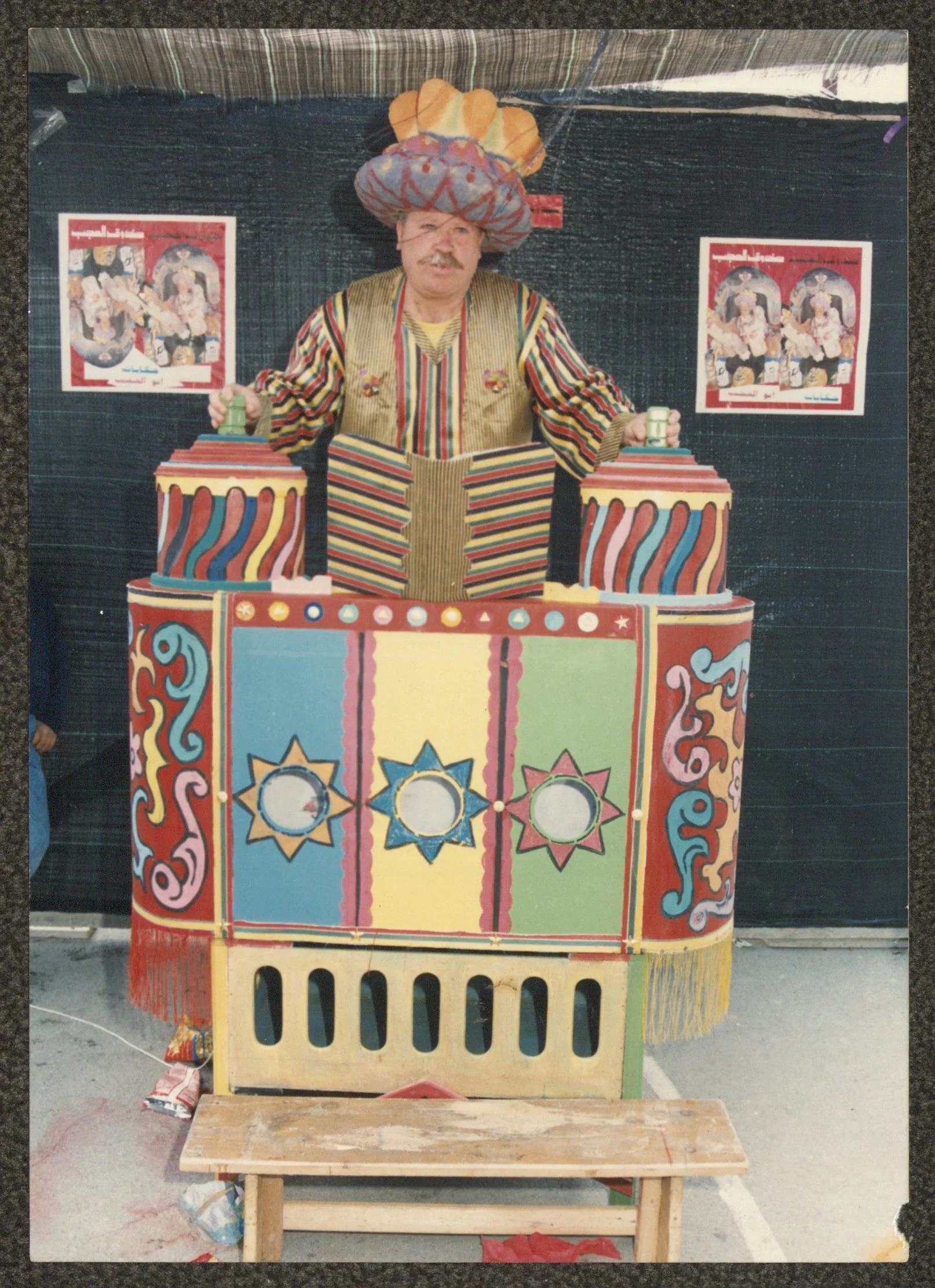
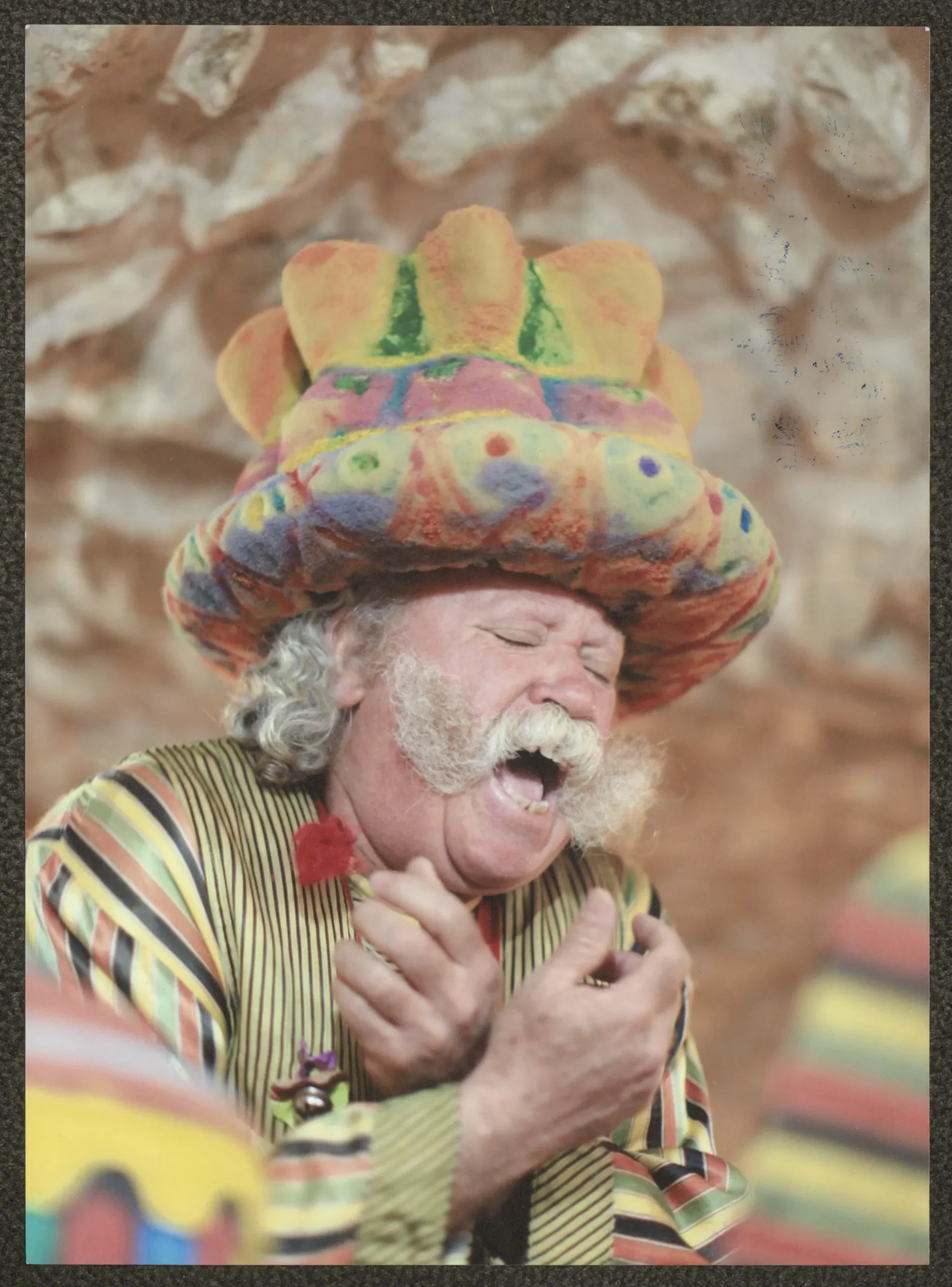
Abu al-Ajab during the Nuwar Nisan Week, Ramallah, 1996 - The Adel Tartir Collection - Palestinian Museum Digital Archive
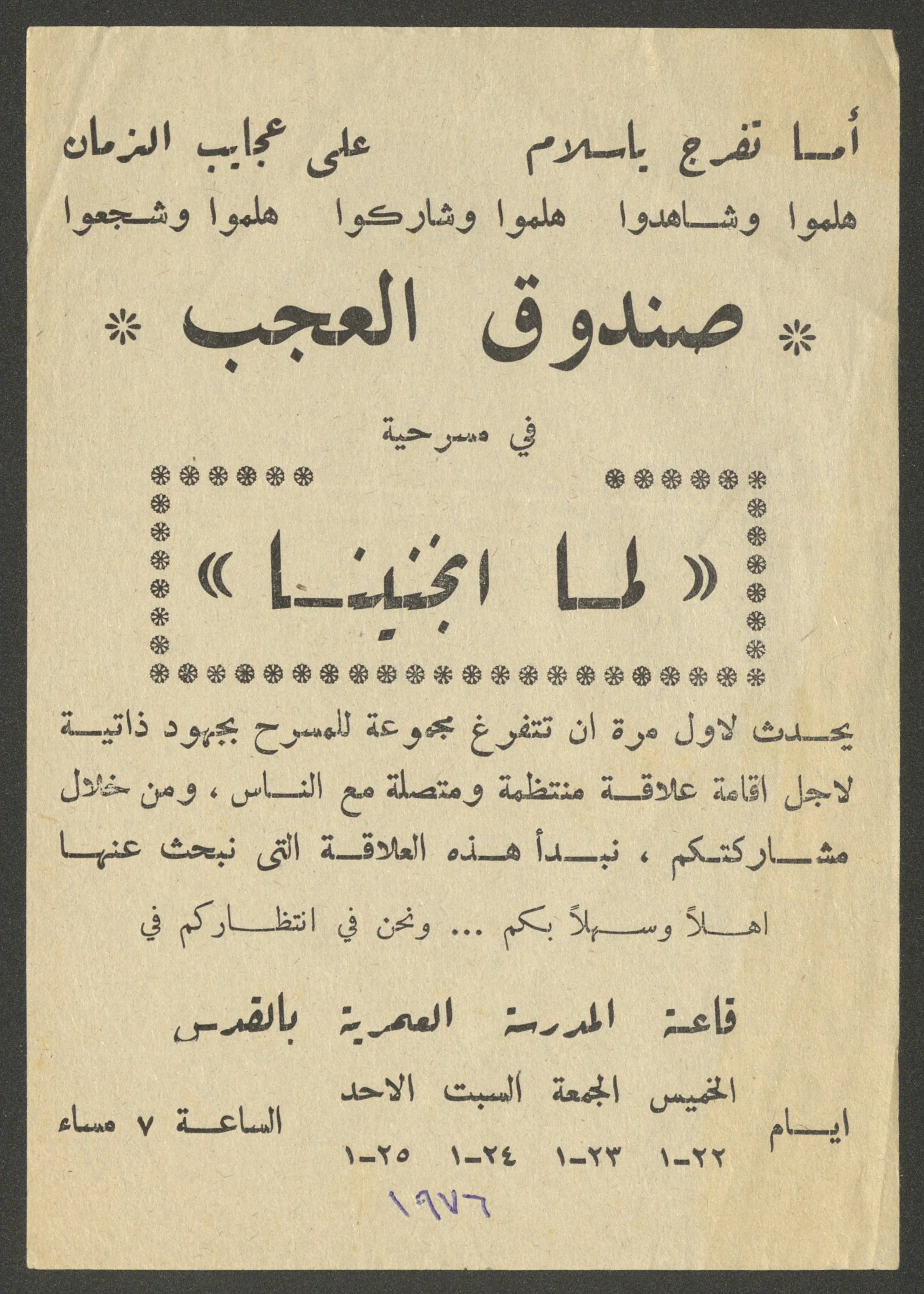
A poster for
Twelve Boxes, Built From His Own Life
In the early 1990s, Tartir turned his attention to what he called "the seeds of the future": children. Over the next thirty years he built twelve Sandouq El-Ajabs by hand, each a different shape and mechanism, each carrying a different piece of the Palestinian story — displacement, memory, resistance, hope — directly to children who might never encounter that history anywhere else.
Every performance opened the same way, with a call he used for decades: "Ta'u wa 'u shufu wasma'u" — "Come, gather, look and listen." Walking his son through the last of the twelve boxes, not long before he died, he stopped at one panel and said: "This piece of the box is part of my crib, from when I was an infant." He wasn't only telling Palestine's story with these boxes. He was building them, quite literally, out of his own life.
The recognition reached well past Palestine's borders — including an honor from Egypt in 2015, at a puppet arts festival in Cairo, which he accepted with the same instinct he brought to everything: "In every country I have visited I make an image box that beholds our heritage and folk stories."
The Kind of Person He Was
Ask anyone who worked with him and the same picture comes back: warm, generous, incapable of being fully serious for very long, and completely unwilling to compromise on what he believed theatre was for. He had no patience for elaborate sets, long donor lists, or productions dressed up to look "Western" for international funders. He believed theatre had exactly one job — to stand with the oppressed — and he built his entire career around that belief without flinching from it once.
He lived for years with serious heart trouble and a daily insulin routine — by one count, more than 1,200 injections over seventeen years — and he kept every single used needle in a wooden box, joking that he'd use them as a prop in one last performance. Every year on March 27, World Theatre Day, he kept a private ritual: phone calls to old friends, a walk through his theatre to check on his old props, a quiet renewal of a promise he'd made decades earlier and never once let lapse.
And around him, an entire neighborhood organized itself, without ever discussing it, into a kind of everyday chorus: the newspaper seller who saved him his daily paper, the pharmacist who kept his medicine ready, the greengrocer with his vegetables set aside, the baker and the children on the street corner who'd start calling out the moment they spotted him coming. That's not the kind of thing you can build with talent alone. It takes fifty years of actually showing up.
His Last Days
In June 2025, with missiles from the Israel-Iran conflict passing overhead, Tartir sat in his courtyard finishing his twelfth and final Wonderbox — painting it, deliberately, a vivid, defiant pink. He was preparing for an exhibition of all twelve boxes together, due to open in a matter of days. When he finished, he turned to his son and said, quietly: "And with this, I conclude."
He died on July 10, one day before that exhibition was supposed to open. His family opened it anyway, four days later, in old Ramallah, with his grandchildren seated near his embroidered performance costume. His last words to his son, spoken as he lay dying, were the same thing he'd spent fifty years proving true on a stage: "Our life is theatre, and theatre is our life."
What He Left Behind
Tartir's personal archive — now held in part by the Palestinian Museum's Digital Archive — holds nearly 4,000 photographs, documents, posters, and tickets from his career. His son has called the website built around it the largest project of its kind ever built around a single Palestinian artist's life. Together, father and son also wrote a book, Adel Tartir: A Temporary Theatrical Biography, published with support from the Arab Fund for Arts and Culture. Tartir always insisted his life be called not a finished biography, but "a temporary story" — one more performance, still technically running.
He is survived by his wife, Tahani, and his children, including Alaa and Yazan. His gravestone in Ramallah calls him, simply, a theatre artist and storyteller, originally from Lydda — a description that manages to be both modest and, given everything his family carried to get there, exactly right.
What he actually left behind is harder to put on a headstone: fifty years of proof that a single person, with almost nothing but a wooden box and total conviction, can build an entire tradition — and can be loved, specifically and by name, by everyone from his grandchildren to the man who sold him his morning paper.
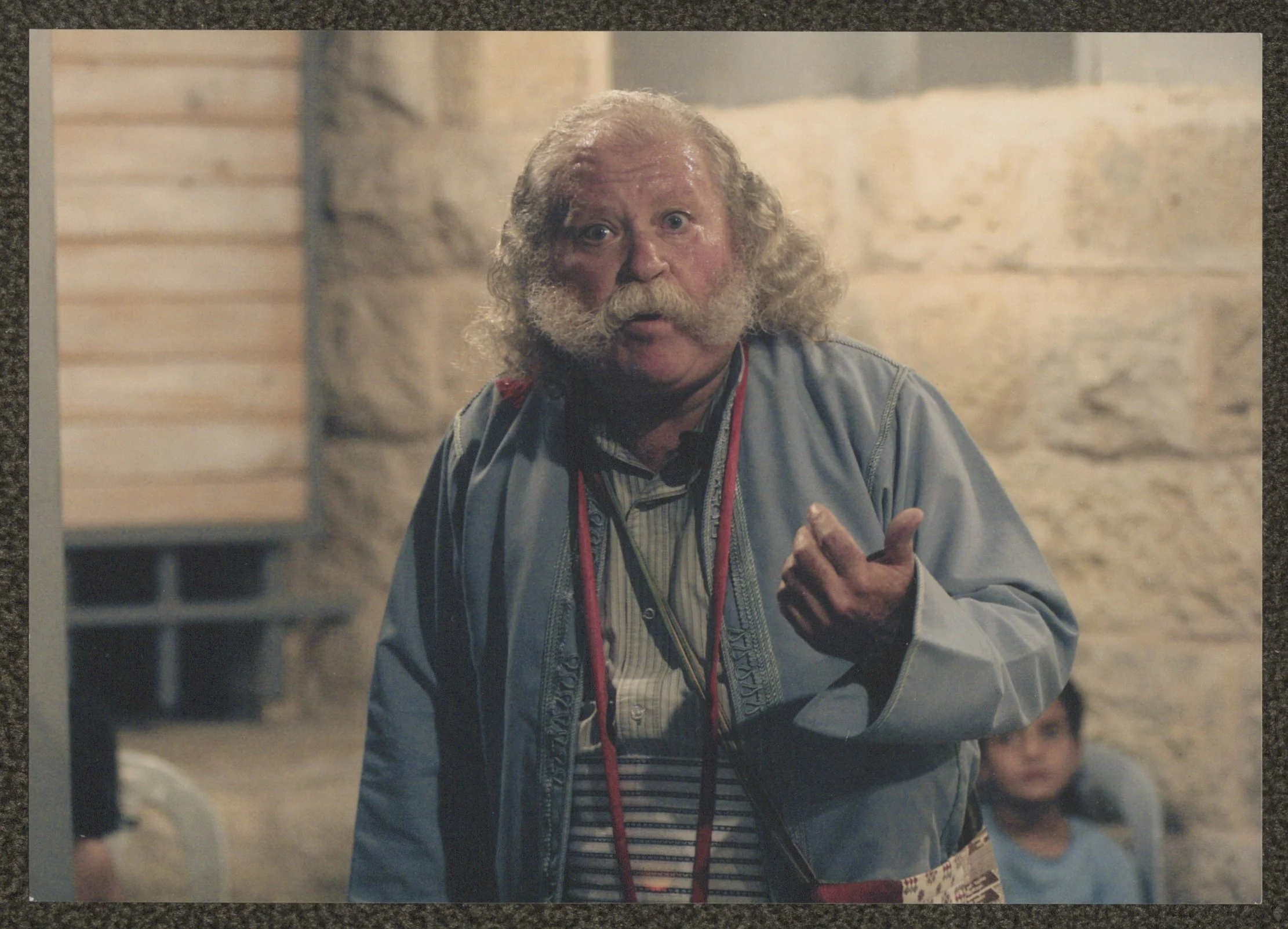
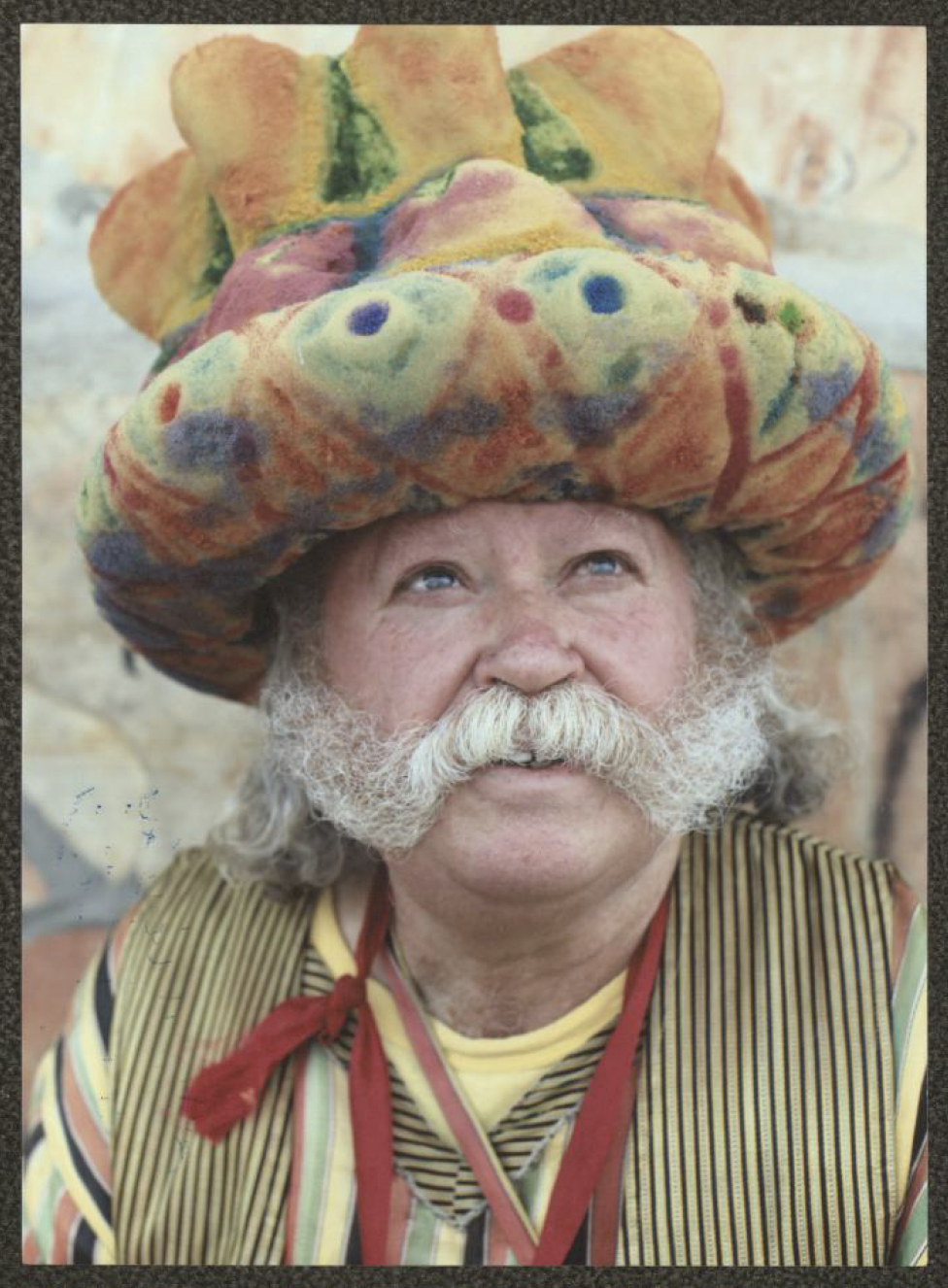
Adel Tartir Participating in the Ramadan Nights Initiative, Ramallah, 2010 , The Adel Tartir Collection Palestinian Museum Digital Archive
Sources: Alaa Tartir's tribute essays in Middle East Eye, Scene48, and dis:orient; adeltartir.com; Al Jazeera's 2016 and 2025 profiles of Tartir; An-Nahar; Oman Daily; the Palestinian Museum Digital Archive; Al-Ahram Weekly's 2015 report on his honor in Cairo; and the Arab Fund for Arts and Culture's project listing for the Tartirs' book.
Images: Palestinian Museum Digital Archive